If you travel to Seoul for work, price alerts can save time and money—but they can also tempt you into impulse bookings that complicate schedules. The practical approach is to use alerts as a decision trigger, not a final call: set explicit price or flexibility thresholds, align alerts with your confirmed meeting window, and treat alerts as one factor among cancellation policies and loyalty benefits. Before you click ‘‘book,’’ verify final cancellation rules, corporate policy needs, and whether the fare includes seat selection or changes. This article gives business-focused rules to set alerts, compare options, and avoid regret, plus a quick checklist you can use the next time you plan a Seoul trip.
Decide your non-price requirements first
Start by listing the constraints that matter for a business trip to Seoul: meeting dates and times, preferred arrival/departure windows, connection tolerance, loyalty program considerations, and your company’s refund/change policy. These constraints shape what a ‘‘good’’ alert looks like; for example, a low headline fare that forces an overnight connection or has non-refundable terms may not be acceptable even if it saves money. Clarify whether you need ticketed changes, refundable hotel rates, or breakfast and proximity to a particular district to reach meetings quickly.
Turn those non-price items into alert filters and thresholds. Instead of creating alerts for any price drop, create alerts that include flight duration limits, maximum layover time, or refundable-room options for hotels. If your company requires flexible fares or a specific hotel class, include that as a hard rule you won’t compromise on. This prevents alerts from becoming a distraction and makes the ones you receive immediately actionable for a business context.
Set practical alert thresholds and avoid over-notifying
Decide in advance what triggers action: a percentage drop from your benchmark, a price below the maximum your company will reimburse, or a change from nonrefundable to refundable options. Use round numbers and realistic timelines—business travelers often have less flexibility than leisure travelers, so a small savings that introduces a longer connection or stricter change fees isn’t worth it. Document your threshold so you can apply it consistently across tools and suppliers.
Limit the frequency and scope of alerts to reduce impulse responses. Opt for one well-defined alert per itinerary rather than dozens of broad searches. Use the alert notes or naming conventions to record why the alert exists (for example, ‘‘Seoul: meeting Oct 10–13, refundable preferred’’) so when it arrives you can quickly decide. If you use multiple providers, consolidate alerts to avoid duplicate notifications that create false urgency.
| Approach | Best for | Tradeoff to check |
|---|---|---|
| React to every alert immediately | Travelers with rare flexibility and no strict meeting dates | High risk of impulse bookings that conflict with fixed business schedules or corporate policies |
| Only alert for refundable or changeable fares | Travelers whose companies require flexibility or who frequently reschedule | May miss lower nonrefundable fares but reduces disruption and change costs |
| Use alerts as price checks, then compare rules | Practical business travelers who balance cost and flexibility | Requires quick verification on provider pages and slightly more time before booking |
| Set high threshold alerts tied to corporate approval | Employees with strict expense policies or centralized travel teams | Fewer notifications but potential to miss small savings that don’t meet thresholds |
How to evaluate an alert without booking on impulse
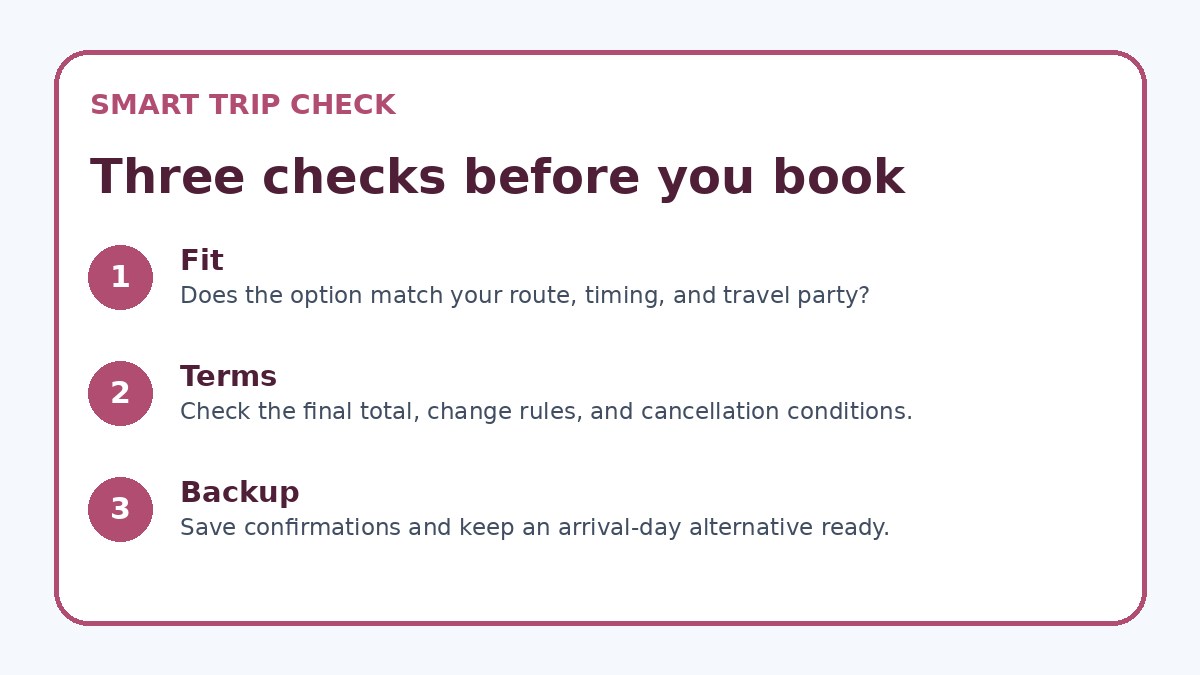
When an alert arrives, follow a short checklist before booking: verify meeting dates, confirm corporate travel approval, check the full fare or hotel rules on the provider’s final booking page, and estimate change fees versus potential savings. Important details—refundability, penalties for changes, whether the fare is changeable to another traveler, and loyalty program earnability—are often only visible on the provider’s checkout page. Don’t rely on the alert summary alone; treat the alert as an invitation to compare final terms.
If the alert meets your thresholds, pause to calculate the total cost of a potential change. For flights, compare the lowest acceptable fare with slightly higher flexible fares and weigh the value of being able to change arrival times. For hotels, compare refundable rates to nonrefundable discounts and include the cost of cancelling last-minute if meetings shift. If the math favors booking, document the reasoning for your corporate records before completing the purchase to justify the decision if plans change.
Before you book
- Confirm meeting dates, times, and required arrival buffer before creating any price alerts.
- Set a clear monetary or percentage threshold that triggers review, not immediate booking.
- Include fare class, refundable status, and maximum layover time in your alert filters.
- When an alert fires, open the provider’s final booking page and copy the cancellation and change terms.
- Log the alert details and your booking rationale in a brief note for corporate expense justification.
- If unsure, place refundable holds or buy a flexible fare first, then lock hotels and ground transport.
Practical booking strategies for business travelers
Use a layered booking approach: secure the element that is most critical first (often the flight) with either a flexible fare or a holdable option, then lock hotels and ground transport. Some providers and corporate travel tools allow holds or provisional reservations—if your employer permits, a short hold reduces the impulse to buy when an alert appears. If holds aren’t available, aim for refundable or changeable fares within your company’s cost limits.
Also consider secondary protections: travel insurance that covers business interruptions, company travel policies that allow fees for changes, and loyalty program benefits that can offset inconveniences like seat selection or lounge access. Keep a simple decision log for bookings made from alerts—date, alert detail, and why you booked—so you can review the process after travel and refine thresholds. This record helps you and your company maintain accountability without making every alert an emergency.
Frequently asked questions
How do I prevent alerts from causing me to overbook or break corporate policy?
Control alerts at the source: limit searches to employer-approved routes and dates, and set thresholds that reflect your company’s reimbursement limits and change rules. Use naming conventions that remind you of policy constraints, and funnel alerts to a single device or email to prevent distraction. Before booking, route approvals through your corporate travel coordinator if required. Finally, maintain a simple decision log so any booking can be justified with dates, alert details, and the policy rationale.
Should I prefer refundable fares or just wait for cheaper nonrefundable alerts?
Prefer refundable fares when your meeting dates are not locked or when change fees would outweigh potential savings. For fixed, confirmed meetings, a carefully chosen nonrefundable fare can be acceptable if it matches your schedule and corporate rules. When an alert shows a cheaper nonrefundable option, compare its total risk-adjusted cost—possible change fees, rebooking time, and the chance of plan shifts—against a slightly higher flexible fare. Always verify the fare rules on the final booking page before committing.
Can I rely on price-alert services to find all available Seoul travel deals?
Price-alert services are useful but not exhaustive. They typically monitor a set of routes, providers, and rate types; some negotiated corporate rates, flash cancellations, or special corporate-only fares may not appear. Use a short list of trusted tools and compare the provider checkout pages to confirm rules and availability. If needed, check your company’s travel portal and consider Trip.com as an additional place to compare current availability, then verify all terms on the supplier’s final booking page.
Final planning note
Price alerts can be a powerful tool for business travel to Seoul if you treat them as structured signals rather than commands. Define non-price constraints first, set clear thresholds, and limit the number and scope of alerts to avoid distraction. When an alert arrives, always verify fare and hotel rules on the provider’s booking page, check corporate approval, and document your decision. Over time you’ll refine thresholds that match your company’s tolerance for change fees and your personal scheduling needs, so alerts save money without creating avoidable hassle.
Continue planning
Check current options and final conditions
Use the provider page to confirm live availability, the final total, cancellation terms, and every condition that matters to your trip.
This evergreen planning guide was created with AI-assisted drafting and a structured quality review. It does not display live prices, schedules, availability, visa guidance, or provider rankings. Verify current details before booking. Some links are affiliate links; we may earn a commission at no additional cost to you.