If you’re traveling solo between Hanoi and Da Nang, the most useful question is not simply which carrier is cheapest but which ticket gives you the right flexibility for your plans. Do you need a fully refundable option because your itinerary is uncertain? Are you comfortable paying a small fee to change dates, or would you rather lock in a lower fare that can’t be altered? This article lays out a practical way to compare ticket flexibility across transport modes—train, plane, and bus—so you make an informed booking. I’ll start with the bottom-line recommendation for common solo-traveler scenarios, then explain the tradeoffs and the exact booking details you should verify on a provider’s final page before you pay.
Choosing flexibility based on your solo travel style
Start by matching ticket flexibility to how fixed your schedule is. If you have a hard arrival or departure time, buying a moderate-flex fare that offers free date changes or minimal change fees gives peace of mind without the high cost of fully refundable tickets. If you’re open to adjusting plans or expect to stop along the way, a lower-cost restricted fare might be fine. Think about variables that matter most to you—work commitments, weather risk, or connecting onward travel—and choose flexibility where it reduces the biggest potential disruption.
Also weigh the value of optional extras that often come with flexible fares: reserved seating, baggage allowances, and the ability to switch to an earlier or later service on short notice. For solo travelers who prefer fewer logistics to manage, those extras can be worth the premium. Conversely, if you relish improvisation and can handle standing in a queue to change a reservation, a basic fare can free up budget for activities in Da Nang instead of ticket insurance.
Comparing trains, planes, and buses for flexibility
Trains between Hanoi and Da Nang often offer multiple classes and a mix of strictly non-changeable tickets and more flexible cabin categories. Railway bookings may allow exchanges through station counters or online portals with set fees; however, the specifics—how long before departure you can change, whether you can switch classes, and whether penalties vary by route—are all provider-dependent. If you prefer a scenic daytime or overnight journey and want the option to change dates without fuss, look for rail fares that explicitly state change and refund windows before purchase.
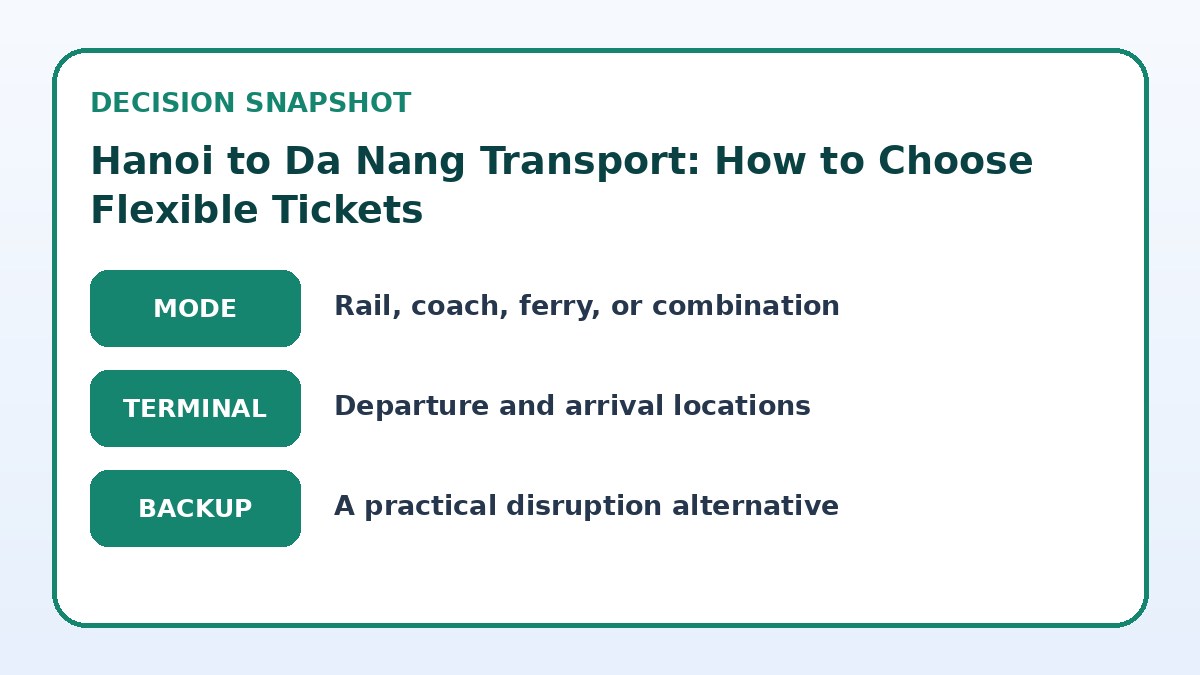
Flights usually have clearer fare tiers labeled by whether they allow changes and refunds and under what conditions. Low-cost carriers may sell the cheapest seats with no free changes, while higher-tier fares permit one or two free alterations or offer credit vouchers. Buses can be the most variable: some operators sell flexible tickets or allow free rebooking at a station, while smaller companies may have very strict, non-refundable policies. For each mode, verify the provider’s final booking terms about how to request changes and whether there are administrative fees or fare differences to pay.
| Approach | Best for | Tradeoff to check |
|---|---|---|
| Flexible fare with free changes within a window | Solo travelers with uncertain plans or time-sensitive connections | Higher upfront cost but simple rebooking and lower stress if plans shift |
| Restricted non-changeable fare | Budget-focused solo travellers confident in fixed plans | Lowest price but no refunds and cumbersome changes if needed |
| Semi-flex fare (free changes with fare difference) | Travelers who may move dates but accept paying any fare gap | Cheaper than fully flexible, but possible extra cost if demand raises prices |
| Ticket with third-party insurance or add-on protection | Those who want flexibility without buying top-tier fares | Adds complexity—check exclusions and the claim process before relying on it |
What to verify on the final booking page
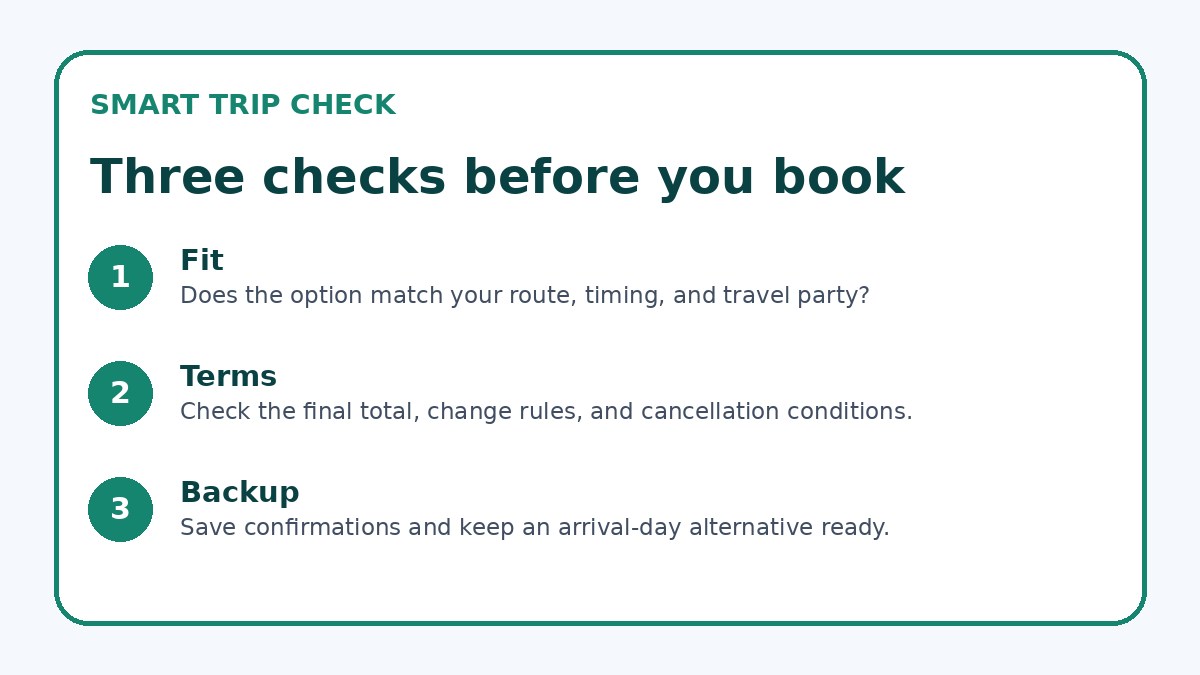
Always read the provider’s full fare rules on the booking page before completing payment. Look specifically for the change window (how close to departure you can still alter the ticket), whether changes are free or chargeable, whether refunds are possible and how they are processed, and who covers fare differences when switching to a more expensive service. For online purchases, confirm whether changes can be made in the same booking interface or require phone or in-person assistance at a station or office.
Also check practical details tied to flexibility: whether the fare includes a reserved seat and if seat changes are allowed, how baggage allowances are handled when changing classes, and whether a voucher or credit is issued for cancellations instead of a cash refund. If the booking process offers seat maps, cancellation insurance, or add-on protections, examine the exact terms. If anything is unclear, use the provider’s contact channel and save screenshots of the stated policy before you pay.
Before you book
- Before paying, open the full fare rules and copy the change and cancellation section into a note or screenshot.
- Confirm whether changes can be made online, by phone, or only at a ticket office and note any required documents.
- Check if reserved seating or berth options are included with flexible fares and how seat assignments change after rebooking.
- If using a third-party site, verify the provider’s policy on the final booking page and compare it to the reseller’s terms.
- Decide in advance the maximum you’ll pay for flexibility and use that threshold to choose between fare classes.
- If buying add-on protection, read the exclusions and sample claim process so you know what qualifies for refund or rebooking.
Decision criteria and tradeoffs for solo travelers
Prioritize one or two decision criteria: strict schedule adherence, cost sensitivity, or ease of change. If arriving at a specific hour in Da Nang for an event matters most, accept a higher-cost flexible fare. If cost is the priority and your dates are loose, accept a restrictive ticket but plan a contingency. Consider how much time and stress you want to spend managing changes—if minimal, favor tickets with simple online change processes even if the fare is a bit higher.
Remember tradeoffs: higher flexibility typically costs more, and very cheap fares often come with awkward change or cancellation processes that can eat time during travel. Some flexible tickets will still require you to pay the fare difference when switching to a pricier service, which can negate perceived savings. Weigh the expected probability of needing a change against the incremental cost of flexibility and choose the option that gives you the best expected utility as a solo traveler.
Frequently asked questions
Should I buy the most flexible train ticket for peace of mind?
That depends on how likely your plans are to change and how much you value convenience. A most-flexible train ticket reduces stress by allowing easy date changes and refunds, which is helpful if your schedule is uncertain or if you have tight onward connections. However, flexible tickets cost more. If you have a fixed itinerary or a tight budget, a less flexible fare plus a back-up plan (such as knowing later trains or flight options) may be preferable. Always check the train operator’s exact change window and fee details on the booking page before deciding.
Can I rely on a cheaper flight or bus ticket and just rebook if plans change?
This approach can work but carries risks. Cheaper tickets often come with strict non-changeable terms, so if you need to rebook you may face a full forfeiture of the fare and must buy a new ticket at current rates. Rebooking can also be time-consuming—some operators require in-person changes. If you’re comfortable with that risk and have flexibility in your itinerary, it may be acceptable. Otherwise, compare the cost difference between cheap non-changeable fares and semi-flex fares that allow changes with manageable fees.
What exactly should I verify on the provider’s final booking page?
Look for the change and cancellation policy language (deadlines, fees, refund method), whether changes can be made online, how seat reservations are handled after changes, and whether refunds are cash, credit, or voucher. Also check baggage rules, any service fees for processing changes, and whether special circumstances (illness, official travel restrictions) are covered. If the booking page links to a full fare rules PDF or terms and conditions, open it and save a copy for reference in case you need to dispute a charge or process a refund.
Final planning note
For solo travelers on the Hanoi to Da Nang route, thoughtful comparison of ticket flexibility usually beats picking the cheapest fare by default. Decide first how likely your plans are to change, and prioritize clear change and refund rules, easy online rebooking, and included seat or baggage privileges if those reduce your travel stress. Use the decision criteria and checklist above to compare options side by side, and always verify the provider’s full fare rules on the final booking page before paying. If you want a quick snapshot of current availability and to compare booking conditions, you can look on travel sites such as Trip.com—but confirm the operator’s terms on the operator’s own confirmation page before relying on them.
Continue planning
Check current options and final conditions
Use the provider page to confirm live availability, the final total, cancellation terms, and every condition that matters to your trip.
This evergreen planning guide was created with AI-assisted drafting and a structured quality review. It does not display live prices, schedules, availability, visa guidance, or provider rankings. Verify current details before booking. Some links are affiliate links; we may earn a commission at no additional cost to you.