For families deciding between flexible schedules and quicker, simpler journeys, the core question on Seoul to Bali flights is where you want to trade time for certainty. If you prize predictable arrival times, shorter ground transfers, and fewer changes with children, prioritize convenient routings, earlier connections, and reliable transfer options. If your schedule can bend for lower fares, fewer restrictions, or more flight choices, prioritize flexibility: open date policies, multi-day layovers, or separate tickets that let you rebuild the trip if plans change. This guide explains the tradeoffs families face—flight length versus total door-to-door time, change risk versus cost, and seat/meal policies versus family comfort—so you can pick an approach that fits your kids’ ages, travel nerves, and on-trip plans. Verify all flight connection times, baggage rules, and seat assignments on the carrier’s final booking page before you commit.
How to frame the choice: flexibility versus convenience
Start by clarifying what 'flexibility' and 'convenience' mean for your household. Flexibility often means being willing to accept later flights, longer or more variable layovers, separate tickets, or flexible-ticket fares that allow changes with lower penalties. Convenience focuses on minimizing the number of itinerary parts: fewer connections, shorter transfer times, and smoother airport-to-hotel logistics. Both approaches have emotional and practical costs: flexible itineraries can save money or open more timing options, but they may add unpredictability—especially stressful with children who prefer routine and direct routes.
Set family priorities before comparing options. Consider the ages of your children, how they handle long waits, and medical or schedule constraints such as school or events. If a parent needs to return quickly or infants require consistent nap schedules, lean toward convenience. If your trip dates are adjustable and you want to test more carrier options or lower change fees, lean toward flexibility. Making that decision up front keeps searches focused and makes tradeoffs visible—so you won’t be surprised by a long overnight layover or a complicated cross-airline transfer at a busy airport.
Comparing itinerary elements that matter for families
When comparing Seoul to Bali flights, treat the itinerary as several linked parts: the flight segments, the airport transfer time at each end, and the potential for disruption. Don’t just compare scheduled block time; add in recommended minimum connection time, likely immigration and baggage waits, and travel time from the arrival airport to your Bali accommodation. For families, arriving later in the evening or with a long transfer can turn a short flight into a gruelling day. If a route requires an overnight connection, weigh whether that implies a hotel stay vs. staying in the airport, and the added cost and logistics of a night with kids.
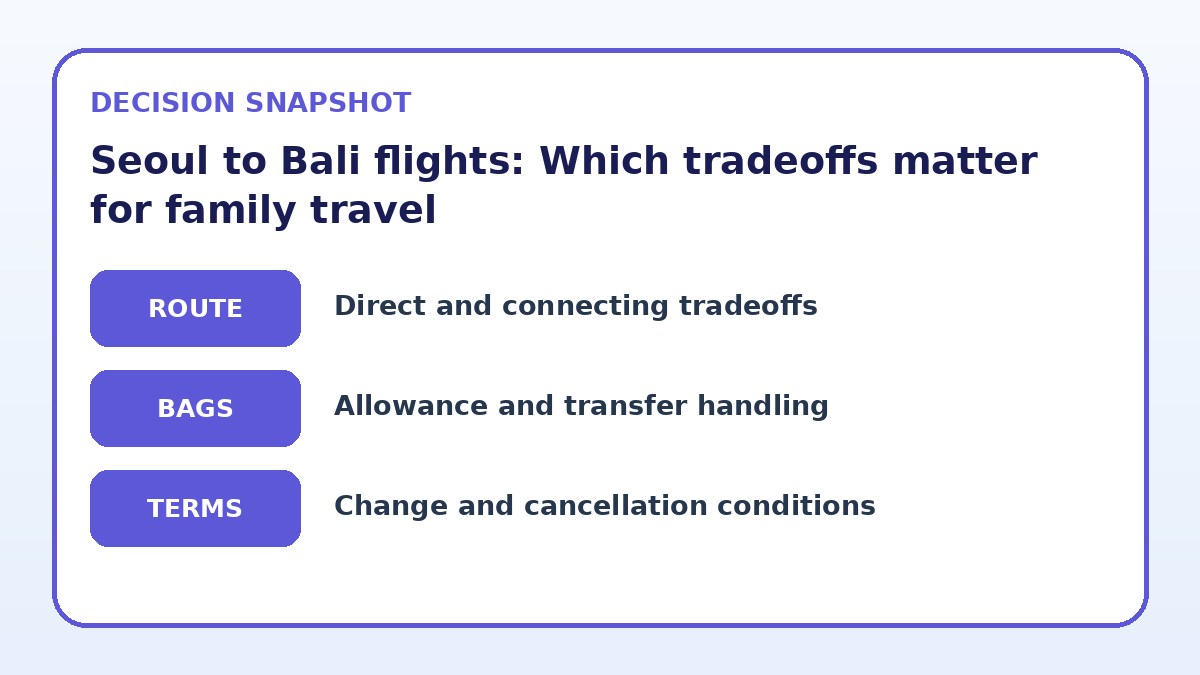
Pay special attention to baggage and seating rules. Basic fares can look appealing until you add fees for checked bags, seat selection, or infant fares. For families, guaranteed adjacent seats and a checked stroller or car seat often matter more than a slight fare difference. Also confirm what happens to checked luggage on connections—does the carrier transfer bags automatically, or will you need to collect and recheck them? Verify these operational details on the carrier’s or booking platform’s final page before purchase, because policies and terminal layouts can change.
| Approach | Best for | Tradeoff to check |
|---|---|---|
| Prioritize convenience (fewer connections, shorter transfers) | Families with very young children, tight schedules, or low tolerance for disruption | Usually higher fares and fewer date/price choices; less room to adjust plans without fees |
| Prioritize flexibility (open dates, separate tickets, longer layovers) | Families who can shift travel dates and want more carrier or timing options | Higher risk of missed connections, baggage recheck needs, and unpredictable total travel time |
| Balance with one-stop single-ticket itineraries | Families seeking a middle ground between cost savings and protection for connections | May still require a long transit at a hub and can have limited seat selection on bundled fares |
| Pay extra for confirmed adjacent seats and baggage-included fares | Families who value comfort and want to avoid on-the-day seat changes or surprise luggage fees | Increases upfront cost but reduces friction and packing/seat stress at the airport |
Practical search and booking tips for family trips
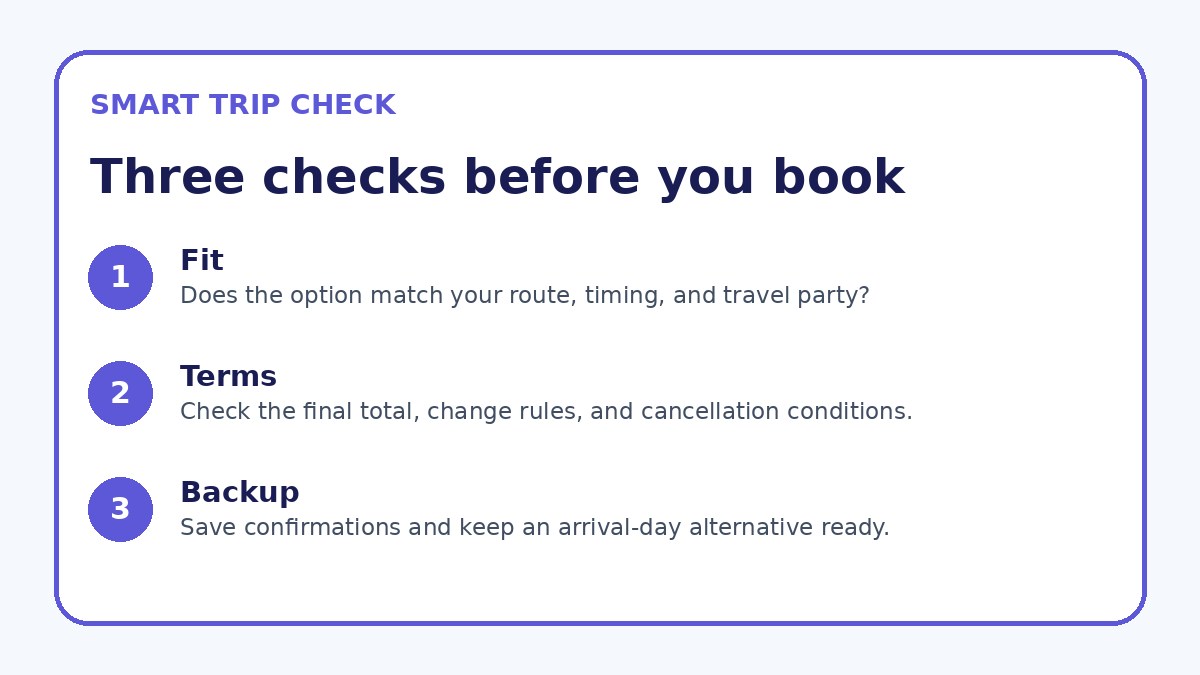
Search itineraries using a few filters: total door-to-door time, number of connections, and refundable or flexible fare options. Consider using fare calendars to spot days with more direct or convenient routings. If pricing is a key concern, compare flexible-ticket fares that include free changes versus cheaper non-refundable fares plus travel insurance; sometimes a slightly higher fare with low change fees offers better family peace of mind. When routes involve connecting in another country, check visa or transit rules for your passport so you aren’t surprised during a tight transfer.
Use the carrier’s site to confirm seat maps and baggage policies before finalizing. If you book separate tickets (for example, one airline for Seoul to a hub, another for the hub to Bali), add ample buffer between flights and understand how missed connections are handled—typically each carrier treats their ticket independently. If you prefer one-stop simplicity, look for single-ticket itineraries that hold all segments together; they usually protect you through missed connections but can limit flexibility. Trip.com can be useful as a comparison tool for current availability, though always verify conditions on the airline’s booking page.
Before you book
- Decide whether door-to-door travel time or flexible dates matter more for your family and write that priority at the top of your planning notes.
- Compare total travel time (flight segments + transfers + likely immigration and baggage wait) across candidate itineraries.
- Confirm baggage allowances, stroller/car-seat policies, and whether checked luggage transfers automatically for each itinerary on the airline’s final booking page.
- Verify seat availability and book adjacent seats or bulkhead rows when possible to secure easier access and space for children.
- Allow generous minimum connection times if you book separate tickets or plan to clear immigration and recheck luggage.
- Pre-book a reliable airport transfer on arrival in Bali or confirm pickup with your accommodation to minimize late-night transfers with children.
On-trip strategies to keep kids comfortable and reduce stress
Plan for airport time as part of the travel day and bring calming activities and comfort items for kids. Choose departure times that align with natural sleep windows where possible—an early morning flight may avoid a restless evening, while a short afternoon flight might follow a nap. For longer layovers, identify family-friendly lounges or rest areas in advance and plan simple meals. If you might face unexpected overnight waits, pack a small emergency sleep kit with a light blanket, toothbrushes, and change of clothes for each child.
Have contingency plans for delays or rebookings: know your preferred rebooking priorities (same-day arrival, minimal connections, or preferred airline), and keep digital and printed copies of tickets and important contacts. If traveling with infants, confirm availability of bassinets on long segments and bring your own harness-style child restraint if you want to use it on the aircraft. Remember that ground transfers in Bali can vary widely by arrival airport and hotel location, so pre-book or confirm a reliable transfer service if minimizing travel time from the airport to your accommodation is essential.
Frequently asked questions
Should families always choose direct flights from Seoul to Bali if available?
Direct flights reduce the number of moving parts—no connecting gates, fewer security passes, and usually simpler baggage handling—which can be especially helpful with restless kids. However, direct options may depart at inconvenient times, cost more, or have limited seat availability for adjacent seats. Families should weigh the time saved against price and schedule fit. If the direct option is much later or creates tight overnight hotel needs on either end, a one-stop itinerary with a sensible connection time might still be the better practical choice.
How much transfer time should we allow when connecting through a hub with children?
Plan more buffer than you would when traveling alone. Allow at least the airline’s published minimum connection time plus an extra 60–90 minutes to account for restroom breaks, stroller gate-checking, and unexpected lines. If you must clear immigration and baggage, add extra time accordingly—transfers that require leaving and reentering security are particularly slow. When possible, aim for connections that leave several hours’ margin or consider overnighting at the hub rather than risking a tight same-day turn with kids.
Is it safe to book separate tickets for different legs of a Seoul–Bali trip?
Booking separate tickets can increase options and sometimes lower cost, but it shifts risk to you: missed connections typically aren’t covered, and you may need to collect and recheck luggage or obtain transit visas. For families, the added complexity can be stressful during disruption. If you choose separate tickets, build long connection buffers, insure the trip appropriately, and understand rebooking policies. Alternatively, single-ticket itineraries usually offer protection across segments, though they may be less flexible for date changes.
Final planning note
Choosing between schedule flexibility and convenience for Seoul to Bali flights is about honest tradeoffs: convenience buys predictability and fewer moving parts, while flexibility opens timing and fare options but asks you to manage more uncertainty. For families, the deciding factors are often non-negotiable comforts—adjacent seats, manageable door-to-door time, and predictable baggage handling—so start there and let cost or additional flexibility refine your choices. Always verify baggage rules, connection handling, and seat maps on the airline’s final booking page before paying. If you need a quick comparison of current availability, Trip.com can help show options, but use the airline page to confirm operational details.
Continue planning
Check current options and final conditions
Use the provider page to confirm live availability, the final total, cancellation terms, and every condition that matters to your trip.
This evergreen planning guide was created with AI-assisted drafting and a structured quality review. It does not display live prices, schedules, availability, visa guidance, or provider rankings. Verify current details before booking. Some links are affiliate links; we may earn a commission at no additional cost to you.