If you’re traveling solo from Bangkok to Chiang Mai, your main decision is not just how to get there but how much flexibility you want. Flexible tickets let you change plans, swap departure times, or cancel with varying penalties; fixed tickets lock you into a specific train, bus, or flight but are often simpler and sometimes cheaper. Start by deciding how likely your plans will change: tight schedules, uncertain connections, or multi-day plans usually benefit from more flexibility. If you have a fixed itinerary with limited wiggle room, a fixed ticket can reduce hassle. This article walks through the tradeoffs for trains, overnight options, daytime buses, and flights, explains what to check on the final booking page, and gives solo-traveler tips for weighing convenience versus cost and peace of mind.
How to judge flexibility needs for Bangkok–Chiang Mai
Assessing your flexibility need starts with your itinerary context. If you’re traveling with fixed onward plans—such as a tour start date, a flight out of Chiang Mai, or a timed connection—you’ll likely prefer refundable or changeable tickets even if they cost more. Solo travelers who are backpacking with open plans, staying several days in Chiang Mai, or who prioritize spontaneity can often accept fixed tickets to save time and reduce booking complexity. Also consider local factors that might disrupt schedules: festivals, seasonal travel surges, or weather risks may increase the value of flexibility.
Think about personal tolerance for uncertainty and the effort you’ll expend to manage changes. If you prefer resolving issues yourself and can negotiate at stations, a fixed or nonrefundable booking might be fine. If you’d rather avoid customer-service interactions or need formal protections—like a written refund policy—choose a ticket with explicit change and cancellation terms. For solo travelers, the cost of peace of mind includes time saved and reduced stress, so quantify how much you’d pay to avoid last-minute hassles before picking a ticket type.
Comparing trains, buses, and flights on flexibility
Trains between Bangkok and Chiang Mai are a common choice; many run overnight and offer reserved berths or seats. Flexible train tickets typically allow date or train changes with a fee and sometimes partial refunds. Fixed train tickets may be cheaper or easier to buy at the station but can be restrictive if you miss the train or need to leave earlier. When comparing options, check whether reservations guarantee a specific berth or only a class of service, and whether the provider allows same-day exchanges—these details matter more for solo travelers carrying most of their own logistics responsibility.
Buses and flights have different flexibility patterns. Buses often sell fixed seats with limited formal refundability, though local operators sometimes permit changes at the terminal for a fee. Flights commonly offer tiered fares: more flexible tickets allow changes or refunds, while basic fares give little leeway. For solo travelers, the tradeoff is straightforward: flights give speed and fewer roadside uncertainties but can be restrictive at low-fare levels, while buses let you travel cheaply with more last-minute in-person negotiation possibilities—if you’re comfortable handling those at terminals.
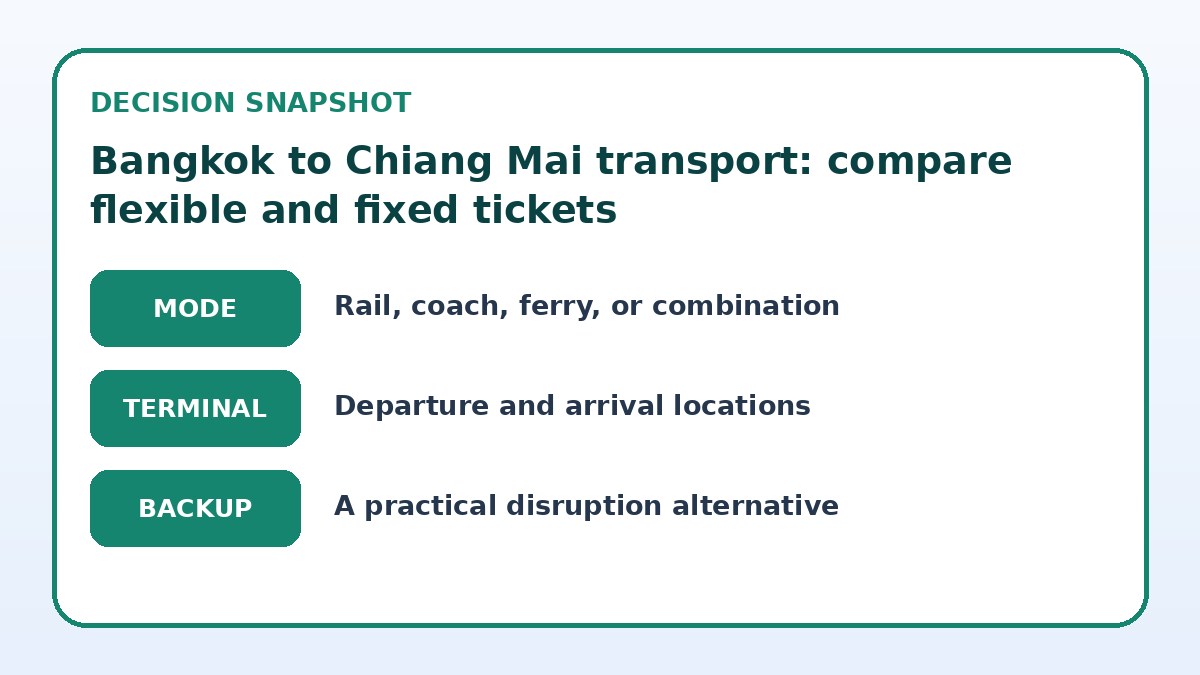
| Approach | Best for | Tradeoff to check |
|---|---|---|
| Buy a fully flexible ticket | Solo travelers with fixed onward commitments or high schedule uncertainty | Higher upfront cost but easier changes and fewer station hassles |
| Buy a restricted/fixed ticket | Those with firm plans who prioritize simplicity and lower booking time | Lower price or convenience initially, little recourse if plans change |
| Mix flexible and fixed bookings | Solo travelers balancing budget with critical timed connections | Requires more planning and tracking multiple tickets and policies |
| Buy fixed locally at station or terminal | Experienced travelers comfortable negotiating and seeking last-minute seats | Uncertain availability and potentially limited formal refund or recourse |
What to verify on the final booking page
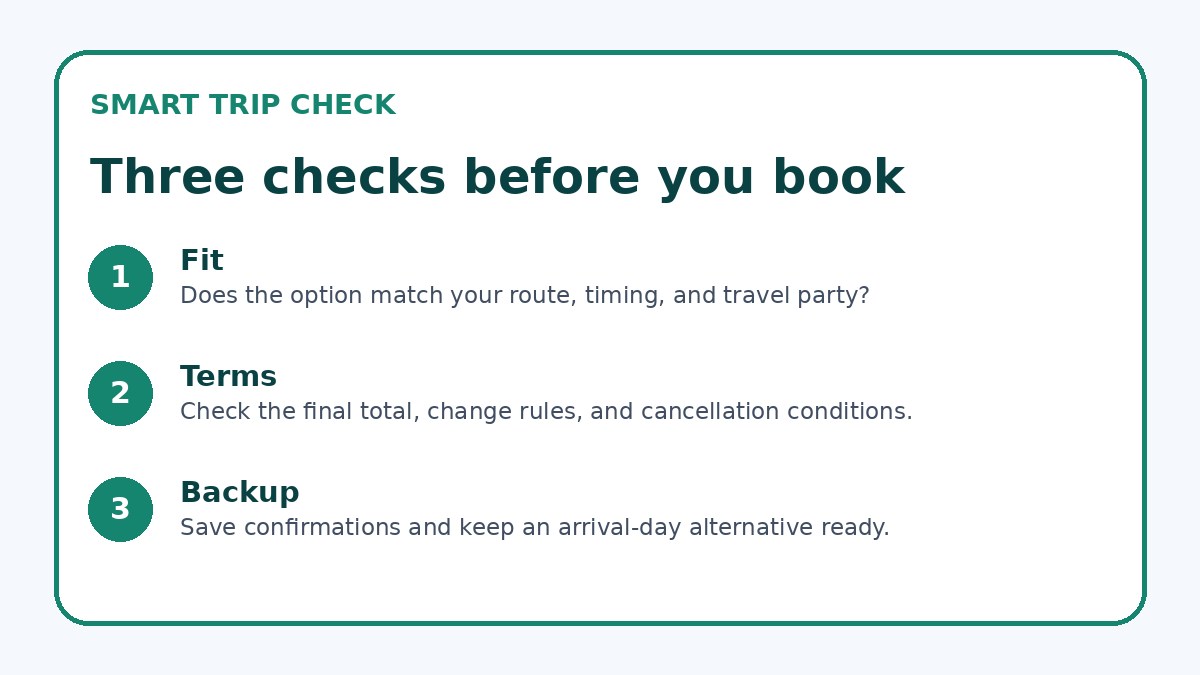
Never finalize a booking without checking the provider’s change and cancellation policy printed on the purchase page. Look for exact fees, the time window for free changes (if any), and the process: is it online, by phone, or must you visit a ticket office? Confirm whether the ticket name can be corrected or transferred, which matters if your passport name differs slightly from your booking. For overnight trains or reserved berths, verify whether a specific berth number is issued and what happens if you miss the departure; some tickets may be exchangeable on the day, others become void.
Check baggage rules, boarding requirements, and identification required at check-in or boarding. For flights, note the allowed check-in time and whether online check-in is available; for buses and trains, see when to arrive to claim reserved seats. If the option to rebook is limited, check whether there is a contact or local office in Thailand that handles changes in English. Finally, confirm refund timelines and whether refunds return to the original payment method—providers differ in how long processing takes and whether they deduct administrative fees.
Before you book
- Decide your acceptable level of schedule risk and how much extra you’ll pay to avoid it.
- Compare change and cancellation fees on the provider’s final booking page before paying.
- Confirm whether the ticket specifies a berth/seat number or only a travel class.
- Save booking confirmations, policy screenshots, and local provider contact details on your phone.
- Plan arrival times at the station or airport to allow rebooking if something goes wrong.
- If unsure, buy flexibility for the most time-sensitive leg and fixed tickets elsewhere.
Solo-traveler tradeoffs and practical tips
Solo travelers should weigh flexibility against the friction of managing changes alone. A flexible ticket can save a stressful night spent negotiating a new seat or explaining a missed connection. However, flexible fares sometimes come with higher upfront cost or stricter booking channels. If budget is tight and you’re willing to handle on-the-spot rebooking, a fixed ticket supplemented by travel insurance or a contingency plan might be appropriate. Consider using a mix: book a key leg flexibly (like a timed connection) and the rest on fixed tickets.
Practical steps reduce risk: arrive early for departures, take photos of ticket confirmations and e-receipts, and save native-language copies of booking policies. If you anticipate changing plans often, select providers with clear English support or accessible ticket offices in major hubs. For overnight options, secure a berth when possible and note communal-security norms—keeping valuables close and using a small lock. Finally, consider Trip.com as one place to compare current availability and conditions but verify all critical policy details on the provider’s official booking page before paying.
Frequently asked questions
Can I change a train ticket for Bangkok to Chiang Mai on the travel day?
It depends on the ticket terms and the operator. Some train tickets allow same-day exchanges at the station ticket office with a fee, while others are non-changeable. If a change is allowed, policies vary on whether you keep your seat class, get a new berth, or pay a fare difference. Always check the provider’s final booking page or the ticket office staff before relying on same-day exchange, and arrive early to handle paperwork in person if needed.
Is it safer for a solo traveler to pick a flexible flight over a fixed bus or train ticket?
Safety and flexibility are separate considerations. Flexible flights reduce schedule stress and the need to negotiate changes, which can feel safer for solo travelers handling issues alone. However, trains and buses may offer comfort or direct overnight options that fit your travel style. Evaluate what matters most—speed, cost, or the ability to change plans easily—and verify the provider’s change/cancel rules. Also consider local support availability and whether you can manage terminal-level changes if you choose a fixed land ticket.
Will travel insurance cover costs if I need to change my Bangkok–Chiang Mai ticket?
Travel insurance policies vary widely: some cover cancellations for covered reasons like medical emergencies, while routine changes due to personal preference usually aren’t covered. Check your policy for specifics on cancellations, change fees, and missed connections. If your travel is time-sensitive, a flexible fare plus insurance that covers emergencies can provide layered protection. Always read the insurance policy wording carefully and confirm whether it requires documentary evidence from providers to process a claim.
Final planning note
Choosing ticket flexibility for Bangkok to Chiang Mai transport comes down to how fixed your plans are and how much effort you’re willing to spend managing changes. Solo travelers who need certainty for onward commitments should favor flexible fares despite the higher cost. Those with open schedules or confidence in handling in-person changes can use fixed tickets to save money and simplify the purchase process. Whatever you choose, verify change and refund rules on the provider’s final booking page, keep all confirmations handy, and consider mixing flexible and fixed tickets to protect the most important leg of your journey.
Continue planning
Check current options and final conditions
Use the provider page to confirm live availability, the final total, cancellation terms, and every condition that matters to your trip.
This evergreen planning guide was created with AI-assisted drafting and a structured quality review. It does not display live prices, schedules, availability, visa guidance, or provider rankings. Verify current details before booking. Some links are affiliate links; we may earn a commission at no additional cost to you.