If you’re travelling from Taipei to Kaohsiung with kids, the single most useful thing to decide before booking is how much ticket flexibility you need. That means thinking beyond fastest trains or cheapest seats and focusing on change and cancellation allowances, seat reservations that keep children together, and rules that affect refunds when plans shift. Families often value the option to change times without big penalties, and the ability to reserve adjacent seats or a family-friendly carriage. Start by listing how likely your schedule is to change, how long you want to be flexible, and whether you want guaranteed seats. Use those criteria to compare ticket types from express rail, high-speed rail, and intercity buses. When you look at any provider’s booking page, verify the exact change and refund rules, any seat reservation policies, and whether child fares or family discounts apply.
Understand the ticket flexibility tradeoffs
Ticket flexibility usually sits on a spectrum from fully changeable, partially changeable, to non-refundable. Fully changeable fares allow date and time adjustments with minimal fees; partially changeable tickets permit limited changes or charges; non-refundable tickets give the lowest upfront cost but little to no refund. For families, a small extra fee for a flexible ticket can be worth the peace of mind when illness, sudden plans, or delayed morning routines are possibilities. Assess how likely you are to change travel times and weigh that against the fare difference to decide whether the added flexibility is cost-effective.
When comparing providers, read the fine print on what constitutes a permitted change. Some tickets allow time shifts on the same day only, others permit date changes within a fixed window, and some require paying a fare difference in addition to a change fee. Also note deadlines for free cancellations or changes—some providers give a full refund up to a certain hour before departure, while others don’t. Verify whether refunds are returned to the original payment method, as travel credit may be inconvenient if you prefer cash refunds for another trip.
Seat reservations and family seating options
Keeping the family together on a medium- or long-distance journey is often more important than shaving minutes off travel time. Look for ticket types that include or allow advance seat reservations so you can secure adjacent seats or a family area. Some services allocate family spaces or priority seating for parents with small children; others rely on open seating or first-come boarding. When booking, check whether seat selection is free with the fare or costs extra—some cheaper fares block seat choice unless you pay an add-on.
If you are booking separately, coordinate seat numbers to avoid being split up. For infants and toddlers, confirm whether a lap infant is permitted and how that affects seat allocation. Also check baggage and stroller rules: some tickets include generous luggage allowances or stroller check-in while others restrict them. If you need a child seat, booster, or space for a large stroller, contact the operator ahead of booking to understand how those requests are handled and whether they impact ticket type or seat choices.
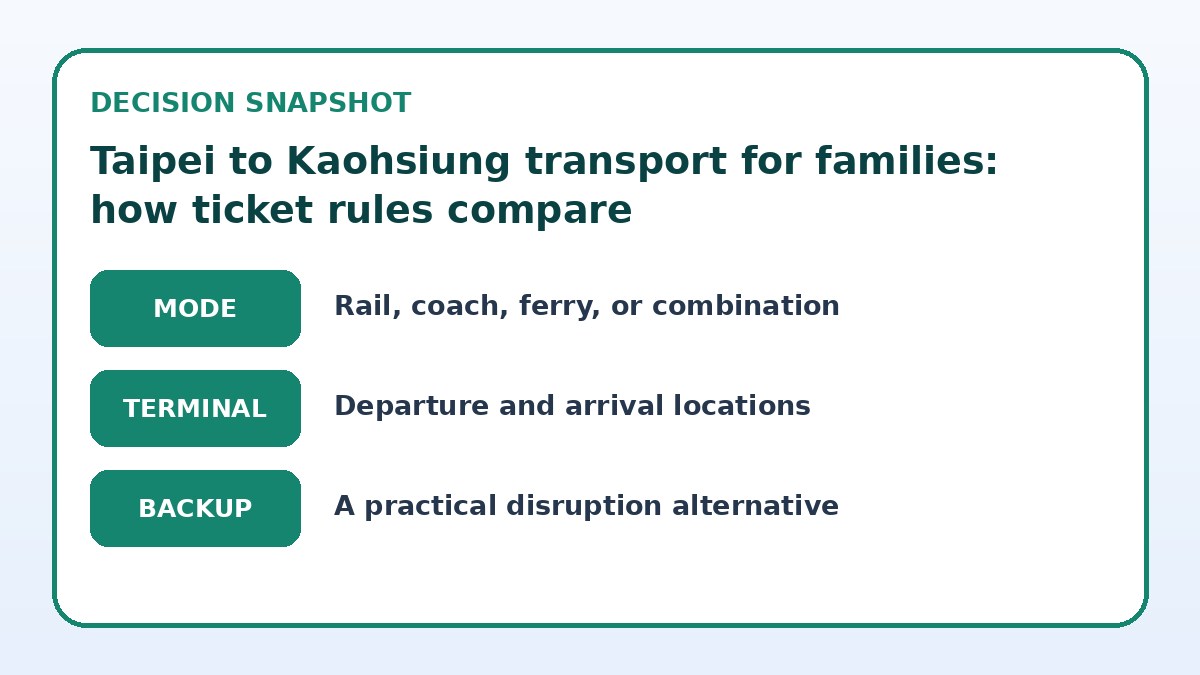
| Approach | Best for | Tradeoff to check |
|---|---|---|
| Flexible refundable ticket | Families with unpredictable schedules or young children prone to sudden changes | Higher upfront cost but low fees for changes or cancellations |
| Partially flexible ticket (limited changes) | Families with semi-fixed plans who want some protection without full cost | Cheaper than refundable options, but penalties or time limits may apply |
| Non-refundable discounted ticket | Families with firm, fixed itineraries who prioritize lower fare | Lowest cost but little or no refund and strict change rules |
| Connecting or multi-leg ticket | Families looking to save or with intermediate stops planned | Potential savings but higher risk of missed connections and separate ticket rules |
Comparing direct versus connecting options
On the Taipei–Kaohsiung corridor you’ll often see both direct and connecting journeys across different transport modes. Direct services simplify logistics for families: you book once, keep your seats, and avoid the stress of transfers. Connecting options—switching trains or combining train and bus—can be cheaper or necessary when direct seats are sold out, but they increase the risk of missed connections and may require separate tickets with different change policies. When comparing options, factor in total door-to-door time, the extra effort of moving luggage and children, and how each provider’s change policy applies when one leg is disrupted.
If you choose a connecting itinerary, check whether a single ticket covers all legs or you must buy separate tickets. A single-ticket itinerary often means the operator is responsible for missed connections and will rebook you under their terms; separate tickets usually place the risk on the traveler. For families, the convenience of a through-ticket often outweighs savings from piecing together separate legs—especially when a missed connection could force you to purchase last-minute seats or wait with tired children.
Before you book
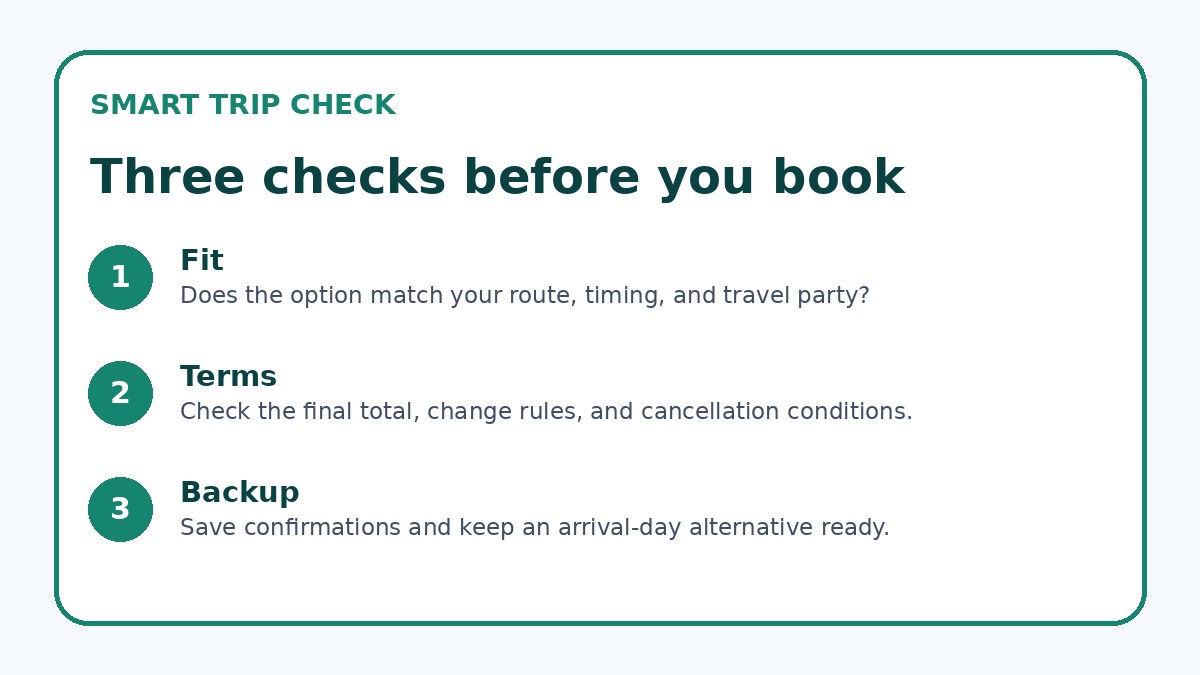
- Decide how likely you are to change travel dates and set a maximum acceptable change fee before comparing fares.
- Verify on the provider’s final booking page whether seat reservations are included or require an extra fee and book adjacent seats.
- Confirm child fare rules, lap infant policies, and whether the provider accepts strollers or car seats without added charges.
- Check change and cancellation deadlines, the method of refund (card refund or travel credit), and any fare-difference conditions.
- If your trip includes a connection, confirm whether a single ticket covers all legs and who is responsible for rebooking missed connections.
- Save booking confirmations, policy screenshots, and provider contact numbers in one accessible place for quick changes or refunds.
How to make the final booking decision
Start by listing what matters most: flexibility to change, guaranteed adjacent seats, lowest upfront cost, or simplest itinerary. Use those priorities to eliminate ticket classes and focus on two or three realistic options. For each option, check the exact change and cancellation rules on the provider’s final booking page: permitted changes, deadlines, fee amounts, refund type, and whether a fare difference applies. If you find conflicting information, contact the operator directly or compare on a booking aggregator like Trip.com to see current availability and policies, but verify details on the operator’s page before payment.
Next, consider contingencies—illness, delayed start, or sudden schedule shifts—and ask whether your chosen ticket will let you rebook without large penalties. If your trip involves tight connections, factor in buffer time and whether the operator offers assistance for missed connections on a single ticket. Finally, keep a record of your booking terms, customer-service contacts, and any confirmation codes to streamline changes. Families who plan one contingency step ahead will travel calmer and handle surprises without scrambling at the station.
Frequently asked questions
Should I buy flexible tickets for a family of four travelling Taipei to Kaohsiung?
Flexible tickets are often wise for families because unpredictable factors like illness, delays, or toddler meltdowns can force schedule changes. If your plans could shift, flexibility reduces stress and the need for last-minute purchases. However, weigh the fare difference: if your itinerary is fixed—hotel bookings and activities tied to specific times—a less flexible fare may be acceptable. Always check the exact change and refund rules on the booking page so you know whether changes are free, require a fee, or involve a fare difference.
How do seat reservations and family seating usually work on trains between Taipei and Kaohsiung?
Many operators allow advance seat reservations so families can sit together; some have designated family or priority seating. Whether seat choice is included depends on the ticket class—premium or flexible fares often include free seat selection, while discounted fares may charge extra. If you need adjacent seats, make reservations at booking; if you can’t reserve online, contact the operator’s customer service for assistance. Verify stroller storage and whether special assistance for boarding with children is available.
If I buy separate tickets for a connecting journey, who bears the risk of a missed connection?
When you buy separate tickets for each leg, the risk of missed connections usually falls on you, the traveler. That means delays on the first leg could make you miss the next service, and the second operator may treat you as a no-show. A single through-ticket often transfers responsibility to the operator, who may rebook you under their policies. Before choosing separate tickets, compare the convenience of a through-ticket against potential savings and check how each operator handles disruptions on their final booking pages.
Final planning note
For families travelling Taipei to Kaohsiung, the right ticket depends on how much unpredictability you expect and how much convenience you value. Flexible tickets and fares that include seat reservations offer the calm of being able to change plans without major penalties and the comfort of sitting together. Partially flexible or non-refundable fares can save money for fixed itineraries but carry more risk if plans change. Always read the provider’s booking page to confirm change windows, fees, refund methods, and seat policies before purchase. With those checks done, you’ll choose an option that balances budget and family peace of mind.
Continue planning
Check current options and final conditions
Use the provider page to confirm live availability, the final total, cancellation terms, and every condition that matters to your trip.
This evergreen planning guide was created with AI-assisted drafting and a structured quality review. It does not display live prices, schedules, availability, visa guidance, or provider rankings. Verify current details before booking. Some links are affiliate links; we may earn a commission at no additional cost to you.