For most couples planning Seoul to Gyeongju travel, the most practical option balances comfort, luggage handling, and schedule flexibility. If you want a relaxed trip with easy station access and minimal navigation, taking the intercity train or express rail is usually the simplest choice. If you value door-to-door convenience or want flexible stops en route, driving can be better, especially with two drivers or a confident navigator. Long-distance buses are the budget-minded fallback when train seats are full or when departure times match your itinerary. Before you book, think about how much walking you want at stations, how much luggage you'll have, and whether you want to arrive in central Gyeongju or nearer a specific site. Later sections explain tradeoffs, how to compare direct versus connecting options, and what to verify on provider booking pages so you aren’t surprised at departure or arrival.
Pick by what matters to you: comfort, control, or cost
Couples should start by listing priorities: minimal transfers, low walking between city center and terminal, ability to split driving duties, or strict budget. Comfort covers seat space, ability to move around, and onboard amenities; control covers being able to leave when you want and stop along the way; cost covers both ticket fees and incidental expenses such as station taxi rides or parking. Talk through these with your partner—one person’s tolerance for a longer coach ride might be another’s dealbreaker if it eats into sightseeing time.
Once you know the priority mix, use it to filter options. If comfort and minimal hassle are top, prioritize direct intercity or express trains that serve central stations. If control and flexibility are more important, plan a rental car and map likely parking and refueling points. If saving money is key, look for off-peak bus departures and compare their final drop-off points against where you will stay in Gyeongju to avoid extra city transfers.
Trains: what to verify and how to choose seats
Trains are often the go-to for couples who want a stress-free transfer between city centers. When comparing train options, check whether services are direct or require a transfer; if a transfer is involved, look at minimum connection times and platform changes so you avoid tight connections. Confirm luggage allowances and whether seat reservations are mandatory or optional. If both of you value quiet and personal space, reserve adjacent seats or a small compartment when available, and verify group-seat policies on the operator’s booking page.
Also verify arrival station location relative to your Gyeongju accommodation. Some rail options may stop at stations that require an extra local transfer by taxi or bus. On the booking page, look for details about station names, platform access, and whether station transfers (shuttle, taxi ranks) are commonly available. If you plan to arrive late or very early, check station opening and last-mile transport options so you aren’t left arranging a taxi at an odd hour.
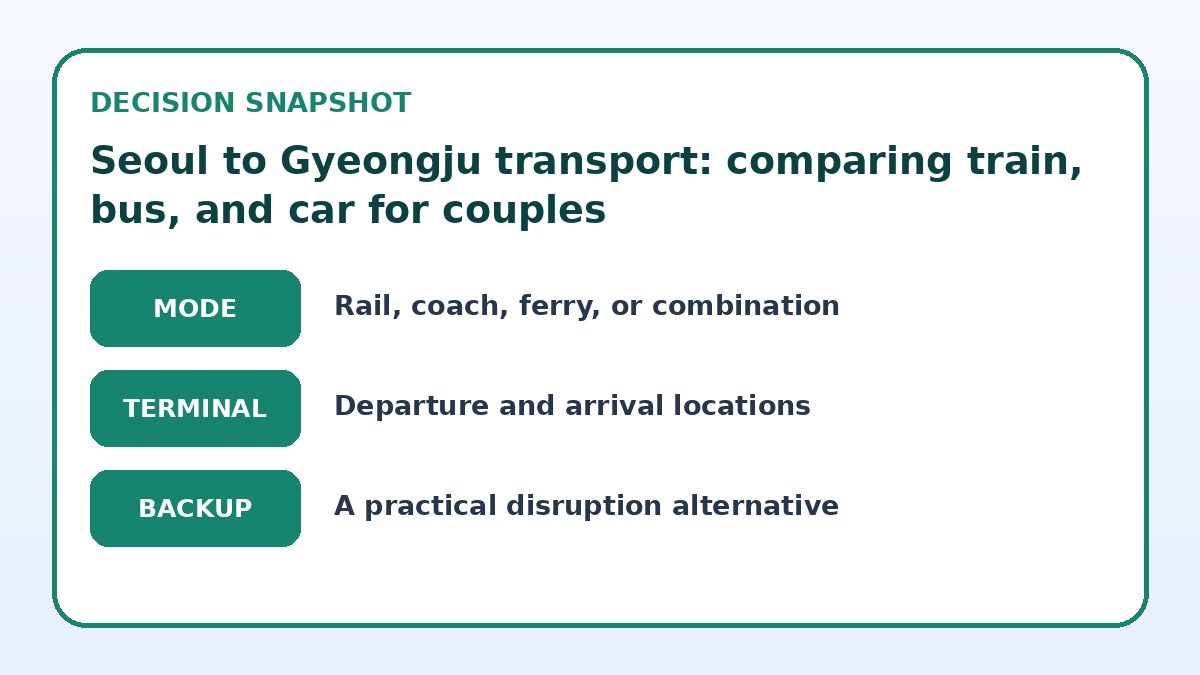
| Approach | Best for | Tradeoff to check |
|---|---|---|
| Direct intercity/express train | Couples seeking minimal transfers and city-center arrival | Less flexible for detours and possibly limited departure times |
| Rental car / driving | Couples wanting full route control and scenic stops | Adds navigation, parking, tolls, and driver responsibility |
| Long-distance bus | Couples prioritizing schedule variety and lower fares | Longer on-road time and possible extra city transfers |
| Mixed approach (train + car for local touring) | Couples who want easy transfer plus flexible day trips | Requires extra planning to sync timings and bookings |
Driving and renting: flexibility with responsibilities
Driving gives couples full control over timing and route, and it’s invaluable if you plan multiple stops around rural temples or coastal viewpoints. Before choosing this option, decide who will drive and check international driving permit requirements if applicable. Research pick-up and drop-off logistics for rental firms in Seoul and drop-off options near Gyeongju; one-way rentals can simplify routing but may carry different terms. Also consider parking availability at your intended Gyeongju accommodation and how comfortable you are navigating local roads.
Be explicit about additional responsibilities: fuel, tolls, local traffic regulations, and the need for a reliable GPS or offline maps. If one of you prefers not to drive, plan realistic driver shifts and rest stops. Compare driving door-to-door time against train and bus options accounting for likely city-center congestion at departure and arrival times; that comparison often changes which option looks most practical for a couple.
Before you book
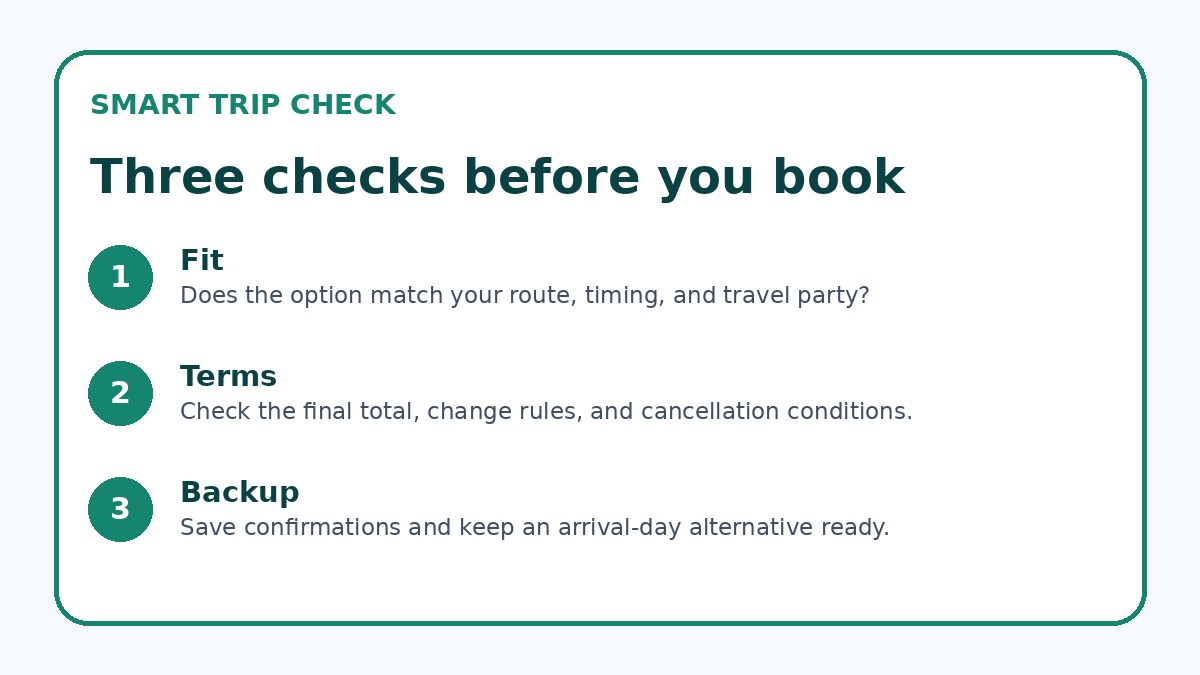
- Confirm exact departure and arrival station names and their distance to your hotel or planned activities in Gyeongju.
- Verify whether seat reservations are required and reserve adjacent seats if you want guaranteed together seating.
- Check luggage rules and size limits on the provider’s booking page to avoid excess-fee surprises.
- If renting a car, confirm one-way drop-off options, insurance coverage, and any driver age or license requirements.
- Plan buffer time for connections, taxis, or hotel check-in—factor in traffic or platform walking times.
- Compare total door-to-door travel time for each option, not only the in-vehicle trip time, before you book.
Buses and mixed options: practical when schedules match
Long-distance coaches can be practical when departure times line up with your schedule or when train seats are unavailable. Buses usually offer multiple daily departures and can drop you near central terminals or specific bus stations in Gyeongju. On the booking page, check whether the bus is direct or makes many stops, the boarding location in Seoul, and the final drop-off address so you’re not surprised by extra transfers at your destination.
For many couples, a mixed plan—train for the outbound and a rented car for day tours—strikes a good balance. If choosing mixed transport, plan buffer time between arrival and any onward bookings (car rentals, tours, or hotel check-in). Always verify cancellation and change policies on booking sites, and consider checking current availability and schedules on aggregator sites such as Trip.com before finalizing so you can compare real-time options in one place.
Frequently asked questions
Is taking the train from Seoul to Gyeongju the fastest option for couples?
Trains are often among the faster and least stressful ways to travel between cities because they avoid traffic unpredictability and deliver you to central stations. Whether they're the fastest depends on the specific service you choose—direct express services may be quicker than slower regional lines, while a well-timed car could beat rail if you avoid peak traffic. Check each operator’s timetable and compare door-to-door times (station pickup plus onward transport) on the provider booking pages before deciding.
Should couples rent a car for touring around Gyeongju after arrival?
Renting a car can be a great choice if you want to visit dispersed attractions on a flexible schedule and don’t mind driving. Think about who will drive, local parking and narrow roads, and whether your chosen accommodation provides parking. If most of your sightseeing is within the historic city center, public transport or taxis may be simpler. Compare nearby parking options and the driving comfort level for both partners before committing to a rental.
How do we compare direct and connecting transport options on booking sites?
First, confirm whether a listed journey is direct or requires a transfer, and note the connection time and station change complexity. Look at total trip duration including expected waiting or transfer times. Verify whether seats are guaranteed through the whole journey or must be rebooked at the connection. Finally, read cancellation and change terms on the booking page so you understand flexibility should your plans shift, and cross-check schedules on an aggregator like Trip.com if you want to view multiple operators side by side.
Final planning note
For most couples, start by choosing the travel quality you value most: low-stress transfers point to trains, maximum flexibility points to driving, and schedule variety or lower fares can make buses attractive. Compare door-to-door time, station or drop-off proximity to your Gyeongju lodgings, and the logistical tasks you’re willing to handle—luggage, parking, or platform changes. Use provider booking pages to confirm seats, luggage rules, and station names before paying, and consider a mixed plan if you want a calm intercity trip plus rental flexibility for local touring. Planning around what reduces friction for both partners will make the journey together more enjoyable than chasing marginal time savings.
Continue planning
Check current options and final conditions
Use the provider page to confirm live availability, the final total, cancellation terms, and every condition that matters to your trip.
This evergreen planning guide was created with AI-assisted drafting and a structured quality review. It does not display live prices, schedules, availability, visa guidance, or provider rankings. Verify current details before booking. Some links are affiliate links; we may earn a commission at no additional cost to you.