If your family is deciding how to fly from Melbourne to Queenstown, start by choosing whether convenience or schedule flexibility matters most. Convenience means fewer connections, easier airport transfers and predictable total travel time — a big plus with small children or grandparents. Flexibility means choice of departure times, broader fares and easier changes when plans shift; that’s helpful for families with variable schedules or multi-leg road trips. Before you book, check layover lengths, total door-to-door time, baggage rules for family items like car seats and strollers, and what change/cancellation terms actually let you rebook. Use the rest of this guide to weigh the tradeoffs, compare typical family priorities, and follow a practical checklist to lock in the right balance for your household.
What convenience means for families
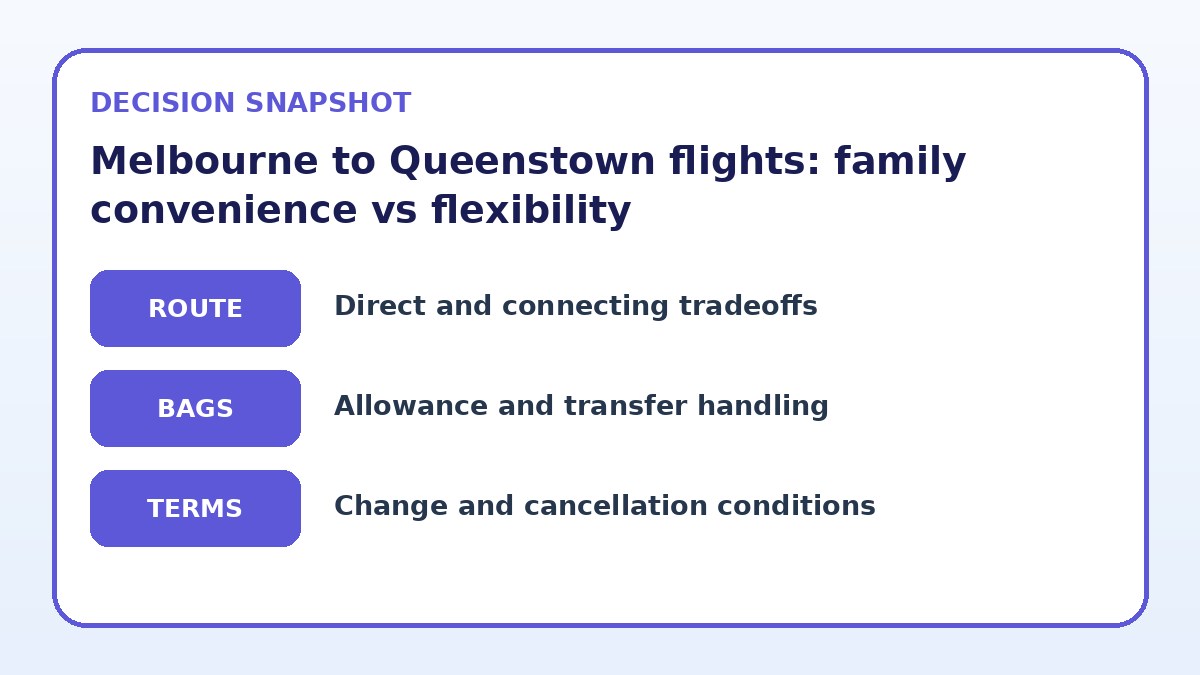
Convenience for family travel is practical: fewer steps between front door and accommodation, minimal transfers, and simple luggage handling. For most families that translates to direct or single-connection itineraries, arrivals at airports with straightforward ground transport options, and predictable total travel times. With young children, convenience also includes the ability to keep a tight schedule — morning naps, meal times and check-in windows are easier to manage when travel is compact and connections are few. Consider whether a slightly higher fare is worth saving an extra hour or two and reducing the number of times you must herd children through security, terminals and transport.
Convenience also extends to traveller experience onboard and on the ground. Look for flights that depart at family-friendly times (not too early to disrupt sleeping children), seat selection rules that let a family sit together, and airlines that clearly describe policies for child restraints and gate-checked strollers. Ground-side convenience matters: how far is the terminal from the car pickup, are shuttles frequent, and how simple is customs or arrival processing on the Queenstown side? Verify these operational details on the airline and airport pages before booking because they change more often than fare displays.
What flexibility looks like and when it helps
Flexibility usually means more flight options: a wider range of departure times, multiple routings and fare classes that permit changes with modest penalties. Families who might adjust dates to follow school calendars, weather windows, or relatives’ plans can benefit from flexible fares or tickets with generous change terms. Flexibility also helps when your trip is part of a longer multi-stop itinerary; choosing flights with open connections or wider layover buffers reduces the risk that a single delay wrecks the whole schedule. Keep in mind that flexibility often comes with tradeoffs: longer total travel times, potentially more connections, and sometimes earlier or later departures that are less convenient for children.
When assessing flexible options, treat change and cancellation rules as decisive features rather than fine print. Compare the conditions you actually need — free date changes within a window, low change fees, refundable components, or the ability to hold a fare for a short period. If you expect plans to be fluid, factor the likely cost of changes into the total trip cost rather than just the ticket price. Also check whether flexible tickets still allow preferred seats together, necessary baggage allowances, or family-specific services; some fare buckets restrict those conveniences even if changes are permitted.
| Approach | Best for | Tradeoff to check |
|---|---|---|
| Direct or single-connection convenience | Families with young children or tight schedules | Usually higher fares and fewer schedule choices |
| Flexible fares and open routing | Families who may change dates or combine trips | May involve longer travel time and more connections |
| Cheapest-available itineraries | Families with firm plans and minimal baggage | Less flexibility and possible inconvenient times or transfers |
| Mid-priced balance (moderate flexibility + convenience) | Families seeking sensible compromise between cost and ease | You pay a moderate premium and must accept some limits |
How to compare direct versus connecting itineraries
Do not assume a direct flight is always possible; compare direct and connecting itineraries head-to-head by total door-to-door time, number of transfers, and how disruptions ripple through the plan. A direct or single-connection flight reduces the number of times you must deplane, re-check bags, and pass through security, which is meaningful with toddlers or older relatives. For connections, prioritize longer minimum connection times to allow restroom breaks, snack stops and a buffer for delays. Also think about where the connection happens: changing planes within a single terminal is better than joining terminals or re-clearing immigration.
For connecting flights, map the worst-case scenario fairly: how long would you be stuck at an intermediate airport if a delay occurs, and what are realistic rebooking options with the carrier? Some families accept a longer single connection because it offers cheaper fares and more flexible departure windows; others pay a premium to avoid connecting entirely. Wherever you land on this, verify the ticket’s transfer conditions and whether airlines automatically protect your onward connection in case your inbound sector is delayed. Check these policies on the airline’s booking page before you complete the purchase.
Before you book
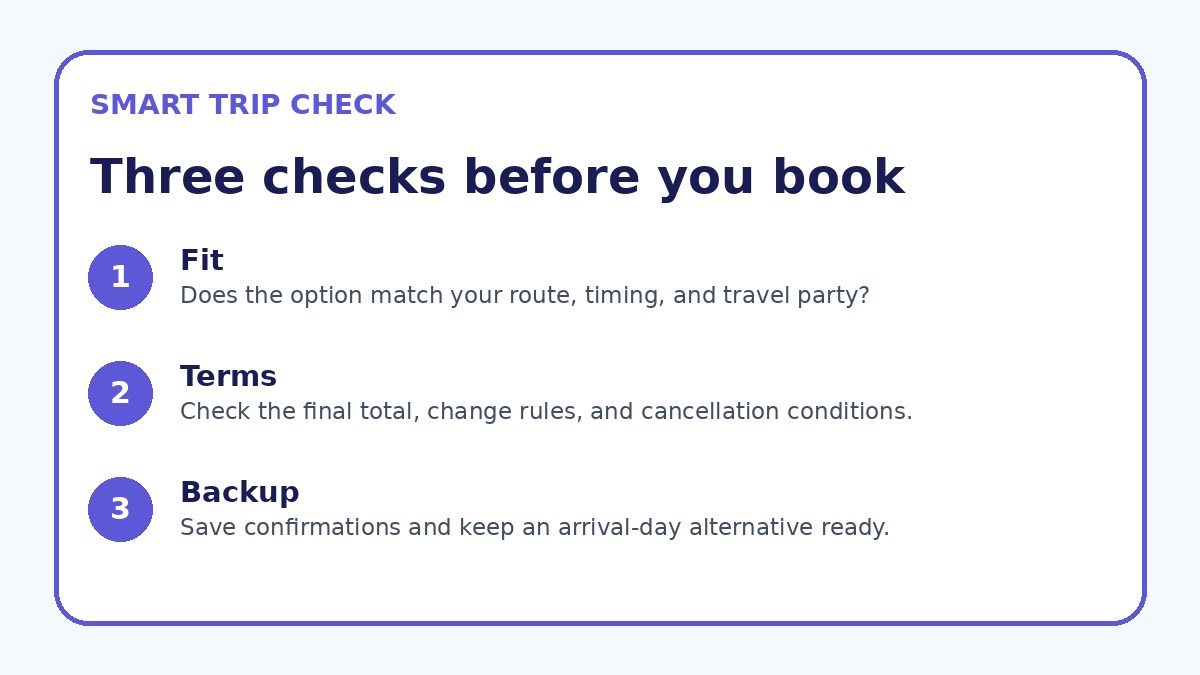
- Confirm total door-to-door time including transfers and ground transport options in both Melbourne and Queenstown before comparing fares.
- Check the airline’s baggage policy for strollers, car seats and checked luggage and note any fees or gate-check rules on the booking page.
- Review change, cancellation and rebooking terms and calculate realistic worst-case change costs for your family.
- Verify seating policies so your family can sit together or reserve preferred seats for a fee if necessary.
- Match arrival and departure times with hotel check-in, car hire schedules, and likely local daylight or weather conditions.
- Take screenshots of the airline’s final booking pages showing the fare rules and confirmation numbers after purchase.
Practical booking criteria and family-focused checks
When you’re ready to book, use a checklist of family-focused criteria to compare options quickly. Key items: total door-to-door travel time; number and length of connections; required airport transfers in Melbourne and Queenstown; baggage allowances for strollers and car seats; seat selection rules for families; and the cost/availability of infant or child fares. Don’t forget to check official change and refund rules, as well as the carrier’s policies on family seating and priority boarding. Trip.com can be mentioned as a place to compare availability and conditions, but always confirm details on the airline’s own booking flow.
Also account for non-flight ripple effects: does the arrival time in Queenstown fit with hotel check-in or car hire pickup? Are you arriving after dark in winter when roads and visibility differ? How will late arrivals affect planned activities or transfers? These operational follow-ons often determine whether a slight savings in fare is worthwhile. Before you click purchase, review the fare’s final page for baggage, cancellation and rebooking fees, and capture screenshots or confirmation numbers. Those concrete details make it easier to manage changes later and protect the family’s travel budget and sanity.
Frequently asked questions
Should a family always choose the shortest itinerary from Melbourne to Queenstown?
Not always. The shortest itinerary reduces travel stress and transit time, which is beneficial with young children or older relatives, but it can come at a higher fare and fewer departure options. If your dates are fixed and time is the priority, shorter is usually worth it. If your schedule might move, or you need lower-cost alternatives, a slightly longer itinerary with flexible change terms may be a better overall value. Always weigh the time saved against the fare difference and the family’s tolerance for transfers and schedule changes.
How much connection time should a family allow when booking?
Allow more buffer than a solo traveler would: at minimum add 60–90 minutes for domestic-to-domestic connections if terminals are compact, and longer if you must change terminals, re-check baggage, or re-clear security. For international or mixed international/domestic routings, build in larger buffers to account for passport control and potential delays. Consider whether you need time to feed, change or rest with children and whether airport facilities (lounges, family restrooms) are accessible. Always check the airline’s published minimum connection time and add a comfort margin.
What are the best ways to protect a family trip against last-minute changes?
Buy a fare class that offers reasonable change terms or add travel insurance that covers flight changes and interruptions relevant to your family’s needs. Choose flights on schedules with multiple daily options where possible, so rebooking is simpler if one flight is disrupted. Keep important documents and confirmation screenshots handy, register for airline alerts, and consider traveling with a fare that allows free name or date changes if you anticipate uncertainty. Before finalising, read the carrier’s final booking page for the exact change fees and refund rules you would face.
Final planning note
Balancing schedule flexibility and convenience for Melbourne to Queenstown flights comes down to family priorities. If short travel time, fewer handoffs and predictable arrival matter most, pay for a simpler itinerary and confirm family seating and baggage allowances. If dates may shift or you want to keep costs down, prioritise flexible fares and connections with comfortable buffers — but add realistic padding for transfers and family needs. Use the checklist above to compare total door-to-door time, fare rules, and airport logistics before booking. Verify every operational detail on the airline’s final booking page, and consider comparing listings on Trip.com to view current availability, then complete your purchase with the exact fare rules captured.
Continue planning
Check current options and final conditions
Use the provider page to confirm live availability, the final total, cancellation terms, and every condition that matters to your trip.
This evergreen planning guide was created with AI-assisted drafting and a structured quality review. It does not display live prices, schedules, availability, visa guidance, or provider rankings. Verify current details before booking. Some links are affiliate links; we may earn a commission at no additional cost to you.