For families traveling from Seoul to Da Nang, the practical choice usually comes down to balancing flexibility in timing with door-to-door convenience. Decide first whether a more flexible ticket or a tighter itinerary will reduce stress for your group: flexible fares and later change options help when kids’ routines are uncertain, while shorter total travel time and fewer connections are worth paying for when minimizing transit complexity matters more. Start by listing non-negotiables—bedtime windows, stroller needs, and whether everyone can handle a long layover—and then compare sample itineraries that meet those constraints. This article explains how to weigh schedule flexibility against convenience, what tradeoffs you'll face at booking time, and exactly which details to verify on airline or booking-provider pages before you confirm.
Decide your flexibility baseline
Start by defining how much schedule wiggle room you really need. Families with young children often value flexible change options because illnesses, delayed sleep, or unexpected events can force last-minute shifts. A flexible ticket or a fare class that allows free or low-cost changes reduces potential stress, but those fares may have fewer included extras like seat selection or checked bags. List the contingencies that would make you change plans—sudden sickness, missed connections, or weather disruptions—and assign each a priority. Being honest about which scenarios would prompt a rebooking helps you choose whether to pay more for changeability or accept restrictions in exchange for lower upfront cost.
Next, think about timing tolerances for departure and arrival. Some families need to land in Da Nang early to settle in before a planned activity; others simply need to arrive within a range of hours. Define an acceptable arrival window and how many connections you and your children can tolerate. A shorter itinerary with a connection that cuts travel time might be preferable even if it's less changeable. Conversely, multiple daily options with flexible change rules can be better if your schedule is uncertain. This baseline guides the types of fares and flight times you'll compare and narrows down choices efficiently.
Compare direct vs. connecting options and the tradeoffs
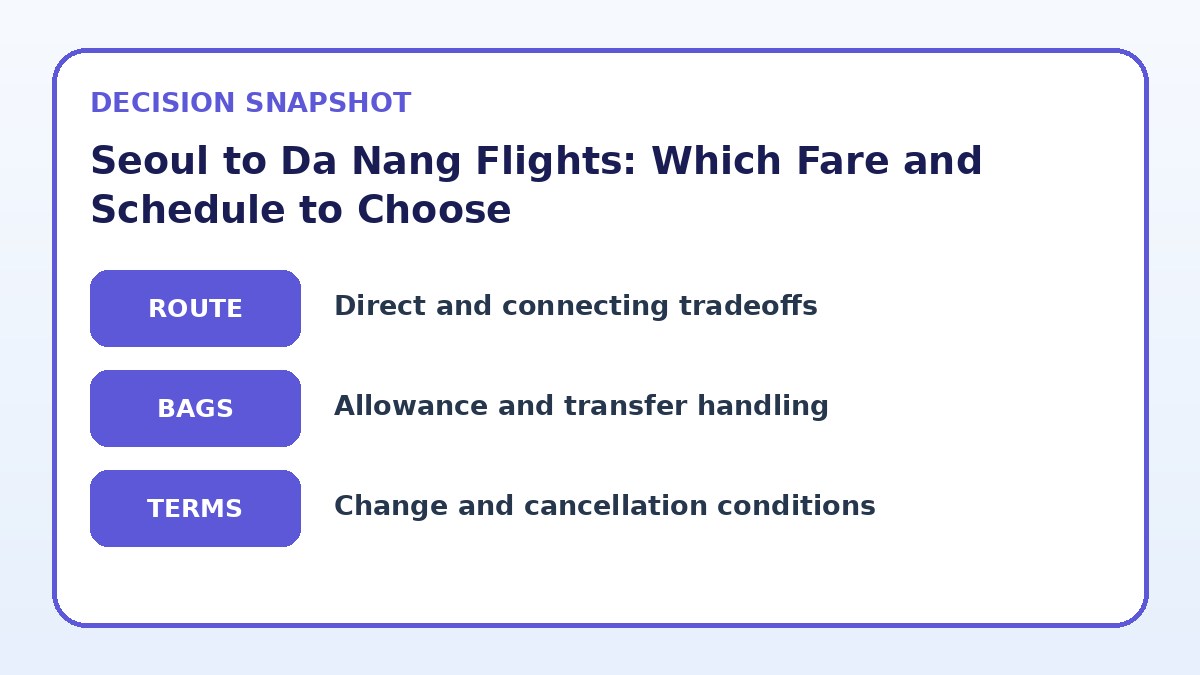
When comparing Seoul to Da Nang flights, treat direct and connecting itineraries as different strategies rather than simply faster or cheaper. A direct flight reduces handling, transfers, and potential delays that are difficult with children, but direct options may be less frequent or more expensive. Connecting flights can open lower fares and more time choices; however, they add the complexity of deplaning, rechecking luggage (if required), and navigating transit terminals. For families, each transfer increases the number of times you need to settle kids, move luggage, and pass through security, so weigh how many transitions your particular group will tolerate on travel day.
Also evaluate layover lengths and airport layouts when considering connecting routes. Short connections risk stress and missed flights; very long ones can undo the benefit of a low price by stretching the day. Look for balanced layovers that allow bathroom breaks, a snack, and a short rest. If a connecting airport requires moving between terminals, check whether transfers are straightforward or require additional security checks. Airlines’ booking pages and airport maps will list connection times and terminal information; verify these details and how they affect stroller and baggage handling before booking.
| Approach | Best for | Tradeoff to check |
|---|---|---|
| Flexible fare with open change options | Families needing the freedom to rearrange travel without large fees | Higher upfront cost and sometimes fewer included extras like checked bags |
| Lowest-cost restricted ticket | Families with fixed, certain travel dates and minimal likelihood of changes | Limited or expensive changes, and possible extra fees for seats and baggage |
| One-stop connecting itinerary with reasonable layover | Families aiming to cut price while keeping transfers manageable | Extra handling and potential delays during connections |
| Short direct service (if available) | Families prioritizing minimal transitions and total travel time | May be less frequent or cost more than indirect routes |
What to confirm on the booking page
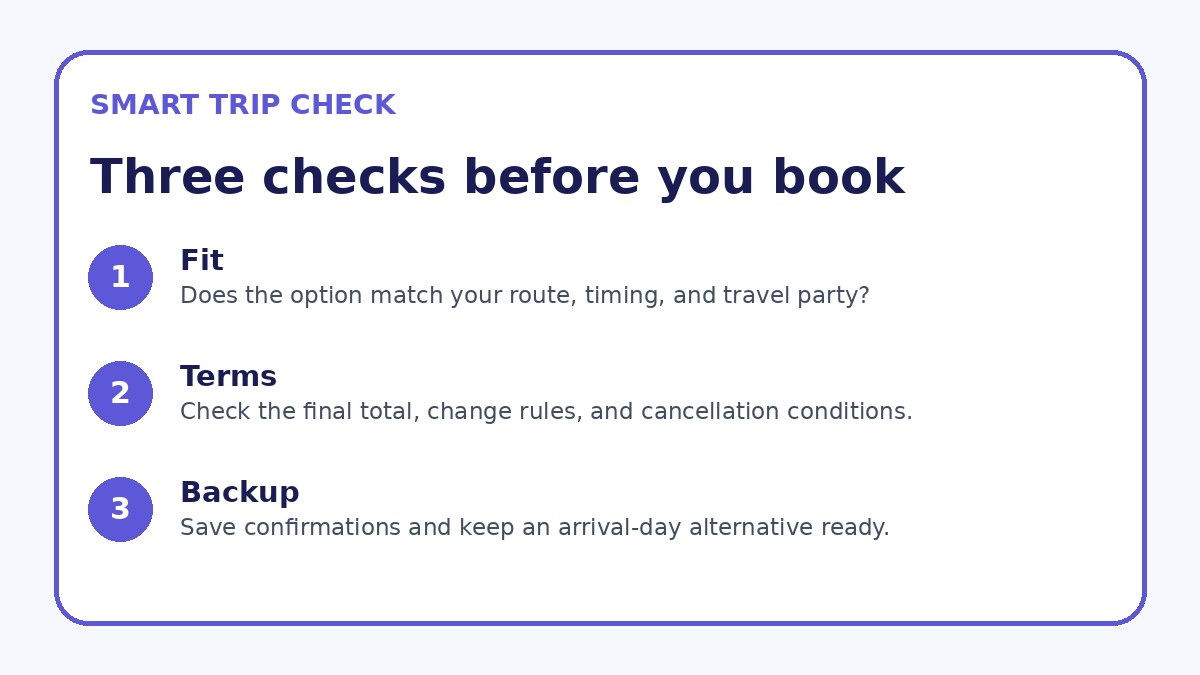
Before you finalize any reservation, confirm the specific rules that most affect families: included checked baggage allowance, fees for additional bags, whether checked strollers are free or counted toward allowance, and seat selection policies. Low-cost or restricted fares sometimes omit seat assignments and impose baggage charges that add up quickly for a family. Also look for whether infant fares or lap child policies apply and what documents are required at check-in. The carrier’s official booking page is the authoritative place to verify these details; if you use an aggregator or travel agent, always cross-check critical terms directly with the airline.
Check change and cancellation terms carefully and note any time windows or fees. Flexible fares may offer free changes up to a set period before departure; restricted fares may permit changes for a steep charge or only provide credits. Also examine the boarding process—for example, whether families get priority boarding, how early check-in opens, and if online check-in is available to select seats. Confirm baggage dropoff times and whether lane queues can be avoided with online check-in or family lanes. These seeming small details shape whether your outbound day is calm or rushed.
Before you book
- Confirm total door-to-door travel time including airport transfer, check-in, and baggage collection before booking any itinerary.
- Verify baggage allowances, stroller policies, and seat selection rules on the airline’s official booking page.
- Compare change and cancellation terms across fare classes and note any blackout windows or fees.
- Choose flight times that align with your children’s sleep or meal schedule to reduce in-air stress.
- Plan airport transfers in advance (private transfer, taxi, or public transport) and allow extra time for family boarding.
- Pack a carry-on with medicines, spare clothes, snacks, and entertainment easily reachable during transit.
Practical convenience choices for travel day
Plan the airport transfer that matches your family’s tolerance for logistics. A private transfer or taxi that drops you at the terminal door can be worth the extra cost when traveling with toddlers and multiple bags. Public transport is often cheaper but may require more walking, stairs, or stair-lift coordination for strollers. Consider flight times that align with children’s nap or sleep schedules—an early flight might let you land mid-afternoon, while a red-eye can work if everyone can sleep on board. Factor in time for security, restroom breaks, and a comfortable margin for check-in with luggage or special assistance.
Pack and organize for convenience: put essentials in a clear, easily reachable carry-on—medicines, snacks, spare clothes, and small entertainment. If you anticipate a transfer, keep important items like passports and medications on your person rather than in checked luggage. Consider renting or checking a stroller at the gate to simplify boarding and transfers, but verify the airline’s policy. Finally, build time cushions for unexpected delays and decide ahead who handles which child or bag tasks—simple role assignments reduce confusion at busy checkpoints and speed moving through terminals.
Frequently asked questions
Is it better to book a flexible fare or accept a cheaper restricted ticket for a family?
Decide based on how likely you are to change travel plans. Flexible fares reduce stress if illness, school events, or sudden schedule changes are a realistic possibility. If your travel dates are fixed and predictable, a restricted ticket can save money but factor in extra fees for seat selection and baggage, which add cost and reduce convenience. Run sample total-cost comparisons including likely baggage and seat fees, and weigh that against the peace of mind from better change terms.
How should I evaluate layover times when traveling with kids?
Look for layovers that give enough time to deplane, use restrooms, get snacks, and handle stroller or baggage transfers without rushing. Short layovers raise the risk of missed connections; very long layovers extend travel day fatigue. Aim for a balanced window that matches your family’s needs—often 90–180 minutes depending on airports and whether you must re-clear security. Check terminal transfer details and whether family facilities are available at the connection airport before booking.
What practical steps reduce stress on the travel day from Seoul to Da Nang?
Assign clear roles for who manages luggage and who watches children during transitions; have travel documents and essentials in an accessible carry-on; choose a transfer method to the airport that minimizes walking and time; and confirm online check-in and seat assignments before arrival. Also verify stroller policies and pack a compact emergency kit for medicines and quick snacks. These small preparations cut stress and make the day more predictable for parents and kids alike.
Final planning note
Balancing schedule flexibility and convenience for Seoul to Da Nang flights means defining what would cause you to change plans, then choosing the fare and itinerary that minimize the most painful risks for your family. Flexible tickets buy peace of mind but can cost more; direct or shorter itineraries reduce handling and stress but may be less flexible. Always verify crucial details—baggage, seat selection, stroller rules, and change penalties—on the airline’s booking page before you pay. With a clear priority list and realistic expectations about transfers and layovers, you can pick an option that keeps travel day manageable and gets your family to Da Nang ready to enjoy the trip.
Continue planning
Check current options and final conditions
Use the provider page to confirm live availability, the final total, cancellation terms, and every condition that matters to your trip.
This evergreen planning guide was created with AI-assisted drafting and a structured quality review. It does not display live prices, schedules, availability, visa guidance, or provider rankings. Verify current details before booking. Some links are affiliate links; we may earn a commission at no additional cost to you.