If you and your partner prioritize flexibility on the London to Paris route, your practical decision usually comes down to how much change or cancellation freedom you need and how comfortable you are locking in seat-specific fares. For many couples, the useful short answer is: weigh refundable or changeable tickets when plans may shift, but consider semi-flexible options if you want a lower fare and can accept stricter conditions. Comparing ticket classes, bundled extras (like seat reservations), and how refunds or name changes are handled is essential. This article lays out the tradeoffs specific to couples — including how to manage different traveler needs, the paperwork to check on booking pages, and what to verify with providers before you commit. Use these points to decide whether to prioritize low cost, maximum flexibility, or a middle path that balances both partners’ preferences.
Types of flexibility and what they mean for couples
Ticket flexibility on the London to Paris route usually falls into a few practical categories: fully refundable, changeable with a fee, changeable without fee, and non-changeable. For couples, the key is matching the ticket type to both partners’ tolerance for uncertainty. Fully refundable tickets let you cancel and get money back, which is useful if either partner has work or health variables. Changeable tickets reduce the financial risk of switching travel dates, but may still charge a fee or fare difference; that matters if you expect to move your trip by several days.
Non-changeable fares are cheap but rigid — suitable for couples with fixed plans who value savings. If you choose a restrictive ticket, protect yourselves by confirming travel insurance or a flexible itinerary for other trip elements such as hotels. Also verify whether name corrections are allowed; some carriers permit small spelling fixes but charge for full name swaps. Always read the provider’s final booking conditions so you know exactly what ‘changeable’ or ‘flexible’ covers before you pay.
How to compare direct and connecting options
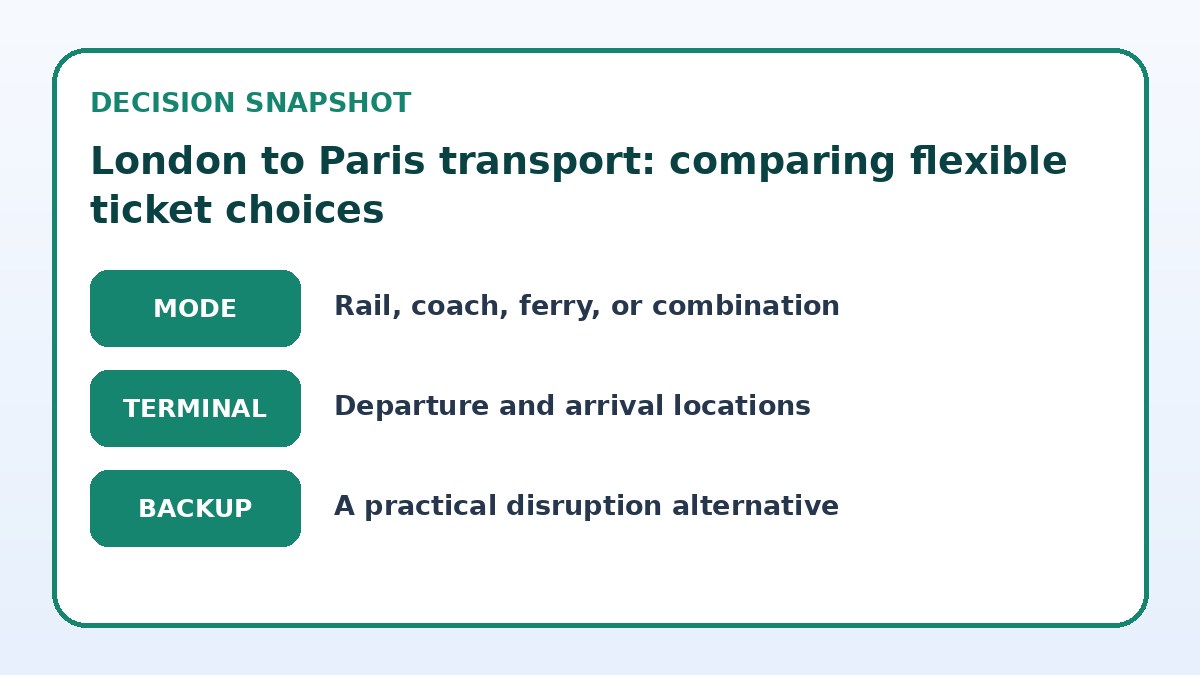
When searching London to Paris transport, you may see direct high-speed train services and options that include transfers or different operators. For couples, direct journeys often reduce stress because there’s no intermediate transfer to coordinate — less chance of missing a connection if one traveler is delayed. However, connecting itineraries sometimes have more flexible ticket rules or lower fares that permit changes under certain conditions. Compare the flexibility terms for each itinerary, not just the travel time: a slightly longer trip with free changes might suit couples who dislike rigid plans.
If direct and connecting options are both available, check how ticket changes are handled across operators. Some combined itineraries require you to rebook individual legs separately, which can complicate refunds and date changes. On the booking page, confirm whether the ticket is protected through the whole route and whether a single change fee covers both legs. If the couple values simplicity, favor a single-provider booking with clarity on how alterations are processed.
| Approach | Best for | Tradeoff to check |
|---|---|---|
| Buy fully refundable tickets for both partners | Couples with uncertain schedules or high need for peace of mind | Higher upfront cost in exchange for maximum cancellation and change freedom |
| One flexible ticket, one restrictive ticket | Couples where only one partner’s plans are likely to change | Saves money but requires coordination if you need to travel together on new dates |
| Both on semi-flexible/changeable fares | Couples wanting balance between cost and the ability to adjust plans | May still incur fees or fare differences for changes, depending on provider rules |
| Book lowest-fare non-changeable tickets and add insurance | Couples confident in fixed plans who want lowest fares and risk transfer via insurance | Insurance may not cover all change fees or administrative restrictions by carriers |
Managing differences between partners
Couples often have different risk tolerances around schedule changes. One partner might want the cheapest possible fare; the other may want the option to swap dates. Practical approaches include splitting ticket types between travelers, choosing a middle-tier ticket for both, or buying one flexible ticket plus cheap extras like refundable seat reservations. When splitting, ensure both tickets align on the same trains and seat placements if you want to travel together. If booking separately, record both PNRs and check whether the operator can seat you together before departure.
Another useful strategy is to prioritize flexibility for the partner whose schedule is least certain while booking the other traveler on a lower-tier fare. This can reduce overall cost while retaining a safety net. Remember that administrative tasks like changing travel dates or names often require the original booking holder to make the request, so confirm whose name is on which reservation and what documentation each provider will need for alterations.
Before you book
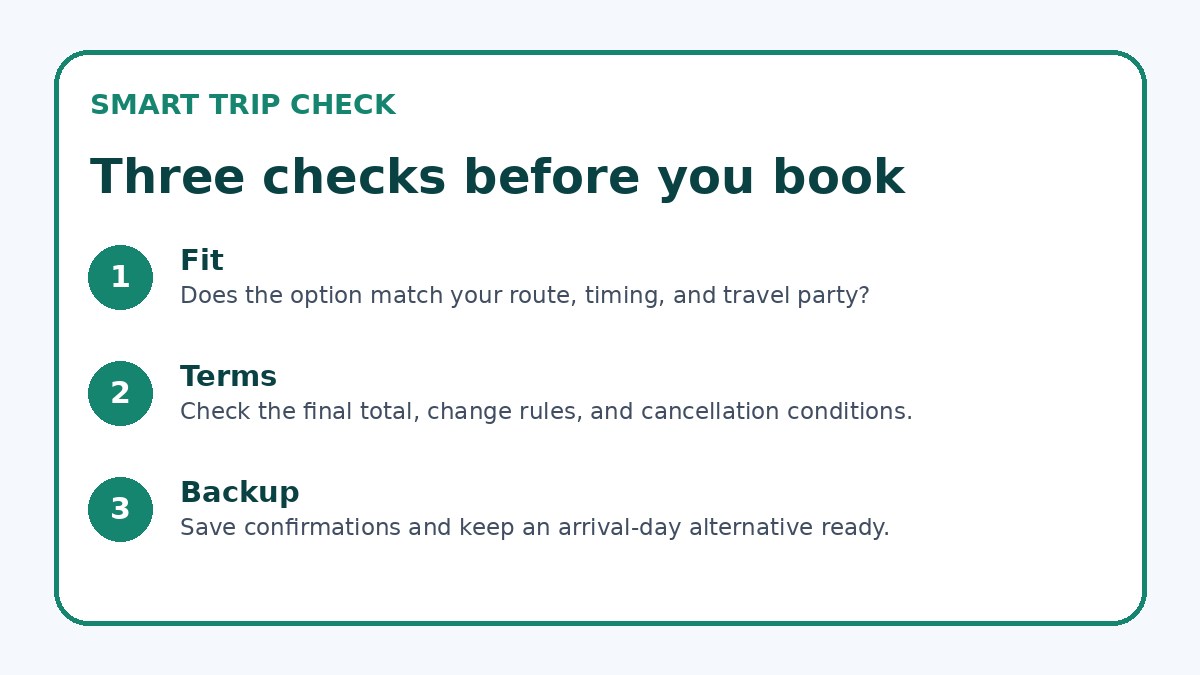
- Confirm change and cancellation rules on the provider’s final booking page before payment.
- Decide whether you need seat reservations together and check if they are refundable or transferable.
- Compare whether refunds are issued to the original payment method or as travel vouchers.
- Note whose name appears on each booking and the provider’s policy for name corrections or swaps.
- Check whether travel insurance covers change fees, cancellations, or only medical emergencies.
- Record both booking references and the provider’s customer service contact details for quick changes.
What to verify on the provider booking page
Before you click purchase, verify the exact change and refund rules, where fees apply, and how long it takes to process a refund. Check whether optional extras — seat reservations, baggage, and priority boarding — are refundable or transferable and whether they must be bought together with the ticket to secure your preferred seats. Look for small print on name corrections, transfer policies for missed connections, and whether refunds are issued as the original payment method or as vouchers; these details can materially affect couples making plans.
Also confirm how to contact customer service and whether online self-service covers date swaps or cancellations. If you want travel protection, compare the provider’s offered insurance with independent policies and note whether insurance covers change fees or only medical emergencies. If you use a third-party site to compare options, always open the final provider booking page and read the full terms there. As a convenience, you can check availability on Trip.com, but verify terms directly with the carrier before paying.
Frequently asked questions
Can couples book one flexible ticket and share it if plans change?
Most carriers require each traveler to have their own ticket, so a single flexible ticket cannot be shared between two people. If only one partner is flexible, book that traveler on a ticket with change privileges and the other on the fare you prefer. If you need to keep your travel together after a change, you may have to rebook the second traveler onto a different fare, which could incur a difference in fare or a new booking fee. Always check the provider’s rules on adding or pairing passengers when changing itineraries.
How do seat reservations and luggage rules affect flexibility for couples?
Seat reservations and baggage allowances are often separate from the ticket’s change policy. For couples who want to sit together, reserving adjacent seats may be essential, but some operators treat seat fees as non-refundable even if the ticket is changeable. Luggage rules can also differ by fare class—higher flexibility fares may include more generous baggage allowances. Verify whether reserved seats and included baggage transfer automatically when you change dates, or whether you must rebook them and pay again.
Is it better to book direct with the operator or use a third-party site for flexibility?
Booking directly with the operator usually gives clearer access to change or refund options and customer service, which can simplify alterations. Third-party sites may offer comparative search tools and convenience, but any change or refund often has to be handled through the original seller and may involve extra steps. If you use a comparison site, open the final operator booking page to read terms and keep screenshots of the fare rules. Trip.com can be used to compare availability, but always verify and confirm flexibility terms on the carrier’s own booking page before paying.
Final planning note
For couples traveling between London and Paris, ticket flexibility is a practical tradeoff between cost and peace of mind. Start by assessing how likely either partner is to change plans, then match that risk to a ticket type: fully refundable for high uncertainty, semi-flexible for a balanced approach, or restrictive fares with insurance if plans are fixed. Pay attention to seat reservations, baggage, name-change conditions, and whether refunds are vouchers or original-payment reimbursements. Always read the final provider booking terms and keep both booking references handy. With a little planning and clear expectations, you can pick the combination that keeps you traveling together with the least friction.
Continue planning
Check current options and final conditions
Use the provider page to confirm live availability, the final total, cancellation terms, and every condition that matters to your trip.
This evergreen planning guide was created with AI-assisted drafting and a structured quality review. It does not display live prices, schedules, availability, visa guidance, or provider rankings. Verify current details before booking. Some links are affiliate links; we may earn a commission at no additional cost to you.