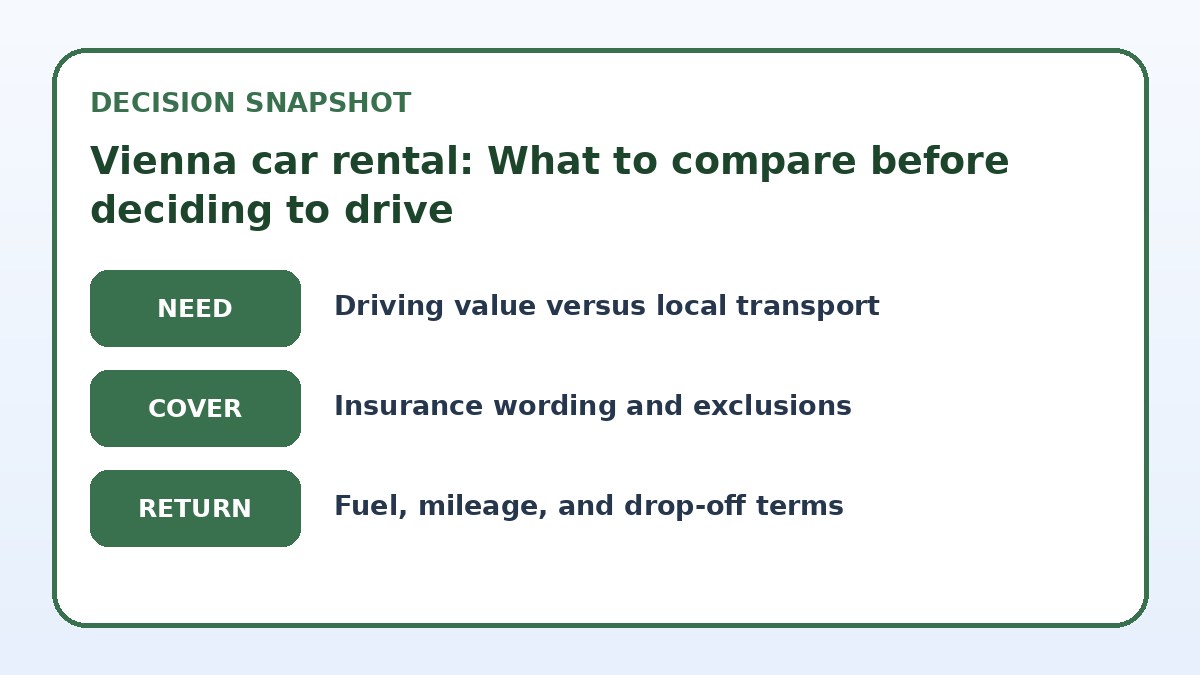
Practical answer first: most first-time visitors to Vienna do better without a rental car. The city’s compact historical core, excellent public transport, and pedestrian-friendly layout mean taxis, trams, U-Bahn, and walking will cover the essentials. A car makes sense only if you plan regular day trips to places not well served by trains, travel with bulky gear, or need flexible rural access. Before you decide, weigh where you’ll stay, your day-trip ambitions, how many people and bags you’ll have, and whether you’re comfortable driving in unfamiliar European traffic and paying for parking. This article helps you compare the tradeoffs, lists the booking checks to avoid surprises, and gives a checklist so you can choose with confidence.
How Vienna’s layout and transport shape the decision
Vienna’s historic core is compact, with most major attractions within a walkable ring and well-covered by trams and the U-Bahn. Public transit is frequent and designed for short hops: trams glide across central boulevards, U-Bahn lines link neighborhoods quickly, and buses fill gaps. For a first visit focused on museums, palaces, restaurants, and concerts, transit plus walking typically beats the time cost of searching for paid parking and negotiating one-way streets. Consider also that many hotels and apartments lie near major transit stops, making it easy to store luggage and return to a central base without needing a car.
Where a car becomes useful is outside that core. If you plan multiple excursions to vineyards, alpine valleys, or small towns with sparse rail service, a car adds flexibility and saves complex timed connections. Likewise, if you’re traveling with family, a lot of luggage, or mobility constraints, the door-to-door convenience can outweigh city hassles. Decide on your itinerary first: map daily plans and check train timetables—if most days begin or end with journeys under two hours by rail, you can usually skip the rental and enjoy a simpler city experience.
Costs, practical hassles, and hidden considerations
A rental’s headline rate rarely tells the whole story. Taxes, required insurance upgrades, fuel options, GPS or data charges, and one-way or airport surcharges can quickly raise the total. Parking in Vienna’s inner districts is often metered, resident-only, or limited in duration, and nightly hotel or public garage fees vary widely. There are also low-emission zones and sticker requirements in some parts of Austria; confirm whether your vehicle needs any environmental vignette or sticker before you cross into restricted areas. These operational details change, so always verify final charges and legal requirements on the rental provider’s booking page.
Driving itself poses practical tradeoffs: city traffic at rush hour, narrow streets in older neighborhoods, and unfamiliar signage if you’re not used to driving on the right. On the plus side, a car can let you extend itineraries—visit lesser-known villages, carry sports equipment, or adapt plans on the fly. If you decide to rent, favor a smaller car for easier parking and better fuel economy, check whether tolls or vignettes are required for highways, and budget time for parking searches and occasional traffic delays when scheduling museum visits or performances.
| Approach | Best for | Tradeoff to check |
|---|---|---|
| No rental—public transit and walking | First-time city-focused visitors who plan no major rural day trips | Less flexibility for remote sites but far easier parking and lower city stress |
| Short-term rental for one or two day trips | Visitors who want a car only for specific excursions outside rail corridors | You must coordinate pick-up/drop-off times and accept extra hourly or daily fees |
| Full-trip rental based in Vienna | Travelers prioritizing door-to-door freedom and multiple countryside visits | Higher parking costs, city driving hassle, and more administrative checks |
| Mixed transport—train for long legs, car for last-mile | Those combining rail convenience with rural exploring or multi-center travel | Requires careful scheduling and possibly extra one-way rental charges |
Alternatives and mixed approaches to keep flexibility
You don’t have to pick strictly car or no-car. Consider hybrid strategies: rely on public transport while based in Vienna, then rent a car for one or two planned day trips or an overnight excursion. This reduces the time you spend parking and driving in the city while giving the freedom to explore beyond rail lines. Another option is to combine train travel with local bike rentals or guided day tours for areas where public transport is available but slower—tours can cover scenic detours without the worry of navigation, while trains handle longer distances comfortably.
Also think about where you’ll stay. Choosing an overnight outside the center near a park-and-ride or a suburban rail hub can let you use a rental for countryside legs without fighting central parking. If you’ll use a car for only a day or two, confirm rental hours, pick-up/drop-off locations, and whether the provider allows different return locations. Use Trip.com or other comparison sites to check current availability and terms, but always confirm rules, surge fees, and mileage limits on the provider’s official checkout page before booking.
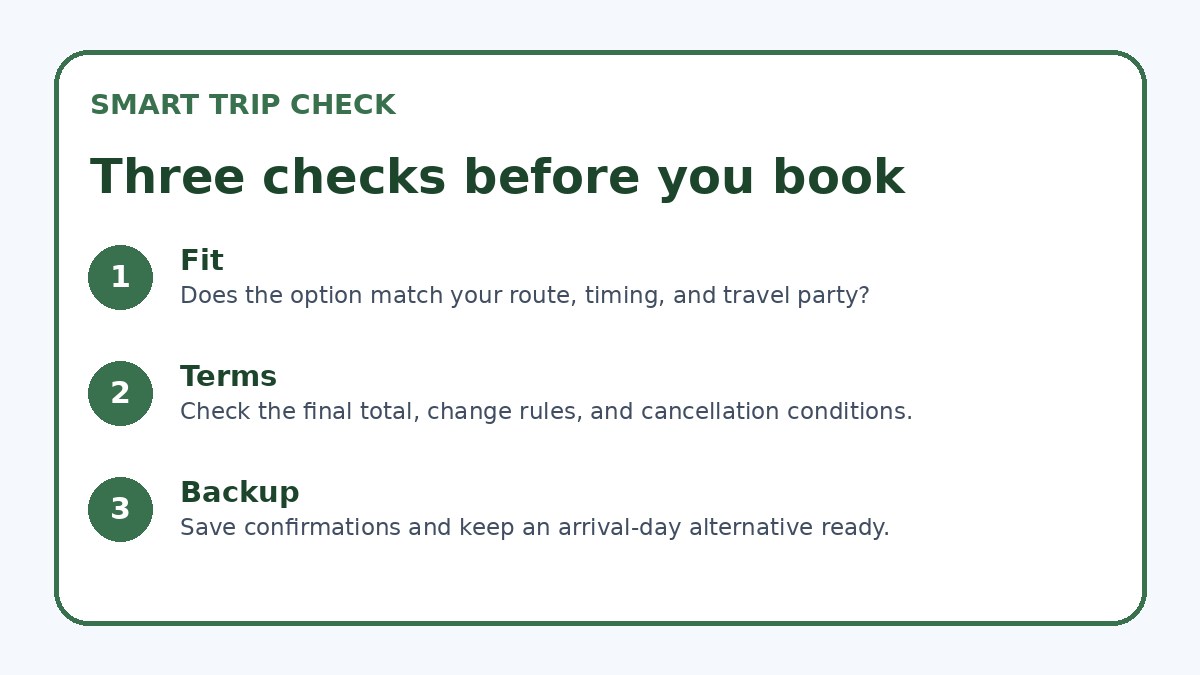
Before you book
- Map your day-by-day itinerary and mark which destinations lack direct or fast rail service.
- Compare total car rental costs including insurance, fuel policy, vignettes, and parking estimates.
- Confirm on the rental page whether cross-border travel is allowed and what extra fees apply.
- Choose a compact vehicle if you’ll drive in the city; note roof boxes can complicate parking.
- Photograph the car’s condition at pick-up, log mileage, and retain the signed inspection report.
- Check whether your driver’s license, an International Driving Permit, or additional ID is required.
Safety, driving culture, and legal must-checks
Austria has specific driving rules that may differ from your home country: speed limits, right-of-way norms, alcohol limits, and mandatory equipment (like reflective vests or warning triangles). Vienna’s urban driving is typically orderly, but rules are enforced strictly and fines are not always payable on the spot. If you’re unfamiliar with continental road signage, brief yourself on key symbols and local expectations. Also verify whether your driver’s license is accepted or if an International Driving Permit is advisable, and check insurance coverage levels on the rental agreement, including what counts as third-party versus collision protection.
If you plan to cross into neighboring countries, notify the rental provider in advance; cross-border permissions, regional restrictions, or additional insurance can apply. When picking up the car, document existing damage with photos and get a clear record on the rental agreement to avoid disputes at return. Lastly, ensure your GPS or phone navigation plan works offline or consider paper alternatives for remote drives—cell coverage is generally good in Austria, but mountainous stretches might be patchy.
Frequently asked questions
Is driving in Vienna difficult for someone used to driving in other European cities?
Urban driving in Vienna is generally predictable: lanes are well-marked, and the city enforces traffic rules consistently. The main challenges are finding legal parking in central districts and dealing with tram tracks and one-way systems near older streets. Rush-hour congestion can add stress if you’re not comfortable with dense traffic. If you plan to stay mostly in the inner districts, public transit and walking remove these hassles. If you choose to drive, favor off-street hotel parking or public garages and allow extra time for navigation and parking.
Can I park easily at major Vienna attractions if I drive?
Parking availability varies by neighborhood and by time of day. Many central attractions are in zones with resident parking permits, short-term meters, or private garages rather than free on-street spaces. Some museums and larger venues have nearby paid garages, but fees and opening times differ. If parking matters for your daily plans, contact your accommodation about guest parking options and research nearby public garages in advance. Factor walking time from a garage to sites into your schedule so you’re not late for timed entries or performances.
What documents and insurance should I check before picking up a rental in Vienna?
Confirm which documents the rental company requires: typically a valid driver’s license, a credit card in the main driver’s name, and sometimes an International Driving Permit depending on your home country. On insurance, read the rental terms to see what liability and collision coverage is included and what deductibles apply—decide whether to accept additional waivers. Also verify fuel policy, mileage limits, and toll or vignette responsibilities. Because provider policies change, check these items on the rental company’s final booking page and ask their desk for clarifications at pick-up.
Final planning note
For most first-time visitors, Vienna’s compact center and excellent public transport make a rental car unnecessary. Public transit, trams, and walking let you reach museums, cafés, and concerts faster and with less hassle than hunting for parking or navigating tricky streets. Rent a car if your itinerary includes frequent rural excursions, tight schedules in places without good rail links, or special needs like equipment transport—then plan for added costs, parking logistics, and local rules. Use the checklist above, compare final rental terms on the provider’s booking page, and consider a hybrid approach: base yourself in Vienna, then rent for specific day trips to get the best of both worlds.
Continue planning
Check current options and final conditions
Use the provider page to confirm live availability, the final total, cancellation terms, and every condition that matters to your trip.
This evergreen planning guide was created with AI-assisted drafting and a structured quality review. It does not display live prices, schedules, availability, visa guidance, or provider rankings. Verify current details before booking. Some links are affiliate links; we may earn a commission at no additional cost to you.