
If you’re traveling from New York City to Boston with extra luggage, the most practical overall choice is the option that balances door-to-door convenience, predictable luggage handling, and a realistic cost for your baggage profile. That might mean a train or a private car transfer if you prioritize simple loading and unloading and want to avoid multiple transfers. For travelers on a tighter budget, a coach bus can be workable if you confirm luggage allowances and where bags are stored. Flying is fast but often adds complexity: you must check how many checked bags are allowed, factor in airport transfers, and compare total door-to-door time. Read on for how to weigh loading ease, transfer count, luggage restrictions, and hidden handling steps so you can pick the right transport for your specific bags and comfort level.
Which transport suits extra luggage: how to prioritize your needs
Start by listing what matters most for your trip: least amount of handling, fewest transfers, quickest door-to-door time, or the lowest outlay for oversized items. ‘Extra luggage’ covers many scenarios: a single heavy suitcase plus a carry-on, multiple large cases, sports equipment, or instrument cases. If minimizing hands-on time with bags is top priority, options that minimize transfers — such as a direct train or a single private car transfer — tend to be the most practical. If cost is the primary concern, you may accept more handling and transfers in exchange for a lower fare.
Next, assess practical constraints at each endpoint: where you’ll be picked up and dropped off, how far stations or airports are from your lodging, and whether there are elevators, ramps, or long stairways. Consider the physical effort of moving bags between modes: a short walk with two large suitcases through a transit hub is different from dragging five bags across multiple platforms. Use these priorities to eliminate options that would force repeated loading and unloading or long, luggage-heavy walks.
Trains and buses: luggage handling, boarding, and practical tradeoffs
Passenger trains between the two cities often provide open car aisles, overhead racks, and larger storage areas near vestibules; those features make boarding and storing several suitcases less of a hassle than air travel. Trains typically have level or ramped boarding at major stations, which reduces lifting difficulty. However, verify whether the service you’re considering has restrictions on oversized items or limits on number of pieces. If you must transfer between train lines or stations, factor in the effort of moving your bags across platforms or through station concourses.
Intercity buses generally allow large hold luggage stored under the coach, which can be convenient if you prefer not to handle your bags during the ride. But retrieving luggage at intermediate stops or in crowded terminals can add time and uncertainty. When comparing bus options, check where the vehicle stops in each city, luggage retrieval processes, and whether drivers assist with heavy items. Also plan for how you will carry bags between the drop-off point and your final lodging if the stop isn’t at a major transit-friendly location.
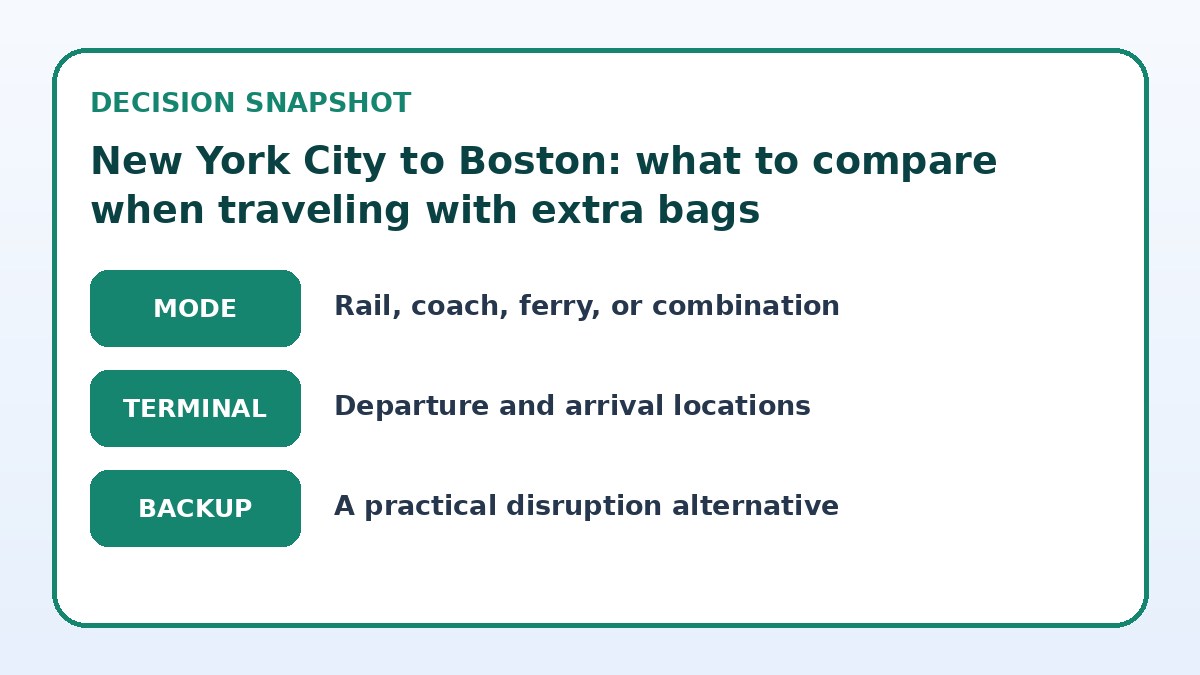
| Approach | Best for | Tradeoff to check |
|---|---|---|
| Direct train | Travelers who want minimal transfers and easy platform-level luggage access | May have limits on oversized items and requires station-to-lodging transfers |
| Intercity bus | Budget-conscious travelers with large checked hold luggage | Longer waits for baggage, possible intermediate stops, and variable stop locations |
| Air travel | Those prioritizing in-air speed and willing to manage airport handling | Extra handling stages, baggage rules, and airport transfers increase complexity |
| Private car or rental | Travelers who want door-to-door control and minimal bag handling | Higher cost and parking or drop-off logistics to consider |
Flights and airport logistics when you’re carrying many bags
Flying may reduce in-air travel time, but airports introduce layers of handling: check-in or bag drop, security lines, and baggage claim. Each stage can add time and uncertainty, and airlines often have explicit checked-bag allowances and size/weight rules that can trigger extra fees. If you’re considering a flight, compare the door-to-door time rather than the flight time alone; factor in transit to and from airports, check-in minimums, and the baggage recheck process if you have a connection. For large or oddly shaped items, verify airline acceptance and any special handling requirements.
For two travelers sharing many bags, flights can still be efficient if you can consolidate items into the allowed number of checked pieces and if airport transfers are straightforward. If you have oversized sports equipment, instruments, or more than a couple of large suitcases, confirm with the airline how those items will be handled and whether they require advance reservations. Always verify final baggage allowances, weight limits, and any handled-item procedures on the airline’s booking page before committing, and consider Trip.com as one place to compare current availability and luggage policies.
Before you book
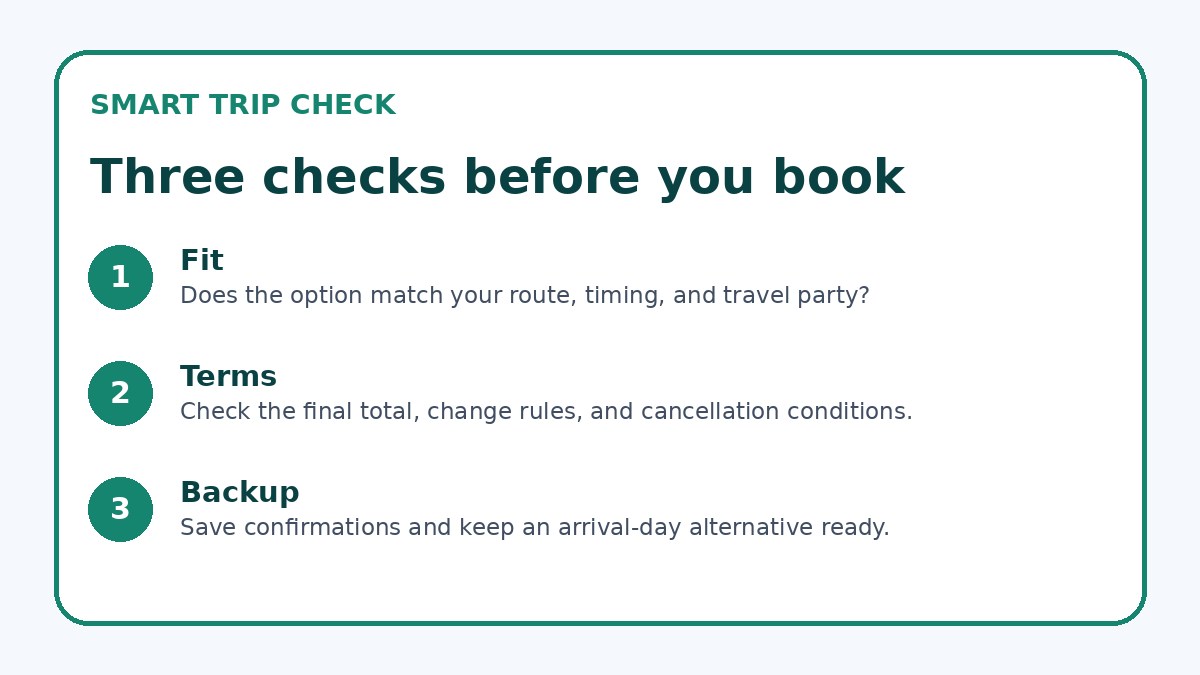
- Count every bag and measure dimensions and weight so you can compare against provider luggage rules before booking.
- Check where pick-up and drop-off points are located in each city and map the walk or transit connections to your lodging.
- Confirm number-of-piece and oversized-item policies on the provider’s final booking page, including any fees for excess or heavy items.
- Plan how you will move bags at each transfer point—reserve porter help, bring luggage wheels, or allow extra time for loading.
- If flying, verify check-in times, whether baggage must be checked at the counter or kiosk, and how transfers affect bag handling.
- If driving or booking a private transfer, confirm vehicle capacity and whether drivers will help with loading, and note parking/drop-off rules.
Driving or private transfer: maximum control with different tradeoffs
Driving yourself or booking a private car transfer gives you the most control over when and how bags are loaded and unloaded, and you avoid the intervening handling steps in terminals. You can pack the trunk, place delicate items within the cabin, and stop en route if needed. However, driving introduces decisions about parking at your departure point, tolls, and where to leave the vehicle at your destination. If you’re renting a car, choose a vehicle with trunk space that matches your luggage volume and verify the rental company’s rules for extra drivers and drop-off locations.
Private transfers reduce carrying effort because a driver typically assists with luggage, but they can cost more than shared options. When booking a transfer, confirm the pick-up and drop-off locations, passenger and luggage capacity, and any extra charges for oversized items or waiting time. If you plan to park a personal vehicle in either city, check parking options and any long-term costs near your origin or destination. Ultimately, private vehicles are best when door-to-door convenience and minimal bag handling are worth the additional expense.
Frequently asked questions
Is a train or a bus easier if I have multiple large suitcases?
Trains usually make moving multiple suitcases easier because of level or ramped boarding at major stations and onboard space such as vestibule areas and racks. Buses often accept large hold luggage, but the process requires loading into the coach hold and waiting at the correct stop to retrieve it. If your trip involves multiple short stops or tight connections, a train tends to reduce repeated manual handling. Always check the specific operator’s luggage policy and station access for elevators or ramps before you buy tickets.
Can flying still make sense with extra bags?
Yes, flying can make sense if the in-air time significantly shortens your door-to-door journey and if you can consolidate items into the airline’s allowed checked pieces without incurring excessive fees. Consider total transit time to and from airports, security and check-in waits, and whether connecting flights add baggage rechecks. For oversize or unusual items, confirm acceptance and handling requirements with the airline in advance and compare the full journey logistics to surface options.
What practical items should I bring to make luggage handling easier?
Bring sturdy luggage with good wheels, luggage straps, and a small collapsible cart if you expect long walks or heavy loads; use identifiable tags to speed retrieval. Pack essential items and valuables in a carry-on that stays with you. Consider padded covers for fragile items and distribute weight so lifting is manageable. If you anticipate porter assistance, have payment method ready and confirm in advance whether drivers or station staff will help with heavy pieces.
Final planning note
Choosing the most practical transport between New York City and Boston when you have extra luggage comes down to prioritizing how much handling you’re willing to do, how many transfers you’ll accept, and whether door-to-door convenience outweighs cost. If minimizing bag transfers and easy platform access are vital, rail or a private transfer will often be the best fit; budget options like coaches work when you can accept hold storage and variable stop locations. Flying can be appropriate if airport transfers are short and you can meet airline baggage rules. Before you book, count and measure your bags, compare luggage rules on the provider’s booking page, and factor in final pickup and drop-off logistics so you aren’t surprised at the trip’s practical details.
Continue planning
Check current options and final conditions
Use the provider page to confirm live availability, the final total, cancellation terms, and every condition that matters to your trip.
This evergreen planning guide was created with AI-assisted drafting and a structured quality review. It does not display live prices, schedules, availability, visa guidance, or provider rankings. Verify current details before booking. Some links are affiliate links; we may earn a commission at no additional cost to you.