
If you’re arriving in Washington, DC for the first time, the practical question is simple: which airport are you using and which transfer option gets you to your hotel with the balance of cost, time, and hassle you prefer. The region has three major airports—Reagan National (DCA), Dulles International (IAD), and Baltimore/Washington (BWI)—and each connects differently to downtown and the National Mall. For quick downtown access choose DCA for proximity and simple public transit; for more international or nonstop choices expect longer ground transfers from IAD; and for lower-cost carriers consider BWI but plan extra travel time. Below you’ll find concise recommendations up front, then a clear explanation of tradeoffs, what to compare when booking, and practical checks to complete before you leave for the airport or make a final booking.
Choosing by airport: DCA, IAD, BWI
Start by mapping which airport your flight uses—this single choice shapes your options. Reagan National (DCA) sits inside the District and provides the shortest ground transfers to downtown and popular tourist areas; its nearby Metro station connects directly to the city transit grid. Dulles (IAD) is farther out in Virginia and usually requires a longer ground transfer whether you take express buses, a rideshare, or a shuttle. Baltimore/Washington (BWI) lies north in Maryland and often serves low-cost and some international flights; it’s a good tradeoff for price versus travel time because you can combine rail or dedicated shuttles to reach downtown.
When you compare airports, consider where you will stay. If your hotel or rental is near the National Mall, DCA typically saves time and a transfer. If you value direct international flight options or lower fares, IAD or BWI might be the better arrival point—just accept a longer onward journey. Also think about arrival time, luggage volume, and whether you want a single hop to your door or are comfortable with a rail-plus-walking option. Knowing your end address makes it easier to compare routes and strike the right balance among cost, convenience, and total travel time.
Public transit and rail options
Washington’s Metro and regional rail provide reliable choices for budget-conscious travelers. DCA links to the Metro system at a station within walking distance of terminals, giving direct access to downtown and many neighborhoods without traffic uncertainty. BWI connects to Amtrak and MARC regional trains via a short airport shuttle; trains run into Baltimore or Washington stations and can be the fastest choice in rush hours. Trains require you to manage luggage and potentially a short intermediate transfer, but they offer predictable travel times compared with surface traffic.
When picking public transit, check connection convenience and the number of transfers you’ll need. For Metro or commuter trains, confirm the final stop relative to your lodging and whether you want to walk, catch a bus, or take a short rideshare for the last mile. Trains and subways can be crowded during peak hours and may have scheduled service changes, so verify live status and planned maintenance on the transit operator’s site before relying on a single connection. Trip.com can be used to compare availability, but always double-check the provider’s official page for the latest routes and advisories.
| Approach | Best for | Tradeoff to check |
|---|---|---|
| Public transit (Metro or commuter rail) | Budget-minded travelers and predictable travel times off-peak | Requires handling luggage and possible transfers; check service alerts before travel |
| Rideshare or taxi | Door-to-door convenience and late arrivals | Subject to traffic delays and variable fares; verify pickup location and surge pricing |
| Shared shuttle or group bus | Travelers seeking a reserved seat and lower cost than private cars | Can include multiple stops, increasing total travel time to your hotel |
| Private pre-booked transfer | Groups, families, and travelers with mobility or heavy luggage | Higher cost but greater reliability; confirm vehicle size and luggage policy on booking |
Rideshares, taxis, and private transfers
Rideshares and taxis provide door-to-door convenience and are often quicker when you have luggage or arrive late at night. Pickup zones and pricing structures vary by airport, so confirm the designated rideshare or taxi pickup area for your arrival terminal. Private car services or pre-booked airport transfers give extra reassurance about vehicle size, luggage handling, and a consistent meet-and-greet—useful for families, groups, or travelers with mobility needs. For any provider-specific details, verify the vehicle allocation, curbside pickup point, and cancellation policy on the company’s booking page before you finalize.
The tradeoff with private options is typically cost and potential delay in heavy traffic. Washington’s metro area can experience rush-hour congestion, event-related roadblocks, or security-driven street closures near the Mall, all of which add time. When comparing a rideshare or taxi with a public transit option, weigh door-to-door time, the unpredictability of traffic, and how comfortable you are waiting at a designated pickup point. For fixed budgets, get an estimated fare from the app or operator but don’t treat that estimate as final—confirm any surge pricing or airport surcharge on the provider’s final confirmation screen.
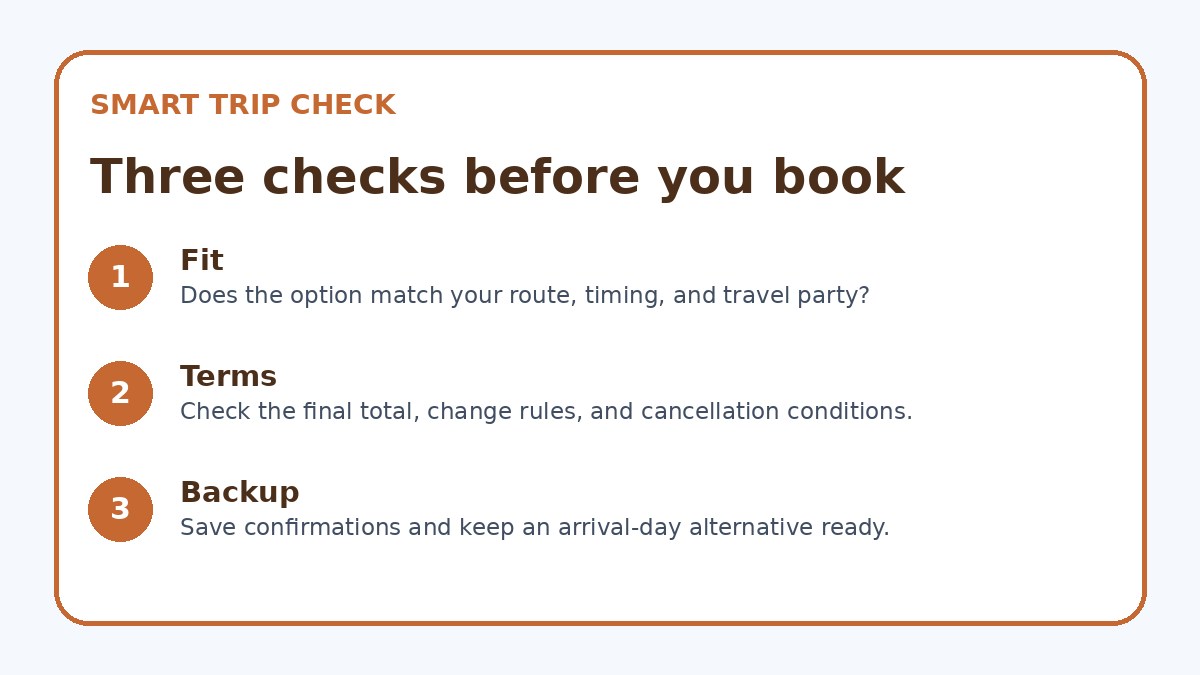
Before you book
- Confirm which airport you will arrive at and note the terminal on your ticket or booking confirmation.
- Check transit operator status and any planned maintenance for Metro, MARC, or Amtrak before departure.
- If using rideshare or taxi, verify the airport’s designated pickup area and have the pickup instructions ready.
- For shuttles and private transfers, review vehicle luggage allowances and request confirmation of the pickup point.
- If accessibility or special assistance is needed, contact the provider directly and get written confirmation of services.
- Compare total door-to-door time, not just advertised travel time, and have a backup plan if your flight is delayed.
Shuttles, group buses, and accessibility choices
Shared airport shuttles and group buses are middle-ground options that reduce cost compared with private cars while offering a reserved seat and luggage handling. These services often operate to major hotels, downtown transfer hubs, or central train stations. They can be a sensible option when traveling solo or with one companion and your schedule aligns with shuttle departures. However, shared shuttles can add time because they may stop at multiple hotels or terminals, so factor that into your arrival expectations and compare total door-to-door time, not simply travel distance.
If you have accessibility needs, prioritize providers that explicitly state wheelchair accessibility, vehicle lift availability, or assistance services. Not all shuttles or buses offer the same level of support, and accessibility features vary by vehicle. When booking, ask the operator to confirm the exact pickup location, whether assistance is available curbside, and how much lead time they recommend before departure. Put these confirmations in writing when possible, and keep a contact number handy for day-of-arrival changes. Doing so avoids last-minute problems and ensures the transfer meets your specific requirements.
Frequently asked questions
Which Washington airport is best if I want to be closest to the National Mall?
Reagan National (DCA) is the closest airport to the National Mall and central DC neighborhoods. It offers quick Metro and short taxi or rideshare trips into downtown areas. If you prioritize minimizing ground travel time after landing, DCA usually reduces transfer time compared with Dulles (IAD) or BWI. That said, check which airport your flight uses before booking and consider convenience against fare and flight availability—sometimes a different airport with a smoother schedule can outweigh a longer ground transfer.
Is it better to use public transit or a rideshare from the airports?
Public transit tends to be the most economical and can be faster than surface traffic during peak hours, especially via DCA’s Metro or rail from BWI. Rideshares and taxis deliver door-to-door service and are preferable with heavy luggage, late arrivals, or when you need direct access to a hotel entrance. Balance the decision by comparing estimated door-to-door time, cost comfort, group size, and how much walking you’re willing to do. Always check live transit alerts and the rideshare app for pickup zones and estimated fares before choosing.
How should I handle late-night arrivals or flight delays?
For late-night arrivals, prioritize options with guaranteed pickup or 24/7 operations—licensed taxis, major rideshare apps, or pre-arranged private transfers are typically available overnight. Public transit may have reduced service or no direct connections late at night, and shared shuttles often run on limited schedules. If you choose a private service, verify cancellation and delay policies on the provider’s booking page, and keep a contact number for day-of arrival communication. Having a backup plan—such as a taxi card or hotel shuttle contact—reduces stress if your flight is delayed.
Final planning note
First-time visitors to Washington, DC should choose an airport and transfer mode based on where they’ll stay, how much luggage and mobility support they need, and how comfortable they are with potential traffic or transfers. DCA usually wins for shortest ground time to central attractions; IAD and BWI expand flight choices but demand more ground planning. Compare door-to-door time, not only fare, and verify pickup locations, luggage rules, and any service advisories on the provider’s booking page before you finalize. For quick comparisons of availability and options consider Trip.com, but always confirm operational details with the transport provider directly to avoid surprises.
Continue planning
Check current options and final conditions
Use the provider page to confirm live availability, the final total, cancellation terms, and every condition that matters to your trip.
This evergreen planning guide was created with AI-assisted drafting and a structured quality review. It does not display live prices, schedules, availability, visa guidance, or provider rankings. Verify current details before booking. Some links are affiliate links; we may earn a commission at no additional cost to you.