If you’re planning to rent a car in Sydney with kids, the single most useful thing you can do is learn how to read the insurer’s wording before you click accept. Start by identifying three key items on the rental page: collision damage waiver (CDW) or excess reduction, third-party liability cover and any policy exclusions such as off-road or beach driving. Families should also check driver age rules, additional driver fees, and whether child seats affect insurance acceptance. Knowing those details lets you balance peace of mind against cost and avoid surprises at pickup when a supplement or a refused claim could ruin a day.
Decoding common insurance terms on Sydney bookings
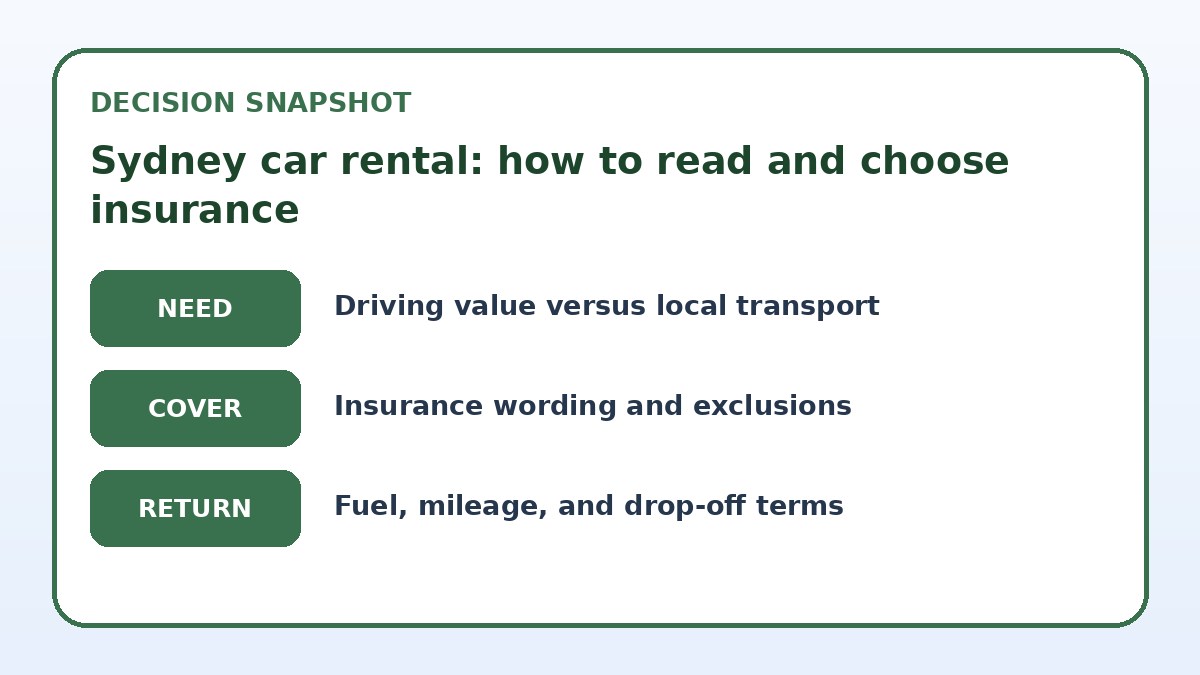
Rental pages and emails use shorthand that can hide important limits. CDW (collision damage waiver) often appears as a headline benefit but check whether it simply lowers the excess or removes it entirely. Excess is the amount you pay if the car is damaged; even with CDW some providers keep a non-waivable excess unless you buy an extra product. Then there’s Theft Protection — confirm whether it covers personal items or only the vehicle, and whether it works alongside local police reporting requirements.
You’ll also see references to third-party liability, supplemental liability insurance (SLI), and personal accident insurance (PAI). Third-party liability covers damage you cause to others; SLI can increase those limits. PAI covers medical costs for you and passengers, but your travel health insurance or family medical coverage may duplicate it. Read the exact limits, exclusions, and what proof the provider requires for a claim — for instance, some insurers insist on a police report for theft or a recorded mechanical inspection at drop-off.
How family needs change the coverage you should prioritize
With children onboard, prioritize reliable third-party liability limits and confirm family-friendly extras. If you will drive outside urban Sydney — national parks, coastal roads, or rural NSW — verify the policy’s permitted road types; many standard policies exclude unsealed roads and beaches, which are tempting with kids but often void insurance. Also check whether additional drivers (e.g., both parents) are included or require paid registration: an unlisted driver can void a claim if they’re at the wheel during an incident.
Child seats themselves typically don’t affect insurance but read whether hiring seats from the rental company changes liability or requires separate terms. If you plan to attach trailers, roof boxes or child carriers, check whether these accessories are permitted and whether they alter the insurer’s responsibilities. For families, a modest upgrade to reduce excess can be worth the cost for reduced stress — but only after you confirm exactly what that upgrade covers and any exclusions that still apply.
| Approach | Best for | Tradeoff to check |
|---|---|---|
| Basic CDW with standard excess | Families on a tight budget who will stay in the city and avoid risky roads | Lower upfront cost but higher financial exposure if damage or theft occurs |
| CDW plus excess reduction (partial) | Families who want reduced liability without full zero-excess premiums | Moderate cost with some remaining excess and potential exclusions |
| Zero excess / super cover | Families wanting near-complete peace of mind and minimal claim hassle | Higher daily fee; verify cover limits and exclusions carefully before trusting it |
| Independent excess insurance (third-party) | Parents wanting a refund of excess after paying rental company charges | You may need to pay the rental company first and wait for reimbursement from the insurer |
Practical steps to verify wording before you book
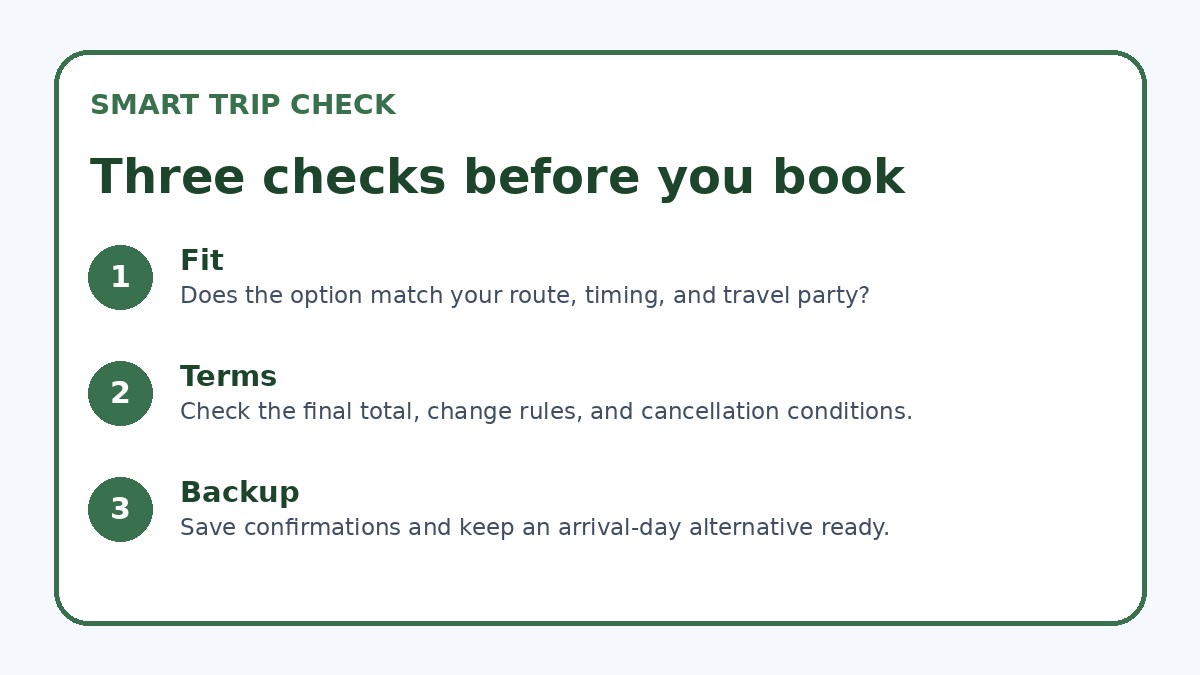
Don’t rely solely on summary text or promotional pages; click through to the full terms and conditions. Look for the insurance policy or product disclosure statement (PDS) and search within it for keywords like "excess", "off-road", "additional driver" and "theft". If anything is unclear, use the booking site’s chat or phone support and request a written clarification you can save with your reservation. Keep screenshots or PDFs of the final wording shown at booking — if wording differs at pickup, the booking screenshots are your reference.
Also compare what’s offered on the rental operator’s page versus what a third-party broker lists. Brokers sometimes bundle third-party insurance products with a rental to lower the upfront deposit or excess; those will have their own claims process and different exclusions. If you consider a separate third-party excess waiver (insurance bought from a separate company), read how refunds are processed after an incident and whether the third-party provider requires you to pay the rental company’s excess first before reimbursing you.
Before you book
- Download or screenshot the full insurance wording, terms, and product disclosure from the rental booking page.
- Confirm the exact excess amount and whether the rental company or a third-party product removes it.
- Verify which roads and driving conditions are explicitly excluded (e.g., beaches, unsealed roads, off-road tracks).
- Register all regular drivers on the rental agreement to avoid invalidating cover during a claim.
- Take time-stamped photos and a signed damage report at pickup; keep copies of both documents.
- Ask the rental agent how to report incidents, where to get a police report if required, and how refunds are processed.
What to check at pickup and how to handle a claim
At the rental desk, ask to see the printed insurance summary before you sign. Match it against your saved booking wording. Walk the car with staff and get a written record of pre-existing damage; take time-stamped photos or video of every panel, the roof, the tyres and the interior, especially where children might scuff seatbacks. If the staff note damage, ensure the report lists it and keep a copy. Confirm where to call after-hours and how to file a claim — many problems arise from unclear communication at handover.
If you have an incident, follow the policy’s claim steps exactly: report to police if required, contact the rental company immediately, and keep all receipts and documentation. When a third-party insurer is involved, note that claims may involve a separate claims form and longer processing; ask your rental company whether they will chase the claim or if that responsibility falls to you. Finally, if a damage bill appears on your card, ask for an itemised invoice and timeline for any refundable security deposit to be returned.
Frequently asked questions
Does a child seat affect car rental insurance in Sydney?
Child seats are primarily a safety item and normally don’t change insurance cover. However, hiring a child seat from the rental company may be subject to separate hire terms and can be charged as an accessory. The important insurance considerations are whether an accessory like a roof box or trailer is permitted under the policy, and whether any damage caused while an accessory is fitted is covered. Always confirm with the rental provider whether accessories or seats change liability, and keep any accessory hire receipt with your booking paperwork.
Can a younger driver in my family invalidate the insurance?
Yes—driver age and licence conditions are common policy restrictions. Many rental contracts stipulate minimum ages for primary drivers and may apply surcharges for drivers under a certain age, or exclude drivers without a full licence. If an unlisted or underage person drives the vehicle and causes damage, the insurer may refuse the claim. Register every driver who might take the wheel, and check the booking wording for age limits, surcharges, and licence requirements before you travel.
Is it better to buy zero-excess cover or use a credit-card insurance option?
There are pros and cons to both. Zero-excess cover sold by the rental company typically removes the payable excess immediately but can be expensive; ensure you read exclusions to understand what remains uncovered. Credit-card insurance may offer excess protection as a benefit but often requires that you pay with that card, meet eligibility rules, and follow the card issuer’s claim process, which can require upfront payment and later reimbursement. Before relying on a card benefit, check the card’s policy wording and confirm how it interacts with the rental company’s claims process.
Final planning note
Families renting a car in Sydney should focus less on headline offers and more on the exact wording that defines what is and isn’t covered. Start by saving the full terms, confirming excess amounts, and ensuring all likely drivers are named on the agreement. Consider whether you’ll drive on roads or in places that policies commonly exclude; if so, a higher level of cover may be worth the cost. At pickup, document the car thoroughly and keep copies of everything. If you want to compare live options, Trip.com can be a place to check availability and current rental terms, but always verify the provider’s final booking page and policy documents before you commit.
Continue planning
Check current options and final conditions
Use the provider page to confirm live availability, the final total, cancellation terms, and every condition that matters to your trip.
This evergreen planning guide was created with AI-assisted drafting and a structured quality review. It does not display live prices, schedules, availability, visa guidance, or provider rankings. Verify current details before booking. Some links are affiliate links; we may earn a commission at no additional cost to you.