
Practical answer first: before you book any Seoul travel deal, calculate the full trip cost—not just the headline fare or room rate. Total your expected expenses for flights (or trains), airport transfers, local transportation, accommodation taxes and fees, daily spending, travel insurance, and any visa or entry-related charges. Add a buffer for currency conversion and unexpected changes. Once you have a single “all-in” figure, compare it to alternative dates, nearby airports, different neighborhoods, and refundable versus nonrefundable options. That number is what turns a tempting deal into a realistic plan for a solo traveler who wants to avoid surprise costs and keep flexibility.
Build an honest all-in budget before you start searching
Start by listing every category where money moves: transportation to and from Korea, airport transfers, flights between cities if any, baggage or seat fees, accommodation (including taxes and cleaning), daily food, SIM or data plans, local transit cards, attractions and activities, travel insurance, and a contingency fund. For solo travelers, single supplements and solo-friendly room types can affect cost; include those. Keep this running total visible as you open different fare and room options so you can compare like with like rather than being distracted by low headline rates.
Use realistic daily estimates for food and activities based on how you like to travel—street food and convenience stores cost much less than sit-down meals, and many museums or palaces have optional guided tours. Convert estimates into the currency you’ll use on arrival so the numbers feel concrete. Don’t forget one-off expenses like SIM cards, luggage delivery services, or coin laundry. This upfront math will reveal if a so-called deal genuinely saves money or simply shifts expense to another category.
Compare neighborhoods and lodging types, not just price tags
Location affects both time and money. A cheaper hotel farther from central Seoul may save per-night costs but add daily transit time and taxi rides when you’re out late. For solo travelers, consider areas with easy 24-hour transit links, good lighting, and nearby convenience stores for quick meals and essentials. Hostels, guesthouses, and single rooms in business hotels can be wallet-friendly, but check what’s included: breakfast, linen, lockers, or access to kitchen facilities can change the true value significantly.
When you evaluate a lodging option, open the booking page and verify the final price breakdown: taxes, service fees, refundable versus nonrefundable rates, check-in/check-out policies, and deposit or ID requirements. If the booking site or hotel shows many rate options, compare the amenity and cancellation differences rather than just the amount. For longer stays, calculate weekly or monthly rates and weigh the convenience of a centrally located slightly pricier base against time lost commuting.
| Approach | Best for | Tradeoff to check |
|---|---|---|
| Book cheapest nonrefundable fare | Strict, fixed plans with minimal chance of changes | Lowest upfront cost but little to no recourse if plans change; cancellation or amendment can be costly. |
| Pay extra for flexible fare or refundable room | Travelers who need schedule flexibility or face uncertain plans | Higher initial price but reduces financial risk and stress if you must change dates or cancel. |
| Choose centrally located modest lodging | Maximizing daytime convenience and saving on transit | Higher nightly rate may be offset by lower transport costs and more free time; depends on itinerary. |
| Select a cheaper out-of-center option | Stretching accommodation budget on long stays | Saves per-night cost but adds daily transit time and potential taxi expenses. |
Weigh transport choices: airports, trains, and local transit costs
Seoul has multiple airports and a comprehensive subway network, but transfers and travel times affect both budget and energy. When comparing Seoul travel deals, factor in how you’ll get from the airport to your accommodation—airport express trains, limousines buses, taxis, or rideshares all differ in price and time. If your itinerary includes day trips or intercity legs, check whether regional trains or buses are available and how they change the overall timeline and cost. Always compare total door-to-door time as well as fare, because a cheaper option that costs extra time often has a real opportunity cost.
For local mobility, purchase a transit card and preload a reasonable amount, and estimate your daily journey count. Solo travelers who prefer late-night flexibility should budget for taxis or ride apps on nights when public transit stops. Check luggage allowances on domestic or regional carriers and whether transfers require re-checking bags. When provider-specific details could change, verify baggage rules, transfer procedures, and payment methods on the airline, rail operator, or booking page before you finalize anything.
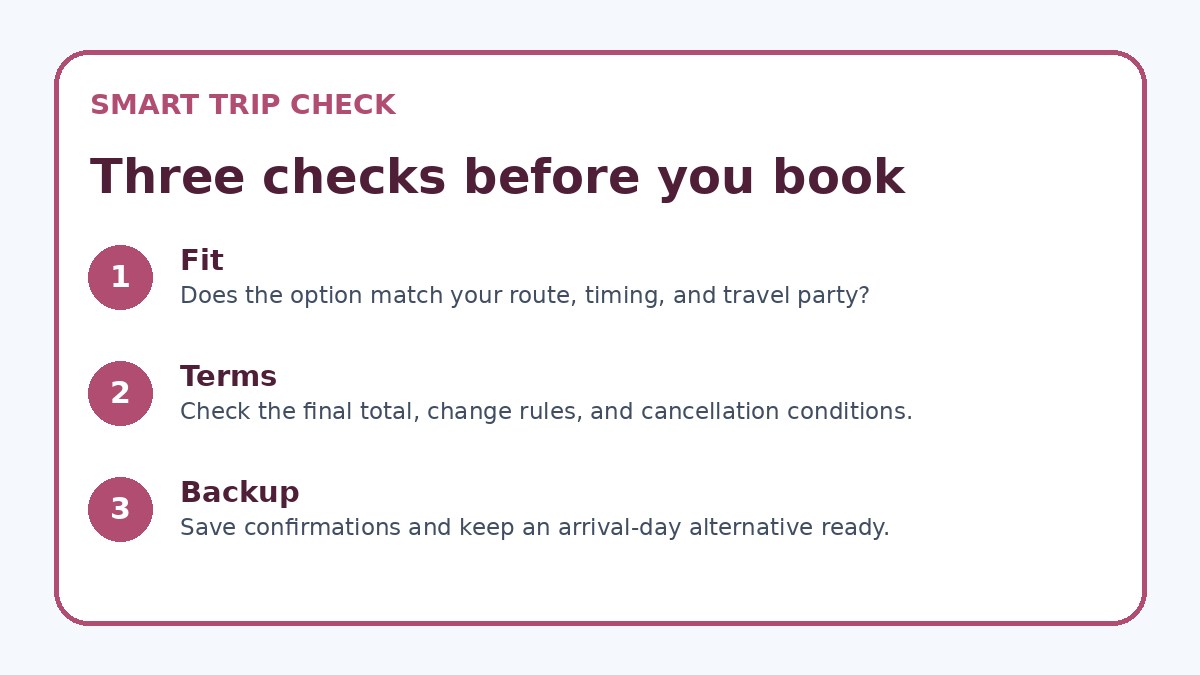
Before you book
- Create a single spreadsheet or note with every expected cost category and current subtotal to keep comparison simple.
- Open the airline and hotel provider final pages to verify baggage rules, taxes, cancellation policies, and any mandatory fees before you lock in a booking.
- Map your lodging choices against transit lines and estimated door-to-door travel times for mornings and nights to see true convenience costs.
- Estimate daily food and activity spending based on your style, then multiply by trip days and add a 10–20% contingency buffer.
- Compare total cost for refundable versus nonrefundable options and decide how much flexibility is worth to you before selecting a rate.
- If using a booking platform, cross-check the final terms on the provider’s official page and save screenshots or confirmation emails showing the full price breakdown.
Policy fine print that affects solo travelers’ flexibility
Cancellation and change fees are the biggest risk factors when trip plans might shift. Nonrefundable fares can look cheap but leave you exposed; refundable or partially refundable options cost more upfront but reduce downside. For solo travelers balancing work or family obligations, look for tickets and rooms with clear, reasonable amendment policies. Also check check-in time windows, late-arrival policies, and whether the accommodation requires an in-person ID check or deposit that could complicate a late-night arrival.
Read the exact rules on the provider’s final booking page: which cancellations are allowed, the deadline and fees, whether vouchers are transferable, and if reschedules require paying the fare difference. If travel insurance is part of your safety net, confirm whether it covers changes, missed connections, or health issues and what documentation is required for claims. Trip.com is one place to compare listings and policies, but always verify the final terms on the airline, hotel, or operator page before you commit.
Frequently asked questions
How do I compare a flight-only deal versus a package when planning a solo trip to Seoul?
Start by breaking each package into the same categories: airfare, ground transfers, accommodation, baggage, and any included meals or extras. For flight-only deals, add realistic estimates for the missing pieces—airport transfers, a few nights’ hotel, and any local transit passes. Consider whether the package includes pre-paid attractions or transport that you would otherwise pay for separately and whether those items match your travel style. Always verify cancellation and change policies for both package and individual components on the provider’s final pages before booking.
What’s the best way to budget for food and activities in Seoul without underestimating costs?
Decide the mix of meals you prefer: street food, casual restaurants, and occasional sit-down dinners. Assign a realistic per-meal budget for each category and plan how many of each you’ll do per day. Add a separate line for paid attractions, guided tours, or special experiences and a daily small-spend buffer for coffees, snacks, and transport. Convert everything into the currency you’ll use and include a contingency of 10–20% to cover exchange rate fluctuations or impulse experiences.
Should I choose a refundable booking if it costs significantly more for the same flight or hotel?
It depends on your risk tolerance and likelihood of change. If your plans are fixed and you’re comfortable absorbing the risk, a nonrefundable rate can save money. But if there’s any chance of date changes, work conflicts, or illness, a refundable or flexible option reduces the potential loss and stress. Compare the incremental cost of flexibility to the total trip budget—if the extra equals a small percentage of the trip or the cost of rebooking a single flight later, it may be worth paying for peace of mind.
Final planning note
For solo travelers, the difference between a pleasant trip and a stressful one often comes down to whether you checked the full cost before booking. Headline fares and nightly rates are only useful with context; build an all-in budget that includes transport, transfers, local transit, taxes and fees, daily spending, and contingency. Compare alternatives—neighborhoods, refundable versus nonrefundable rates, and door-to-door travel time—to see how each choice affects your total cost and convenience. Before you tap confirm, verify cancellation rules, baggage terms, and any mandatory fees on the provider’s final booking page so there are no surprises.
Continue planning
Check current options and final conditions
Use the provider page to confirm live availability, the final total, cancellation terms, and every condition that matters to your trip.
This evergreen planning guide was created with AI-assisted drafting and a structured quality review. It does not display live prices, schedules, availability, visa guidance, or provider rankings. Verify current details before booking. Some links are affiliate links; we may earn a commission at no additional cost to you.