
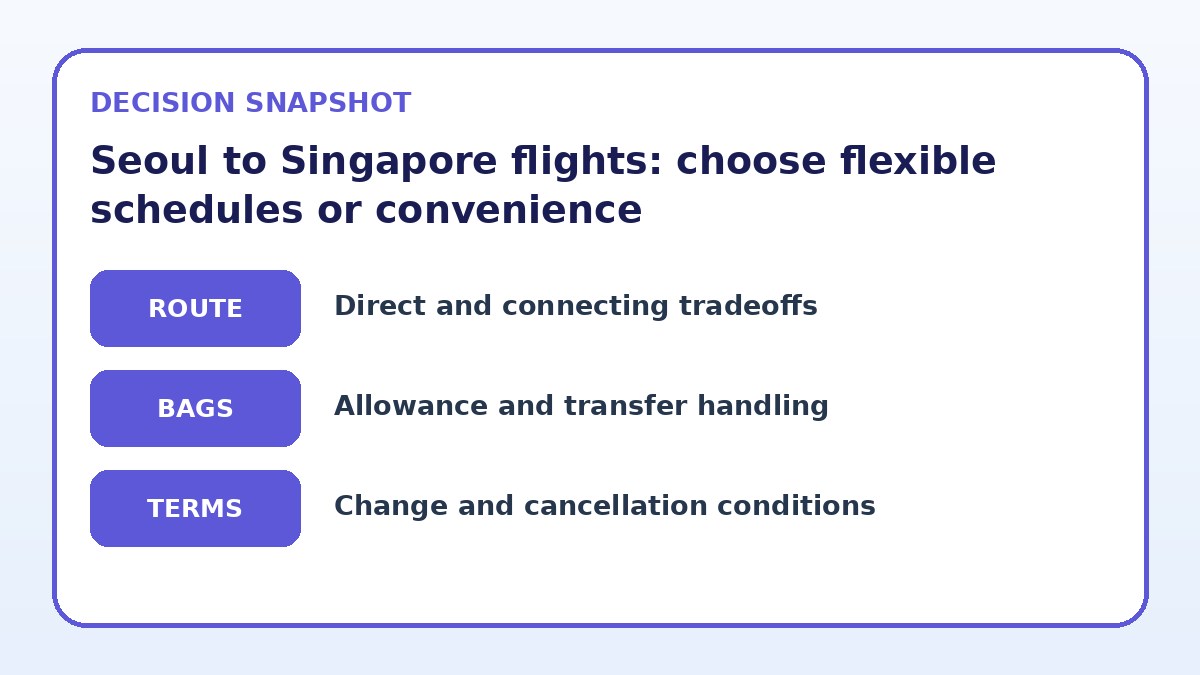
If you need to decide quickly, prioritize what matters most to your family: convenience (fewer connections, shorter transfers, predictable arrival times) or schedule flexibility (more departure options, cheaper standby or change rules). For many families traveling Seoul to Singapore, the practical choice is a flight that minimizes total door-to-door stress: fewer airport changes, family-friendly departure times, and a straightforward transfer plan when connections are unavoidable. That said, flexibility matters if your plans can shift—later flight options, refundable or low-penalty change fares, and routes with reasonable connection windows reduce risk. The rest of this guide explains how to compare direct versus connecting itineraries, which schedule features to prioritize with kids, and what to confirm on the airline or booking page before you commit.
Direct vs connecting: how to weigh convenience
The cleanest route for families is usually a nonstop or single-connection itinerary that minimizes airport transfers and potential missed-connections. Nonstop flights reduce the number of security checks, carry-on rearrangements, and the need to entertain restless children between flights. If a nonstop is available at times that suit your family's sleep and meal rhythms, convenience often outweighs a marginal fare saving. But direct options can depart at inconvenient hours or have limited seat availability for families who need adjacent seats or bassinets.
Connecting itineraries sometimes unlock more schedule choices and lower headline fares, but they carry tradeoffs that matter for families: additional immigration checks, potential luggage re-checks, and tighter minimum connection times. When you compare connecting options, prioritize connections that use the same airline alliance or through-checked baggage to avoid reclaiming and rechecking suitcases. Also look for airports with family-support facilities—play areas or short transfer routes—if an overnight layover is likely.
Schedule flexibility: fares, change rules, and daily rhythm
Flexibility is more than whether the ticket is refundable; it’s about how the schedule fits family routines and how easily you can change plans. Look for fare types or add-ons that permit low-cost date or time changes, and verify change fees and fare-difference policies on the airline’s final booking screen. For families with school or work constraints, having flights at different times of day across multiple days means you can swap to a less hectic option if needed without expensive penalties.
Also consider daily rhythm—late-night departures can mean a sleeping child through part of the flight, but they also risk missed connections if an earlier flight is delayed. Morning departures typically face fewer outbound delays, while mid-afternoon flights may better match nap schedules. If flexibility matters, pick flights from carriers that run several daily flights on the route or connecting hubs with many onward options, so rebooking is easier when plans change.
| Approach | Best for | Tradeoff to check |
|---|---|---|
| Nonstop flights | Families valuing minimal transfers and predictable travel time | Fewer daily options and potentially higher fares or inconvenient departure times |
| Single-connection with same-carrier transfer | Families wanting a balance of options and through-checked baggage | More time in airports and reliance on one carrier’s schedule for connections |
| Multi-carrier connecting itineraries | Families seeking lower fares or unusual departure times | Higher risk of baggage recheck, missed connections, and complicated rebooking |
| Flexible-fare tickets or add-on change protection | Families with uncertain dates or risk of schedule changes | Higher upfront cost in exchange for easier changes or refunds |
Practical convenience features families should compare
When balancing convenience versus flexibility, compare concrete in-flight and ground features: guaranteed adjacent seats or family seating policies, bassinet availability, children’s meals, priority boarding, and baggage allowances. These determine how comfortable and practical a flight will be for children and caregivers. Don’t assume features are standard—verify the exact seat selection rules, baggage inclusions, and whether bassinets must be reserved in advance on the airline’s booking page.
On the ground, think about airport transfer time and complexity. A shorter flight with a long or complex transfer can be more stressful than a slightly longer nonstop. Check typical transfer distances and whether terminals require shuttle buses, immigration, or security re-screening. If public transport or taxis are part of your plan, confirm travel time windows from the airport to your accommodation and the availability of child seats where relevant.
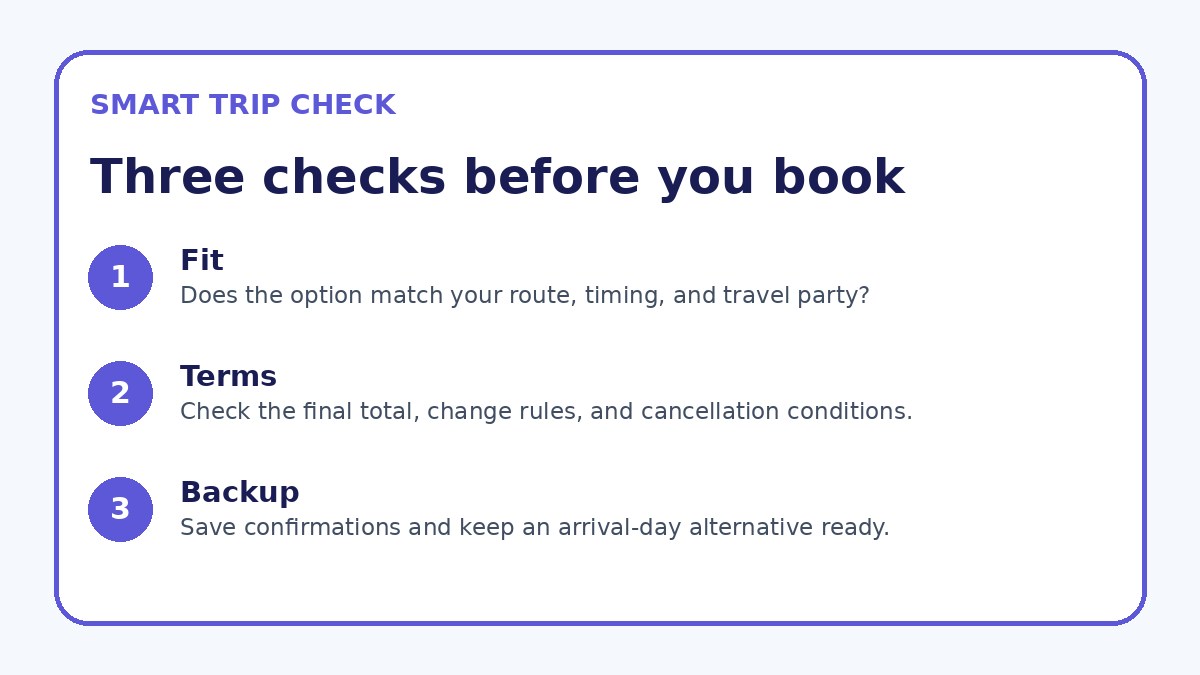
Before you book
- Compare total door-to-door time including transfers, airport transit, and recommended check-in for international family travel.
- Verify fare rules on the airline’s final booking page: change fees, refundability, and how fare differences are handled.
- Confirm baggage allowances for each passenger and whether infant equipment or strollers are included or require special handling.
- Reserve seats together and request bassinets or child meals during booking if available; note any advance deadlines for these services.
- Check connection details: same-terminal transfers, interterminal shuttles, and whether baggage is through-checked between flights.
- Plan arrival logistics: transfer time to accommodation, child-friendly transport options, and any time-of-day considerations for check-in.
How to compare options and what to confirm before booking
Make a side-by-side checklist when comparing itineraries: total door-to-door time, number of connections, earliest/latest departure times that fit your family, baggage and seat policies, and change/refund rules. Use the airline’s final booking page (or a reliable OTA like Trip.com for comparison) to confirm the fare rules, baggage allowances by fare class, and whether seat selection is included or costs extra. If you rely on through-checked baggage, confirm that on the carrier’s confirmation screen; routing through multiple airlines can break through-check agreements.
Also verify arrival time relative to your family’s schedule—jetlag, school drop-offs on return, or early morning check-ins matter. If the itinerary includes an overnight layover, plan accommodation logistics and whether visa or immigration procedures are needed. Finally, note contact options and rebooking processes: some airlines allow easy online rebooking while others require phone calls with long hold times—this operational detail can be decisive when plans change.
Frequently asked questions
Should families always choose nonstop Seoul to Singapore flights?
Not always. Nonstops minimize hassle and are ideal with young children or tight schedules, but they may depart at less convenient times or have limited seat options for families. If nonstops don’t match your preferred departure windows or seats together, a single, well-timed connection—especially on the same carrier with through-checked baggage—can be a practical compromise. Compare total travel time, seat availability, and change policies, and verify those details on the airline’s booking page before deciding.
How much connection time should we allow when traveling with kids?
Allow more than the minimum technical connection time shown in search results. Families benefit from longer buffers for restroom breaks, stroller folds, immigration, and unexpected delays. If both flights are in the same terminal and baggage is through-checked, shorter connections may be workable; otherwise aim for substantial buffers or even an overnight layover. Check airport layouts and the airline’s recommended minimum connection time on their site to set a sensible margin for your family.
What fare features are most valuable for family flexibility?
Look for low-change-fee or refundable fare types, hold or rebooking options without large penalties, and bundled perks like free seat selection and higher baggage allowances. Some tickets include flexible rebooking windows or the ability to hold a reservation briefly without payment—useful when coordinating with family. Always confirm the exact language on the carrier’s final booking page about what changes trigger fees and whether rebooking is possible online or requires calling customer service.
Final planning note
Balancing schedule flexibility and convenience on Seoul to Singapore flights comes down to tradeoffs specific to your family’s priorities. If minimizing airport time, transfers, and the chance of chaotic rebookings matters most, favor nonstop or single-carrier connections with family-friendly seat and baggage policies. If dates could change or you need a wider selection of departure times, accept a connecting itinerary or a more flexible fare type, but verify transfer logistics and change rules thoroughly. Always confirm baggage, seating, and fare-change terms on the airline’s final booking page (or compare options on Trip.com) so the itinerary you buy matches the family experience you need.
Continue planning
Check current options and final conditions
Use the provider page to confirm live availability, the final total, cancellation terms, and every condition that matters to your trip.
This evergreen planning guide was created with AI-assisted drafting and a structured quality review. It does not display live prices, schedules, availability, visa guidance, or provider rankings. Verify current details before booking. Some links are affiliate links; we may earn a commission at no additional cost to you.