If you’re traveling from Seoul to Osaka with family, pick the approach that fits how you want the trip to feel: prioritize schedule flexibility when you value backup options and reduced stress over delays, or prioritize convenience when door-to-door ease and simplicity matter most. Families often juggle naps, luggage, and connecting transport; the right mix can mean fewer meltdowns. This article gives a quick decision, then breaks down how to compare flight types, transfers, departure airports, and extras so you can book with confidence. Follow the checklist and FAQ at the end to verify details on the carrier’s booking page before you finalize anything.
Decide what 'flexible' and 'convenient' mean for your family
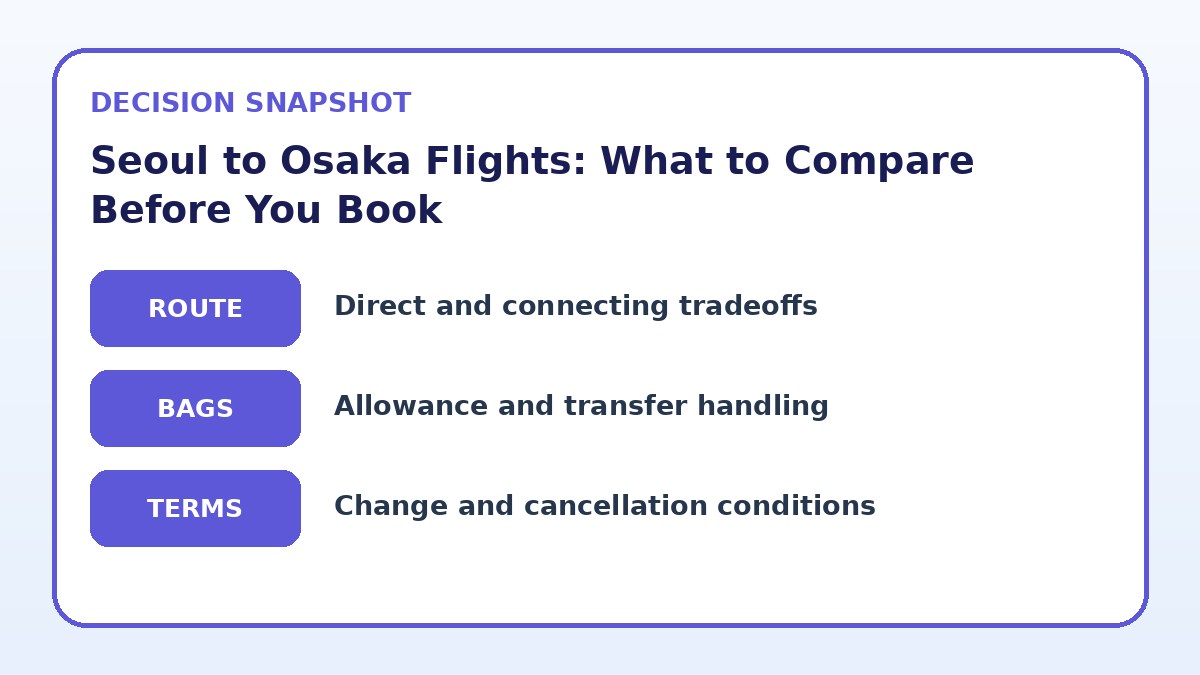
“Flexible” can mean different things: refundable or changeable fares, the ability to rebook without heavy penalties, and schedules with multiple daily options so you can move to another flight the same day. For families, flexibility often also includes easy customer service access—online or phone—so you can switch plans while juggling children. When comparing fare rules, look beyond price: read the exact change and cancellation terms on the airline’s final booking page, note any reissue fees, and check whether taxes or fare differences still apply if you change dates.
“Convenient” usually focuses on cutting handling complexity: direct flights or single-plane connections, departure airports closer to your accommodation, straightforward transfers in Osaka, and predictable arrival times to match hotel check-in or evening routines. Convenience also includes seat selection (sitting together), expedited boarding options, and straightforward baggage rules. Weigh convenience against flexibility by considering how much hassle a disrupted schedule would cause your family and whether simple on-the-ground options (airport transfers, late check-in) can mitigate risks.
Comparing direct and connecting flights for family needs
Direct flights minimize variables: fewer takeoffs and landings, no mid-journey gate changes, and less chance of lost luggage—advantages that matter with small children or lots of equipment. But direct options sometimes run from a different airport in Seoul or land at a less convenient Osaka airport; that can add ground transfer time that offsets airborne convenience. When direct flights are available, check total door-to-door time, not just airborne duration, and confirm whether the same aircraft literally continues or whether a short connection is required.
Connecting itineraries can increase schedule flexibility because they offer more departure times and alternate routings if a flight is delayed or cancelled. However, connections introduce transfer risk: missed connections, longer layovers, or a need to re-clear security or immigration. For families, aim for connections with comfortable minimum transfer times, terminals with family-friendly facilities, and airlines that protect connecting passengers. Verify on the airline’s final booking page whether connections are protected and what assistance they promise for rebooking.
| Approach | Best for | Tradeoff to check |
|---|---|---|
| Prioritize direct flights and convenience | Families valuing simplicity, fewer transfers, and predictable door-to-door time | Fewer daily options and potentially less flexible change or refund terms |
| Prioritize flexible fares and schedules | Families who need the option to change plans easily or face uncertain schedules | Often higher upfront cost and possible extra steps at the airport |
| Hybrid approach: moderate flexibility + convenient airport choice | Families wanting a compromise: some rebooking leeway with reasonable ground logistics | May require careful fare-rule reading and small additional expense for convenience features |
| Use connecting flights with protected connections | Families seeking more departure time options while maintaining rebooking protection | Longer total travel time and more complexity during transfers |
Airport pairs and ground logistics that affect convenience
In Seoul, you may have choices between airports; in Osaka, too. A shorter drive to the departure airport can be a major convenience advantage when traveling with children who are tired or prone to last-minute issues. Also consider public transit options like airport express trains versus long taxi rides. If you depend on child seats or strollers, check how each airport handles curbside drop-off, elevator or escalator access, and stroller gate-check processes. These small logistics often have a bigger effect on family comfort than shaving minutes off the flight time.
On arrival, think about how you’ll travel from the Osaka airport to your accommodation. A convenient choice might mean landing at the airport with a direct rail link to your neighborhood, or one with frequent airport shuttle services. If you arrive later in the day, confirm whether trains or buses still run and whether taxis are readily available. Before you book, check the carrier’s final booking page for terminal information and cross-reference ground-transfer options with the airport’s official site or a trusted trip planner.
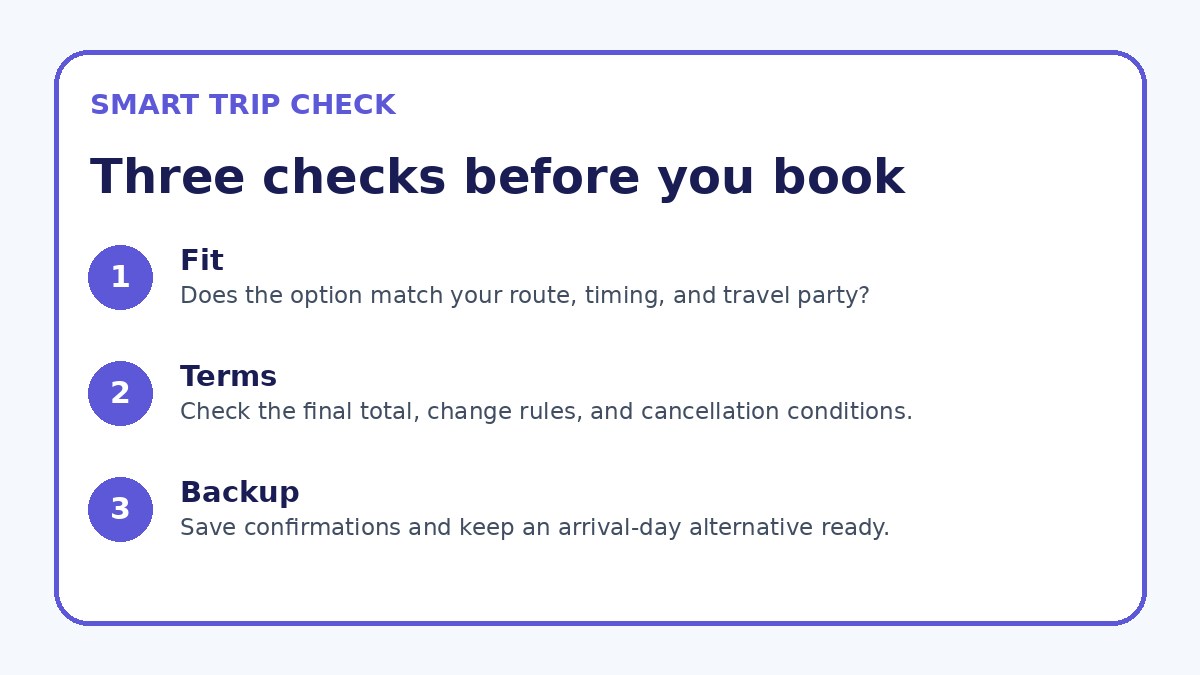
Before you book
- Confirm on the airline’s booking page whether the fare allows free or low-cost date changes and what fees or fare differences apply.
- Verify baggage rules for adults, children, and infants—confirm whether checked baggage is included or must be added separately.
- Reserve seats together at booking or immediately after; check seat maps so you aren’t separated in different rows or cabins.
- Note departure and arrival terminals on the final booking page and map transfer options from each terminal to your local transport or accommodation.
- Check whether baggage is checked through on connecting itineraries or if you must reclaim and recheck it during transfer.
- Confirm daycare-friendly services: early family boarding, stroller gate check procedures, and availability of child meals if needed, via the airline’s customer information.
Fare rules, seats, and extras: what families should verify
Fare flexibility comes in tiers. Low-cost fares may be cheaper but often limit changes, seat selection, and checked baggage, which can be inconvenient for families. Standard or family-friendly fares generally include seat assignments and baggage allowances, and some provide free date changes or lower reissue fees. When comparing fares, read the detailed terms on the airline’s final booking page: confirm whether infants and children share baggage allowances with adults, how seat assignments are handled, and whether any family bundles or extras are available.
Also check seat maps and the cost to reserve seats together—securing adjacent seats can matter more than a slightly cheaper fare. Look for family amenities like early boarding for families, bassinets on long sectors, and the availability of child meals if needed. If you’ll use a connecting itinerary, verify whether baggage is checked through to the final destination or must be reclaimed and rechecked; if you see conflicting information, contact the airline before booking to get a clear answer.
Frequently asked questions
Should families always choose direct Seoul to Osaka flights when possible?
Direct flights reduce the number of moving parts—one aircraft, one boarding, and lower risk of missed connections or lost luggage—so they’re often the most convenient choice for families. However, convenience depends on total travel time from your home to the Osaka accommodation. If a direct flight departs from an airport that adds an hour of ground transfer compared with a connecting option from a closer airport, that advantage may disappear. Weigh door-to-door time, cost, and the likelihood you’ll need to change plans; confirm specifics like terminals and ground connections on the airline’s booking page before deciding.
How much flexibility do families need versus the extra cost?
The right amount of flexibility depends on your family’s tolerance for disruption and the likelihood plans will change. If you travel with infants, tight schedules, or medical needs, paying more for a fare that allows free changes or refunds can be worth the peace of mind. For more predictable trips, a lower-cost fare plus travel insurance that covers illness or travel interruption may be sufficient. Always examine the fare rules on the final booking page: know exactly what triggers fees, whether taxes change on reissue, and how refunds are processed.
What transfer and airport details should I verify before booking?
Before you book, check the departure and arrival terminals, expected ground transport options (train lines, shuttle frequency, taxi availability), and whether the airport has family facilities like nursing rooms or play areas. For connections, find out if baggage is checked through and whether you’ll need to clear immigration or security between flights. These operational details can change seasonally or by carrier, so confirm them on the airline’s booking page and the airports’ official information pages, and factor in additional time for stroller handling or child-seat needs.
Final planning note
Choosing between schedule flexibility and convenience for Seoul to Osaka flights comes down to what will reduce stress for your family on travel day. If fewer touchpoints and predictable transfers matter most, lean toward simpler, more convenient routings and seat arrangements. If your plans could shift, prioritize fare rules that let you rebook without heavy penalties. The smart middle path is a moderately flexible fare combined with an airport pairing and seat choices that minimize on-the-ground hassle. Use the checklist to verify fare rules, baggage, seats, and terminal logistics on the airline’s booking page before you commit, and compare availability on Trip.com if you want a snapshot of current options.
Continue planning
Check current options and final conditions
Use the provider page to confirm live availability, the final total, cancellation terms, and every condition that matters to your trip.
This evergreen planning guide was created with AI-assisted drafting and a structured quality review. It does not display live prices, schedules, availability, visa guidance, or provider rankings. Verify current details before booking. Some links are affiliate links; we may earn a commission at no additional cost to you.