
If you’re traveling to Dubai with children, planning for the shoulder seasons — the cooler months before and after peak winter — can give you more comfortable weather, shorter lines, and improved value without full winter crowds. The practical choice: target arrival and departure dates just outside the busiest school-holiday windows and compare accommodation in family-friendly neighborhoods, prioritizing an easy mix of indoor and outdoor options. For flights and package deals, compare refundable or flexible fare families, and check multiple sources for availability and restrictions. Before you finalize anything, verify cancellation and change policies, baggage allowances, and whether major attractions require time-specific tickets. This article focuses on tradeoffs families face when timing a Dubai trip in shoulder seasons and gives concrete decision steps for booking stays, transport, and attractions.
Timing and weather tradeoffs for families
Choosing shoulder season dates in Dubai means balancing milder weather against the possibility of some reduced services. Temperatures are more comfortable for outdoor play and beach time than in peak summer, but occasional windy or hazy days can occur. For families, that natural variability is often manageable if you plan a flexible daily rhythm: morning outdoor activities, midday indoor rest or museum time, and evening outdoor dinners or promenades when the temperature drops.
The main tradeoff is crowding and event timing: shoulder periods generally mean fewer tourists than peak winter, but some attractions, restaurants, and seasonal entertainment operate on altered schedules outside high season. That’s why you should check opening hours and whether attractions require advance time-slot tickets — verify all operational details on the attraction’s official pages or final booking screens before paying. If specific events are a priority, book them directly or through a trusted reseller and confirm change or refund options.
Where to stay: neighborhoods and family needs
For families, proximity matters more than prestige. Choose a neighborhood that minimizes travel time between your accommodation and key activities: a central base near easy transit (or a short taxi ride) to beaches, malls with play areas, and child-friendly attractions reduces stress. Look for family rooms or interconnecting rooms and verify bed configurations on the provider’s booking page. Prioritize places with on-site dining options, a pool with shallow sections, and laundry facilities to simplify daily life with kids.
Deciding which type of lodging to book depends on how you plan to balance budget and convenience. Apartments or suites with kitchenettes give flexibility for picky eaters and late bedtimes; hotels with kids’ clubs and supervised activities buy you adult time. The tradeoff is cost versus convenience: apartments often require more self-organization, while hotels may add convenience fees. Always confirm whether advertised family amenities are included or require extra booking and payment — review the hotel’s policies before completing your reservation.
| Approach | Best for | Tradeoff to check |
|---|---|---|
| Book flexible refundable fares and flexible hotel rates | Families who value cancellation freedom and last-minute date changes | Usually higher upfront cost and potentially limited promotional savings |
| Lock in a non-refundable package with bundled tickets or transfers | Families confident in fixed dates who want simplified logistics | Lower cost but limited options if plans change or an attraction reschedules |
| Choose an apartment-style stay with kitchen facilities | Families needing meal flexibility, longer stays, or space for kids to play | More self-catering work and possibly fewer on-site child services |
| Stay in a full-service hotel with kids’ club and concierge | Families wanting on-site childcare, dining, and activity booking help | Higher nightly rates and additional fees for some family services |
Finding and comparing Dubai travel deals
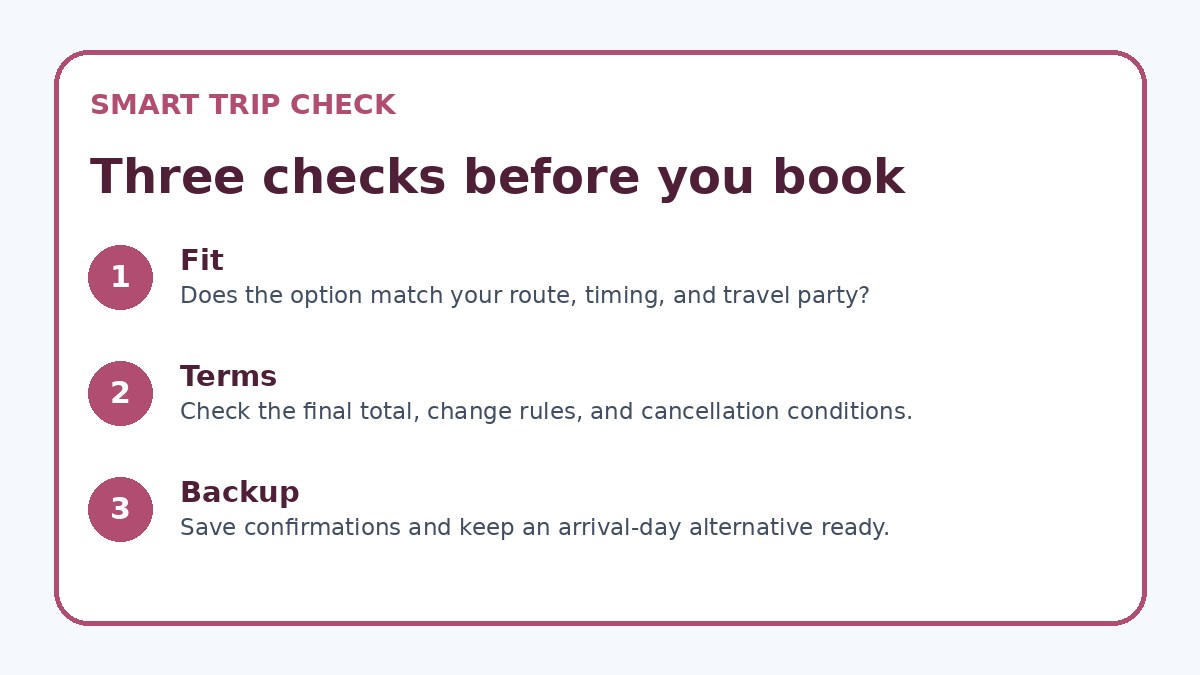
When comparing deals for a family trip, gather a short list of options and compare the same variables across them: total price for your exact dates, cancellation terms, whether breakfast or extra beds are included, and the exact room type. Don’t assume an advertised family rate covers children’s meals or additional bedding; these are commonly added at checkout. If you use an aggregator to scan options, cross-check the final terms on the provider’s or booking engine’s payment page because taxes and fees can change the effective value of a deal.
Use flexible filters to compare refundable rates and packages that bundle attraction tickets or transfers — which can simplify logistics for families. If you see a package that looks convenient, verify the redemption rules and whether time-specific attraction reservations are necessary. Trip.com may be useful for checking current availability and comparing options, but always confirm crucial details on the supplier’s final booking page and note any differences in cancellation windows and refund conditions before you commit.
Before you book
- Confirm the exact room type, bed configuration, and maximum occupancy on the hotel’s final booking page before paying.
- Compare refundable and non-refundable rates for flights and hotels and note the deadline and penalties for changes or cancellations.
- Verify attraction ticket rules: whether time-slot reservations are required, refund policies, and whether child pricing applies automatically.
- Request or reserve child seats for transfers and check local taxi or transfer provider policies on booster seats and car-seat requirements.
- Confirm meal inclusions and extra-bed charges, and ask the property how they handle late check-ins and early check-outs for families.
- Buy travel insurance that covers family medical needs, trip interruption, and event cancellations—read policy exclusions and claim procedures carefully.
Daily planning and packing for shoulder-season travel
Build a loose daily plan that mixes outdoor mornings with indoor afternoons to handle warm spells or dust. Pack layers: lightweight long-sleeve shirts for sun protection, a light jacket for cooler evenings, and comfortable shoes for walking. Include a small medical kit, sunscreen, refillable water bottles, and snacks to avoid last-minute shopping with tired children. For babies and toddlers, bring items that make napping away from home easier — a familiar blanket, a portable blackout cover, or a white-noise app.
Also plan transport with kids in mind: check seat-safety options and whether your accommodation can arrange child seats for transfers. If you intend to use public transport, study the route map and peak hours so you can avoid crowded commutes with strollers. Keep attraction tickets, passports, and any insurance or medical numbers in a single, accessible folder or app, and recheck provider requirements like ID or printout needs before travel to prevent a last-minute scramble.
Frequently asked questions
When are Dubai’s shoulder seasons and why do they matter for family trips?
Shoulder seasons fall just before and after the busiest winter months and offer milder temperatures and reduced crowding. For families, these periods can make outdoor activities, beaches, and theme parks more enjoyable because days are less hot and lines are often shorter than peak season. However, because services and seasonal events shift according to demand, you should confirm attraction hours, restaurant openings, and any special event schedules before booking to avoid surprises.
How can I find reliable Dubai travel deals suitable for families without missing important restrictions?
Start by creating a shortlist of accommodations and fare options, then compare identical date ranges, room types, and passenger counts. Look beyond headline prices to read the fine print: cancellation rules, included meals, child policies, and extra-bed fees. Use aggregator tools for a wide view, but always finalize the booking on the provider’s page to confirm the final price and terms. Trip.com can be used to compare availability, but verify details such as inclusions and refund rules on the supplier’s own checkout.
What should I pack and plan daily for a family visiting Dubai in a shoulder season?
Pack layers for fluctuating temperatures: light sun-protective clothing, a light jacket for evenings, and comfortable walking shoes. Bring sun protection, refillable water bottles, and a small medical kit. Structure days around cooler mornings for outdoor activities and reserve indoor attractions or rest time during hotter or windier afternoons. Also plan transport logistics in advance: make arrangements for child seats in transfers, and have digital copies of tickets and important documents accessible to reduce stress while moving between activities.
Final planning note
Planning a family trip to Dubai around shoulder seasons can deliver a pleasant balance of weather, space, and value — but it demands a little extra checking and flexibility. Choose a family-friendly neighborhood that minimizes travel time, compare refundable versus bundled deals based on your tolerance for change, and verify all provider rules on final booking pages. Build daily plans that mix outdoor mornings with indoor afternoons, pack for variable conditions, and keep key documents and booking confirmations handy. With these steps you’ll be prepared to enjoy Dubai’s attractions without being at the mercy of peak-season crowds or unpredictable service hours.
Continue planning
Check current options and final conditions
Use the provider page to confirm live availability, the final total, cancellation terms, and every condition that matters to your trip.
This evergreen planning guide was created with AI-assisted drafting and a structured quality review. It does not display live prices, schedules, availability, visa guidance, or provider rankings. Verify current details before booking. Some links are affiliate links; we may earn a commission at no additional cost to you.