If your family needs flexibility, the practical first step is simple: compare cancellation rules line by line for flights, hotels and extras before accepting any bundled offer. A package can simplify booking, but the convenience is worth little if one vendor’s nonrefundable rule strands a child or forces a costly change. Start by matching the same travel dates, number of travelers and room/seat types across options. Verify who issues refunds, how credits work, whether third-party fees apply, and exactly what documentation or time windows trigger a refund or change. This article focuses on the actionable criteria families should use when evaluating Honolulu travel deals so you can choose a plan that minimizes risk and keeps your itinerary flexible without relying on advertised discounts or promises that change after you click.
Test package value fairly
| Booking approach | Best for | Tradeoff to check |
|---|---|---|
| All-in-one travel package (single checkout) | Families wanting single-place management and straightforward initial booking. | May hide supplier-level nonrefundable rules and use credits; confirm who issues refunds and exact penalties before purchase. |
| Book flights and hotel separately with refundable rates | Families prioritizing maximum refunds on high-change components like flights or hotels. | Higher initial cost and more separate confirmations to manage, but clearer refund paths and faster cash returns. |
| Bundle flights with refundable hotel, add activities separately | Families who want core flexibility on travel and lodging while shopping activities for best terms. | Requires careful tracking of different suppliers’ policies; activity refunds may still be strict or voucher-based. |
| Basic nonrefundable bundle with travel insurance added | Families seeking lower upfront prices but willing to rely on insurance for covered cancellations. | Insurance claims add complexity and exclusions; verify policy coverage for family-specific reasons like illness or school closures. |
Check current package and separate options
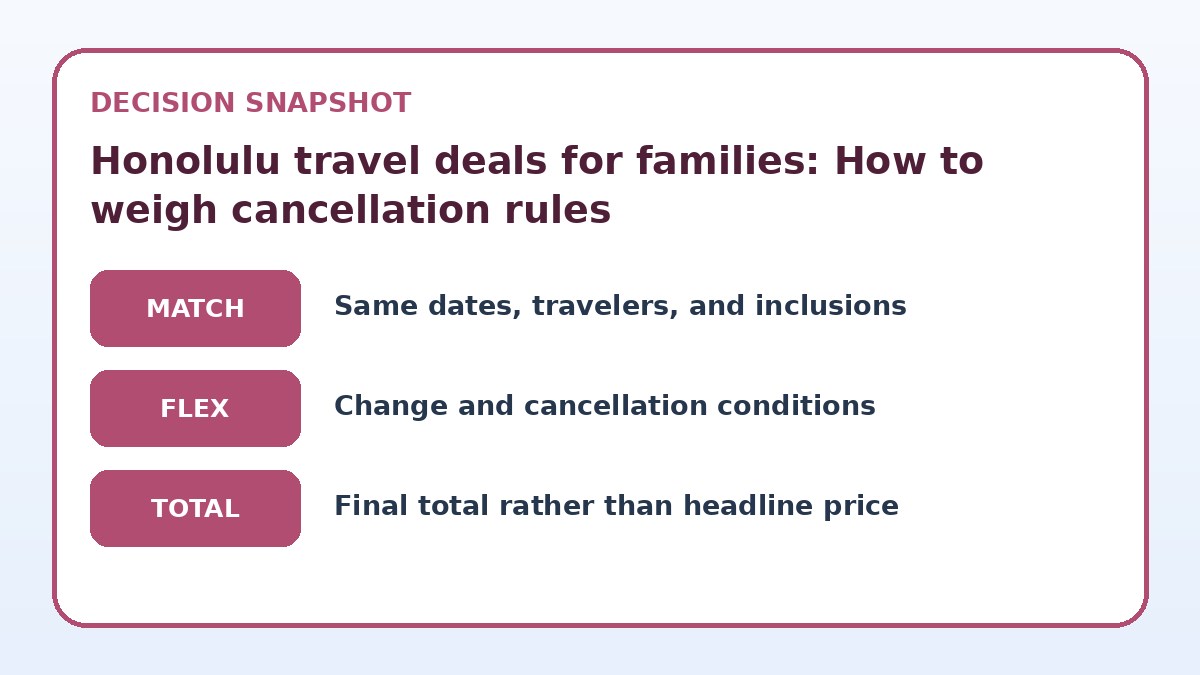
Use identical dates, travelers, room needs, baggage, and flexibility so the comparison stays meaningful.
What to compare before deciding a bundle is useful
Before you judge a bundled Honolulu deal, put the bundle beside an equivalent separate booking and compare every inclusion. That means the same outbound and return dates, seat classes (or economy versus premium economy), the same hotel room type and bedding configuration suitable for your family size, and identical add-ons such as checked bags, lap infant fares, and airport transfers. If a package uses different room categories or omits child fares, a lower headline price can hide extra charges or stricter cancellation terms. Use a spreadsheet or checklist to ensure you’re comparing apples to apples: dates, travelers, beds, seat assignments, baggage allowances, and activity inclusions.
Next, examine who is contractually responsible for cancellations and refunds. Many travel packages are sold by third-party consolidators who act as the merchant of record; others are bundles assembled by airlines or hotel groups. That distinction matters because the merchant’s terms dictate processing times, whether refunds are issued as cash or travel credit, and where to file changes. On provider pages look for explicit phrasing: who accepts cancellations, whether refunds are immediate or delayed, and whether separate supplier rules override ticketing terms. If the terms aren’t plainly visible, call the seller and get confirmation in writing before booking.
Inclusions: what to verify in the fine print
List every inclusion the package advertises and verify it against the same items when booked separately. For family travelers, pay special attention to bed configuration, connecting rooms or suites, early check-in and late check-out options, and whether children stay free or occupy a paid bed. For flights check baggage allowances per passenger and whether infant fares or bassinets are included. Many bundled packages bundle nonrefundable extras like sightseeing tours or shuttles; make sure those individual components have cancellation windows that suit family needs, especially if you may need to cancel close to travel dates.
Also check whether any inclusions are actually 'subject to availability' at booking or at check-in; that clause can affect families who need guaranteed adjoining rooms or particular meal plans. Confirm who issues vouchers or credits if an included activity is canceled: will the hotel front the refund, or do you have to chase a tour operator? When provider-specific facts matter, go to the final booking page and screenshot or save the cancellation and modification policy text so you have the contractual language if you need to dispute a charge later.
Look past the headline total
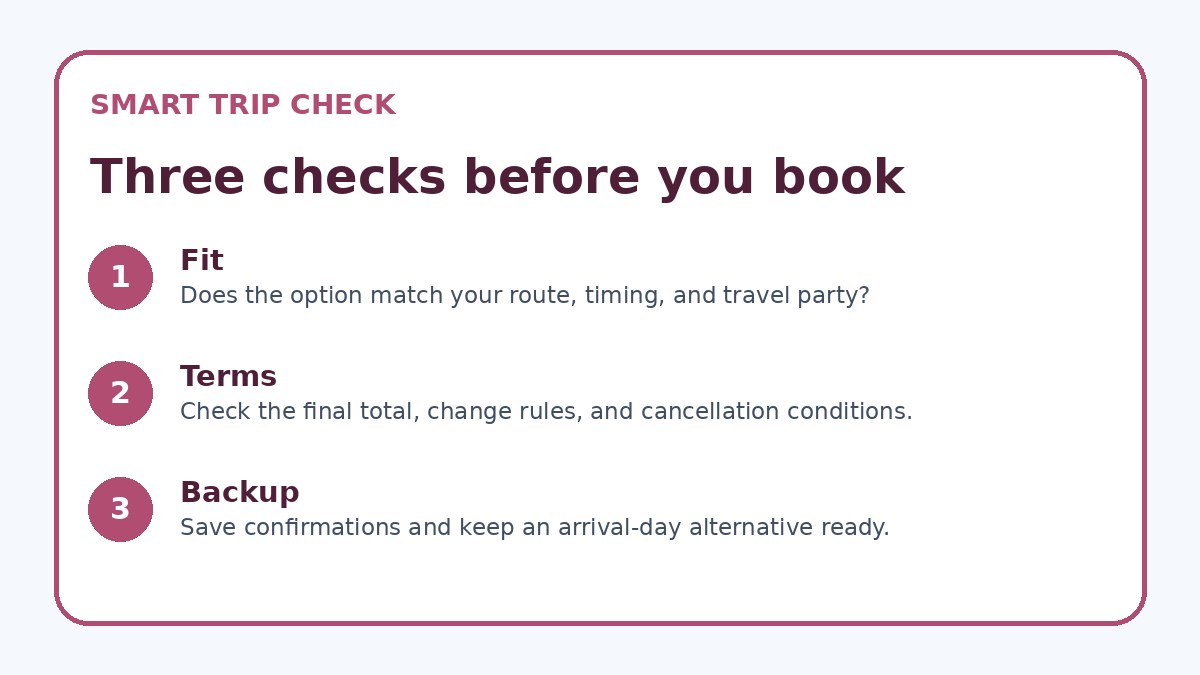
Compare inclusions and change conditions before deciding whether a package is genuinely useful for this trip.
Deal comparison checklist
- Match dates, passenger count, and room/seat categories across package and separate booking quotes to avoid comparing unequal offers.
- Confirm who is the merchant of record and read the seller’s cancellation and refund timeline on the final booking page before paying.
- Verify whether refunds are cash or travel credits, and check processing times so you know when funds will be available for rebooking.
- Check child and infant rules specifically—their fares, seat assignments, and whether special documentation affects cancellations.
- Save screenshots or PDFs of the exact cancellation and modification language shown on the provider’s final checkout screen.
- If relying on travel insurance, read exclusions and claim procedures and ensure the policy covers your likely family disruptions.
Flexibility and traveler-specific value for families
Families often value different kinds of flexibility than couples: the ability to change bookings without penalty within school-term limits, easier seat selection for multiple passengers, and straightforward rules for infants or children. A refundable hotel rate might be most valuable for a family who may need to shift dates for a school event, while refundable flights or tickets with free changes could matter more if a child’s health or travel documents are uncertain. Think about which components are most likely to change and prioritize refundable options there rather than paying extra for flexibility you won’t use.
Also consider time-to-refund and method: a provider that issues quick cash refunds reduces stress after a canceled trip, while store credit or vouchers—common in some package offers—may be cumbersome if you can’t reuse them within your planning horizon. Evaluate how easy it is to rebook for equivalent dates: some suppliers allow free reissue within a window but require fare differences. For families, the value of an option is not only its headline flexibility but how easy it is to actually execute a change for multiple passengers without juggling separate credits.
Final terms: where families should focus before booking
On the final booking page, verify the cancellation timing, who will process refunds, and any service or processing fees. Look for clear statements about full refunds versus credits, the maximum time to wait for a refund, and whether cancelling part of a combined booking (for example, only one traveler in a family) triggers penalties for the remainder. If the package includes nonrefundable supplier components, confirm whether the seller offers any protections or whether you must petition the supplier directly. Document all terms with screenshots or saved PDFs and keep confirmation emails organized for quick access.
Another often-missed detail is how changes are handled for group reservations or linked itineraries. If your family’s hotel and flight are ticketed together, a change on one may require reissue of the entire package. Confirm how reallocations work for infants or additional guests added later. When specific provider policies could change, visit the supplier’s official booking page—airline, hotel or tour operator—and verify cancellation and change policies there before completing payment. Trip.com can be used as a comparison point to view current availability and policies, but always rely on the seller’s final booking terms for the contract.
Travel Deals & Booking Strategy questions travelers ask
Is it safer for families to book a package or book components separately for Honolulu?
Safety depends on which parts of the trip you expect might change. Booking components separately gives clearer refund paths and often faster cash returns for flights and hotels, which are the most common change points for families. A package simplifies management but can combine refund timing and transfer control to the package merchant; that can delay refunds or convert them to credits. Evaluate which components (flights, lodging, activities) need flexibility and choose refundable options there, whether inside a bundle or on separate bookings.
How do vouchers and travel credits affect family planning if I must cancel?
Vouchers and credits may lock you into a supplier’s future inventory and expiration windows that don’t match your family’s schedule. They can be useful if you intend to rebook with the same provider soon, but they reduce liquidity and can complicate rebooking for exact room types or seat combinations. Before accepting a credit, check its expiration, whether it’s transferable across travelers, and any blackout dates. For families who may postpone travel for months or need refunds to fund alternative plans, direct cash refunds are generally preferable.
What exact terms should I screenshot on the final booking page to protect my family?
Take screenshots of the full cancellation and change policy, the breakdown of charges, the merchant-of-record name, and any notes about vouchers versus cash refunds. Capture the booking confirmation language that states who processes refunds and the timeframes for refunds or credits. If any family-specific rules are listed (child rates, infant policies, or bed/room guarantees), save those too. These records can be essential if you need to dispute a charge or demonstrate agreed terms when contacting customer support.
Final decision note
When planning Honolulu travel deals for a family, the most practical approach is to make decisions based on how each component’s cancellation policy will affect your plans. Compare identical itineraries side by side, prioritize refundable options for the items most likely to change, and confirm who issues refunds and how quickly. Keep detailed records of final booking terms and verify supplier policies on their own booking pages. By focusing on real contract terms instead of headline prices, you’ll choose a booking path that balances convenience, cost and the flexibility families actually need.
Continue planning
Check current options and final conditions
Use the provider page to confirm live availability, the final total, cancellation terms, and every condition that matters to your trip.
This evergreen planning guide was created with AI-assisted drafting and a structured quality review. It does not display live prices, schedules, availability, visa guidance, or provider rankings. Verify current details before booking. Some links are affiliate links; we may earn a commission at no additional cost to you.