For most family trips that stay inside Lisbon’s city center and nearby coastal towns, a car often adds more hassle than freedom. Narrow, cobbled streets, scarce parking, timed restrictions and one-way systems make driving around central neighborhoods slower and more stressful than transit or walking. But a rental becomes attractive if your itinerary includes multiple day trips to outlying beaches, Sintra’s hilltop palaces, or the Alentejo coast where public connections are infrequent and coordinated schedules with children are hard to manage. The practical question is not whether a car is possible, but whether it genuinely improves your daily rhythm: fewer transfers, easier stroller and luggage handling, and time flexibility versus parking costs, pickup/return friction, and insurance uncertainty. Read on to weigh route value, pickup/return logistics, insurance wording you must verify, and a clear non-driving fallback so your family can book confidently.
Route value: when a car genuinely improves a family itinerary
Start by mapping each day’s main destinations and ask whether public transport links are direct, frequent, and short enough for kids. In-city attractions like Alfama, Baixa, and Belém pair well with walking, trams, and short taxi rides; the car adds little because parking near the most interesting streets can be limited and walking is often faster. However, if your family itinerary includes several full-day trips to dispersed sites—Sintra’s palaces spread across hills, the wide beaches of Costa da Caparica, or the quieter Alentejo towns—a car reduces transfers, makes stroller and picnic logistics simpler, and lets you depart on your own schedule rather than chase timetables.
Evaluate the total door-to-door time, not just driving minutes. Factor in searches for parking, loading and unloading child seats, and traffic at peak times. A roughly 40–80 minute regional drive that removes two train changes or long taxi waits can be worth renting; a 20–30 minute inner-city drive rarely is. Also consider how much of your day would be spent hopping between sites: if most days would be single-purpose (museum mornings, park afternoons) you may manage fine without a car, but multi-stop days benefit from the flexibility of private transport.
Decide whether driving earns its place
| Mobility strategy | Best for | Cost or friction to check |
|---|---|---|
| Full rental car for the entire stay | Families with multiple day trips to remote areas or flexible schedules that need a vehicle daily. | Higher parking and insurance hassle in the city; more time spent managing pickup/return logistics. |
| Short-term rental only for specific day trips | Families who mostly use transit in Lisbon but want flexibility for one or two long outings. | Extra pickup/return steps around day trips and possible hourly charges or limited pickup windows. |
| No car: rely on public transport, taxis, and guided tours | Families staying central who prefer to avoid parking, driving stress, and city traffic. | Less flexibility for remote destinations and more dependence on schedules and transfers. |
| Hybrid: public transport in city plus pre-booked private transfers | Families who want convenience for airport transfers and occasional remote transfers without a full rental. | Higher per-trip cost and requires careful advance planning for child seats and pick-up points. |
Check live rental choices only after the route test
Use the exact driver, dates, pickup point, and return plan to compare current conditions.
Insurance wording: what to read and verify before you commit
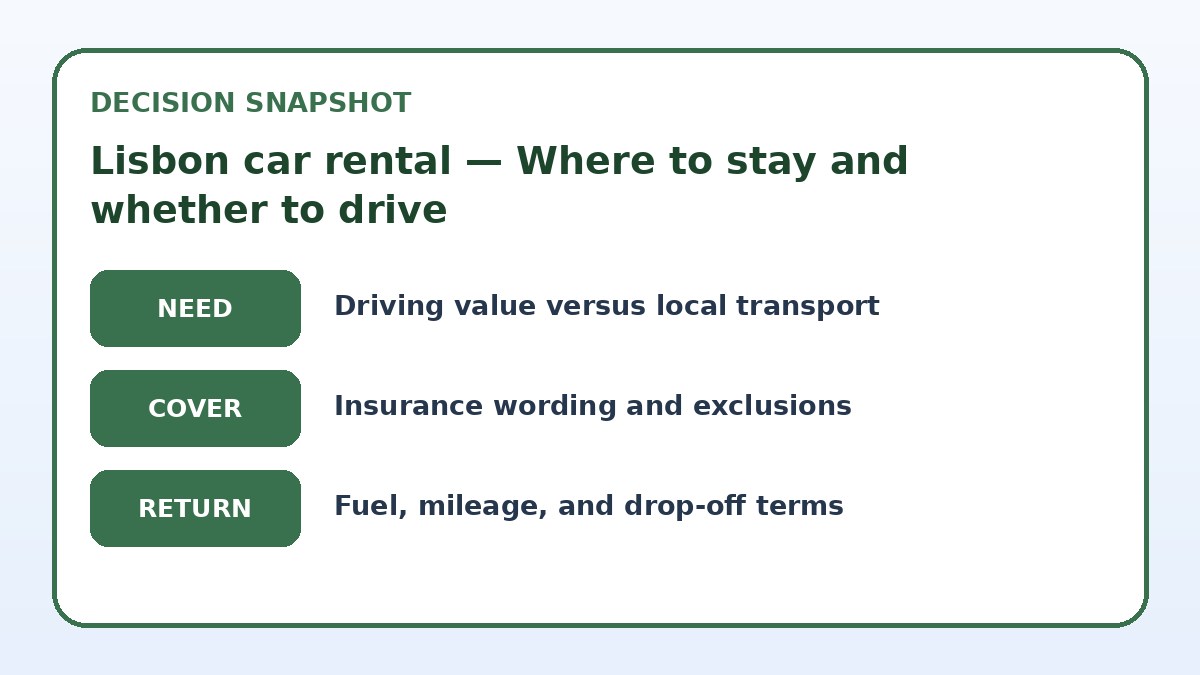
Insurance phrasing in rental contracts shapes real risk for families. Look for clear definitions of Collision Damage Waiver (CDW), theft protection, and any mandatory excess or deductible amounts. Pay special attention to exclusions for driving on unpaved roads, for additional named drivers, and for claims involving child seats or roof boxes. Also verify whether CDW reduces your financial exposure to zero or whether a residual excess still applies. If you plan to use credit-card coverage, check the card issuer’s explicit terms: many require that the cardholder declines the rental company’s insurance on the rental agreement and may have geographic exclusions.
Don’t accept vague promises—ask for exact language or a screenshot of the final booking page where insurance options are listed. If you see optional coverage called “super CDW” or “zero excess,” confirm what it actually covers and whether it requires payment at pickup. Note any rules about crossing borders if your route ventures beyond Portugal. Finally, record the vehicle’s condition with photos at pickup and keep all paperwork; disputes over scratches or windshield damage are a common friction point for families juggling baggage and children.
Compare the full rental conditions
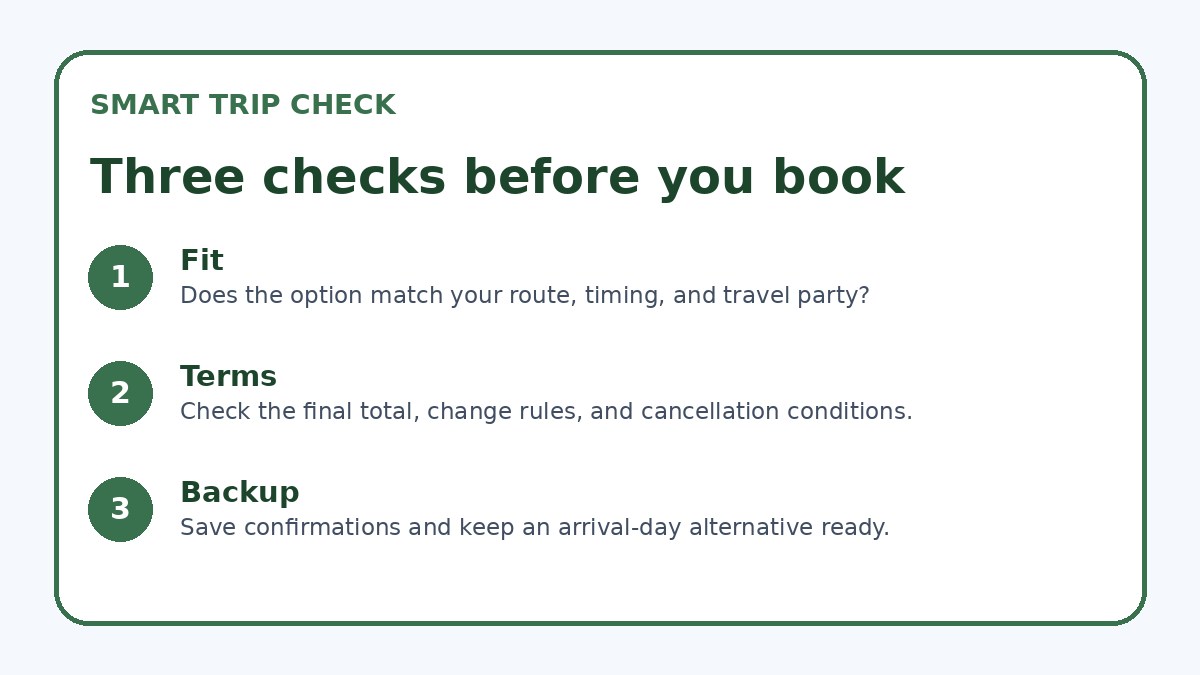
Confirm insurance wording, exclusions, deposit, fuel, mileage, and return terms on the final page.
Pickup and return friction: timing, logistics, and how families can reduce stress
Pickup in Lisbon can be quick at airport counters but more time-consuming at downtown offices where narrow streets, loading zones, and hotel drop-off rules complicate arrivals. If you plan to pick up a vehicle on arrival day, build at least 60–90 minutes into your schedule for paperwork, child-seat installation, and a short orientation. If your flight arrives late or you have jet-lagged children, consider delaying pickup until the next morning. For returning, allow extra time for refueling regulations, final inspections, and possible queues—late returns without clear return instructions can add needless stress or extra fees.
Bring printed or offline copies of confirmation, insurance selection, and child-seat bookings to speed the process. Ask in advance whether the supplier can deliver the car to a hotel or whether you must return to a depot. If using airport pickup, verify where shuttle buses stop and whether there are family priority lanes. For families with baby seats, pre-booking and confirming the exact age-appropriate seat is essential; check the seat’s condition on arrival and note any damage immediately in writing with staff.
Car rental terms to verify
- Map every day’s destinations and mark which need a car to avoid long transfers or multiple public connections.
- Read the rental contract’s insurance wording: confirm CDW, excess amounts, theft protection, and any geographical exclusions.
- Confirm child-seat availability and specifications in writing before pickup; inspect and photograph the seat and vehicle condition.
- Calculate expected parking options and nightly fees at your chosen accommodation and each major attraction.
- Plan pickup and return windows with at least 60–90 minutes buffer around family arrivals or departures.
- Prepare a non-driving fallback: central lodging, key train schedules, taxi apps, and one pre-booked guided day trip.
Non-driving fallback: how to plan a smooth family trip without a car
Create a fallback itinerary that assumes no car and prioritizes convenience for children. Base your family near a well-connected neighborhood—such as Baixa, Chiado, or near Avenida da Liberdade—where walking, trams, and short metro trips access most central sights. For day trips, plan rail journeys where available (Sintra and Cascais both have reliable services) and reserve taxis or app-based rides for the first/last mile with luggage or strollers. Factor in extra rest time and pick activities that minimize transfers: a morning in Belém and an afternoon in the riverside parks, for example, keeps travel simple.
Pre-book tickets for trains and museums when possible to reduce queuing with kids. Know the local apps and taxi numbers, and keep small local currency or contactless payment ready. For longer excursions that would be difficult without a car, consider a guided day tour that handles transport and logistics—compare pickup points and child-seat policy before you book. Having this non-driving plan in hand leaves you free to cancel the car if pickup issues arise or if the family prefers to settle into the city rhythm first.
Car Rental & Road Trip questions travelers ask
Is it hard to park a family car in central Lisbon?
Parking in central Lisbon can be constrained: many historic neighborhoods have narrow, one-way lanes and limited curbside spaces. Hotels may offer valet or reserved spots but often charge separately; public garages are available but can be tight for larger vehicles and may have height or width limits. When considering a rental, check your accommodation’s parking arrangements and size restrictions. Also verify garage opening hours and any overnight or access fees on the rental or hotel final booking page to avoid surprises at arrival.
Can I use my credit card insurance to avoid buying extra coverage?
Some credit cards offer rental car insurance but terms vary widely and may exclude certain countries, vehicle types, or damages like tires and windscreens. Typical conditions require you to decline the rental company’s CDW at pickup and to pay with the qualifying card. Before relying on card coverage, get the card issuer’s policy in writing, confirm whether it applies in Portugal, and verify excess amounts and claim procedures. Always compare the card’s wording with the rental supplier’s final booking page so you know what you will be exposed to at pickup.
Are child seats legally required and easy to get with rentals?
Portugal requires appropriate child restraints for young passengers; rental companies typically offer child seats for an additional fee. Availability and the specific seat type can vary, so reserve seats in advance and confirm the exact model and installation method on the booking page. On pickup, inspect the seat for wear, verify correct installation, and keep the rental agreement itemizing the child-seat charge. If the supplier cannot supply an appropriate seat, be prepared to use a trusted taxi service that provides one or to bring your own portable option.
Final decision note
Deciding whether a Lisbon car rental fits a family trip comes down to route value and daily tradeoffs. If most of your time is inside Lisbon’s compact neighborhoods or on well-served train lines to Sintra and Cascais, you’ll likely save stress and parking costs by relying on walking, trams, and occasional taxis. But if your plan includes multiple remote day trips, flexible departure times with kids, or lots of luggage and gear, a car can be a practical tool that shortens transfers and simplifies logistics. Whatever you choose, read insurance language carefully, confirm child-seat availability in writing, allow generous pickup and drop-off buffers, and keep a clear non-driving fallback so the family can adapt without scrambling.
Continue planning
Check current options and final conditions
Use the provider page to confirm live availability, the final total, cancellation terms, and every condition that matters to your trip.
This evergreen planning guide was created with AI-assisted drafting and a structured quality review. It does not display live prices, schedules, availability, visa guidance, or provider rankings. Verify current details before booking. Some links are affiliate links; we may earn a commission at no additional cost to you.