If your priority is arriving in Osaka ready to work, choose tickets that minimize transfer friction and let you adapt to meetings. For most business travelers between Tokyo and Osaka, that means weighing high-frequency rail (with flexible exchange or refundable ticketing where offered), faster but less flexible premium trains, long-distance coach options with simpler seat-change policies, or mixing modes to buy flexibility at a critical leg. Start by deciding whether time certainty or schedule flexibility matters more for your trip: fixed departure windows favor reserved trains; flexible arrival windows favor refundable or changeable tickets. This article compares terminal fit, luggage and transfers, timing flexibility, and disruption backups for different planning approaches, and gives practical steps to check before you book. Verify refund, exchange, and rebooking rules on the provider’s final booking page and consider Trip.com as one place to compare current availability and conditions.
Terminal fit: where door-to-door time really starts and ends
When planning Tokyo to Osaka transport for business, think beyond the train or coach ride and map door-to-door time. Major rail terminals in both cities sit inside dense urban cores with good subway and taxi links; that often shortens total travel time because you land within reach of hotels and conference venues. By contrast, some long-distance coaches use peripheral bus terminals that require longer transfers by local transit or taxi, which can add unpredictability during rush hours.
Evaluate how each terminal connects to your meeting locations and accommodation. If your schedule has tight start times, favor options with minimal transfer steps and reliable taxi ranks or scheduled shuttle services. Also check typical security queues and station layouts: a ticket that grants platform priority or allows advance seat selection may be worth paying extra if it reduces the chance of missed connections between trains and meetings.
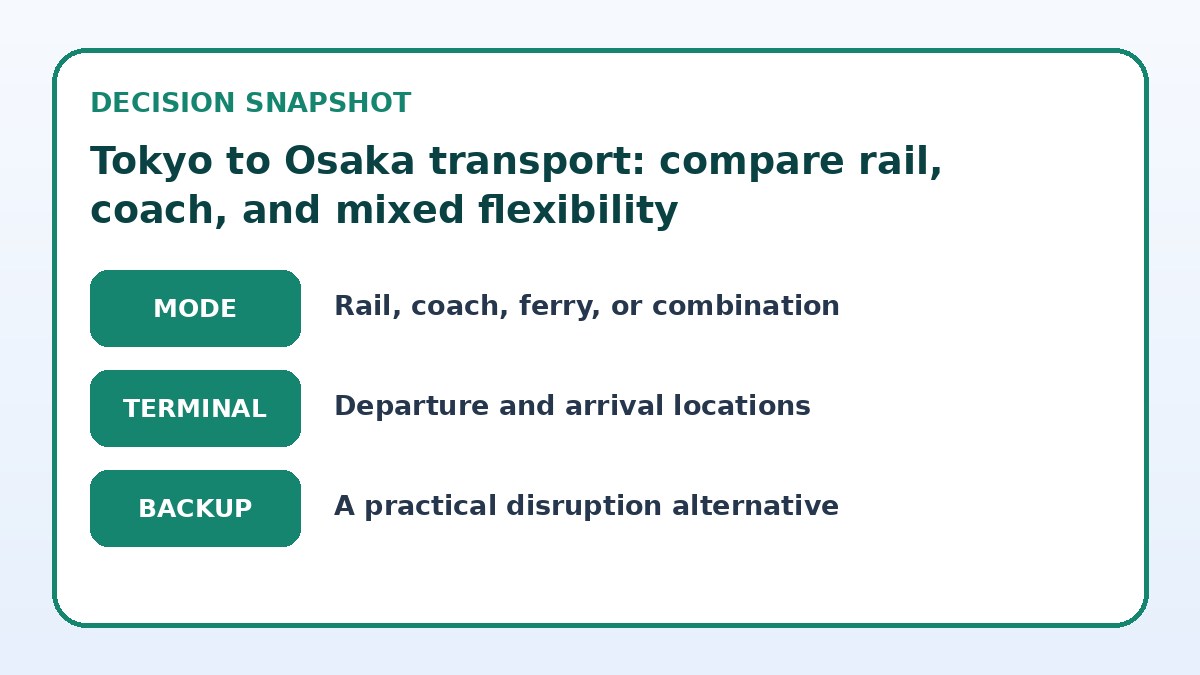
Choose the end-to-end journey plan
| Journey approach | Best for | Friction to check |
|---|---|---|
| Reserved high-frequency rail with exchangeable tickets | Travelers who value predictable city-center arrival and frequent alternative departures. | Higher base fare and more restrictive refund windows on discounted seats; verify exchange procedures before booking. |
| Flexible/refundable rail fare or upgrade | Those with volatile meeting schedules who need easy same-day changes. | Higher upfront cost; confirm exact rebooking fees, cutoff times, and whether seat selection transfers. |
| Coach or express bus with simple change policies | Cost-conscious travelers who prefer looser change rules and don’t mind longer transfers. | Longer door-to-door times and possible peripheral terminals that add taxi or transit time. |
| Mixed-mode plan (coach for one leg, train for return) | Business travelers balancing cost and flexibility across an unpredictable round trip. | More complexity managing two providers and differing baggage or rebooking rules—check each booking page. |
Check live intercity options
Look beyond the ride itself and compare terminals, transfers, luggage, and arrival fit.
Luggage and transfer friction: keep mobility high for meetings
Business travelers often carry laptops, suitcases, and presentation materials, so luggage policies matter. Trains generally allow onboard luggage with overhead shelves or designated areas; however, larger suitcases may require pre-booked storage services or station-to-station baggage transfer. Coaches sometimes restrict size or have limited space, which can complicate last-minute changes. If you need door-to-door baggage handling, consider providers or ticket classes that explicitly include station-to-station delivery or allow easier re-check of items at connecting terminals.
Minimize friction by planning connectors: choose services with short, predictable transfer distances and reliable elevator/escalator access if you’re moving heavy bags. Reserve seats near doors for faster exits and allow extra time for luggage retrieval. When using multiple modes, verify whether each leg’s fare class permits gate-side assistance or priority boarding—those small conveniences can save crucial minutes before a meeting.
Timing flexibility: exchanging, refunding, and rebooking strategies
Ticket flexibility varies widely across providers and fare classes. Some rail tickets are exchangeable for a small fee or refundable up to a cutoff time; other discounted fares are strictly non-changeable. Coaches may offer simpler change policies but with fewer departure choices. For business travelers, choose ticket types that match your risk tolerance: refundable or easily exchangeable tickets for unpredictable itineraries, and reserved but cheaper fares when schedules are firm. Always check the exact conditions on the booking page—how long before departure you can change, what documentation is required, and whether any rebooking fee scales with the fare difference.
If you expect possible schedule shifts, consider splitting your journey: buy a flexible outward ticket and a low-cost return, or vice versa. Weighted decisions depend on meeting volatility and cost sensitivity. When comparing options, calculate the practical cost of a change (fee plus any fare difference) and weigh it against the convenience of having more frequent departures that you could board instead of changing your reservation.
Compare the practical alternatives
Use the final page to confirm what is actually offered on your dates and save a workable fallback.
Intercity travel checklist
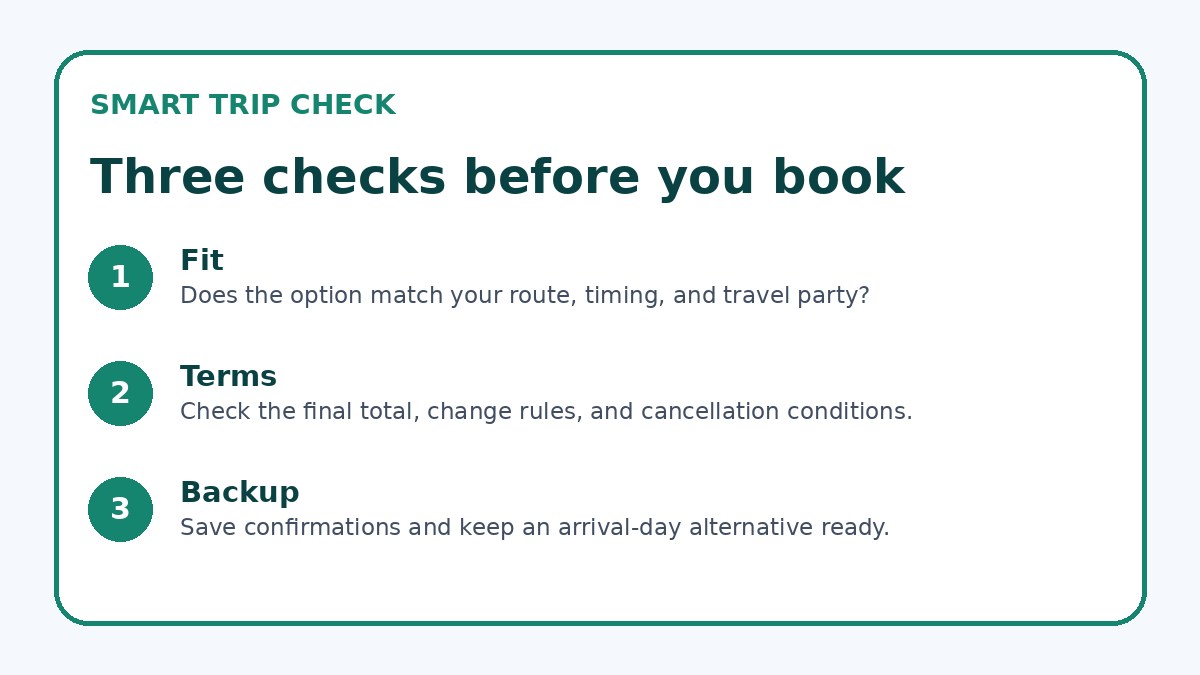
- Map door-to-door time from your office or hotel to each terminal, including realistic taxi and transit estimates for peak hours.
- On the provider’s final booking page, confirm the ticket’s change, refund, and rebooking conditions and any associated fees.
- Verify luggage size limits and whether station-to-station baggage delivery or onboard storage is available for large items.
- Reserve seats near doors or request assistance if quick station exits are critical for connecting to meetings.
- Identify at least two alternative departures or routes for each leg and note their terminals to reduce transfer surprises.
- Arrange a disruption contingency: remote-work setup, flexible meeting buffer, or insurance that covers business interruption.
Disruption backup: realistic plans for delays and cancellations
Plan a realistic disruption backup that covers missed trains, traffic delays, or sudden schedule changes. For rail, identify the next several departures and whether your ticket can be used on later services; for coach travel, note alternative bus routes and their boarding terminals. If your ticket is non-exchangeable, arrange an external buffer—book a flexible taxi or keep a buffered meeting time to absorb delays. Also check whether service disruptions trigger provider rebooking or compensation policies; verify that information on the final booking page before you purchase.
Consider practical backups beyond alternate departures: for example, prepare a remote-work contingency (a quiet spot on arrival, mobile hotspot, or extended meeting via video call) so a delayed arrival doesn’t derail the whole day. For high-stakes trips, buying a ticket class that includes priority rebooking or travel insurance with business interruption coverage can be sensible, but confirm the exact coverage and claims process on the insurer’s site before relying on it.
Rail & Intercity Transport questions travelers ask
Should I prioritize a refundable ticket or more frequent departures for business trips between Tokyo and Osaka?
Prioritize based on schedule volatility. If meetings can move at short notice, a refundable or exchangeable ticket reduces stress and protects your itinerary; check exact rebooking rules on the booking page. If your schedule is fixed but you need reliability getting to the city center quickly, prioritize a frequent service with many departures so a short delay still allows you to catch the next train without paying to change your ticket. Weigh the cost of refundable fares against the practical cost of missing a meeting or arranging an alternate taxi.
How do I handle luggage when using mixed modes for a Tokyo to Osaka business trip?
Plan transfers with luggage in mind: choose services with clear onboard storage and reserve seats that ease boarding and alighting. If your itinerary mixes coach and rail, verify each provider’s size restrictions and whether advance baggage delivery is offered. For fragile or essential equipment, consider sending items ahead via a professional station-to-station delivery service or hotel pickup, and confirm pickup/drop-off windows on the carrier’s booking page. Carry a compact day bag with essentials in case checked items are delayed.
What is a practical disruption backup if my reserved train is canceled or delayed?
First, check the ticket’s rebooking policy on the provider’s final booking page—some tickets allow free rebooking on the same day. Next, identify at least two alternate departures and alternate modes (coach or another rail service) that use nearby terminals. Keep a paid taxi option for short hops when time is critical and ensure you have a remote-work contingency to avoid losing meeting time. For high-stakes trips, consider travel insurance that covers business interruption, and confirm the claims process and exclusions before buying.
Final decision note
For business travel between Tokyo and Osaka, the right ticket comes down to the balance between schedule certainty and the ability to change plans. Rail will usually win for city-center access and frequent departures, but flexible or refundable fares are essential if meetings may shift. Coaches and mixed-mode itineraries can cut costs and sometimes offer simpler change policies but add transfer time and complexity. Before booking, map door-to-door logistics, confirm luggage rules, and read the provider’s final booking page for exchange and refund details. With a clear disruption backup and the right ticket class, you’ll minimize stress and keep your schedule under control.
Continue planning
Check current options and final conditions
Use the provider page to confirm live availability, the final total, cancellation terms, and every condition that matters to your trip.
This evergreen planning guide was created with AI-assisted drafting and a structured quality review. It does not display live prices, schedules, availability, visa guidance, or provider rankings. Verify current details before booking. Some links are affiliate links; we may earn a commission at no additional cost to you.