Pick your Sydney base by what matters most: nightlife and meeting people, waterfront views and walks, budget transit access, or calm residential streets. For a quick decision: stay in the CBD/Darling Harbour if you want central transport and easy solo dining; pick Surry Hills for cafes, bars and boutique stays; choose Circular Quay/The Rocks for harbour scenery and tourist walking routes; opt for Newtown/Bondi if you prioritise neighbourhood character or beach access. This article compares those areas by neighborhood fit, how much time you’ll spend moving between sights, the typical room types and party setups you should search for, and the booking terms to confirm before you pay. Read the short comparisons to shortlist one area, then use that shortlist to open live hotel inventory (Trip.com is one place to compare availability).
Check live stays in the areas that fit
Use your dates and party size to compare current rooms after you narrow the neighborhood fit.
Neighborhood fit: who you are and what you’ll do
Start by matching your travel style to the neighborhood’s personality. Solo travelers who plan long sightseeing days and rely on public transport will appreciate the CBD/Darling Harbour’s grid-like streets and proximity to major train stations and ferry terminals. If coffee, boutique shops and evening bar culture are your priorities, Surry Hills and nearby Paddington offer the kind of short walks between daytime activities and nightlife that make meeting people easy without late-night commutes.
If you’re after iconic Sydney scenery and daytime walking routes, Circular Quay and The Rocks place you within immediate reach of the Opera House, Botanic Gardens and harbour ferries — ideal for solo photographers and walkers. For a relaxed beach-and-cafe routine, Bondi and Newtown provide neighbourhood warmth, local markets and an easier path to shared experiences like surf lessons or food tours, but they add time when you need to return to central sights.
Choose an area-selection strategy
| Area approach | Best for | Tradeoff to check |
|---|---|---|
| Prioritise transport hubs (CBD/Darling Harbour) | Sightseeing efficiency and quick cross-city travel | Less neighbourhood character and potentially higher nightly rates |
| Choose social neighbourhoods (Surry Hills) | Meeting people at cafes, bars and evening events | Shorter local walks but slightly farther from major tourist sites |
| Pick scenic tourism hubs (Circular Quay/The Rocks) | Harbour views and walking routes to major attractions | More tourist crowds and fewer quiet local evenings |
| Opt for character or beach stays (Newtown/Bondi) | Local culture, markets and beach days | Longer commutes to central museums and transport hubs |
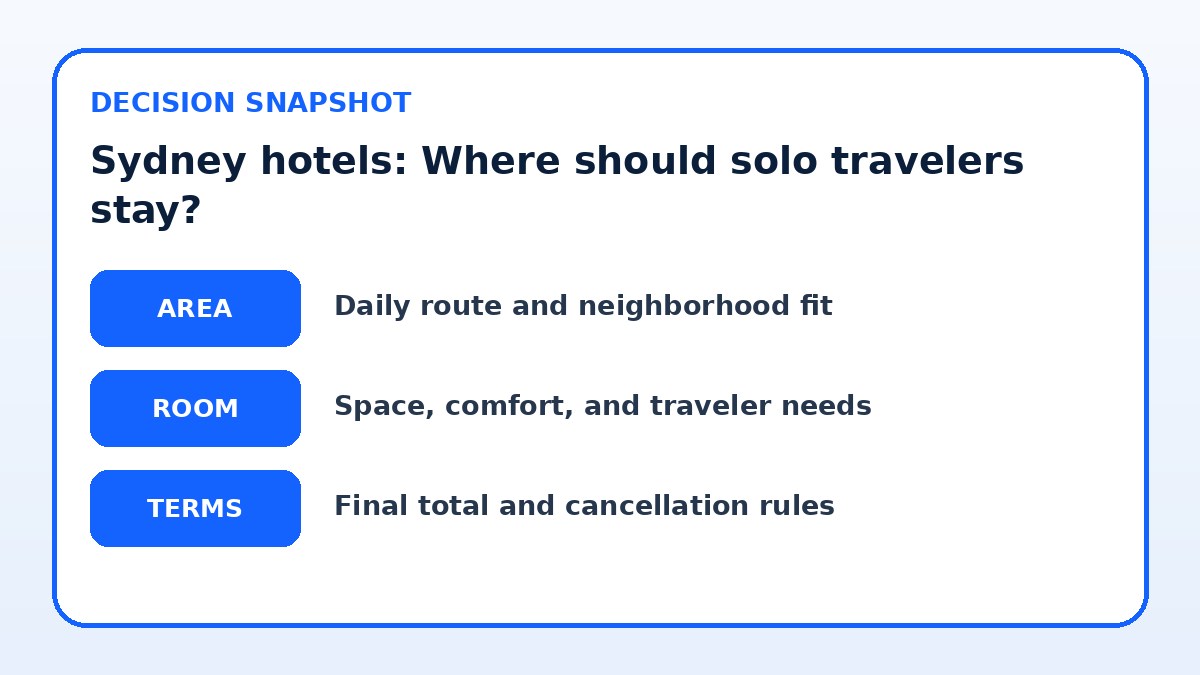
Daily-route friction: how much time will you spend moving around?
Think of daily-route friction as the time and hassle of getting between where you sleep and where you want to be most days. The CBD/Darling Harbour minimizes friction for cross-city travel: many museums, ferry wharves and theatres are walkable or a single short train or bus away. That reduces the need to carry bulky luggage between neighbourhoods during a stay and makes same-day plan changes simple — handy when you want to join a last-minute group activity or evening event.
Surry Hills, Circular Quay/The Rocks, Bondi and Newtown each create different frictions. Surry Hills is a short bus or tram ride from the CBD but has quieter nights that can mean a short taxi home; Circular Quay has minimal daytime friction but can be noisy and more touristy at night; Bondi adds a predictable commute to central attractions while offering beach access; Newtown’s transit links are good but not as frequent late at night, so check how late trains or buses run if you plan late returns.
Now compare like with like
Keep the same dates, guests, room needs, and cancellation preferences while you compare the final choices.
Room and party needs: what to book as a solo traveler
Decide on the room type you want before you search inventory. Solo travelers often choose single rooms, studios or small double rooms to balance cost and privacy. In central areas you’ll find hotels and serviced apartments that offer compact, well-located rooms with onsite concierge or 24-hour reception, which can be useful for late arrivals and local advice. In neighbourhoods like Surry Hills or Newtown you’ll see more boutique guesthouses and small hotels where breakfast cafes are a social meeting point.
If you prefer meeting other travelers, search for hostels with private rooms and social spaces or hotels that advertise communal lounges and events. For beach stays, filter inventory for properties that advertise easy beach access, laundry options and luggage storage — useful if you're rolling between activities. Always confirm bed configuration, cancellation and check-in details on the booking page: verify whether the price shown includes taxes, whether the property requires ID at check-in, and whether they charge for early check-in, late check-out or baggage storage.

Hotel booking check before payment
- Confirm check-in and check-out times on the hotel’s official booking page before reserving a nonrefundable rate.
- Verify bed type, room size and whether the listed rate includes taxes, Wi‑Fi and breakfast where those matter to you.
- Check proximity to the nearest train station, ferry wharf or major bus stop on a map and note the walking route and typical transport options at night.
- Read recent guest comments that mention noise, safety and late-night access to ensure the neighbourhood matches your comfort level.
- If you expect late arrival or early departure, confirm 24-hour reception, luggage storage availability and any transfer meeting instructions.
- Compare the same room across two booking platforms and the hotel’s own site, then recheck final cancellation and extra-fee policies before payment.
Booking terms and final checks before you pay
Before you book, compare the same room across two or three platforms and read recent guest comments focused on safety, noise and public transport access — then verify important details directly on the hotel’s own booking page. Confirm the cancellation and refund policy, whether the rate includes breakfast or Wi-Fi, and the check-in/check-out windows. If the property offers airport transfers, confirm whether they’re private, shared, fixed-price or third-party and check where you’ll meet the driver.
Also check practical amenities that matter for solo comfort: 24-hour reception, secure luggage storage, room safes, bedside power outlets, and a working elevator if you’ll be on a higher floor. If you plan day trips by ferry or rail, note the nearest station or wharf and which side of the street it’s on so late night returns feel straightforward. When using third-party sites, always verify on the provider’s page for final terms and availability.
Hotel Guide questions travelers ask
Which Sydney area is safest for a solo traveler at night?
Safety depends on behaviour as much as location. The CBD and Circular Quay are well-lit and have a constant presence of tourists, transport users and security, which helps after dark, but they can become noisy. Surry Hills and Bondi feel safe in day-to-evening activity zones where cafés and bars stay busy; however, quieter residential pockets in any suburb can be less active at night. Before booking, check recent guest feedback about lighting, street activity and how easy it is to get a taxi or rideshare late at night.
How do I balance location and budget when choosing Sydney hotels?
Start by listing the three things you won’t compromise on — for example, proximity to a ferry, private bathroom, or late check-in — then search within areas that meet those needs. CBD stays cut commuting time but often cost more; neighbourhoods like Newtown or Bondi may offer lower nightly rates for similar room quality at the expense of longer daily travel. Use filters for cancellation flexibility and compare identical room types across sites, then decide whether the saved transport time in a central area is worth the extra cost for your itinerary.
Can I rely on public transport from these areas late at night?
Public transport in Sydney is extensive but varies by neighbourhood and time. Central areas and Circular Quay are well served during the day and have frequent services, though late-night frequencies can drop. Suburbs like Bondi and parts of Newtown rely more on buses which may be less frequent after midnight. If you anticipate late returns, check the current timetables for trains, buses and night services for your planned dates, and confirm how late the nearest taxi ranks or rideshare pickup points operate in that neighbourhood.
Final decision note
Shortlisting one Sydney area before you open live hotel inventory makes booking faster and less confusing. Decide first whether you want the convenience of central transport, the social buzz of neighbourhood cafes and bars, the harbour scenery of Circular Quay, or beach and local character in Bondi or Newtown. Use the decision checklist above to confirm the practical details — bed type, cancellation terms, arrival logistics and nearby transport — and always verify final terms on the hotel’s booking page. With an area chosen and those checks done, you can compare rooms across platforms and pick the property that matches both your travel style and practical needs.
Continue planning
Check current options and final conditions
Use the provider page to confirm live availability, the final total, cancellation terms, and every condition that matters to your trip.
This evergreen planning guide was created with AI-assisted drafting and a structured quality review. It does not display live prices, schedules, availability, visa guidance, or provider rankings. Verify current details before booking. Some links are affiliate links; we may earn a commission at no additional cost to you.