If you’re traveling from Los Angeles to Las Vegas with extra luggage, the single most useful decision is whether to prioritize a flexible fare or the lowest upfront ticket that may charge for changes, cancellations, and checked bags. Practically, that means looking past headline prices and checking three things on the airline’s final booking page: the fare family’s change fee and refundability, the baggage allowance and fees (including oversized/extra bag rules), and how the airline treats rebooking when a schedule changes. Also confirm whether your itinerary is direct or connects; a connection increases the risk that checked bags could be delayed or rechecked and may change the rebooking rules. Before you search live options, have exact travel dates, the number and size/weight of bags, passenger ages, and whether you’ll need carry-on priority—these details determine which fare family or add-on you should buy.

See live routes for your exact travel day
Compare direct and connecting choices with the same baggage and traveler details.
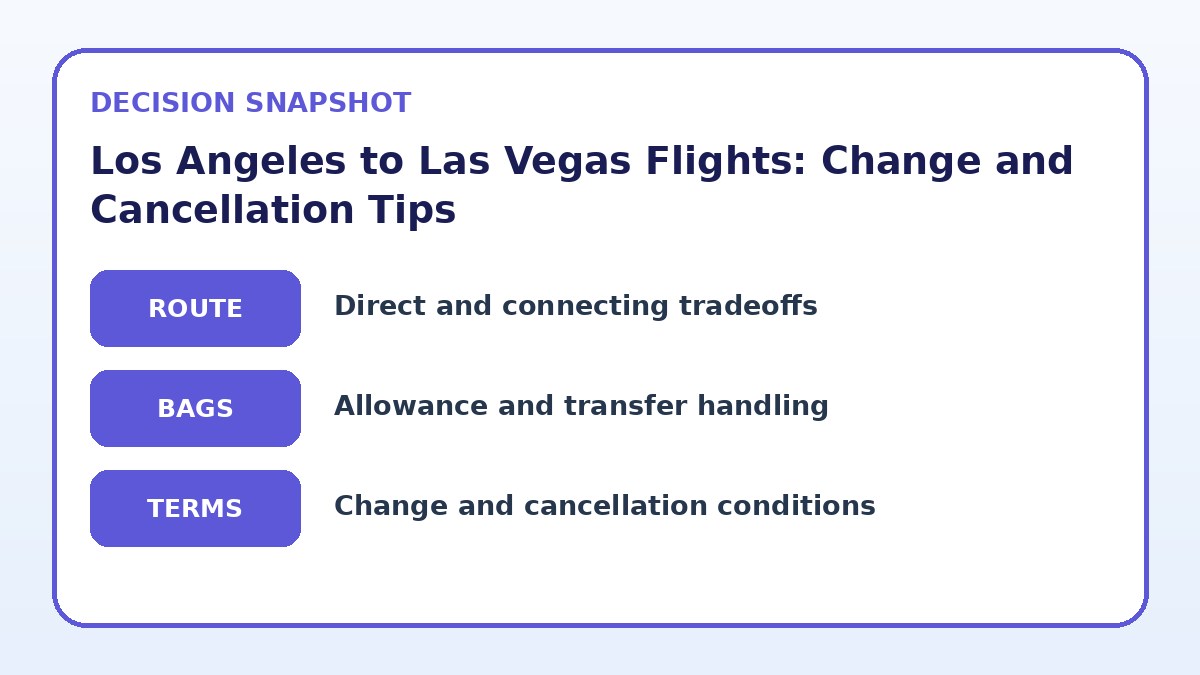
Routing and how it affects luggage risk
Choose routing deliberately: a nonstop Los Angeles to Las Vegas itinerary normally keeps your checked bags on a single aircraft and reduces touchpoints where bags can be delayed or mishandled. If you see connecting options, treat them as a different category: connections increase the chance an airline will need to transfer your bags between flights or require you to recheck them during a terminal change. For travelers with extra luggage, even a single connection raises the chance of a missed transfer if schedules are tight or an earlier flight is late.
When comparing routing, ask the airline or check the booking rules to confirm whether checked bags are ticketed through to the final destination on a single ticket. If the legs are sold separately, you will almost certainly need to claim and recheck bags at the connection. Also check minimum connection times and whether you’ll have to change terminals; those details matter as they affect how much buffer you need to protect luggage from being left behind.
Baggage allowances, fees, and restrictions to verify
Before you lock in any fare, list every piece of luggage you plan to bring, including checked bags, oversized items, and carry-ons. Many fare families differ not only in their changeability but also in how many free checked bags they allow and the maximum dimensions and weights for each bag. Confirm whether an upgraded fare, elite status, or a branded baggage add-on includes the exact number and weight of bags you need, because buying separate bags on top of a low fare can quickly make the total cost higher than a more flexible ticket.
Also check the airline’s rules for oversized, overweight, and special items (golf clubs, instruments, pet crates). If you have extra-large or heavy baggage, verify the per-item limit and whether a special handling charge applies. On the airline’s booking page, look for the baggage policy link specific to the fare you select—this is the document that will determine the fee you pay at booking or the airport, and it’s the one to screenshot or save in case of disputes.
Compare flight-selection strategies
| Flight strategy | Best for | Risk to check |
|---|---|---|
| Buy the cheapest nonrefundable fare and add bags a la carte | Travelers confident of fixed plans who prioritize lowest upfront cost | Low base fare can be offset by bag fees and high change fees if plans shift |
| Purchase a flexible fare that includes at least one checked bag | Travelers with several bags who want fewer surprises and easier rebooking | Higher upfront fare but fewer fees and simpler change/refund processes |
| Book separate legs or mix carriers to save money | Experienced travelers willing to manage checked-bag transfers themselves | No through-checked baggage, greater risk if schedule changes occur |
| Buy the cheapest fare and add refundable travel insurance | Those who want financial protection without committing to an expensive flexible fare | Insurance can cover cancellations but may not cover baggage fees or airline rebooking rules |
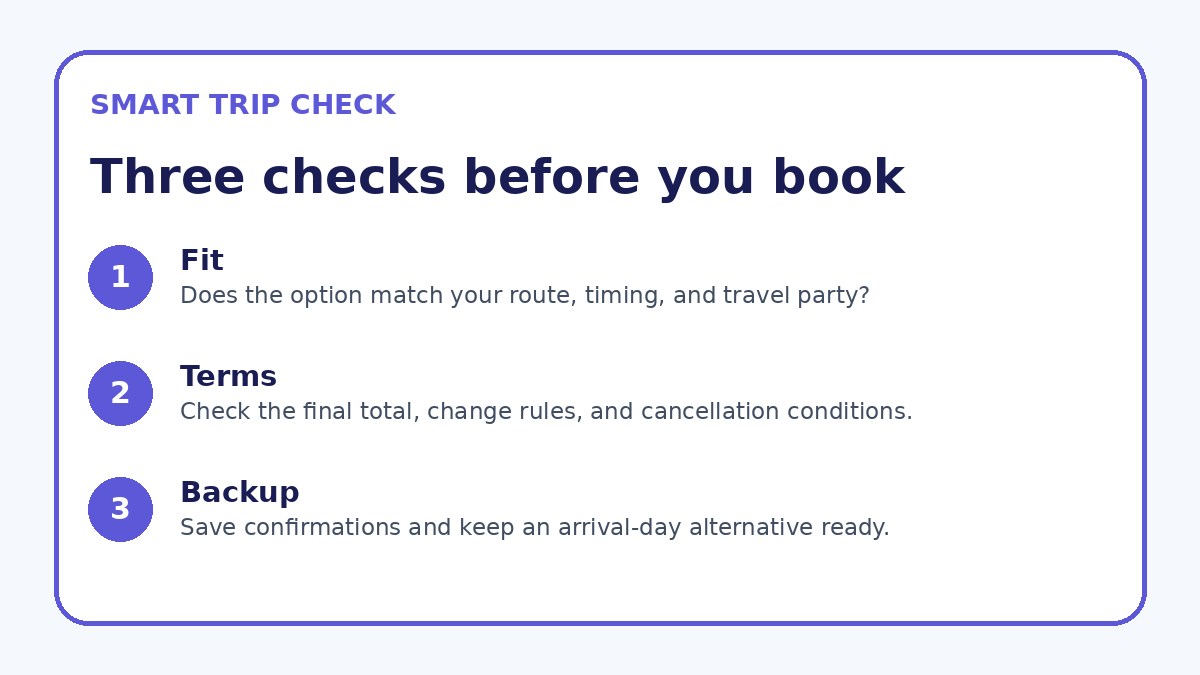
Recheck the complete itinerary
Confirm airports, connection handling, baggage, and change conditions before deciding.
Schedule fit and how changes are handled
A schedule that fits your arrival and departure windows matters more when you have lots of luggage. Choosing early morning or mid-day flights can reduce congestion and the risk that late inbound aircraft delay your departure. But more important than time of day is the airline’s policy for schedule changes: some carriers allow free rebooking if they change your flight by a set number of hours, while others offer only vouchers or rebooking with a fare difference. Always verify the rebooking window and whether accommodation or baggage assistance is offered for extended delays.
If you’re booking with separate tickets, understand that schedule changes on one leg won’t obligate the other carrier to accommodate you, and you may lose the checked bag transfer that a single-ticket itinerary would have provided. When evaluating options, ask the airline how they handle involuntary schedule changes that force an overnight stay or miss a connection—specifically whether they cover accommodation or will allow you to reroute without paying fare differences.
Flight details to verify
- Confirm exact travel dates, passenger names, and the number, weight and sizes of all bags before searching fares.
- On the airline’s booking page, open the fare rules and screenshot or save the change and cancellation policy text.
- Add up the base fare plus checked-bag charges and any likely change fees to compare true out-the-door costs.
- Verify whether your ticket is on a single itinerary (one PNR) to allow through-checked luggage and unified rebooking.
- If booking separate carriers, plan at least extra time between connections and expect to reclaim and recheck bags.
- Consider a flexible fare or refundable insurance if your schedule has a significant risk of change that would make bag fees wasteful.
Fare conditions: change fees, refunds, and the overall cost math
When comparing fares, calculate the total cost for likely scenarios: initial ticket price plus checked-bag fees, probable change fees, and any likely fare difference if you must rebook. Some airlines sell nonrefundable fares with low base prices but high change or cancellation fees; others sell higher-priced “flex” fares that include free changes or refunds and one or more checked bags. If your plans are uncertain or you want to avoid paying for multiple checked bags at the counter, a flexible fare can be cheaper in practice despite a higher sticker price.
On the airline’s final booking page, locate the fare rules and the exact text about change and cancellation fees, refundability, and whether refunds are issued to the original form of payment or as travel credit. Verify the deadline for making changes without penalty (for example, before scheduled departure) and whether the airline waives fees for certain disruptions. Do this for every carrier you consider; if you want a quick way to compare current options, you can check Trip.com as one of several comparison tools, but always confirm the provider’s own terms at booking.
Flight Guide questions travelers ask
How do I decide whether to buy a flexible fare or add baggage to a cheap ticket?
Start by listing your luggage needs and the chance you’ll change plans. If you’re carrying multiple checked bags or oversized items, calculate the cumulative bag fees on a cheap fare versus the price premium for a flexible fare that includes bags. Then factor in the likelihood of needing to change dates: flexible fares often absorb change fees and sometimes include free rebooking within a window, which can save money compared with paying multiple unilateral change fees. Verify the exact baggage inclusions and change policies on the airline’s booking page before purchasing.
What should I verify if an airline changes my Los Angeles to Las Vegas flight?
Check the airline’s specific rebooking and refund options stated in the schedule-change policy on your booking confirmation. Look for whether the airline offers free rebooking to a new flight within a certain time window, whether refunds are allowed to the original form of payment, and whether accommodations or care are provided for long delays. Also confirm how the airline treats checked bags in a scheduled change—will they transfer bags automatically to your new flight, or will you need to collect and recheck them? Always get any promised rebooking or refund offer in writing.
If I book two separate tickets, can the airlines transfer my checked bags through to Las Vegas?
Typically only airlines that are participating on the same single ticket will check bags through to the final destination. With separate tickets, you should plan to claim and recheck your bags at any connection; carriers are rarely obligated to transfer through-checked bags between separate reservations. That means extra time to move between terminals or recheck, and a higher risk your baggage will miss a tight connection. If through-checking is important, buy a single itinerary on one carrier or a validated codeshare so the carriers will accept responsibility for the bags.
Final decision note
For Los Angeles to Las Vegas flights with extra luggage, the simplest rule is to quantify your luggage and uncertainty before choosing a fare. Nonstop itineraries and single-ticket bookings reduce baggage handling risk, while flexible fares or fare families that include checked bags reduce the administrative and financial surprise of changes. Always verify baggage allowances and the exact wording of change and cancellation rules on the airline’s final booking page; save screenshots of those pages. If you want a quick comparison of current availability, you may consult Trip.com among other tools, but proceed to the airline’s booking confirmation to confirm the final terms before paying.
Continue planning
Check current options and final conditions
Use the provider page to confirm live availability, the final total, cancellation terms, and every condition that matters to your trip.
This evergreen planning guide was created with AI-assisted drafting and a structured quality review. It does not display live prices, schedules, availability, visa guidance, or provider rankings. Verify current details before booking. Some links are affiliate links; we may earn a commission at no additional cost to you.