If you’re a solo traveler debating whether to rent a car in Taipei, the practical answer is: often you don’t need one for central Taipei, but clear insurance wording can tip the decision if you plan day trips outside the city. Driving lifts convenience and reach—coastal panoramas, mountain temples, or remote night markets—yet it brings extra paperwork, possible language friction, and gaps between what sales staff say and what your policy actually covers. Read the fine print now so you won’t learn limits at the roadside. This guide explains which insurance phrases to focus on, how they change your financial exposure, the pickup and return frictions that add time to your itinerary, and a non-driving fallback using public and shared mobility options tailored to solo travelers.
Decide whether driving changes your Taipei trip
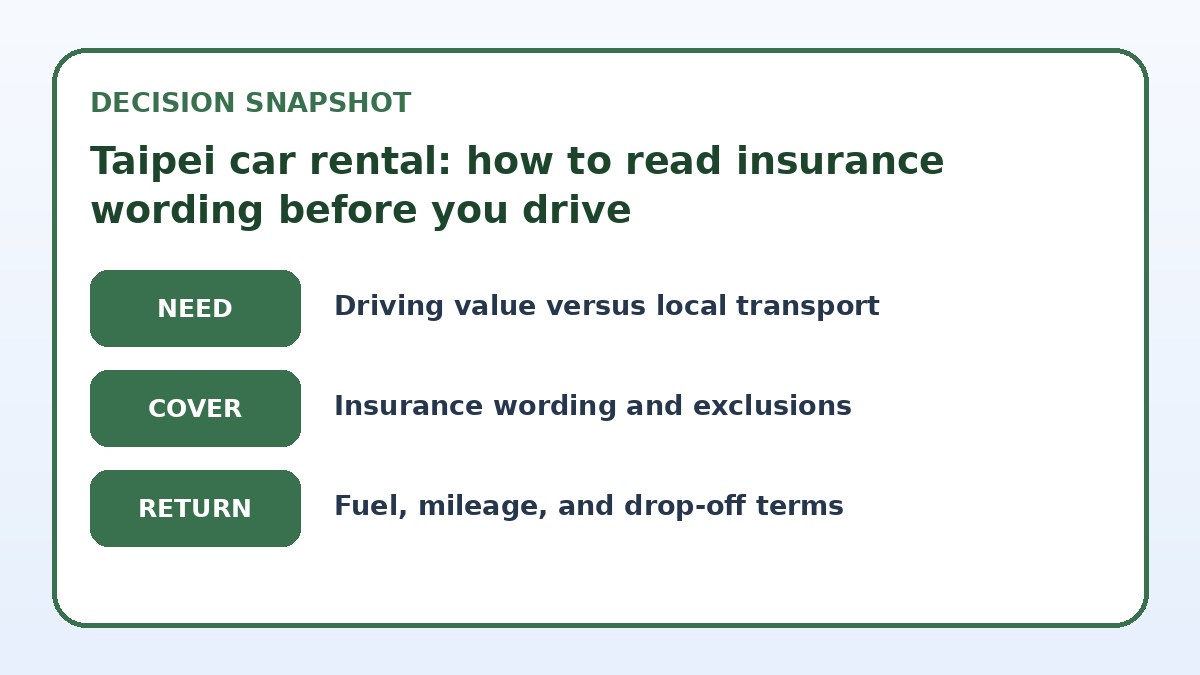
Begin by evaluating route value. Ask which destinations you absolutely want that are inconvenient by public transport: northeastern coastal roads, Sun Moon Lake (longer regional trip), or mountain trails where bus frequency is low. If your solo plan is museum- and night-market–focused in central Taipei, a car mostly adds expense and parking friction rather than time savings. Weigh the daily hours you’d save against the stress of unfamiliar road signage, possible tolls or restricted lanes, and the effort of finding legal parking.
Also consider timing and season. Peak-hour traffic and holiday weekends can turn short drives into long delays; mountain roads become slower in wet weather. For day trips with multiple stops, a car can be liberating; for single-destination journeys reachable by frequent trains or express buses, public transit plus a local taxi or ride-hail at the destination is often simpler. Decide with concrete itineraries—list each day’s start point, key stops, and return time—then check whether a car would materially shorten those transfers.
Decide whether driving earns its place
| Mobility strategy | Best for | Cost or friction to check |
|---|---|---|
| Rent full-time for the trip | Travelers with many remote stops or multi-day rural legs needing full flexibility | Higher insurance exposure, parking costs, and more pickup/return friction with paperwork and potential language barriers |
| Pickup for single day trips only | Solo travelers who mainly use public transit but want a car for one specific remote day | Saves rental days and some insurance cost but still requires navigating pickup and a possibly strict single-day contract |
| Public transit + taxis/ride-hail | Those staying mainly in Taipei who value simplicity and minimal administrative risk | Less control over remote destinations and timing; costs can add up for long multi-stop day trips |
| Train/bus to hub then short local rental | Travelers wanting to avoid city driving while still accessing rural routes for a day or two | Requires more planning and coordinating different bookings; possible mismatch of pickup times and transport schedules |
Check live rental choices only after the route test
Use the exact driver, dates, pickup point, and return plan to compare current conditions.
Which insurance wording changes your financial exposure
When you read rental contracts, focus on four terms that determine who pays: third-party liability (covers damage you cause to others), collision damage waiver or CDW (limits your obligation for damage to the rental vehicle), excess or deductible (the maximum amount you must pay after an incident), and theft protection (handles loss if the car is stolen). Wording matters: a CDW can be conditional—voided by reckless driving, driving on unpaved roads, or leaving keys in the vehicle—so know those carve-outs. Also check whether the policy applies to single-driver contracts, or requires additional driver registration.
Watch for language about coverage limits and local legal jurisdiction. Phrases like “up to NNT coverage” or “subject to local laws” mean you must ask for numeric limits and scenarios where coverage can be denied. Note whether the rental company requires you to pay the full repair cost up front and claim reimbursement later; that affects cash flow and the willingness of solo travelers to accept certain coverages. Always ask for a printed copy of the exact policy wording before you sign and verify whether your personal credit card or travel insurance duplicates or replaces portions of the rental coverage.
Compare the full rental conditions
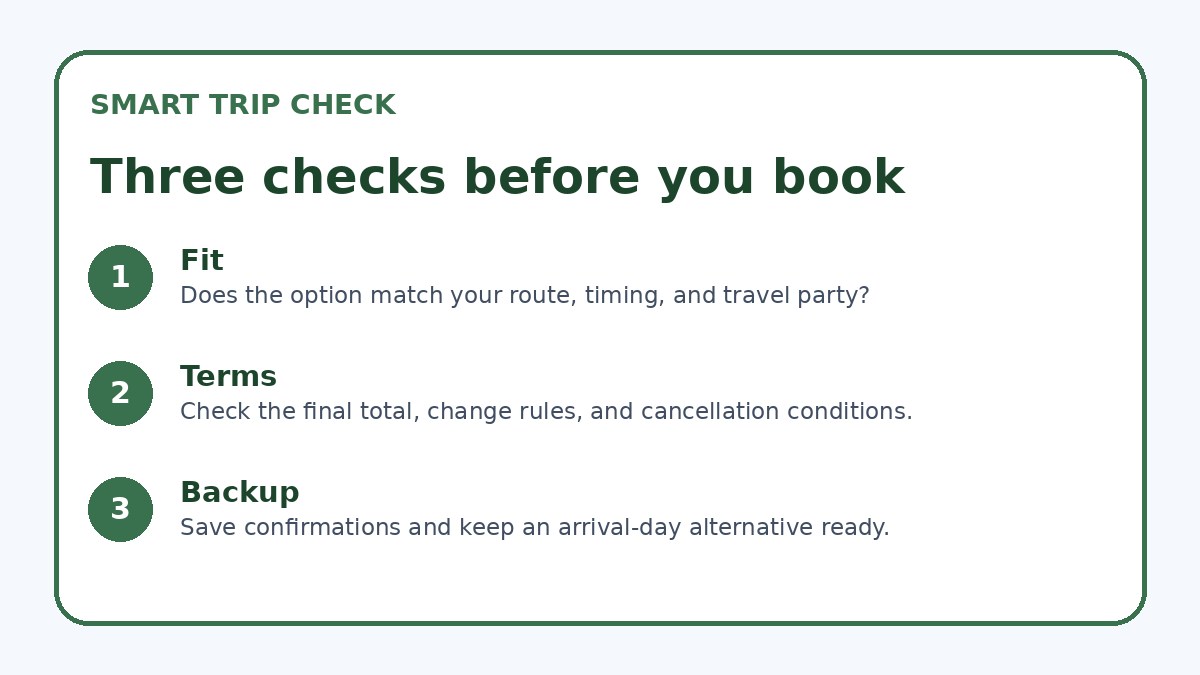
Confirm insurance wording, exclusions, deposit, fuel, mileage, and return terms on the final page.
Pickup and return friction: what the wording won’t tell you
Insurance wording often interacts with pickup and return procedures. Inspect clauses that say coverage is void if the vehicle is returned late, refueled incorrectly, returned with interior damage, or driven by an unlisted driver. These operational conditions create practical risks for solo travelers handling everything themselves. At pickup, document existing scratches and dents with timestamped photos and get them acknowledged on the contract. If the paperwork is only in Chinese, request an official English version or a translated summary that lists exclusions and excess amounts.
Also check how damage claims are handled locally. Phrases like “customer responsible for damage subject to inspection” can mean on-the-spot disputes where language barriers matter. Ask whether the vendor uses a third-party inspection service and how quickly they finalize claims; some providers lock an authorization on your card for the excess amount until claims settle. For returns, confirm exact drop-off locations and whether after-hours drop boxes are allowed without voiding theft or damage protection in the policy wording.
Car rental terms to verify
- Read the full rental contract and get a printed or emailed copy of the exact insurance wording before you sign.
- Confirm numeric limits for third-party liability, collision coverage, deductible amounts, and theft protection in writing.
- Photograph the vehicle from multiple angles with timestamps and have staff initial or note existing damage on the form.
- Ask whether verbal assurances from counter staff are included in the contract and insist on written confirmation for any exceptions.
- Verify whether your personal travel insurance or credit-card coverage overlaps with or replaces parts of the rental policy.
- Check the vendor’s damage-claim process, including whether they pre-authorize excess on your card and the estimated timeline for releases.
Non-driving fallback: getting around Taipei efficiently
A robust fallback plan keeps your solo trip flexible without a car. Taipei’s metro and frequent buses cover central attractions; intercity trains and scoped express buses connect to nearby regions for day trips. For endpoints where public transit stops short, combine transit with short taxi rides, ride-hailing apps, or local tour operators who handle transport and guide details. Choose rail plus a local taxi when parking is limited or when mountain roads appear narrow or steep in destination reports.
For longer excursions that make a car tempting, consider a hybrid approach: take a public transit backbone to a regional hub, then rent a car locally for a shorter, single-day excursion. This minimizes time behind the wheel in urban traffic and reduces the number of days you pay for insurance, while still giving you a car where it’s genuinely helpful. Book refundable train or bus tickets and check vehicle pickup times carefully so you won’t be rushed at either end.
Car Rental & Road Trip questions travelers ask
Can my credit card’s rental insurance replace the car rental company’s coverage in Taipei?
Some credit cards offer secondary or primary rental insurance that can cover collision or theft, but the exact protection depends on card terms and may exclude certain vehicle types, countries, or single-driver rentals. Don’t assume automatic coverage: check your card’s policy wording for geographic restrictions, whether it applies to liability or only to damage/theft, and whether it requires you to decline the rental company’s CDW at the counter. Before relying on card benefits, call your card’s insurance administrator, get confirmation in writing, and bring that documentation to the rental desk.
What wording should I look for to avoid a big out-of-pocket bill after a minor accident?
Search for explicit statements of the deductible or excess, and for phrases that void coverage—examples include exclusions for driving on unpaved roads, using the vehicle off-road, or allowing unlisted drivers. Also check if the company requires immediate payment for full repairs with later reimbursement; that can lead to high temporary charges. Aim for policies that specify a low excess amount, clear exclusions, and that outline the claim timeline. If the rental agent’s explanation conflicts with the written contract, the contract controls.
How should a solo traveler handle language barriers when signing insurance documents?
Ask for an English-language contract or an official translated summary of insurance terms. If the vendor cannot provide one, take photos of the document and request time to have it translated; reputable companies will allow this. Use clear, recorded questions about coverage limits and exclusions, and ask staff to initial any handwritten notes. Carry contact details for your embassy or consulate and offline copies of your travel insurance and credit-card benefits in case you need support with claim disputes after returning home.
Final decision note
For most solo travelers who stay inside central Taipei, driving is more hassle than advantage: efficient public transit, short taxi rides, and targeted regional trains usually cover the same ground without the insurance and pickup friction. If your plans include multiple remote stops or flexible mountain and coastal routes, a rental can be worth it — but only after you have the insurance wording in hand and understand excess amounts, exclusions, and claim procedures. Before you commit, read the contract fully, confirm numeric limits, photograph the car, and decide whether your credit card or travel insurance fills any gaps. If doubts remain, use the hybrid approach: transit to a hub and rent locally for specific days, minimizing both administrative risk and time behind the wheel.
Continue planning
Check current options and final conditions
Use the provider page to confirm live availability, the final total, cancellation terms, and every condition that matters to your trip.
This evergreen planning guide was created with AI-assisted drafting and a structured quality review. It does not display live prices, schedules, availability, visa guidance, or provider rankings. Verify current details before booking. Some links are affiliate links; we may earn a commission at no additional cost to you.