Practical choice matters more than idealized comfort when you’re a solo traveler planning Auckland to Wellington transport. Decide first whether you value strict departure convenience, the ability to change plans last-minute, or the smoothest door-to-door journey. Rail and coach both connect the major urban centers, ferries become part of mixed routes across Cook Strait, and combinations can trade speed for flexibility. The most useful immediate decision is: do you need refundable or changeable tickets, or can you lock in a cheaper, non-refundable fare and accept disruption risk? This article compares those flexibility options in terms of terminal fit, luggage and transfers, schedule freedom, and a simple disruption backup plan so you can pick the approach that fits your tolerance for uncertainty and your end-to-end practical needs.
Terminal fit: where your journey actually begins and ends
When planning Auckland to Wellington transport, think beyond the train or bus ride and map how you’ll reach and leave terminals. Stations and coach hubs can be a short ride from city accommodation, while some ferry terminals sit farther from central areas and require an extra transfer. A ticket that looks convenient on paper may force an expensive taxi or long local bus trip at each end, which matters more for solo travelers carrying luggage or arriving late at night. Check station addresses, common local transfer options, and whether a ticket includes reserved parking or drop-off allowances if you’re using a rideshare service.
Compare tickets by lining them up against your start and finish points. Does a flexible ticket let you change departure times if you’re delayed getting to the terminal? Does a strict ticket require you to be at a specific terminal at a precise time? For some solo travelers, the ability to switch to a later service without penalty is worth a higher fare because it simplifies arriving from remote suburbs or dealing with unpredictable connections. Before booking, verify the provider’s terminal details and any published guidance on transfers on their official booking page.
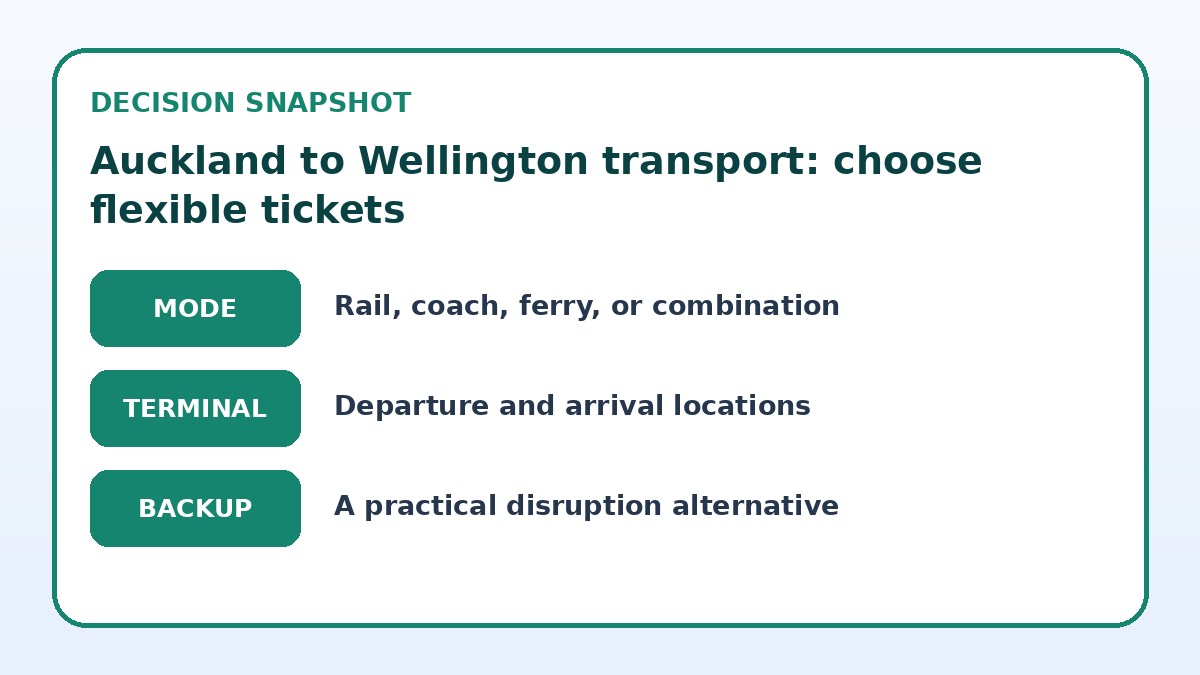
Choose the end-to-end journey plan
| Journey approach | Best for | Friction to check |
|---|---|---|
| Flexible single-ticket (rail or coach with free changes) | Solo travelers prioritizing schedule freedom and stress-free transfers | Higher fare compared with restrictive tickets and may not reduce transfer distance or time |
| Cheapest non-changeable fares | Solo travelers with fixed plans who can absorb risk for lower upfront cost | Little to no recourse if delayed or disrupted; alternative transport may be expensive |
| Segmented tickets (separate bookings for each leg) | Travelers fine managing transfers who want flexibility to mix operators | More complex to manage during disruptions; each segment has independent change/refund rules |
| Mixed-mode itinerary (coach + ferry + rail combined planning) | Those balancing scenic travel and practical door-to-door routing | Increases transfer friction and requires careful checking of connection protections |
Check live intercity options
Look beyond the ride itself and compare terminals, transfers, luggage, and arrival fit.
Luggage and transfer friction: how much extra effort will your bag require?
Luggage rules and how transfers are handled define the real effort of Auckland to Wellington transport. Coaches commonly load standard bags into a hold and may limit bulky items; trains often have more flexible carriage space but may require you to manage bags up stairs or across platforms. Mixed itineraries that include a ferry add another layer of handling: you might need to move between piers, store bags in a locker, or carry them across short footbridges. Solo travelers should anticipate the physical handling of luggage during transfers and choose tickets that minimize required movement or that allow assistance.
When assessing ticket flexibility, always confirm who is responsible for luggage if you must switch modes. A fully flexible ticket that permits same-day changes can let you choose a later single-seat journey with fewer transfers, while restrictive tickets can force rush transfers where baggage becomes a hassle. Look for explicit wording about luggage allowances, assisted boarding, and whether transfers are guaranteed or subject to separate availability. Verify these details on the provider’s booking pages and factor any extra transfer time into your schedule.
Timing flexibility: change policies, open tickets, and same-day swaps
The core difference between ticket types is how they handle time. Flexible tickets usually permit date or time changes with low or no fees, making them useful when your arrival in Auckland is uncertain. Semi-flexible options might allow limited changes or exchanges for a fee, while the cheapest fares commonly lock you to a specific service. For solo travelers, the ability to move to a later departure the same day can be worth the premium if you’re juggling tight connections to airports, ferries, or late work commitments.
When comparing options, don’t assume the change policy applies across combined bookings. Mixed itineraries often combine separate tickets for coach, train, and ferry segments; each segment will have its own rules for changes or refunds. If your plan involves a timed ferry crossing, verify how missed connections are handled and whether a later crossing can be used without buying a new ticket. Always check the exact change window and any fees on the provider’s final booking page before you commit.
Compare the practical alternatives
Use the final page to confirm what is actually offered on your dates and save a workable fallback.
Intercity travel checklist
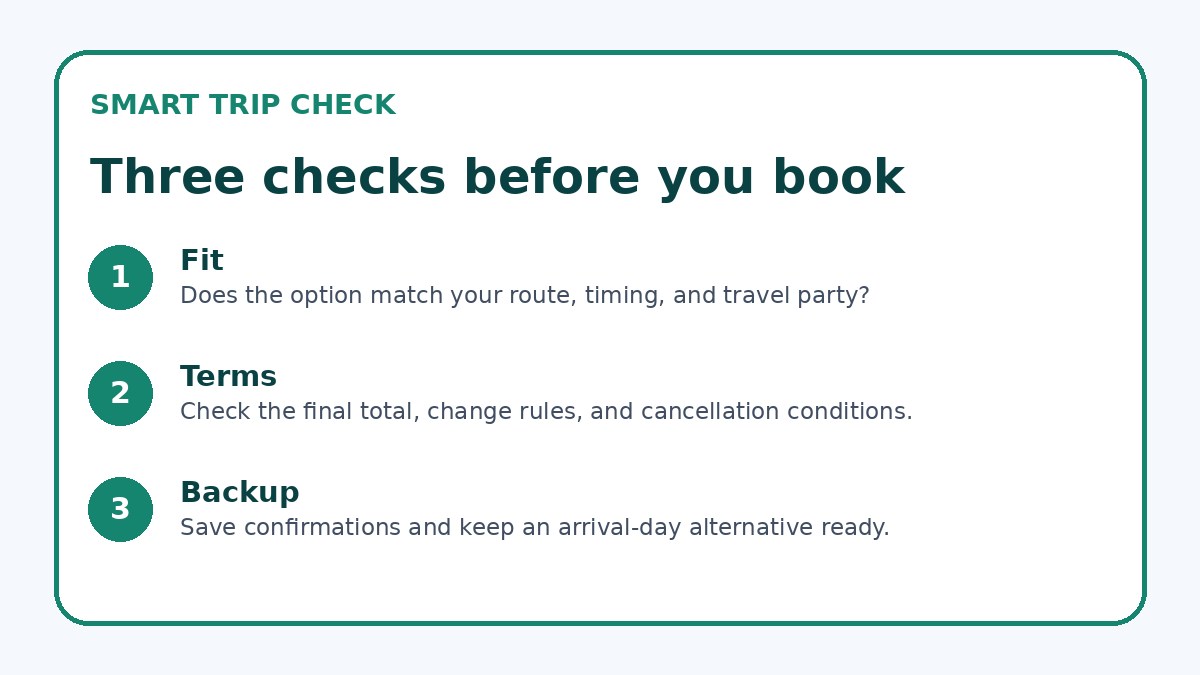
- Confirm terminal addresses and typical local transfer options for your chosen arrival and departure points.
- Read the ticket’s change, exchange, and refund policy on the provider’s final booking page before paying.
- Check luggage allowances and whether staff assistance is available for transfers or platform changes.
- Identify at least two alternative same-day departures or modes to use if your booked service is canceled.
- Screenshot or save booking terms and your confirmation so you can quickly reference rules during disruptions.
- Compare whether buying flexibility for one segment (ferry or final leg) reduces overall disruption risk.
Disruption backup: simple plans if the original ticket fails
A practical disruption plan turns flexibility into usable insurance. For solo travelers, a sensible backup includes a prioritized list: first try to get onto the provider’s next available service under your ticket’s change policy, then check alternate operators or modes, and finally consider rideshares or local flights if time-critical. Keep digital confirmations and screenshots of booking terms so you can reference change or refund provisions quickly if a service is canceled. If you rely on a single non-changeable ticket to save money, have a clear plan and budget for the cost of last-minute alternatives.
Document the simplest alternatives before departure. Note the closest coach hubs, nearby stations, and ferry terminals and save contact numbers for booking desks. If you plan a mixed route, identify which segment is most likely to disrupt the whole trip—often the ferry crossing in rough weather—and see whether buying a refundable option for just that segment gives you better peace of mind for a modest added cost. Always verify any stated disruption policies on the provider’s current booking page so you know what support to expect in practice.
Rail & Intercity Transport questions travelers ask
Should I buy a single flexible ticket or separate segment tickets for a mixed-route trip?
If you want simple recourse for changes, a single flexible ticket covering the whole journey is easiest because it keeps responsibility with one operator. However, fully flexible single tickets may not be available for mixed-mode journeys; in that case, buying separate segment tickets can let you choose preferred providers for each leg. The downside is that each booking keeps its own change and refund rules, so a disruption on one segment may not allow adjustments on the others. Before booking, check the change policy for each segment on the provider’s final page and weigh the risk of missed connections against any savings.
How should I handle luggage transfers when changing between coach, train, and ferry?
Plan for manual handling at each transfer unless your ticket explicitly includes through-checked luggage or assistance. Allow extra time between services so you can move bags without rushing, and keep essential items in a small carry-on for quick access. If you have mobility concerns or large items, contact the operator ahead to learn about assisted boarding or luggage holds. Always verify luggage size and weight rules on the booking page and consider buying a more flexible ticket if transfers with heavy bags would otherwise be stressful.
What is a practical disruption backup for a solo traveler on this route?
A practical backup lists three options in order: first, request a rebooking on the provider’s next service under your ticket’s change terms; second, check available services from other operators (coach or rail) and confirm whether they accept your ticket or offer last-minute seats; third, consider a paid rideshare or short domestic flight if delay risks missing an important connection. Keep contact numbers, station addresses, and proof of booking handy. Before departure, confirm the provider’s disruption policy on their booking page so you know whether and how they’ll assist with reservations or refunds.
Final decision note
For solo travelers on the Auckland to Wellington corridor, ticket flexibility is a practical tradeoff between cost and control. If you value the freedom to change plans without stress, choose a ticket that explicitly allows date or time swaps and minimizes transfer friction. If you’re comfortable with fixed plans, a cheaper restrictive fare can work—provided you build a disruption backup and allow extra transfer time. Mixed-mode trips introduce more points of failure but can be the best door-to-door solution if you plan transfers carefully and verify each segment’s rules. Always confirm terminal locations, luggage policies, and change/refund conditions on the provider’s booking page before you pay, and consider Trip.com as an optional place to compare current availability and conditions.
Continue planning
Check current options and final conditions
Use the provider page to confirm live availability, the final total, cancellation terms, and every condition that matters to your trip.
This evergreen planning guide was created with AI-assisted drafting and a structured quality review. It does not display live prices, schedules, availability, visa guidance, or provider rankings. Verify current details before booking. Some links are affiliate links; we may earn a commission at no additional cost to you.