The simplest practical answer: compare a direct long-distance rail or coach as your backbone, then layer local transfers in Seoul and Gyeongju for first- and last-mile legs. For a solo traveler who wants low friction, prioritize terminals with straightforward connections to your accommodation and manageable luggage handling. If you value flexibility and fewer transfers, choose the option that minimizes terminal changes even if it means a longer single ride. If you prefer cost savings and more routing choices, build a multi-segment plan combining express coach and local trains. Wherever you start booking, verify final timetables, luggage rules, seat-reservation options, and transfer walking times on the operator’s booking pages; Trip.com can be used as one comparison point but always confirm details on the provider’s site before you buy.

Choosing the backbone: rail, coach, or a hybrid
When building a multi-city ground plan from Seoul to Gyeongju, treat the long-haul segment as the backbone of your trip. Decide whether you want a rail backbone for a smoother ride and simpler transfers at major stations, or a coach backbone if you prefer potentially lower fares and more departure locations. A hybrid approach—rail for one leg and coach for another—gives flexibility but increases the number of transfers, so weigh the tradeoff between cost and the friction of moving between terminals with luggage.
For solo travelers, the backbone choice should stem from door-to-door practicality: which departure point in Seoul is easiest to reach from your accommodation, and which arrival terminal in Gyeongju places you closest to your first-night plan. Factor in seat reservation practices, whether luggage is stowed and supervised, and how simple it is to book the backbone segment together with connecting city transit. If you need to check operator pages, verify reservation rules, luggage limits, and where the terminals connect to local transit.

Choose the end-to-end journey plan
| Journey approach | Best for | Friction to check |
|---|---|---|
| Single-mode rail backbone with direct station transfers | Travelers who prioritize comfort and simple platform-to-platform transfers | May have fewer departure times and potentially higher per-seat cost compared with multi-leg options |
| Single-mode coach backbone with local shuttle connections | Solo travelers seeking more departure locations and possibly more flexible times | Increases risk of road delays and may require longer walks or taxi transfers at terminals |
| Hybrid plan: rail one way, coach the other | Those who want a balance between cost control and terminal convenience | Adds at least one extra transfer and more coordination across different operator rules |
| Flexible ticketing with buffer-day planning | Travelers who value changeability and protection against disruptions | Often costs more upfront and requires monitoring multiple booking windows and rules |
Check live intercity options
Look beyond the ride itself and compare terminals, transfers, luggage, and arrival fit.
Terminal fit, luggage handling and transfers
Terminal fit is often more important than travel time. Pick the departure terminal in Seoul that minimizes transfers from your lodging—this could be a major station that links easily to subway lines or a coach terminal with convenient taxi stands. At the arrival end, choose the Gyeongju stop that lets you reach your accommodation without an extra long taxi ride or confusing bus changes. Consider walking distances, covered paths, stairs or elevators, and whether baggage storage or porter services are available locally; confirm those details with the operator or terminal.
Luggage rules and transfer friction can change an otherwise good plan into a hassle. If you travel with two large bags, prioritize options that allow checked luggage or have clear stowage. When comparing connection routes, map the walking route between platforms or terminals and add at least 20–30 minutes as buffer for exiting, crossing, and re-checking bags. For late arrivals, prefer a single terminal arrival to avoid overnight transfers and nighttime public transit gaps.
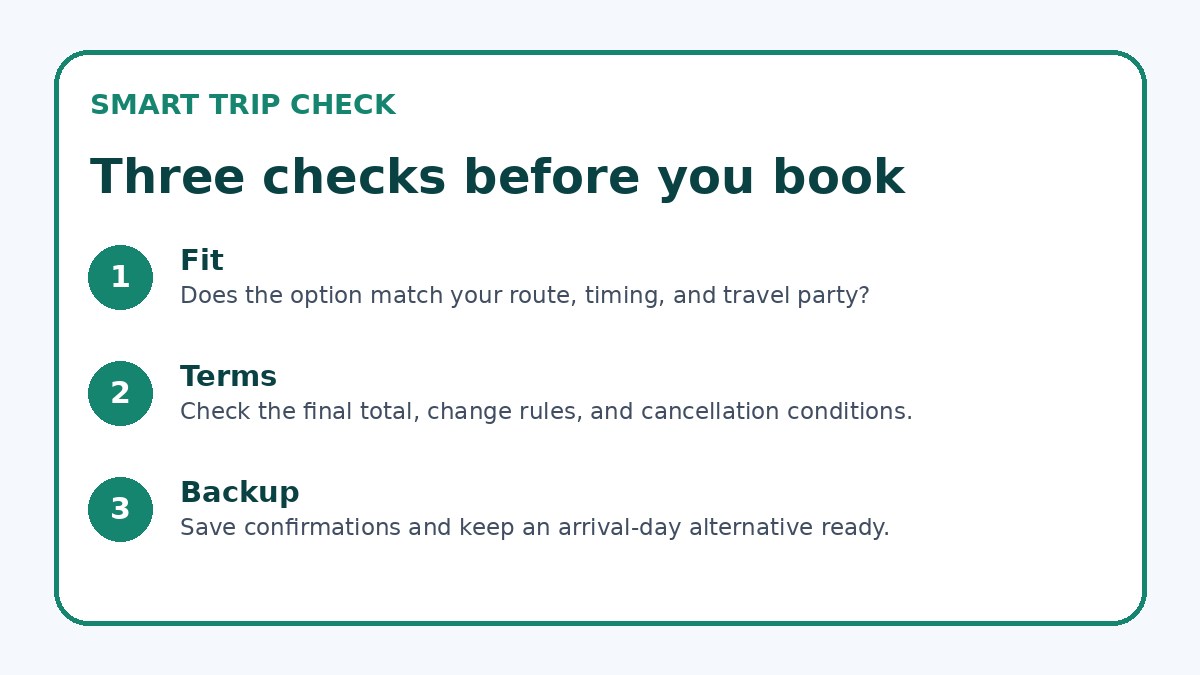
Timing flexibility, booking strategy and day planning
Decide how flexible you need to be before booking. If your schedule is fixed—train or coach that matches a timed tour or check-in—choose a backbone with seat reservations that guarantee a seat. If you want the freedom to change plans, look for refundable or changeable tickets, or build your schedule around frequent services so you can simply take the next available departure. Always pad your itinerary: allow time for delays, airport-like security lines at major stations, and the walk from station exits to buses or taxis.
For single-day movement, plan your sight-seeing pockets around terminal times. If you’re splitting the trip across cities, arrange accommodations near the station you’ll use the following morning. When booking, compare combined journey times including transfers and waiting; sometimes a longer single-seat backbone reduces total door-to-door time. Before you finalize, check the provider’s final booking page for reservation rules, boarding windows, and whether your ticket is tied to a specific departure.
Compare the practical alternatives
Use the final page to confirm what is actually offered on your dates and save a workable fallback.
Intercity travel checklist
- Identify which Seoul departure terminal is closest to your accommodation and print a route map showing subway or taxi options.
- Check luggage allowances and reservation requirements on the operator’s booking page before selecting rail or coach segments.
- Allow at least 20–30 minutes extra between connecting platforms or terminals for walking and handling baggage.
- Choose backup services that use the same terminals and note the next two departures as contingency options.
- Book first- or last-mile transfers (taxi or local bus) in advance if arriving late or with heavy luggage.
- Save operator contact numbers, booking references, and a screenshot of your ticket offline for easier rebooking if needed.
Disruption backup and how to reroute as a solo traveler
Build at least one disruption backup that uses the same terminals as your primary plan—this simplifies rerouting if the backbone service is canceled or delayed. For example, identify an alternative train or coach departing from the same station within a few hours, and note local bus or taxi options to bridge a missed connection. Keep the contact and latest schedule pages of the operator and the terminal bookmarked, and carry digital and paper copies of reservation references so staff can assist quickly if needed.
As a solo traveler, having a fallback ground route that avoids extra terminal changes keeps decisions simple under stress. If services are heavily disrupted, focus on options that maintain a single transfer or allow you to continue by taxi for short bridging distances. If you need to rebook, verify seat availability and luggage transfer rules on the operator’s booking page; use Trip.com or the operator site to compare current options but confirm final terms with the provider to avoid surprises.
Rail & Intercity Transport questions travelers ask
Should I book a direct backbone service or split the trip into multiple legs?
If minimizing transfers and door-to-door friction is your priority, a direct backbone (single long rail or coach) often reduces complexity, especially when traveling solo with luggage. Splitting the trip into multiple legs can save money or allow you to visit intermediate stops, but it increases the number of transfers and the chance of missed connections. To decide, map the full door-to-door journey time, the number of transfers, and the walking distance between terminals. Verify seat reservations and luggage rules before you commit.
How much transfer time should I plan between services in Seoul and Gyeongju?
Plan at least 20–30 minutes between services when transferring within the same terminal to allow for platform changes, locating baggage areas, and buying tickets if needed. If you must change terminals or use public transit or taxis for the connection, add 30–60 minutes depending on distance and peak-hour congestion. Late-night or early-morning transfers may require even more buffer because fewer transport options run. Always check the operator’s boarding window and station layout to refine your timing.
What’s the best disruption backup for a solo traveler on this route?
A practical backup is an alternative service departing from the same terminal within a few hours, so you avoid extra transfers and can rebook more easily. Also identify a short taxi bridge you can afford if a connection is missed, and know the operator’s rebooking policies on the booking page. Keep digital and printed copies of your booking references, and monitor service announcements on the provider’s site or trusted aggregator pages like Trip.com while confirming changes directly with the operator.
Final decision note
Planning Seoul to Gyeongju transport as a solo traveler means thinking in door-to-door terms: pick a backbone mode that fits your tolerance for transfers, confirm terminal fit with your accommodation, and plan luggage-friendly connections. Build in buffers for walking and unexpected delays, and choose disruption backups that keep you within the same terminals to simplify rebooking. Before you finalize any booking, verify reservation, luggage and boarding rules on the operator’s final booking page and save contact details and ticket copies. With a clear backbone choice, realistic transfer times, and a simple contingency plan, you’ll turn an intercity move into a manageable part of your trip rather than a source of stress.
Continue planning
Check current options and final conditions
Use the provider page to confirm live availability, the final total, cancellation terms, and every condition that matters to your trip.
This evergreen planning guide was created with AI-assisted drafting and a structured quality review. It does not display live prices, schedules, availability, visa guidance, or provider rankings. Verify current details before booking. Some links are affiliate links; we may earn a commission at no additional cost to you.