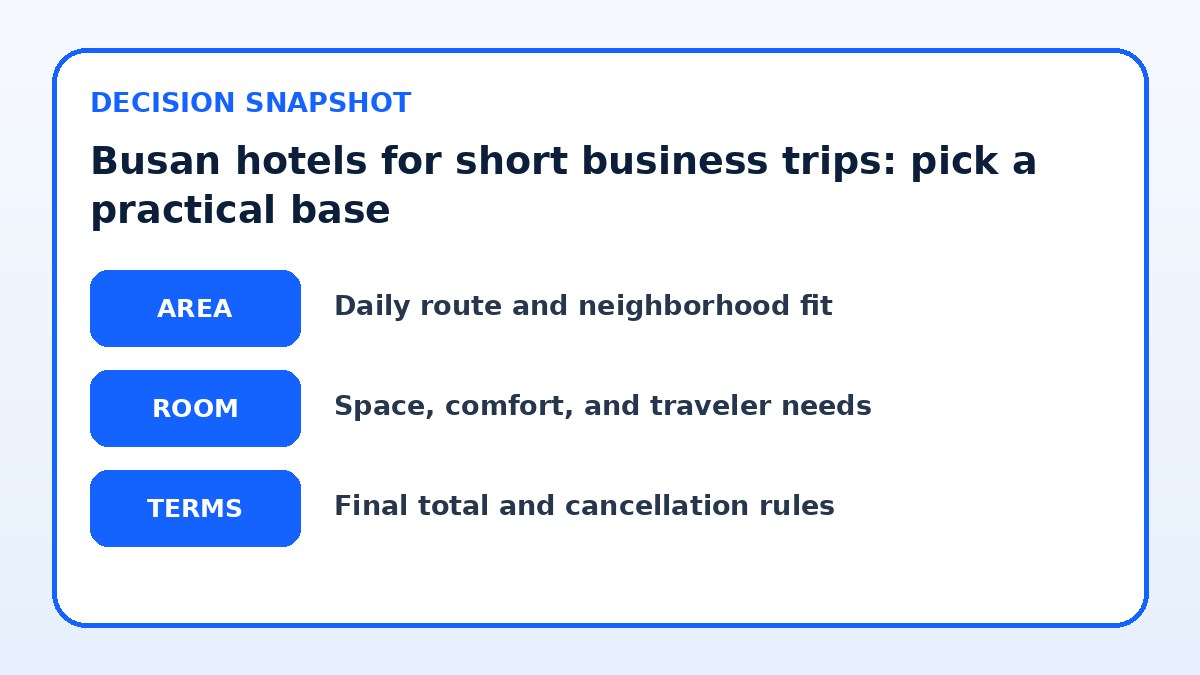
Pick your neighborhood before hunting listings: for a short business stay in Busan, your top priority should be minimizing commute friction between meetings, transport hubs, and the airport or train station. Choose a base that keeps most of your expected movement within a 20–35 minute window by taxi or public transit, then filter hotels by check-in flexibility and business amenities rather than by brand alone. This article gives a direct recommendation up front, then walks through the tradeoffs that matter for one-to-three night stays: neighborhood fit, likely daily routes, room and party needs, and the final booking terms to confirm before you pay. Use the short checklist to finalize a shortlist and the comparison rows to decide which neighborhood-selection approach fits your trip rhythm.

Check live stays in the areas that fit
Use your dates and party size to compare current rooms after you narrow the neighborhood fit.
Neighborhood fit: choose by where your day starts and ends
Decide the core of your schedule first: is your day anchored by a specific office, conference venue, or the station/airport? If most meetings are clustered in a single district, base yourself there and accept fewer leisure options. If your appointments are scattered, pick a central hub with good cross-city metro links and reliable taxis so you can move quickly without changing hotels. For very short trips—one to two nights—the cost of a slightly more expensive centrally placed hotel often pays back in saved travel time and less stress getting to morning meetings.
Think about early-morning and late-evening needs. If you must catch an early train or flight, staying near the main station or the airport link reduces pre-departure risk. Conversely, if your workday ends late and you prefer easy dining or a short ride home, choose a district with a safer, well-lit evening environment. Neighborhoods differ in service hours, late-night dining, and weekend activity levels—match that rhythm to your schedule to avoid wasted time or long waits for transport.
Choose an area-selection strategy
| Area approach | Best for | Tradeoff to check |
|---|---|---|
| Base near your meeting cluster | When most appointments are in one district | Fewer evening or transit options if your meetings shift elsewhere |
| Base near the main station/airport | Short stays with tight arrival/departure windows | May increase daily travel time to dispersed meeting locations |
| Choose a central metro hub | Scattered meetings across the city requiring predictable transit | Slightly longer door-to-door time compared with a meeting-adjacent hotel |
| Pick a quiet business district hotel | Focused work, in-hotel meetings, and restful nights | Less nightlife and dining variety for client entertaining |
Daily-route friction: how transit options change the day
Calculate realistic door-to-door times using the transport modes you’ll actually use. For short stays, taxis and ride-hailing can be faster door-to-door than metro for point-to-point meetings, but they’re subject to traffic peaks. Metro journeys are more predictable during rush hours if your endpoints are near stations. When assessing properties, map the walking time to the nearest station, typical taxi availability at that hour, and whether your meeting venue has a convenient drop-off. A hotel that’s five minutes from a metro and commonly has taxis waiting will reduce your daily friction substantially.
Remember transfers: getting from a hotel to a meeting that requires multiple transfers multiplies risk. If you’ll travel across the city for evening networking, count return routes too—the fastest outbound route may not be the quickest after midnight. Also verify luggage handling if you’re moving on to the next city the same day. Short-stay business travel benefits from simplicity: fewer transfers, predictable routes, and hotels that can offer quick luggage storage and prompt check-out to keep your schedule tight.
Now compare like with like
Keep the same dates, guests, room needs, and cancellation preferences while you compare the final choices.
Room and party needs: fit the space to the trip length
Match the room type to how you’ll use the space. Solo business travelers often prefer compact rooms with a reliable desk, good lighting, and strong Wi-Fi. If you expect to host a short in-room meeting or need brief privacy for calls, look for rooms labeled as business or executive that include seating areas and soundproofing. Traveling with a colleague? Book a room with two beds or request connecting rooms to keep coordination simple; it’s faster than juggling separate reservations or changing rooms on arrival.
Look beyond the bed: check whether the hotel provides complimentary printing, an accessible business center, and flexible breakfast hours to fit your meeting schedule. For stays of only a night or two, housekeeping frequency is less important than express check-in/out, luggage hold, and a late checkout option if your departure time shifts. If client meetings might occur in the hotel, confirm small meeting room availability and any charges for reserving them before you book.
Hotel booking check before payment
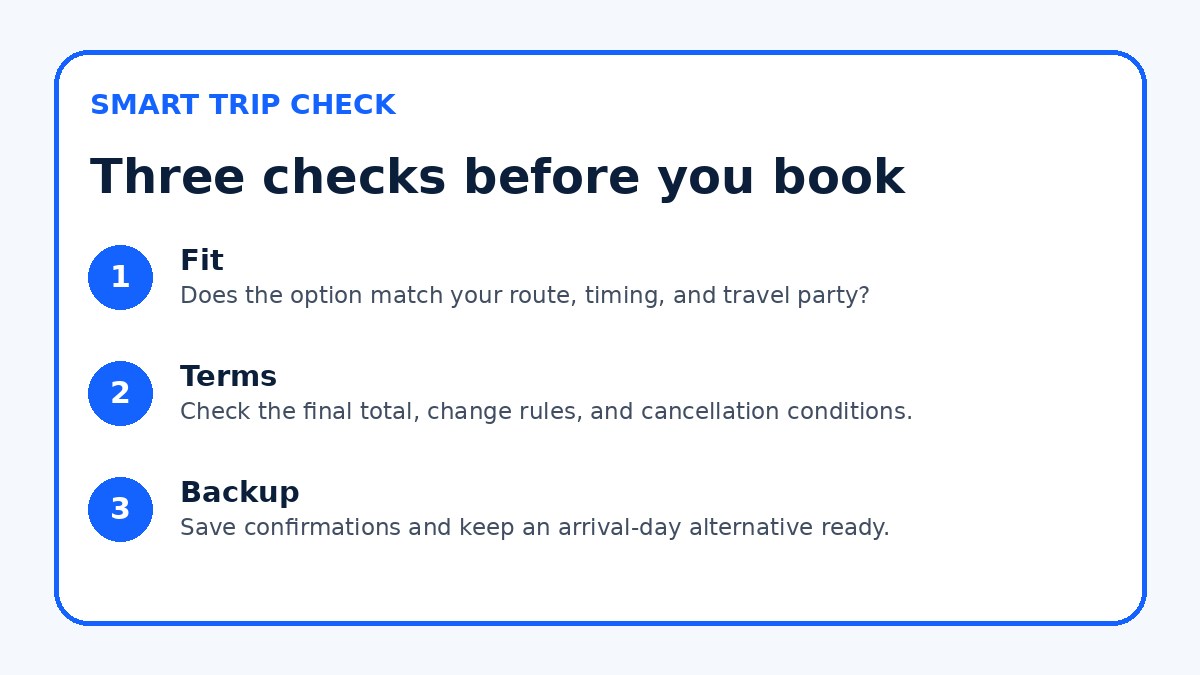
- Map your day: list meeting addresses and estimate door-to-door times from candidate hotels using metro and taxi options.
- Confirm the hotel’s check-in and checkout windows, and ask about early check-in or late checkout fees if needed.
- Request the hotel’s corporate billing or invoice policy in writing if your company requires direct invoicing.
- Verify Wi-Fi speed and whether a business center or printer access is available for urgent documents.
- Ask reception about typical taxi availability at your arrival and departure times, especially early mornings or late nights.
- Compare the hotel’s cancellation and modification terms on the provider page before finalizing the booking.
Final booking terms: exactly what to verify before you pay
Before confirming any booking, verify four practical things on the hotel’s final booking page: cancellation and modification rules, checked-in time windows and early-arrival options, whether the hotel issues corporate invoices or receipts, and what identification the hotel requires for check-in. Don’t assume flexible terms; short business trips frequently change, so clarity on modification penalties and how to request an invoice can save time and headache. If your company requires billing to a corporate card or direct invoicing, contact the hotel directly to confirm this can be arranged.
Also confirm amenities that affect your schedule: Wi-Fi reliability (and whether a premium tier exists), 24-hour reception for late arrivals, and express checkout options. If you plan to commute to the station or airport, check whether the hotel can arrange early morning transport or reliable taxis. Finally, when comparing listings on aggregator sites, cross-check the hotel’s direct policies on its site or by phone; Trip.com can be a useful place to compare current availability and guest policies, but always verify the final terms on the provider page before completing your booking.
Hotel Guide questions travelers ask
Which Busan neighborhood is best if I have evening client dinners?
Pick a neighborhood that combines good dining options with easy transport back to your hotel. Areas with denser restaurant and bar choices allow you to host dinners within a short walk or a short taxi ride, reducing the chance of long post-dinner trips. Also check whether the hotel is in a well-lit, pedestrian-friendly area for walking back after late meetings. If you expect to host clients at the hotel, verify available meeting or dining spaces and any deposit or reservation requirements in advance.
How do I choose between a hotel near the station and a hotel near my meeting venue?
Weigh arrival/departure priorities against daily commute length. If your trip hinges on arriving late or departing early, staying near the main station reduces transfer risk. If your meetings occupy full days in one place, staying near that venue minimizes daily friction. For multiple short meetings across the city, favor proximity to a major metro hub to avoid multiple taxi rides. Always calculate possible rush-hour delays and check whether the hotel can store luggage if you need to check out before departure.
What room features should I prioritize for a one-night business stay?
Prioritize a dependable workspace, stable and fast Wi-Fi, and easy access to power outlets. Soundproofing matters for calls; request a quiet room away from elevators or service areas. If you expect to meet a colleague in the room, check seating arrangements and whether the hotel can provide a small table. For short stays, fast check-in/out, luggage storage, and flexible breakfast times often matter more than extra amenities like gym access—confirm these service details before booking.
Final decision note
For a short business trip to Busan, decide your base by the practical center of your schedule: meetings, arrival/departure points, or cross-city mobility. A slightly pricier centrally located hotel often reduces travel time and stress, while a meeting-adjacent property saves minutes on important days. Use the neighborhood approach that matches your itinerary, verify booking terms and corporate billing needs, and confirm transit options at your intended hours. With the checklist items completed you should be able to shortlist two or three hotels and make a confident booking decision without opening dozens of listings.
Continue planning
Check current options and final conditions
Use the provider page to confirm live availability, the final total, cancellation terms, and every condition that matters to your trip.
This evergreen planning guide was created with AI-assisted drafting and a structured quality review. It does not display live prices, schedules, availability, visa guidance, or provider rankings. Verify current details before booking. Some links are affiliate links; we may earn a commission at no additional cost to you.