For most couples deciding between direct and connecting San Francisco to Vancouver flights, the tradeoff is simple: convenience versus flexibility and potential cost savings. A nonstop flight reduces airport time, lowers the chance of missed connections, and simplifies luggage handling — useful if you want to maximize time together on arrival. Connecting itineraries can open more departure times and possibly lower fares, but they add complexity: extra security lines, rechecking baggage, and a higher chance of delays affecting the trip. Before you search, assemble exact travel dates, the number of travelers, baggage needs, and any mobility or timing constraints. That information will let you compare schedule fits, transfer windows, baggage policies, and fare conditions side-by-side. Read on to weigh routing, baggage and connection risk, schedule fit, and fare rules so you and your partner can pick the right balance for your Vancouver trip.
See live routes for your exact travel day
Compare direct and connecting choices with the same baggage and traveler details.
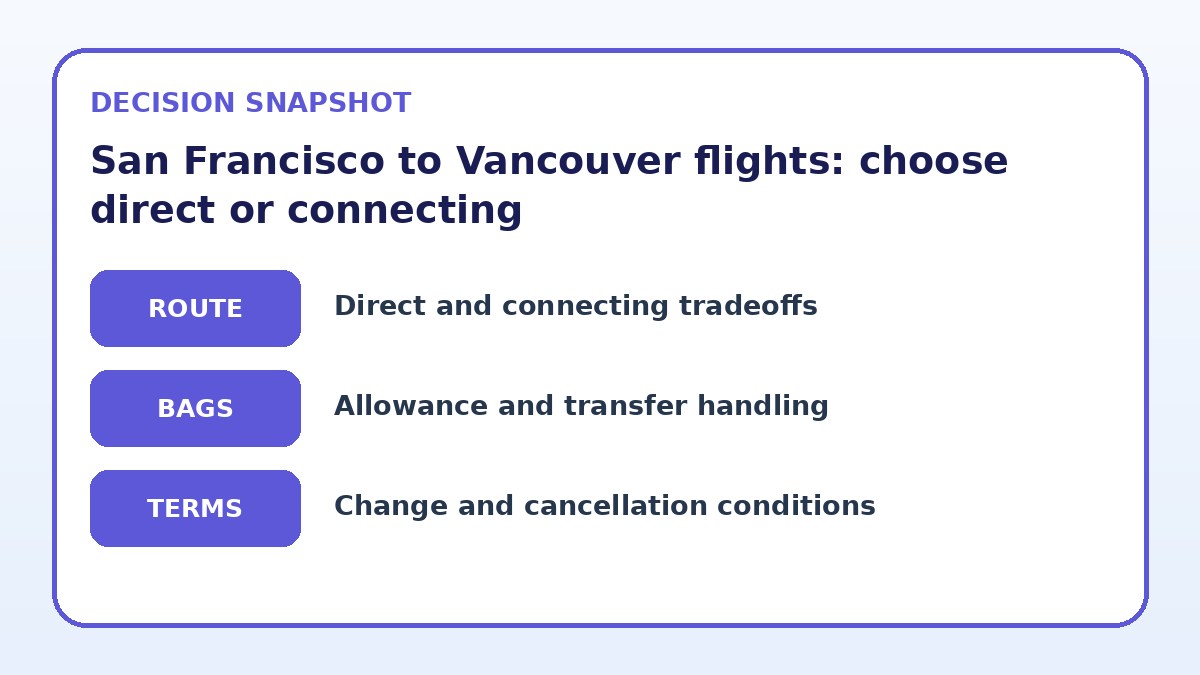
Routing: nonstop comfort versus routing flexibility
Start by mapping the routing options available on your dates. Nonstop flights provide the simplest journey: one takeoff, one landing, and no intermediate terminals. For couples who prioritize time together on arrival, nonstop routing reduces transit stress and the need to coordinate transfers. If nonstop service exists on your chosen dates, compare departure times that match your preferred morning or evening rhythm to minimize jet lag and maximize first-day activities in Vancouver.
Connecting routes broaden the number of daily departure windows and may let you travel at times that better suit work schedules or coincide with lower fares. With a connection you should note the transfer airport, minimum connection times listed by the carrier, and whether you must change terminals or pass customs and immigration at the layover. These practical details affect how much of a buffer you need between flights; when in doubt, choose a longer but reasonable layover to keep your day relaxed.
Baggage and connection risk: what to verify before booking
Baggage handling differs between single-ticket itineraries and multi-ticket plans. If you book all legs on one ticket, the carrier usually through-checks luggage to Vancouver, but exceptions occur for partner airlines or cross-border customs rules. If you and your partner travel with checked bags, verify on the booking page whether bags will be transferred automatically or if you must collect and recheck them during the connection. Also confirm size and weight allowances per passenger class and whether fees apply for each leg.
Connection risk rises with shorter layovers, tight airport layouts, or flights operated by different carriers without interline agreements. For couples, a missed connection is more than an inconvenience: it can disrupt hotel check-ins, activities, and reservations. When comparing options, estimate realistic transfer times that account for passport checks, security screening, gate changes, and crowding. If one of you prefers a gentler pace or requires assistance, add extra buffer time or select a single-ticket nonstop.
Compare flight-selection strategies
| Flight strategy | Best for | Risk to check |
|---|---|---|
| Book a nonstop refundable or flexible fare | Couples prioritizing low stress, quick arrival, and flexibility if plans change | Higher upfront cost compared with basic connecting options |
| Book a nonstop basic/lowest fare | Couples with tight budgets who value time savings but accept strict fare rules | Limited changes and potential extra fees for bags and seats |
| Book a single-ticket connecting itinerary | Couples looking for lower fares with through-checked baggage and protected connections | Longer total travel time and higher chance of delay-related disruption |
| Book separate tickets or mixed carriers to widen options | Flexible couples who want very specific schedules or significant savings | No connection protection; you must recheck baggage and handle missed connections yourself |
Recheck the complete itinerary
Confirm airports, connection handling, baggage, and change conditions before deciding.
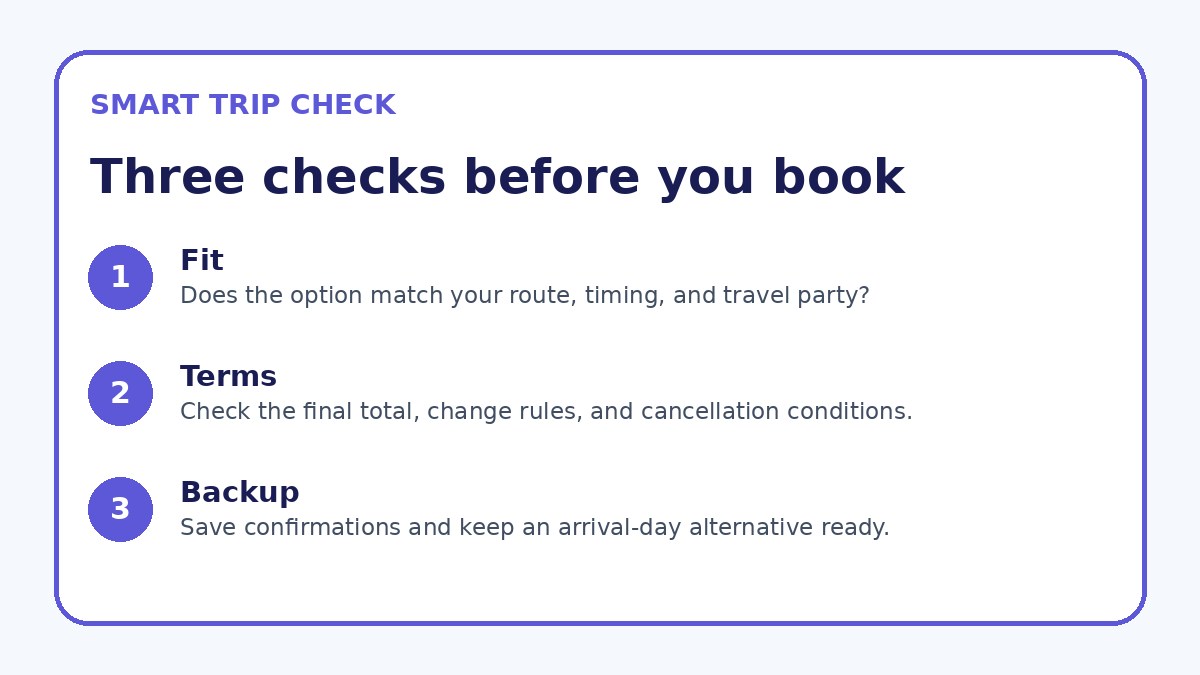
Schedule fit and travel style: align flights with your couple goals
Decide what matters more for this trip: maximizing daytime arrival to start exploring, or saving on fare and departing at off-peak hours. Couples who want a full first afternoon in Vancouver should prioritize morning nonstop arrivals or connections that land early. If your itinerary includes evening reservations, check both arrival times and the risk that tight connections could turn those plans into a rushed evening. Think about how travel fatigue will affect your plans together and pick flights that preserve energy for sightseeing or dining.
Consider the logistics of airport access in San Francisco and transportation on arrival in Vancouver. Early departures may mean driving or rideshares at odd hours, while late arrivals can make settling into a new place more complicated. Matching flight times to your accommodation check-in windows, planned activities, and whether you prefer using public transit versus taxis will steer the choice between a convenient nonstop and a potentially cheaper connecting flight that arrives at less convenient times.
Flight details to verify
- Gather exact travel dates, full traveler names as on passports, and preferred departure/arrival times before searching.
- Decide how many checked bags and carry-ons you’ll travel with and add their fees into fare comparisons.
- For connecting options, note minimum connection times and the layover airport terminal layout from provider pages.
- Compare fully loaded costs: base fare plus seats, baggage, change fees, and seat selection for both travelers.
- Confirm whether both legs are on one ticket (through-checked bags and protection) or separate tickets (self-transfer).
- Verify change and cancellation policies on the airline’s final booking page before entering payment details.
Fare conditions and flexibility: read the fine print
Fare rules — cancellations, changes, baggage inclusion, and standby policies — matter more than headline prices. Low-fare connecting itineraries often lock you into restrictive conditions and separate fees for seat selection or checked bags, which can erase upfront savings. For travel companions, flexibility is valuable: choose fares that permit reasonable changes or offer paid upgrade paths if your plans might alter. Always compare the fully loaded cost: base fare plus foreseeable ancillary fees.
When comparing options, review what the airline’s final booking page shows for change fees, refundability, and baggage allowances for each passenger. If you concern yourselves with protecting investments, look at fares that include at least one free checked bag or permit refundable changes for a modest fee. If you need an easy comparison tool for live availability and conditions, you can check Trip.com alongside airline sites, but always verify rules directly on the carrier’s final booking page before completing payment.
Flight Guide questions travelers ask
Is a nonstop flight always the better choice for couples traveling together?
Not always. Nonstops reduce transit time and simplify logistics, which many couples prefer, but they can cost more. If your schedule is flexible, a well-timed connecting itinerary on a single ticket can save money while still protecting your transfer and baggage. Consider priorities: if you value time together in Vancouver and a relaxed arrival, nonstop is often best. If budget and departure time options matter more, a connection might make sense — just check transfer windows and fare rules carefully before booking.
How much layover time should couples allow when booking a connection?
Aim for a realistic buffer rather than the absolute minimum. For domestic-to-international transfers or busy airports, allow extra time for security, passport control, and possible terminal changes. If the layover requires leaving and re-clearing security or rechecking bags, add at least an hour or more beyond the carrier’s minimum connection time. When traveling together, also factor in a comfortable margin so one partner’s slower pace or restroom stop won’t jeopardize the onward flight.
What should couples check about baggage rules when comparing direct and connecting flights?
Confirm whether checked luggage will be through-checked to Vancouver on the itinerary you view, especially if multiple carriers are involved. Review the weight and dimension limits, the number of free checked bags included per passenger, and fees for additional or overweight items. If booking separate tickets, assume you will collect and recheck bags during the connection. Always verify these specifics on the airline’s final booking page because baggage rules and fees vary by fare class and carrier.
Final decision note
Choosing between direct and connecting San Francisco to Vancouver flights comes down to balancing your couple priorities: time together, budget, and tolerance for complexity. If a stress-free, shorter door-to-door experience is important, lean toward nonstop service or a refundable nonstop fare. If you prioritize lower cost or a specific departure time, a single-ticket connection can work well—just check through-baggage handling, layover length, and fare rules. For the most reliable decision, assemble your exact travel dates and traveler details, tally all expected fees, and verify change and baggage policies on the airline’s final booking page before you book. Use a comparison tool such as Trip.com to view options, but always confirm the carrier’s rules directly to avoid surprises.
Continue planning
Check current options and final conditions
Use the provider page to confirm live availability, the final total, cancellation terms, and every condition that matters to your trip.
This evergreen planning guide was created with AI-assisted drafting and a structured quality review. It does not display live prices, schedules, availability, visa guidance, or provider rankings. Verify current details before booking. Some links are affiliate links; we may earn a commission at no additional cost to you.