If you’re flying solo from Los Angeles to Honolulu, the core decision usually comes down to time versus fare. Direct flights cut travel time and simplify connections for a single traveler but can cost more; connecting itineraries sometimes save money or open better schedule windows at the cost of added complexity and transfer risk. For an efficient, low-stress trip prioritize direct service when your time or comfort is most important, and consider connections if your schedule is flexible and you want to shop for lower fares or departure times not offered nonstop. Before you open booking sites, get exact travel dates, the traveler’s full name as on ID, one or two acceptable departure times, and a baggage plan. Use those details when comparing live options — verify transfer times, baggage transfer rules, and fare conditions on the airline or booking page; Trip.com can be useful to compare current availability but confirm final conditions with the carrier.
See live routes for your exact travel day
Compare direct and connecting choices with the same baggage and traveler details.
Routing: how to compare nonstop and one-stop itineraries
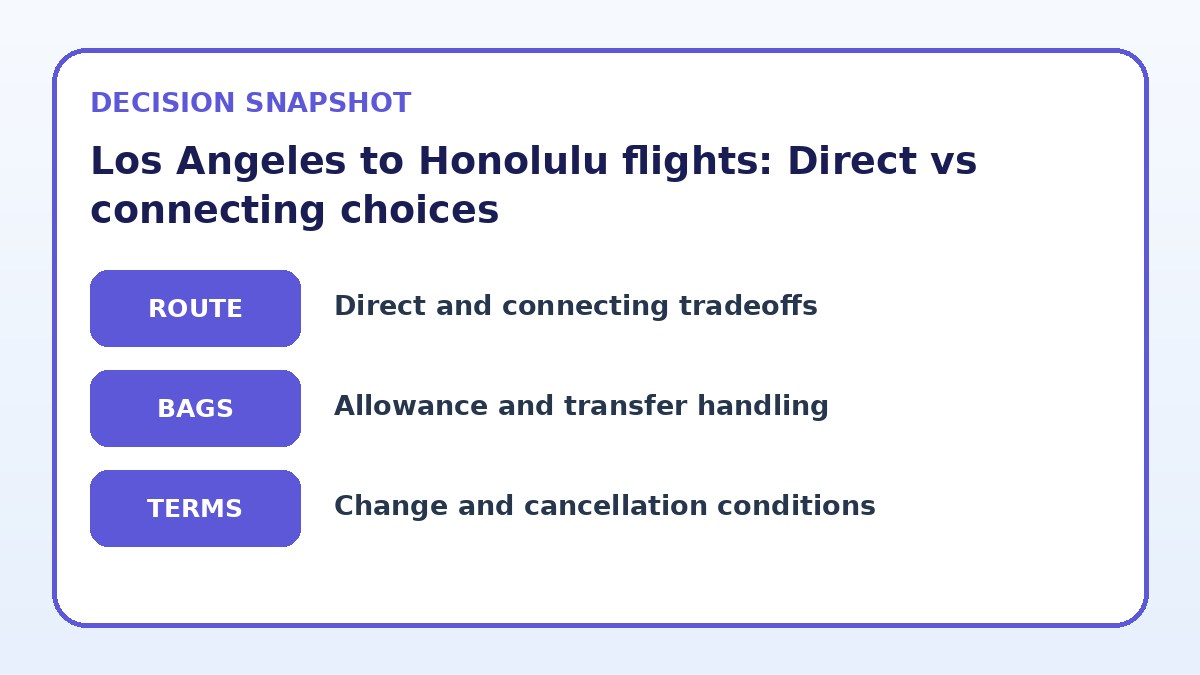
Start by listing direct flights and common one-stop routing points between Los Angeles and Honolulu. For a solo traveler, nonstops are simpler — you board once, luggage is checked through to Honolulu, and there’s no risk of an intra-connection delay. If nonstops fit your departure window and budget, they are the least stressful option. However, one-stop options may appear at different times of day or on carriers you prefer, so don’t dismiss them automatically.
When evaluating connections, look beyond the headline fare to the total elapsed time and the layover length. A short connection saves time but raises the risk of missing the next flight; a long connection adds downtime and may require airport re-entry procedures. Compare door-to-door travel time, total scheduled travel time, and the airport layout for each connection point — if you must change terminals, a longer layover is safer. Make a note of whether the itinerary is on one ticket or separate tickets, as that affects recovery options if things go wrong.
Baggage and connection risk for solo travelers
The way baggage is handled can be decisive for a solo traveler. On a single ticket with an airline that offers through-checked baggage, your bag is usually sent all the way to Honolulu and you only reclaim it on arrival. If you piece together separate tickets, you often need to collect and recheck luggage, which adds time and stress and requires you to manage transfers yourself. Always confirm the baggage transfer policy on the airline booking page: whether through-check is included, fees for checked or oversized bags, and whether the carrier will accept liability for missed connections.
Connection risk extends to missed flights and delays. If your itinerary is on one ticket, airlines typically rebook you on the next available flight if they cause a missed connection; with separate tickets there may be no such obligation. Solo travelers should choose buffer time based on how comfortable they are navigating unfamiliar airports, processing arrival and departure security, and dealing with immigration or customs if those apply. Consider travel insurance that covers missed connections if you pick a tight connection on separate tickets.
Compare flight-selection strategies
| Flight strategy | Best for | Risk to check |
|---|---|---|
| Book a nonstop, higher-fare ticket | Solo travelers prioritizing minimal hassle and fastest door-to-door time | Usually costs more and may offer fewer departure time options |
| Book a single-ticket connecting itinerary | Travelers who want a cheaper fare with the airline responsible for connections | Longer travel time and potential for delay, but baggage is typically through-checked |
| Buy separate tickets for each leg | Travelers seeking the lowest possible fares or specialized schedules | Higher risk: you must recheck baggage and no guaranteed protection for missed connections |
| Choose a flexible or refundable fare | Solo travelers who value the option to change plans without heavy penalties | Higher upfront cost, though it reduces stress and potential change fees |
Recheck the complete itinerary
Confirm airports, connection handling, baggage, and change conditions before deciding.
Schedule fit: when to prioritize departure and arrival times
Decide what matters most: an early arrival in Honolulu to enjoy an afternoon, or a late-night arrival to catch preferred accommodations? Direct flights generally give the most reliable schedule; if an early-morning nonstop gets you to your destination with minimal complications, it can be worth a fare premium. Conversely, if your plans in Honolulu are flexible, a connecting itinerary that departs at an unusual hour might save money or align with other travel.
Also consider how the flight times interact with ground transport and your first-day agenda. Solo travelers often prefer arrivals that coincide with hotel check-in or daylight hours for safer transit from the airport. If you need to be in town by a specific time, prioritize total scheduled travel time and on-time performance history (verify recent reliability with the carrier before booking). When comparing options, make a simple matrix of departure time, arrival time, elapsed time, and how each option supports your itinerary needs.
Flight details to verify
- Set exact travel dates and passenger name as it appears on ID before searching fares.
- Decide how much total travel time versus ticket cost you will accept and record a maximum layover duration.
- Check whether the itinerary is on one ticket; if not, plan time to collect and recheck checked luggage.
- Confirm baggage allowance and fees on the airline’s final booking page, including carry-on rules.
- Note departure and arrival terminals for any connection and allow extra time if terminal transfer is required.
- Compare fare change and cancellation conditions and add travel insurance if you need protection for missed connections.
Fare conditions and what to verify before booking
Fare rules can tip the balance between direct and connecting options. Look for refundability, change fees, and the specific conditions for same-day changes or standby. Low-fare tickets may restrict seat selection and have strict cancellation penalties, which can create stress if your plans change. Solo travelers who need flexibility should search for fares with reasonable change allowances or consider purchasing flexible fare bundles that include seat selection and priority boarding—verify these features on the airline’s final booking page.
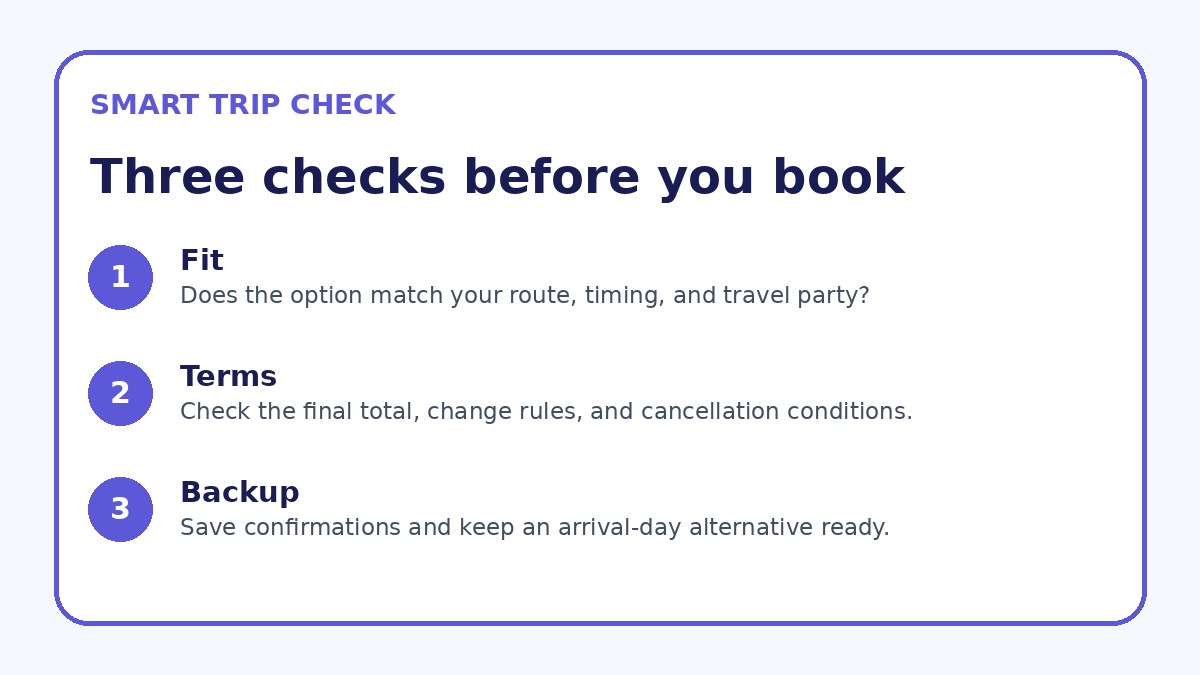
Before you commit, verify baggage allowances and fees, how frequent flyer mileage accrual is handled, and whether the itinerary is on a single ticket. Confirm the airport terminals involved in any connection and whether you must clear security again. If you book through a third-party platform, double-check the carrier’s rules directly; Trip.com is one place to compare availability, but the airline’s site will show the authoritative fare conditions, baggage policy, and rebooking processes you’ll depend on if travel disruptions occur.
Flight Guide questions travelers ask
Are nonstop Los Angeles to Honolulu flights always the easiest option for a solo traveler?
Nonstop flights are typically the least complicated because you don’t need to change planes or re-clear security, and baggage is usually checked through to the final destination. That simplicity is valuable for solo travelers who prefer to avoid extra airport navigation or the stress of tight connections. However, nonstop service can be more expensive or may not depart at a time that fits your schedule. If the nonstop schedules are inconvenient or priced outside your budget, a single-ticket connection can offer a reasonable compromise with lower stress than separate tickets.
How much connection time should I allow when traveling alone between Los Angeles and Honolulu?
Allow enough time to get between gates or terminals, clear any required security screening, and handle unexpected delays. For single-ticket connections operated by the same carrier, 60–90 minutes might be workable in many airports, but solo travelers who prefer less risk should choose longer layovers. If you’re on separate tickets, plan several hours to collect and recheck luggage and to recover from any delay. Always check terminal transfer times on the airline’s site and add buffer time if you need to switch terminals by shuttle or train.
What should I verify on the airline’s booking page before buying a Los Angeles to Honolulu ticket?
Confirm the fare rules (change and cancel policies), baggage allowance and fees, seat selection options, and whether your itinerary is a single ticket covering all legs. Also verify terminal information for any connections and the carrier’s policy on missed connections. If you’re earning loyalty points or using status benefits, check accrual rules. If you used a third-party site to find the fare, cross-check these details on the airline’s site because the carrier’s booking page contains the definitive conditions you will need if plans change or disruptions occur.
Final decision note
For most solo travelers, the choice between direct and connecting Los Angeles to Honolulu flights hinges on how much you value simplicity and time versus the fare and schedule options. Nonstop flights offer the smoothest experience and lower connection risk, which many solo travelers will prefer when time, comfort, or single-bag handling is important. Connecting itineraries can be attractive when nonstops don’t match your timing or budget, but they require careful attention to ticketing, baggage rules, and layover length. Before you book, lock your exact dates and traveler details, compare single-ticket versus separate-ticket outcomes, and confirm all fare and baggage rules on the carrier’s final booking page to avoid surprises.
Continue planning
Check current options and final conditions
Use the provider page to confirm live availability, the final total, cancellation terms, and every condition that matters to your trip.
This evergreen planning guide was created with AI-assisted drafting and a structured quality review. It does not display live prices, schedules, availability, visa guidance, or provider rankings. Verify current details before booking. Some links are affiliate links; we may earn a commission at no additional cost to you.