Most couples visiting Tokyo will find no need for a rental car, because the city’s rail and subway network, punctual surface transit, and walkable neighborhoods handle urban sightseeing cleanly. That practical answer, however, hides important exceptions: if your plans include frequent day trips outside central Tokyo, remote rural stays, or a flexible itinerary that avoids tight train timetables, driving can genuinely improve quality of trip. This article helps couples decide by testing your likely route value, explaining how insurance wording matters for both drivers and partners, outlining common pickup and return frictions at Japanese rental stations and airports, and offering a concrete non-driving fallback plan that keeps mobility simple and pleasant. Read the quick checklist and compare four mobility strategies to match your personality, budget, and itinerary shape before you book.
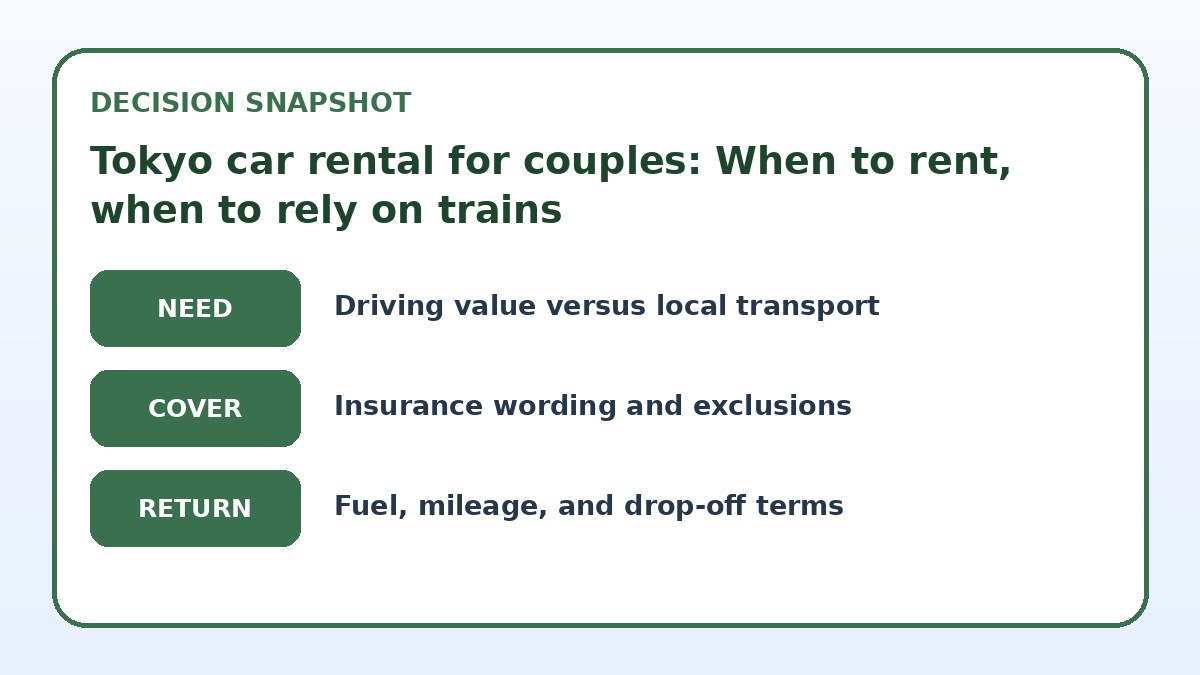
Assess the route value: where driving actually helps
Start by mapping your planned destinations and the time you want to spend traveling between them. Driving in Tokyo itself is rarely helpful — heavy traffic, scarce and costly parking, and easy rail connections make trains faster for most inner-city itineraries. However, for couples who want to combine a few nights in central Tokyo with flexible day trips to mountain shrines, coastal sunsets, or small towns with limited train service, a car can save hours and let you visit places that lack frequent public transit.
To judge whether driving improves your specific plan, estimate door-to-door travel time for both options: include walking to stations, transfers, taxi time, parking search, and any toll roads. Pay attention to luggage: if you’re carrying large suitcases and plan many transfers, a car avoids hauling gear across multiple platforms. Also consider timing — early-morning or late-night departures and returns favor a car when public transit is limited. Sketch a sample day with both modes and see which gives you more leisure time together.
Decide whether driving earns its place
| Mobility strategy | Best for | Cost or friction to check |
|---|---|---|
| Rental car for full trip | Couples with many rural day trips, lots of luggage, or a flexible road-based itinerary. | Higher parking, toll, and fuel costs plus pickup/return friction and more complex insurance choices. |
| Public transit (trains and subways) | Couples focused on urban sightseeing, dining, museums, and efficient inter-station travel. | Limited direct access to remote sights and possible crowding during peak hours. |
| Taxis and ride-hailing | Short late-night trips, point-to-point convenience, and quick door-to-door transfers within Tokyo. | Expensive for long distances and not cost-effective for multiple day trips outside the metro area. |
| Targeted guided tours or private transfers | Couples who want specific day trips to rural sites without renting a car themselves. | Less spontaneous flexibility than self-driving and depends on tour schedules or provider pickups. |
Check live rental choices only after the route test
Use the exact driver, dates, pickup point, and return plan to compare current conditions.
Understand insurance wording and liability implications
Insurance descriptions can be brief and misleading; don’t assume coverage without reading the policy wording. Look for terms like collision damage waiver (CDW), liability coverage limits, deductibles or excess, theft protection, and whether coverage applies when driving on toll roads or remote routes. For couples, confirm whether both partners can be listed as authorized drivers and whether adding a second driver costs extra. If one partner will drive only occasionally, ensure you’re comfortable with the named-driver rules and any additional fees for multiple drivers.
Also verify exclusions: driving on unpaved roads, using the car for racing, or crossing certain prefectural borders can sometimes void coverage. For international visitors, rental companies may require an International Driving Permit (IDP) or specific translations; check that the driver’s license documents you bring satisfy the rental contract. When provider-specific facts could change, always click through to the rental company’s final booking page to confirm insurance limits, optional packages, and whether roadside assistance and towing are included or sold separately.
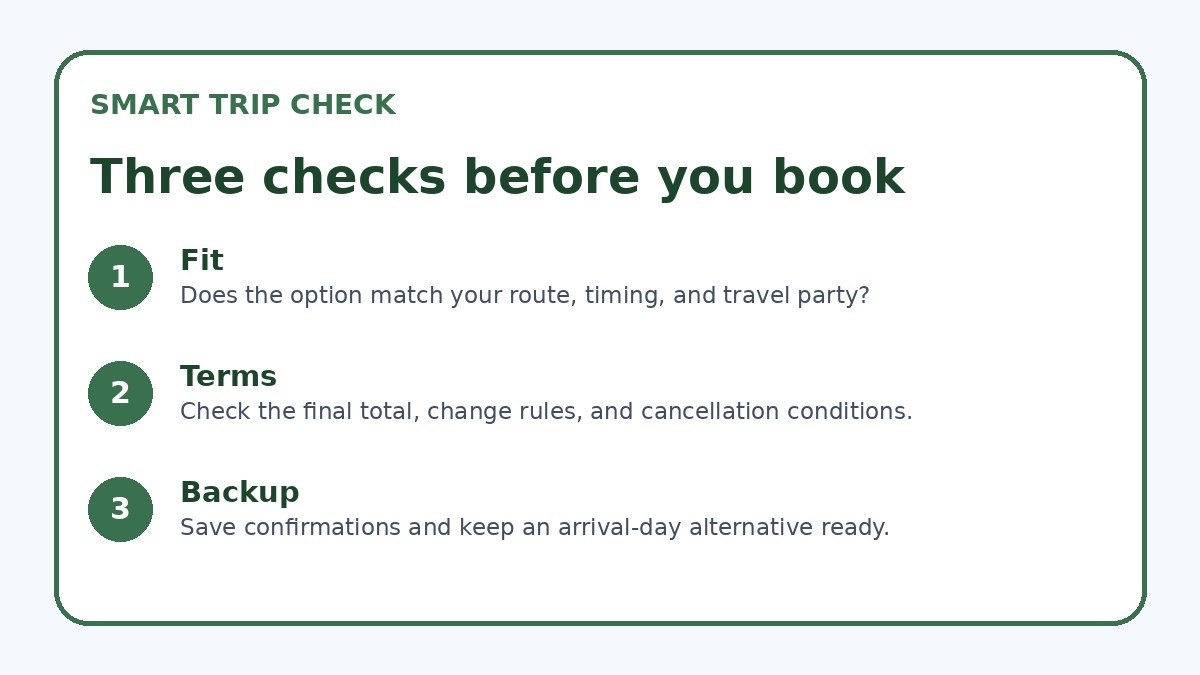
Compare the full rental conditions
Confirm insurance wording, exclusions, deposit, fuel, mileage, and return terms on the final page.
Pickup and return friction: the invisible time and cost
Pickup and drop-off take more time and can add hidden costs that tilt the decision away from driving. Airport pickups often require a shuttle, counter wait, paperwork in multiple languages, and extra time to find the car park. If you plan an intercity one-way rental, search carefully for fees and availability: one-way returns between prefectures may be restricted or carry high relocation surcharges. Couples should budget time for instruction on toll payment devices (ETC), fuel policies, and any pre-rental car inspection to avoid disputes at return.
Urban return logistics matter too. Parking options at hotels or attractions can be expensive or limited; some accommodations don’t have guest parking at all. Factor in congestion and curfew-like restrictions in certain neighborhoods. If you expect to return a car late in the evening, confirm whether offices have after-hours drop boxes and whether the final fuel reconciliation happens in person. These practicalities often eat the time savings you expect from driving, so list them and estimate minutes and yen before deciding.
Car rental terms to verify
- Map your full itinerary and mark every stop where public transit would require two or more transfers versus a single drive.
- Open the rental company’s insurance wording on the final booking page and note cover limits, deductibles, and authorized-driver rules.
- Calculate estimated parking costs and likely tolls for each driving day and add them to your daily budget.
- Confirm pickup and return procedures for your chosen location, including shuttle requirements, after-hours drop-off, and counter hours.
- Check documentation requirements: International Driving Permit (IDP) or translations, passport matching, and company ID rules for all drivers.
- Plan a non-driving backup using trains plus taxis, and book a guided day trip if one or two remote outings are crucial to your itinerary.
A non-driving fallback that keeps your trip flexible
If you opt not to drive, assemble a fallback mobility plan that provides flexibility without owning a car. Combine Tokyo’s rail network with occasional taxis for late-night returns, regional limited express trains for longer day trips, and targeted bus or shuttle services to reach attractions with poor rail links. For day trips beyond easy train routes, consider booking a single guided day tour or a private driver for the specific excursion rather than renting a car for your entire stay — that reduces liability and removes parking headaches while preserving access to remote sights.
Also use luggage-forwarding services (takkyubin) to move bags between hotels, which makes rail travel much more comfortable for couples traveling with spare clothing or bulky items. Check campsite, ryokan, or rural guesthouse access before you book; some places offer pickup from the nearest station. Finally, plan your departure and arrival days carefully: pick accommodations near major stations for easy transit to airports and shinkansen terminals, and keep a small buffer for delayed connections.
Car Rental & Road Trip questions travelers ask
Do couples need an International Driving Permit (IDP) to rent and drive in Tokyo?
Many rental companies and Japanese law require a valid driving credential alongside your domestic license: typically an International Driving Permit issued under the 1949 Geneva convention or an officially translated license for some countries. Requirements vary by nationality and provider, so check the rental company’s driver eligibility rules on their booking page before you book. Also carry your passport, the physical IDP, and any additional documents requested; failure to present required documents at pickup can prevent rental issuance.
How do tolls, congestion, and parking typically affect a Tokyo rental budget?
Tolls on expressways and parking fees in the city add up quickly and are often the most overlooked cost. Expressway tolls depend on distance and route; urban parking is frequently charged by the hour near popular neighborhoods and attractions. When estimating costs, factor in both highway tolls for regional day trips and hourly or overnight fees for city parking. Confirm whether the rental includes an ETC (electronic toll collection) device and whether its tolls appear on your final bill or require separate payment.
What should couples do if they change their mind and decide not to drive after booking?
If you cancel a reservation, review the rental company’s cancellation and modification policies on the final confirmation page because fees and refund rules vary. For a mid-trip decision to stop driving, return the car as arranged and switch to your non-driving fallback: reserve hotels near major stations, prebook a guided day trip for rural visits, or use taxis for late-night legs. Keep insurance paperwork and the rental contract until the vehicle drop-off is fully processed to avoid disputes about damage or fuel charges.
Final decision note
For most couples, Tokyo’s excellent public transit and walkable neighborhoods make a rental car unnecessary and often cumbersome. Yet there are clear scenarios where driving adds value: multi-day rural excursions, bulky luggage, or tight timetables that trains can’t match. Make the decision by testing a sample day comparing door-to-door times, reading insurance wording on the rental company’s final booking page, and accounting for pickup, return, tolls, and parking. If you choose not to drive, plan a structured fallback that mixes trains, occasional taxis, and single guided trips to preserve flexibility and comfort without the hassles of car ownership during your stay.
Continue planning
Check current options and final conditions
Use the provider page to confirm live availability, the final total, cancellation terms, and every condition that matters to your trip.
This evergreen planning guide was created with AI-assisted drafting and a structured quality review. It does not display live prices, schedules, availability, visa guidance, or provider rankings. Verify current details before booking. Some links are affiliate links; we may earn a commission at no additional cost to you.