If your business itinerary in Gyeongju includes off-hour meetings, client visits across the province, or tight transfers from Busan or Daegu, driving can add efficiency — but only if pickup and return terms match your schedule. This article gives a quick practical answer: rent when you need flexible door-to-door access and control over timing; skip self-driving when pickup windows, asymmetric return fees, or insurance gaps could erode time savings. Below I explain the specific contract clauses and operating practices to verify before you book, outline route value for common business uses, detail insurance language that matters to corporate travelers, and suggest non-driving alternatives that keep your day on track. The goal is to help a business traveler decide now and know exactly what to check on the provider’s final booking page.
Does driving improve a Gyeongju business itinerary?
Deciding whether to drive starts with mapping your appointments and priorities. Driving shines when you need strict control over timing, door-to-door flexibility, or access to outskirts such as industrial parks, client sites, or heritage spots outside downtown Gyeongju where taxis can be slow to arrive. Factor in the location of your accommodation relative to meeting sites: if most meetings cluster in central areas or near major train stations, you might gain less from a car and more from punctual taxis or short transfers by hired driver.
Also weigh parking and urban congestion against the time saved moving between sites. Gyeongju’s central tourist areas can have limited short-term parking, and corporate districts may impose paid parking or permit rules; on the other hand, multiple client stops separated by significant travel time make a rental far more convenient. The decision is pragmatic: compare door-to-door time estimates with and without a car and include buffer time for pickup and return in your meeting schedule.
Decide whether driving earns its place
| Mobility strategy | Best for | Cost or friction to check |
|---|---|---|
| Self-drive rental | Travelers needing full schedule control and multiple remote stops. | Higher admin friction at pickup/return, deposit holds, and risk of insurance gaps if wording isn’t checked. |
| Hired driver or corporate sedan | Executives who prioritize time savings and hands-free travel. | Higher per-hour cost and less flexibility to make unscheduled stops without renegotiating service. |
| Public transit plus taxis | Short, centrally-located schedules with reliable station access. | Less privacy and possible waits for taxis during peak meeting transitions or late hours. |
| One-way rental or multi-day shuttle | Point-to-point travel where returning the car to the drop-off city matters. | Potential one-way fees and stricter return conditions; check final-page fees and allowed drop locations. |
Check live rental choices only after the route test
Use the exact driver, dates, pickup point, and return plan to compare current conditions.
Pickup and return friction: what to verify before booking
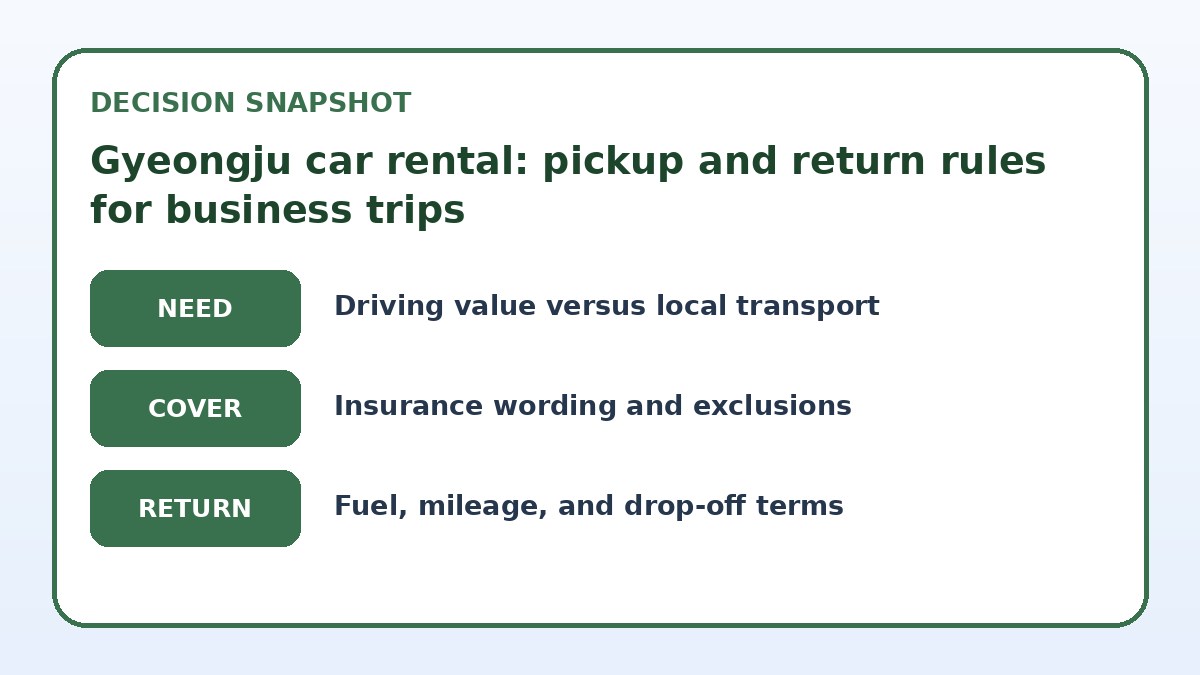
Pickup and return terms are the single largest source of friction for business travelers. Confirm exact pickup hours, the provider’s airport or station collection process, and whether an after-hours collection is possible and at what cost. Verify whether the agency requires a credit card imprint, a security deposit hold, or signed acceptance at pickup; these steps can add minutes or require arrival at the rental desk rather than curbside handoff, which matters if your itinerary is time-pressed.
Return conditions are equally important. Check the allowed return window, whether late returns are charged by the hour or by day, fuel return requirements, and accepted drop-off locations — some agencies charge extra for different return sites. If you plan to fly out of a different city, confirm one-way drop-off availability and any remote-drop fees. For each policy, note the exact wording on the final booking page and take screenshots of the contract terms if you need to present them to an employer or expense manager.
Compare the full rental conditions
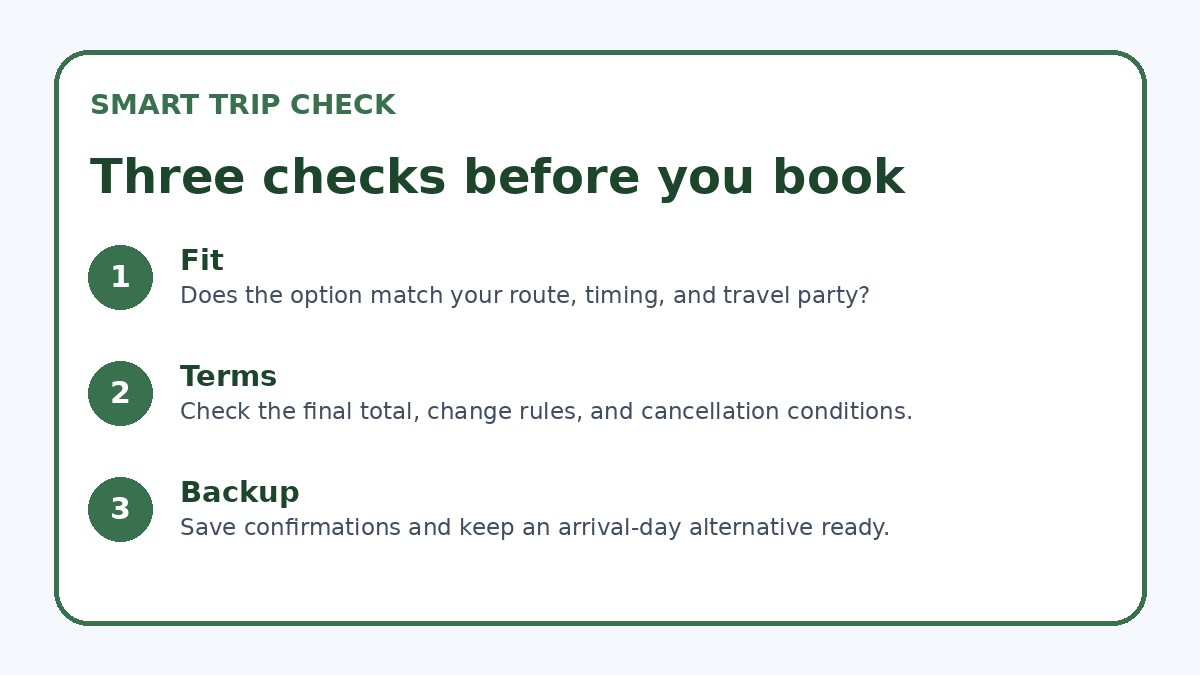
Confirm insurance wording, exclusions, deposit, fuel, mileage, and return terms on the final page.
Insurance wording and corporate protections business travelers need
Insurance descriptions can be dense but reading a few key lines will protect you and your company. Look for the type of coverage (collision damage waiver, third-party liability, theft protection), the deductible amount, and whether the insurer offers a zero-excess option or only partial waivers. Confirm whether credit-card benefits or your employer’s corporate insurance are accepted as primary or secondary cover and exactly what documentation the provider requires at pickup to waive fees.
Also verify how coverage applies across different drivers if you and a colleague will alternate driving. Some contracts require each additional driver to be registered and may charge an extra daily fee; others permit multiple authorized drivers at no charge if they are listed. Finally, note exclusions such as driving on unpaved roads, off-road use, or using winter equipment — these can void coverage, so cross-check any intended routes against the insurer’s list of exclusions on the booking page.
Car rental terms to verify
- Confirm pickup and drop-off hours and note after-hours collection or return fees shown on the booking page.
- Accept and save a screenshot of the rental contract’s insurance section, including deductibles and exclusions.
- Verify whether a security deposit or credit-card hold is required and ensure your card limit covers it.
- Check one-way drop-off availability and any remote-return fees if returning the car to a different city.
- List all authorized drivers on the reservation and confirm additional-driver fees or documentation required.
- Record the exact fuel policy and whether provider will accept a fuel charge instead of a full-tank return.
A practical non-driving fallback for tight business schedules
When pickup or return terms introduce unacceptable risk or time friction, opt for a fallback that preserves schedule control. A common approach is hiring a local driver or corporate sedan service for the day: it removes deposit holds, eliminates return-window stress, and keeps you focused on meetings. For shorter itineraries, combine rail or express bus to Gyeongju with pre-booked taxis at each end — this reduces long-haul driving time and the need to manage parking while still offering predictable point-to-point transfers.
Make contingency plans in writing: schedule confirmations, driver contact numbers, and meeting buffers that account for traffic. If you may need a car spontaneously, choose providers with flexible cancellation and clear pickup instructions so you can convert a taxi day into a rental if time allows. Whatever fallback you pick, verify cancellation and refund terms in case your schedule changes; take screenshots of the provider’s final page for corporate expense reporting and reimbursement support.
Car Rental & Road Trip questions travelers ask
Can my corporate credit card or company insurance cover the rental in Korea?
Possibly, but policies vary by provider and country. Before booking, ask the rental company whether they accept corporate credit cards for payment and security deposits and whether employer insurance can act as primary coverage. Request written confirmation of acceptance and any documentation required at pickup. If the final booking page shows unclear insurance language, contact the provider directly to clarify whether your corporate policy will be honored and whether any extra waivers or authorizations are needed from your company.
What should I do if a meeting overran and I’ll miss the booked return time?
First, notify the rental provider immediately using the emergency or after-hours contact listed on your reservation. Ask how they bill late returns: some charge by the hour up to a day, others charge a full extra day after a grace period. If you have a corporate travel manager, inform them and request approval for any extra charges. Keep records of communications and request written confirmation of any agreed extensions or fees, since you will need documentation for expense reporting.
Are one-way rentals practical for business travel between Busan, Daegu, and Gyeongju?
One-way rentals can add convenience when flights or trains depart from a different city, but they often include administrative or remote-drop fees. Check the booking page for explicit one-way availability, which locations are permitted for drop-off, and whether inventory or seasonal restrictions apply. Also confirm the allowed return window and any geographic restrictions that could affect insurance coverage. If the rental supplier’s one-way rules look unclear, consider an alternative: meet-and-greet chauffeur services or coordinating train travel with local taxis to avoid potential one-way surcharges.
Final decision note
For business travelers in Gyeongju, the right mobility choice depends on how much schedule control you need and how tolerant you are of pickup and return friction. If your day requires multiple remote stops, early starts, or late finishes, a rental car can save time — provided you verify pickup hours, deposit and credit-card policies, one-way options, and the exact insurance wording on the final booking page. If those terms look restrictive, a hired driver, mixed transit with taxis, or scheduled shuttles preserve your timetable with less administrative burden. Before you finalize a booking, compare the contract text line by line, capture screenshots of the provider’s final page, and consider your employer’s reimbursement rules so you can travel confidently and focus on the meetings that matter.
Continue planning
Check current options and final conditions
Use the provider page to confirm live availability, the final total, cancellation terms, and every condition that matters to your trip.
This evergreen planning guide was created with AI-assisted drafting and a structured quality review. It does not display live prices, schedules, availability, visa guidance, or provider rankings. Verify current details before booking. Some links are affiliate links; we may earn a commission at no additional cost to you.