Practical answer first: start by setting a flexible travel window (three to seven days each side) and compare the exact same room type, flight routing, baggage, and cancellation rules across any package and separate bookings. That direct apples-to-apples comparison exposes whether a bundled 'deal' truly saves money or simply shifts restrictions. For first-time visitors to Melbourne, flexible dates give leverage: moving your arrival or departure by a day or two can change fare classes, hotel minimum-stay rules, or whether tours are available. Use flexible-date searches on an airline, hotel, and tour site individually, then test the same dates and passenger details inside a package. If the package adds convenience and matches your flexibility needs without harsher change or refund terms, it can be worth it; if not, book transport and lodging separately to preserve choices.
Test package value fairly
| Booking approach | Best for | Tradeoff to check |
|---|---|---|
| All-in-one package (flight + hotel + transfers) | Travelers valuing convenience and a single point of contact for logistics | Likely less flexibility for changes and possible restrictions on flight times or hotel choices |
| Book flights and hotels separate, add tours later | Travelers who want control over flights and where to stay but accept some packaged tours | More legwork and potential for slightly higher coordination time during trip planning |
| Flights via flexible-date low-fare search, hotel via refundable rate | Flexible-date shoppers who prioritize changeable bookings and protecting plans | Refundable rates and flexible fares often cost more upfront than nonrefundable deals |
| Self-book everything with local transfers arranged on arrival | Independent travelers comfortable with on-the-ground arrangements and local transit | Saves booking complexity but risks higher day-of costs and availability issues for peak times |
Check current package and separate options
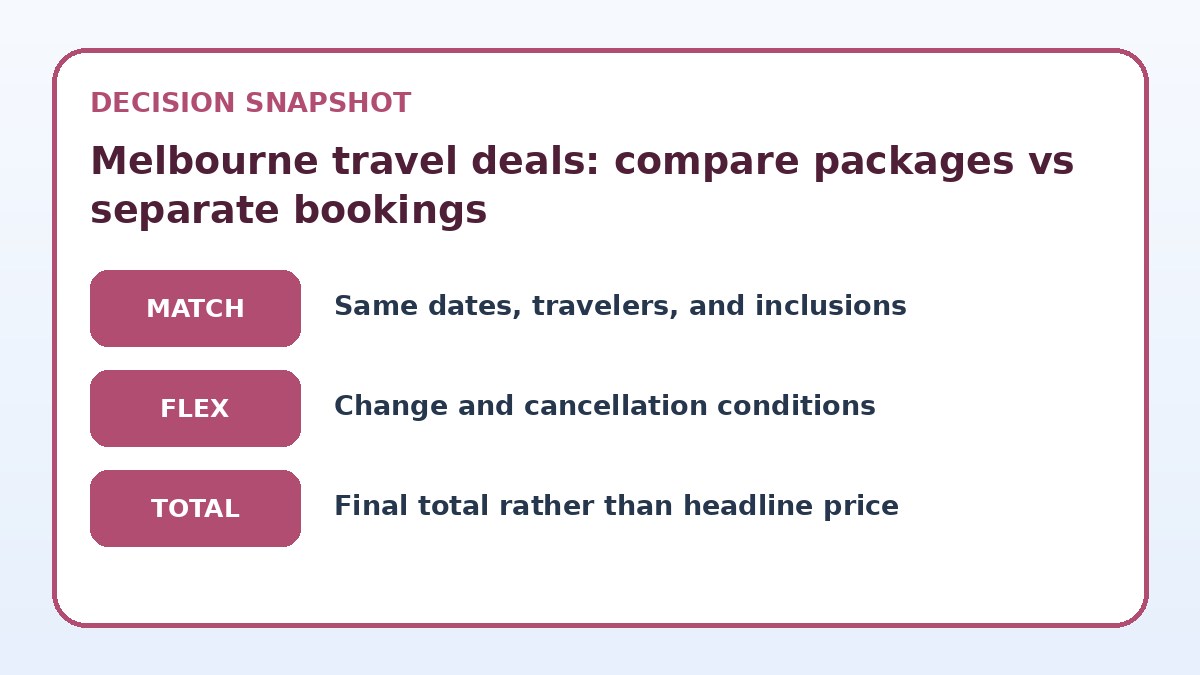
Use identical dates, travelers, room needs, baggage, and flexibility so the comparison stays meaningful.
What to compare before judging a package
Begin by lining up the exact variables you will compare: the same travel dates, number and ages of travelers, flight cabin and baggage allowances, hotel room type and board basis, transfers, and included activities. Ignore headline package savings until you verify those components match what you would book separately. Different check-in times, room inclusions (breakfast or not), or nonrefundable ticket classes can create apparent savings that disappear when you need to adjust plans. Also note whether transfers or internal flights are refundable or changeable; these are often the least flexible pieces of a package.
Record the final-price composition for each option: base fares, taxes, service fees, and cancellation fees. That breakdown reveals where a package might be absorbing certain fees or, conversely, adding nontransparent surcharges. If you care about specific hotels or direct flight times, make sure the package lists them or allows you to select them at booking. When comparing, include the cost of travel insurance or refundable upgrades so you’re comparing end-to-end exposure to changes and cancellations.
Inclusions vs flexibility: reading the fine print
Inclusions can make a package attractive—airport transfers, a welcome tour, or breakfast can save time and effort at arrival. But read the conditions: is the transfer shared or private, scheduled at a fixed time, or available on demand? Are activities optional with refunds if canceled? Packages commonly lock you into set itineraries with limited swap options, which reduces flexibility for a traveler who prefers spontaneous days exploring Melbourne neighborhoods like Fitzroy or St Kilda. For first-time visitors, convenience may outweigh flexibility, but only if the included items genuinely match your priorities.
Examine modification and cancellation terms carefully. Packages often have a combined cancellation policy that can be less forgiving than separate suppliers—one nonrefundable component can render the entire package inflexible. On the other hand, separate bookings let you target refundable fares or flexible hotel rates selectively. Wherever possible, verify on the provider’s final booking page whether changes are permitted, how much they cost, and whether refunds are processed as credit or money back. If uncertainty remains, calling customer service for clarification is worth the extra time.
Look past the headline total
Compare inclusions and change conditions before deciding whether a package is genuinely useful for this trip.
Deal comparison checklist
- Search flights with at least three days flexibility either side of your target dates to reveal different fare classes and connection options.
- Match the exact hotel room type and board basis (e.g., twin room with breakfast) when comparing package and separate listings.
- Confirm baggage allowances and whether any included transfers are shared, timed, or private on the provider’s final booking page.
- Calculate total cancellation exposure by listing nonrefundable elements in each option and their penalty amounts.
- Check whether package payments require full prepayment or a deposit and note how refunds are processed and timed.
- Save screenshots or PDFs of the final booking pages showing inclusions, supplier contact details, and cancellation policies.
Traveler-specific value: who benefits from bundles
Bundles can offer real value for travelers who prioritize convenience and minimal coordination—those arriving late, traveling with young children, or who prefer all logistics handled by a single provider. A package that includes transfers and a centrally located hotel may remove stress on arrival and reduce small, time-consuming decisions. Yet first-time visitors who want to explore Melbourne’s diverse neighborhoods, food scene, and day trips on their own timeline may find that separate bookings give better control over where and when they travel within the city.
Consider health, mobility, and luggage needs. Travelers requiring accessible rooms, extra baggage allowances, or specific dietary accommodations should verify these features in each option. Bundles may not allow bespoke requests as easily as booking a hotel and flights directly; conversely, a tour operator included in a package might offer specialized support. Make the decision by listing must-have conditions—accessible room, direct transfer, or checked baggage included—and exclude options that cannot meet your nonnegotiables.
Final terms to verify before you click buy
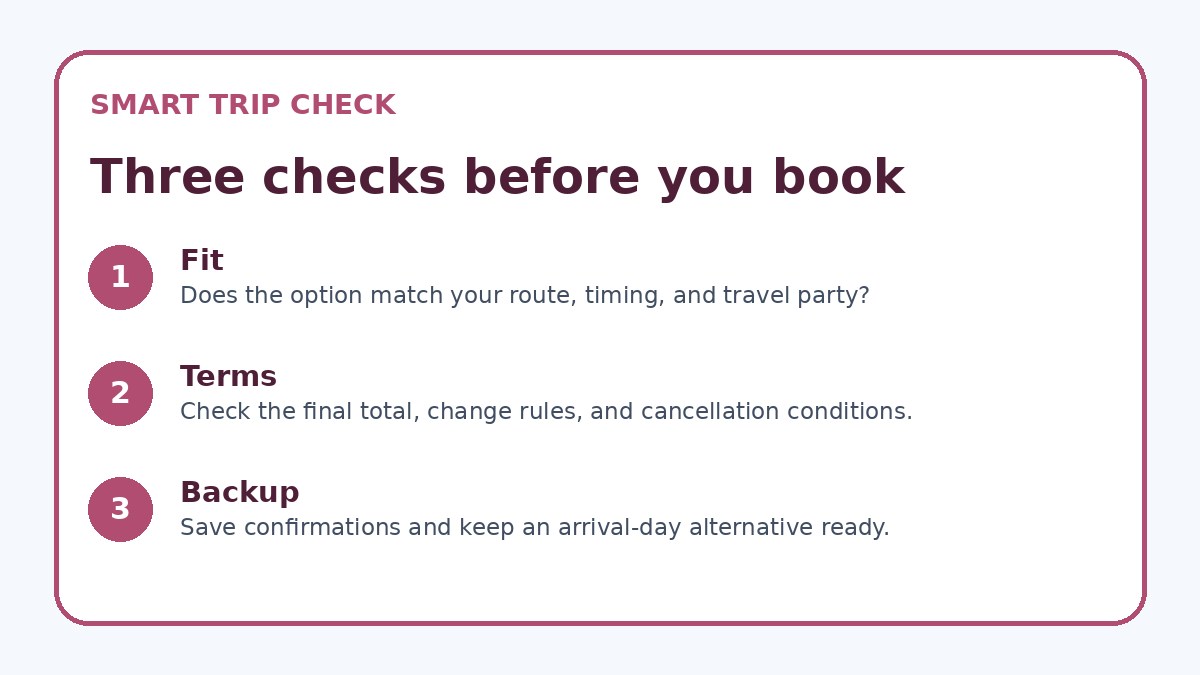
Before finalizing, check these final elements on the supplier’s booking page: the refund and change fees per traveler, exactly which flights or hotels are being reserved, baggage allowances, and whether any included tours or transfers are scheduled at fixed times. Also verify payment terms—do you pay everything up front or just a deposit, and how is any refundable portion handled? If supplemental taxes or city fees apply, ensure they are included in the total price or clearly listed as payable on arrival.
Also verify the provider’s customer-service and emergency-change procedures. For international travel to Melbourne, know how to contact the supplier from abroad and whether they offer 24/7 support or only office-hours assistance. If you choose a package after comparing options, save screenshots of the final booking page showing all inclusions and policies. That documentation will help resolve any discrepancies and is useful if you need to compare refund calculations or request a change.
Travel Deals & Booking Strategy questions travelers ask
How far in advance should a first-time visitor to Melbourne search flexible dates?
Start flexible-date searches as soon as your travel window is open—ideally several months before peak local events—but the immediate goal is to compare three-to-seven-day ranges around your ideal arrival and departure. Early searches reveal how shifting by one or two days affects fares and minimum-stay hotel rules. If you’re restricted by holidays or school breaks, extend the flexible window where possible to increase options. Repeat searches over a few weeks to watch for inventory shifts; small changes in airline or hotel availability can move a booking from nonrefundable to refundable classes.
Can a package ever be more flexible than separate bookings?
Yes—some packages are designed around refundable components or include flexible transfer vouchers that allow changes within defined windows; likewise, a tour operator might offer generous change policies for their included activities. But you must verify this on the package supplier’s final booking page because policies vary widely. Often the convenience of a single contract comes with stricter combined rules, so compare the effective flexibility (the least flexible component often dictates the package’s terms) rather than assuming bundling equals less flexibility every time.
What mistakes do first-time travelers make when chasing 'Melbourne travel deals' with flexible dates?
Common errors include comparing headline prices without matching baggage, room types, or cancellation terms; assuming a package’s transfers are private when they are scheduled shared shuttles; and failing to record exact supplier names, flight numbers, or reservation codes that matter if you need changes. Another mistake is not checking refund timing and whether refunds are issued as credit rather than money back. Avoid these by performing an apples-to-apples comparison, saving booking screenshots, and confirming any special requests directly with the supplier.
Final decision note
Flexible dates are one of the most practical levers first-time visitors have when planning a Melbourne trip. Use a three-to-seven-day window, compare identical components, and check cancellation or change policies on the supplier’s final booking page before deciding. Bundles can simplify arrival and reduce on-the-ground hassle, but they can also combine restrictive terms that hurt flexibility. By listing nonnegotiables, testing package inclusions against separate-book prices, and documenting everything at booking, you’ll be able to choose the option that balances convenience, cost, and the freedom to alter plans if Melbourne’s attractions or your schedule change.
Continue planning
Check current options and final conditions
Use the provider page to confirm live availability, the final total, cancellation terms, and every condition that matters to your trip.
This evergreen planning guide was created with AI-assisted drafting and a structured quality review. It does not display live prices, schedules, availability, visa guidance, or provider rankings. Verify current details before booking. Some links are affiliate links; we may earn a commission at no additional cost to you.