If you’re planning a family trip to Hong Kong, the practical first question is how easily you can change or cancel bookings if plans shift. The quickest way to reduce stress is to compare the cancellation terms of each component—flights, hotels, tours, and transfers—before choosing a bundled package or booking piece-by-piece. For families, flexibility matters not just for illness or school changes, but for seat assignments, bed configurations, and child-rate adjustments. This guide leads with the decisions you must make to judge whether a package’s convenience outweighs the control of separate bookings. Read on to learn which inclusions matter, how to measure traveler-specific value, where hidden restrictions commonly hide, and the exact provider pages or contract lines to verify before you pay.

Test package value fairly
| Booking approach | Best for | Tradeoff to check |
|---|---|---|
| All-in-one package from a tour operator | Families wanting convenience and a single point of contact for changes. | May hide supplier-specific penalties; the operator’s own amendment fees can add on top of vendor charges. |
| Flights and hotel bundled at an online travel agency | Shoppers seeking simpler checkout with some bundled savings and combined support. | Agency policies vary; refunds might be slower and some components may still be non-refundable. |
| Book flights, hotel, and transfers separately | Families who want granular control over refundable options and independent rebooking. | More time-consuming to manage; you handle each supplier’s rules and must reconcile multiple refund processes. |
| Hybrid approach: refundable flights with bundled hotel or tours | Families wanting flight flexibility while keeping the convenience of prebooked local services. | You still face bundled-in restrictions for tours or hotel extras, so check which parts are truly changeable. |
Check current package and separate options
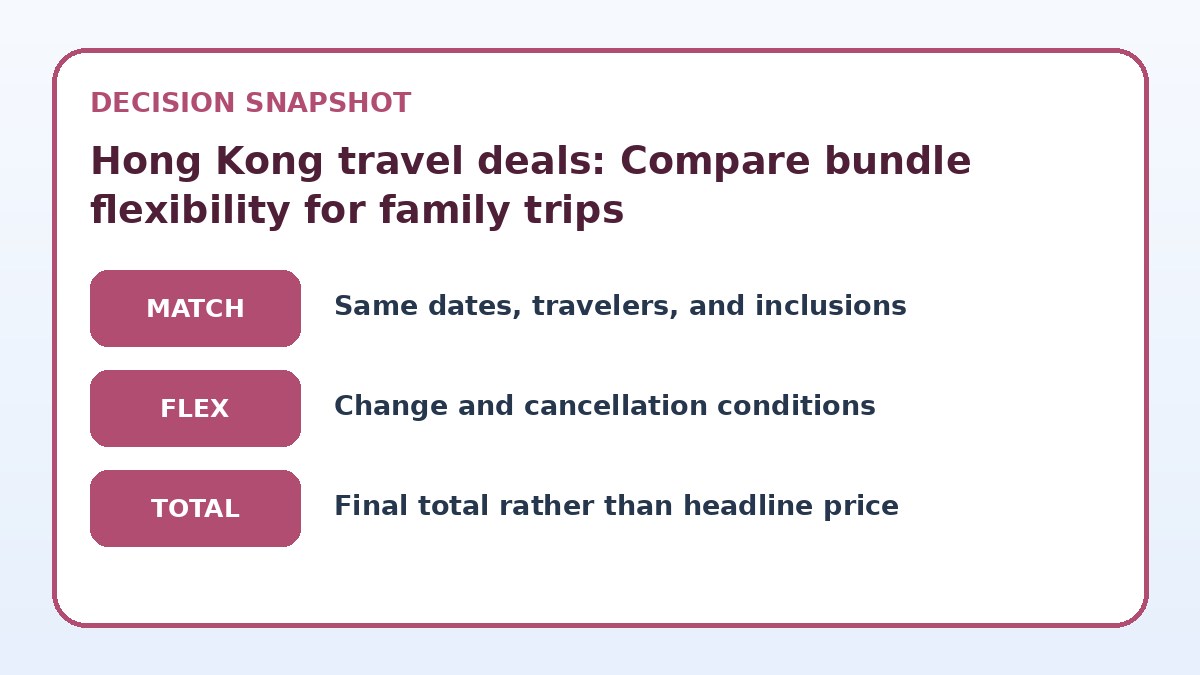
Use identical dates, travelers, room needs, baggage, and flexibility so the comparison stays meaningful.
What to compare before judging a bundled package
Start by listing every component included in a package: roundtrip airfare, hotel nights, local transfers, attraction tickets, and any meals or extras. For each element, note the cancellation window, the penalty scale (percent or fixed fee), and whether the provider issues refunds, travel credits, or rebooking waivers. Don’t assume a package’s single policy covers everything uniformly; some suppliers within the bundle may maintain separate rules that the tour operator enforces.
Next, match that combined cancellation cost against the cost and terms of booking the same components separately for the same travellers and dates. Include realistic change scenarios—a single sick child, one delayed flight, or a swapped hotel night—and total the likely fees for each scenario. This apples-to-apples comparison reveals when convenience is truly worth the extra risk and when separate bookings give you clearer, component-level remedies.
Inclusions: what affects flexibility and family value
In a family booking, inclusions like breakfast, inter-hotel transfers, or attraction fast-track tickets increase convenience but can complicate cancellations. Some inclusions are third-party vouchers tied to a time slot (for example, a museum or harbor cruise) and may be non-refundable or only changeable through the vendor. Understand which inclusions are refundable and whether the package operator can reissue or change those vouchers without penalty.
Also check how family-specific items are handled: extra beds, connecting rooms, or child meal plans can have separate cancellation rules and restocking fees. When a package bundles family extras at a single price, ask the operator whether those extras are refundable if just one traveller cancels. Often, clarity on inclusions is the difference between a sensible family deal and a bundled headache when plans change.
Look past the headline total
Compare inclusions and change conditions before deciding whether a package is genuinely useful for this trip.
Deal comparison checklist
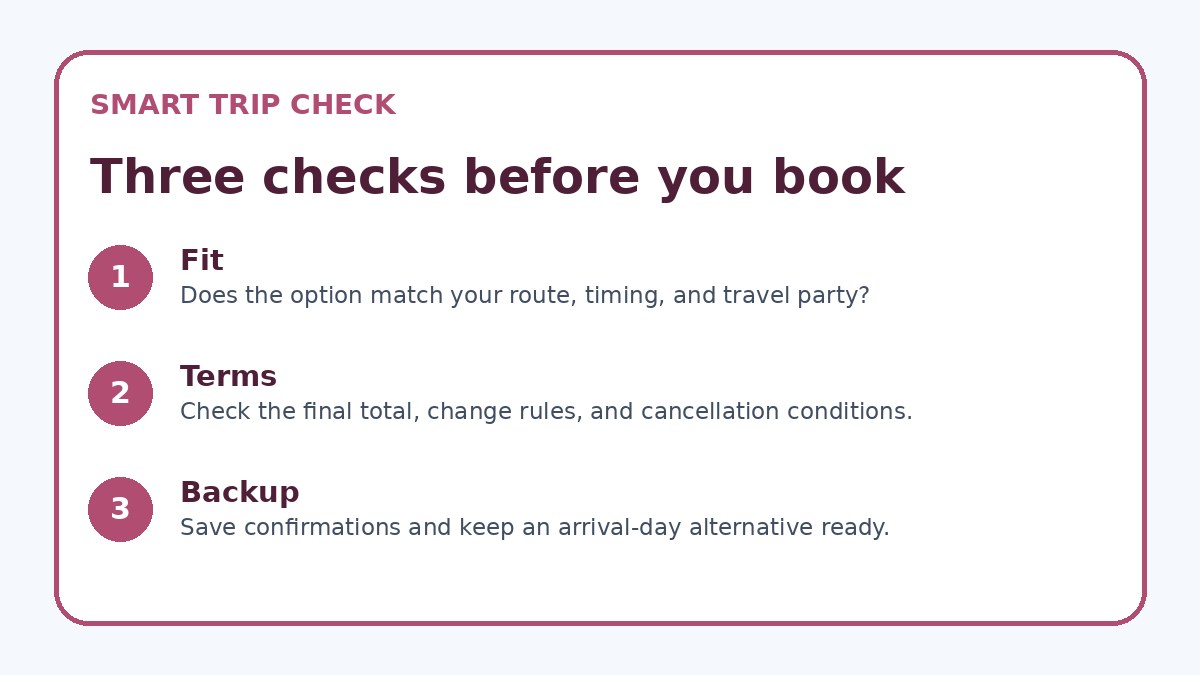
- Match dates, passenger names, ages, and room occupancy rules between any package quote and separate booking quotes.
- Open the final booking page for each supplier and copy the exact cancellation deadlines and refund methods into your notes.
- Confirm whether refunds return to the original payment method or are issued as credits, and note any expiry on credits.
- Ask the operator or supplier how they handle name changes, infant rate adjustments, and bed or room-type changes.
- Simulate two change scenarios (single traveller cancels; entire family postpones a week) and total the penalties.
- Keep screenshots or PDFs of the booking confirmation and provider policy page until all refunds or credits clear.
Flexibility and traveler-specific protections to prioritize
Prioritize refundable or changeable flight fares with reasonable rebooking windows if you expect date changes. For families, pay attention to seat selection rules and whether changes preserve tickets at the original fare class; moving to a different class can create large top-up costs. If the package includes regional transport such as ferries or railway segments, verify transferability and how child or senior concessions are applied when names or ages change.
For hotels, focus on room-type guarantees (connecting rooms, extra cots) and cancellation cutoffs. Some family rooms offer free cancellation until a late date, while others lock in non-refundable deposits. Also confirm whether the property charges a penalty for reducing the number of guests or the length of stay, because a partially used reservation can sometimes be less refundable than a full cancellation.
Final terms: what to verify on the provider’s booking page
Before you click Pay, locate and read the provider’s full cancellation and change policy on the final booking page or reservation confirmation. Verify the refundable amount, the timeline for refunds, any service or processing fees, and whether refunds are issued to the original payment method or as travel credits. If a package involves multiple suppliers, ask the operator to show the exact provider policies or a consolidated cancellation schedule in writing.
Also confirm administrative details that matter for families: how name changes are handled, whether infant or child rates require documentation, and how refunds are processed if a single component is canceled. If you need extra reassurance, check a reliable aggregator like Trip.com for current availability and policy summaries—but always treat the supplier’s own booking page as definitive for cancellation rules.
Travel Deals & Booking Strategy questions travelers ask
Is it safer to book a refundable package or separate refundable components?
Safer depends on the family’s priorities and tolerance for managing bookings. A fully refundable package simplifies the administrative burden: one call or email to the operator may cover multiple components. But packages sometimes layer supplier penalties and operator fees, which can reduce the actual refund. Booking refundable flights and hotel rooms separately gives you component-level control and can limit exposure in some scenarios, yet requires more hands-on management. Compare actual penalty amounts for realistic change examples to decide which path reduces total risk.
How do child and infant policies affect cancellation flexibility for Hong Kong trips?
Child and infant policies often differ from adult rules: children may have separate fares, and infants sometimes occupy a different fare class or need documentation. These distinctions influence refunds and changes—some suppliers treat child tickets as non-refundable or as a different product. For hotels, extra-bed or cot charges can be non-refundable add-ons. Always verify age cutoffs, evidence required for child fares, and whether a change in the number or ages of travellers affects the booking’s refundability.
What should I verify on the supplier’s final page before I pay?
On the final booking page, confirm the exact cancellation deadlines, the refund method (credit card refund versus travel credit), any administrative fees, and the contact channel for post-booking changes. For packages, ask the operator to provide the supplier policy excerpts for flights, hotels, and tours. Also check name-change rules, whether vouchers are transferable, and any blackout or expiration dates on credits. Keep these pages as proof in case of disputes.
Final decision note
Families planning Hong Kong travel deals should trade time now for peace of mind later: compare identical dates, travellers, inclusions, and hypothetical change scenarios across package and separate booking options. Focus on which components you value most for flexibility—usually flights and room type guarantees—and whether the operator or supplier issues refunds to your original payment method or as credits. Use the checklist to capture exact deadlines and policy language on the booking page, and remember that one aggregated source like Trip.com can help surface options but does not replace the supplier’s policy. A careful comparison prevents false savings and makes family travel less stressful when plans change.
Continue planning
Check current options and final conditions
Use the provider page to confirm live availability, the final total, cancellation terms, and every condition that matters to your trip.
This evergreen planning guide was created with AI-assisted drafting and a structured quality review. It does not display live prices, schedules, availability, visa guidance, or provider rankings. Verify current details before booking. Some links are affiliate links; we may earn a commission at no additional cost to you.