Practical answer up front: for most families starting in the LA area, prioritize the airport that reduces total travel friction — fewer transfers, simpler baggage handling and a schedule that fits your kids’ routines. That often means choosing a main airport with more nonstop options and consistent schedules, but if getting to the airport is the bigger headache, a closer, smaller field can still be the smarter choice. This article walks through the tradeoffs you'll face when choosing a Los Angeles departure for Honolulu: routing and direct vs. connecting options; how baggage and connections change your risk; schedule fit for children’s sleep and meal times; and the fare conditions that matter for families. Before you search live, get exact travel dates, number and ages of children, seat and bassinet needs, and whether you need to check large items like strollers or car seats.
See live routes for your exact travel day
Compare direct and connecting choices with the same baggage and traveler details.
Routing: direct versus connecting and the door-to-door picture
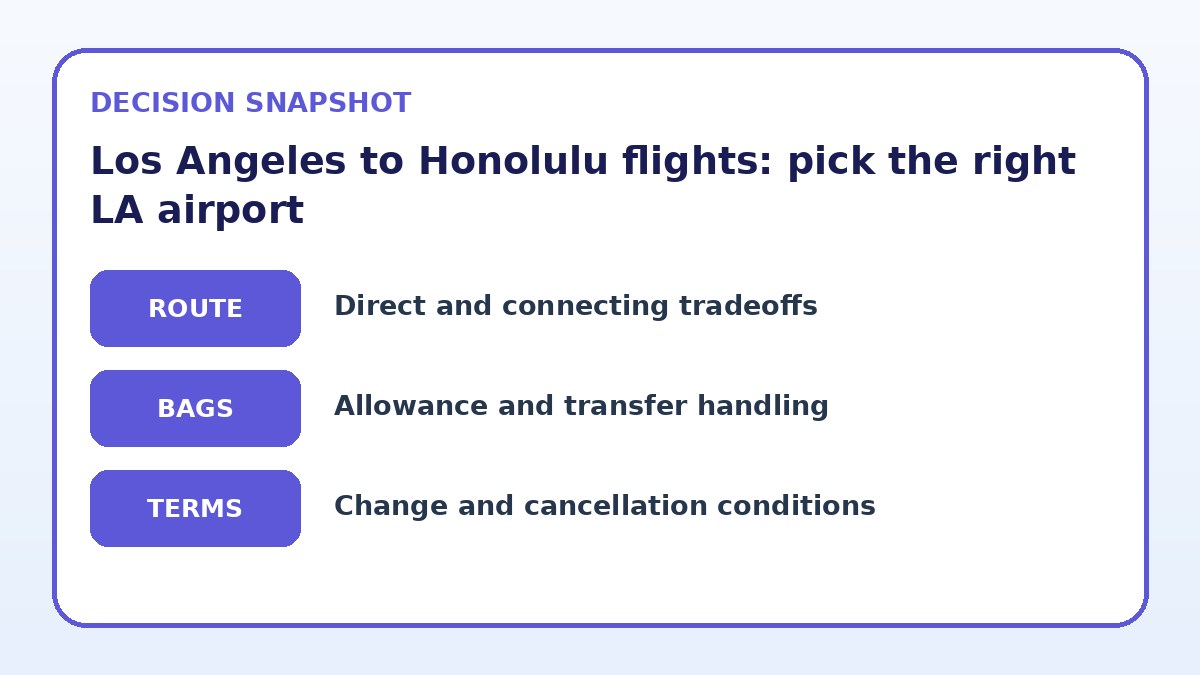
When families compare Los Angeles to Honolulu flights, think beyond the flight time printed on a ticket. A nonstop eliminates an intermediate arrival and departure, so you avoid re-clearing security, moving between terminals, or re-checking bags. Nonstops reduce the number of disruptions for children and remove the need to coordinate a tight connection. If a direct isn’t available from your closest airport, weigh the time and hassle to reach a major hub versus the benefit of a nonstop. Sometimes driving longer to a hub yields one less transfer and a more relaxed travel day.
If a connection is unavoidable, compare realistic transfer windows and the same-airline or codeshare options that keep bags checked through to Honolulu. A connection on the same carrier or partner reduces the chance of having to re-check baggage, but still increases the number of times you manage strollers, snacks, and bathroom stops. Look at terminal pairs and minimum connection times on the airport map; short connection times can be manageable with older kids but risky with infants or multiple checked items. Always plan extra time for family boarding and security lines.
Baggage and connection risk: simplify what you bring and verify policies
Families travel with more gear: car seats, strollers, diaper bags and often an extra checked bag for supplies. Check each airline’s official baggage policy on the booking page for what counts as free infant equipment and the maximum allowance for checked bags. Policies change, so verify whether strollers or car seats are free, whether they count as a checked piece, or require gate-checking. If you book two separate tickets for a connecting itinerary, you may need to collect and re-check bags — an important risk factor for families that can add time and stress.
If you choose a smaller LA airport that requires a connection, consider the physical layout and whether connections are in the same terminal or require a shuttle. A single terminal connection is easier with toddlers and car seats than one requiring a bus, train, or additional security screening. Also verify whether the carrier offers gate-to-gate boarding priority for families and if pre-boarding can be requested for bassinets or mobility needs. Before finalizing, check the airline’s official site for exact baggage fees, dimensions, and whether items like car seats count toward weight limits.
Compare flight-selection strategies
| Flight strategy | Best for | Risk to check |
|---|---|---|
| Fly nonstop from a major LA airport | Families prioritizing fewer disruptions and shorter door-to-door travel | May require a longer drive to the airport or fewer price-saving options |
| Depart from a closer small airport with a connection | Families who want an easier car transfer and lower pre-flight stress | Adds connection risk and possible need to re-check baggage or switch terminals |
| Book mixed carriers to find best schedule | Families needing specific timing or seat availability across multiple flights | Higher chance of separate ticket risks and differing baggage rules |
| Prioritize flexible fares with change options | Families with uncertain dates or potential for last-minute adjustments | Usually costs more up-front but reduces expense and stress if plans change |
Recheck the complete itinerary
Confirm airports, connection handling, baggage, and change conditions before deciding.
Schedule fit: sleep, meal routines and optimal departure times
Traveling with kids means making the schedule work for their sleep and meal patterns. Early-morning nonstops can be great if you can get the family to the airport rested and fed, letting kids sleep on the plane. Conversely, late departures after a full day can leave little margin if delays occur and may disrupt bedtime routines badly. When comparing Los Angeles airports, look at available departure windows: larger airports often offer more choices throughout the day, increasing the chance you’ll find a flight that lines up with your child’s nap or meal schedule.
Consider flight duration variability and typical day-of-week schedules. If you prefer a midday flight to avoid early alarms and late nights, make sure your chosen airport actually serves midday nonstop or convenient connections. Also factor in travel to the airport — a shorter drive that avoids rush hour can make a seemingly early departure feel far more manageable. When you have exact dates and ages, map out an itinerary including arrival time in Honolulu and plan buffer time for car seat pick-up, stroller retrieval, and adjusting to local time.
Flight details to verify
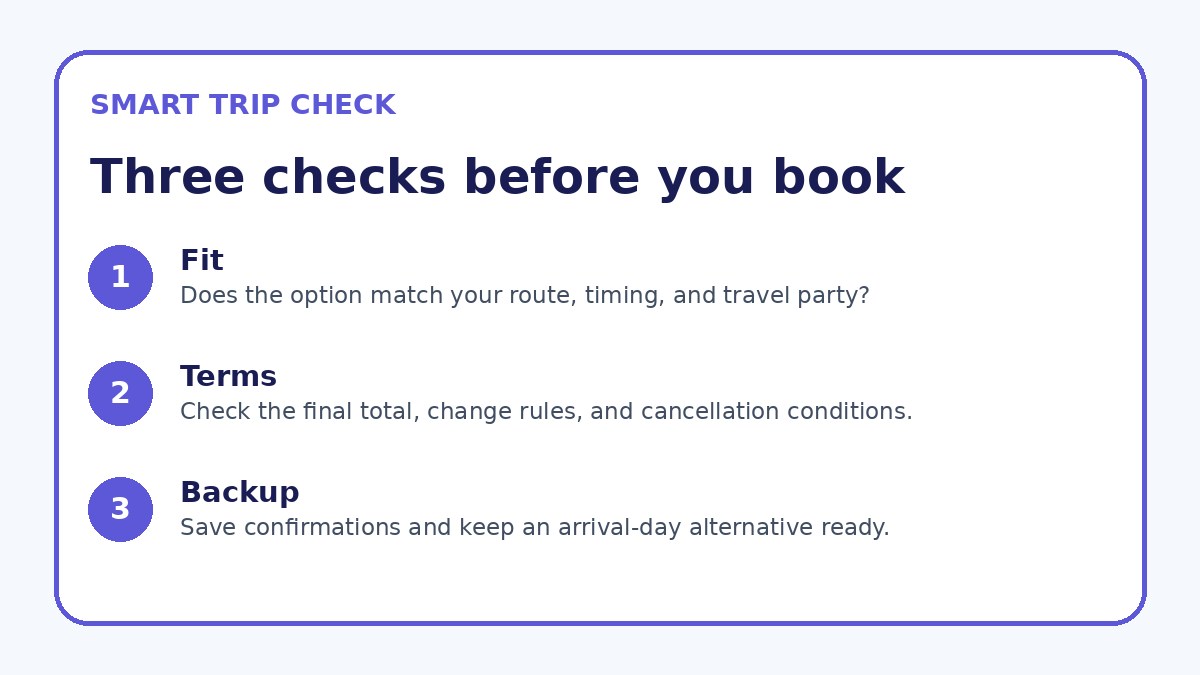
- Write down exact travel dates, traveler ages, and whether infants will occupy a seat or travel on a lap before searching.
- Check the airline’s official baggage policy for car seats, strollers, and checked-bag allowances on the booking page.
- Map door-to-door travel time from your home to each LA airport at your planned departure time, including traffic buffers.
- Compare nonstop and connecting itineraries for total travel time, not just airborne time, and note transfer terminals.
- Verify fare rules on the airline checkout page: change fees, cancellation terms, seat assignment policies, and infant rules.
- Confirm seat availability for together seating or bassinets and request these directly with the carrier after booking.
Fare conditions and flexibility: what to check before booking
Before you hit purchase, scrutinize the fare rules on the airline’s final booking page. Families benefit from flexible change and cancellation options: look for waivers, family-friendly change policies, and clear rules about rebooking when a child’s needs force a date change. Verify whether your fare allows free name changes for infants, what fees apply for date changes, and the process for obtaining refunds or credits. If you plan to book connecting flights on separate tickets, confirm whether the fare covers missed connections due to an earlier delay — many low-cost fares do not.
Also check seat assignment rules and infant pricing specifics directly with the airline. Some fares charge to pick seats in advance, while others reserve such options for higher fare classes; with young children you may need to pay for bulkhead seats or seats together. If you require a bassinet or an extra seat for a car seat, verify eligibility criteria and how those requests are confirmed. Finally, use exact traveler ages and passport details during checkout to make sure fare rules and seat availability reflect your actual party.
Flight Guide questions travelers ask
Which Los Angeles airport generally gives families the most nonstop options to Honolulu?
Major Los Angeles airports typically offer more nonstop flights to Honolulu because they serve more long-haul routes and larger aircraft. More nonstop options increase the chance of finding a flight that matches your preferred departure window and reduces the need for connections. However, availability varies by airline schedules and day of week, so when you have specific dates, check the carrier booking pages and compare airports. Trip.com can also be used to compare current availability across airports, but always verify rules and seat maps on the airline’s final booking screen before purchasing.
How should I handle car seats and strollers when flying from LA to Honolulu with young children?
Before you go, confirm whether the airline allows gate-checking or free checked carriage of car seats and strollers and whether they count toward your baggage allowance. Some carriers allow a stroller and a car seat per child free of charge, while others may treat them as checked items. If you plan to use a car seat on the aircraft, check size and certification requirements with the airline and ensure you have proof of purchase or manufacturer details if required. Keep critical items like medications and a change of clothes in carry-on bags to avoid disruption if checked gear is delayed.
Is it safer for families to book separate tickets or through-tickets for connecting flights?
For most families, a single through-ticket on one airline or partner network is safer because it typically ensures baggage is checked through and the carrier is responsible for rebooking in case of delays. Separate tickets increase the risk that a delay on the first leg will leave you responsible for missed connections and baggage retrieval. If you consider separate tickets to access a better schedule or lower fare, build a generous connection buffer and accept the potential need to re-check bags and buy new seats if a delay occurs.
Final decision note
Choosing the most practical Los Angeles departure airport for Honolulu comes down to a simple family-focused question: which option reduces the most friction for your specific party? For many, that means prioritizing nonstop service at a major airport to avoid connections, re-checking baggage, and terminal transfers. For others, a closer small airport wins by removing a stressful drive and simplifying pre-flight logistics. Use exact travel dates and traveler details to compare total door-to-door time, baggage policies, and fare flexibility. Verify all baggage and fare rules on the airline’s final booking page before paying, and consider flexible fares if your family’s plans might change. With a little prep you’ll pick the departure that keeps the trip smooth and your kids calmer on the way to Hawaii.
Continue planning
Check current options and final conditions
Use the provider page to confirm live availability, the final total, cancellation terms, and every condition that matters to your trip.
This evergreen planning guide was created with AI-assisted drafting and a structured quality review. It does not display live prices, schedules, availability, visa guidance, or provider rankings. Verify current details before booking. Some links are affiliate links; we may earn a commission at no additional cost to you.