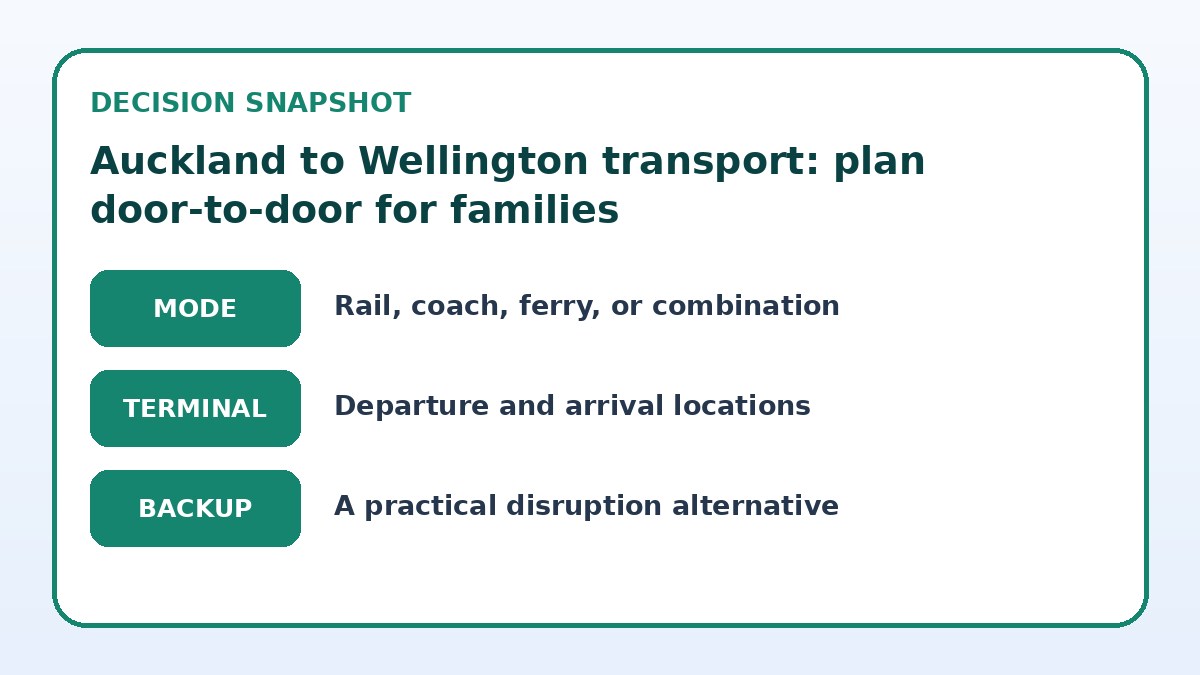
Practical answer first: pick the mix of rail, coach, and ferry that keeps your family comfortable, minimizes transfers, and matches your luggage needs. If you value space and scenic riding with fewer stops, prioritize rail where available; if you need flexible departure times and lower-footprint transfers, coaches are the usual choice; include the Cook Strait ferry only as part of an inter-island connection where it removes multiple driving legs. For many families the best outcome is a hybrid plan—one longer rail or coach hop between major urban nodes combined with short local transfers that land you at family-friendly stations or terminals. Below you’ll find how to evaluate terminals, luggage friction, timing flexibility, and a clear disruption backup, plus a door-to-door checklist and three practical planning approaches to compare before you book.
How to choose between rail, coach, ferry and mixed routes
Start by listing priorities: fewer transfers, lower walking friction, more seating space, or more departure choices. Rail often gives more room to move and may stop at central stations that connect easily to city buses and taxis; coaches usually offer many departure times and point-to-point convenience. Ferries are only relevant for crossing the Cook Strait as part of an inter-island route and will matter mostly if you are combining land travel with vehicle transport. For families, prioritize options that keep total door-to-door time predictable and minimize the number of times you have to lift strollers and heavy bags.
A mixed route can combine the strengths of each mode—for example, a single longer rail or coach leg between major cities and local shuttles at each end. When evaluating combinations, map the transfer points and check whether a single terminal handles multiple modes; terminals that colocate train, coach and ferry services cut transfer time. Also consider on-board facilities for children, space for car seats and whether luggage handling is included or requires separate transfer arrangements.
Choose the end-to-end journey plan
| Journey approach | Best for | Friction to check |
|---|---|---|
| Single-mode coach plan | Families wanting many departure times and straightforward point-to-point transfers. | Less onboard space and fewer central-station connections compared with rail; luggage and comfort vary by operator. |
| Single-mode rail plan | Families prioritizing onboard comfort, legroom and central station arrivals. | Usually fewer departures and potentially longer first/last-mile transfers depending on station locations. |
| Mixed-mode plan (rail or coach + ferry) | Families needing to combine an inter-island crossing with long land legs while balancing comfort and timing. | More transfers to manage and extra booking steps; check alignment of schedules to avoid long waits at terminals. |
| Door-to-door private transfer plus public segment | Families with very young children, lots of luggage, or mobility needs seeking minimal walking and handling. | Higher cost and reliance on availability for private legs; still requires checking last-mile vehicle suitability for child seats. |
Check live intercity options
Look beyond the ride itself and compare terminals, transfers, luggage, and arrival fit.
Terminal fit and luggage/transfer friction for families
Terminal fit covers how easy it is to get from your accommodation to the departing terminal and from your arrival terminal to your final stay. Central stations with short taxi or shuttle rides will usually beat terminals that require long walks or multiple bus changes. Check whether platforms are level-access or require stairs—those with elevators and ramps save a lot of time and stress with prams. Also confirm where ticket counters, family bathrooms and waiting areas are located so you can plan quick pit stops before boarding.
Luggage and transfers are where trips get hard for families. Each transfer typically means unloading and reassembling strollers, lifting suitcases and corralling kids. When comparing options, count the number of handoffs and estimate the walking distance between platforms, bays, or terminals. If possible, reduce friction by booking through-tickets or services that allow checked luggage or by arranging a private transfer for at least one segment to avoid juggling bags on public transport.
Timing flexibility and building a realistic schedule
Timing flexibility is about how tolerant your itinerary can be to delays and how many departure choices you need. Coaches generally offer the most departure frequency; rail services may be less frequent but can be more comfortable for longer consecutive hours. For families with young children, plan travel during natural nap times or split a long day into two shorter segments with an overnight stop. Always allow buffer time at each transfer to absorb small delays without creating a cascade of missed connections.
When you create a schedule, write door-to-door timings rather than just ride durations. Include time to leave your accommodation, reach the terminal, pass any ticket or security checks, load luggage, and board—then repeat for arrivals. If you rely on fixed ferry departures for the inter-island crossing, factor in additional time for vehicle loading or walk-on boarding and potential weather-related waits. Reserve optional downtime at the arrival city so your family isn't rushed in case of a late arrival.
Compare the practical alternatives
Use the final page to confirm what is actually offered on your dates and save a workable fallback.
Intercity travel checklist
- Map the full door-to-door route and time each leg including transfers, security, and local transit to build realistic buffers.
- Confirm terminal addresses, access (elevator vs stairs), and proximity to taxis or shuttles from your accommodation.
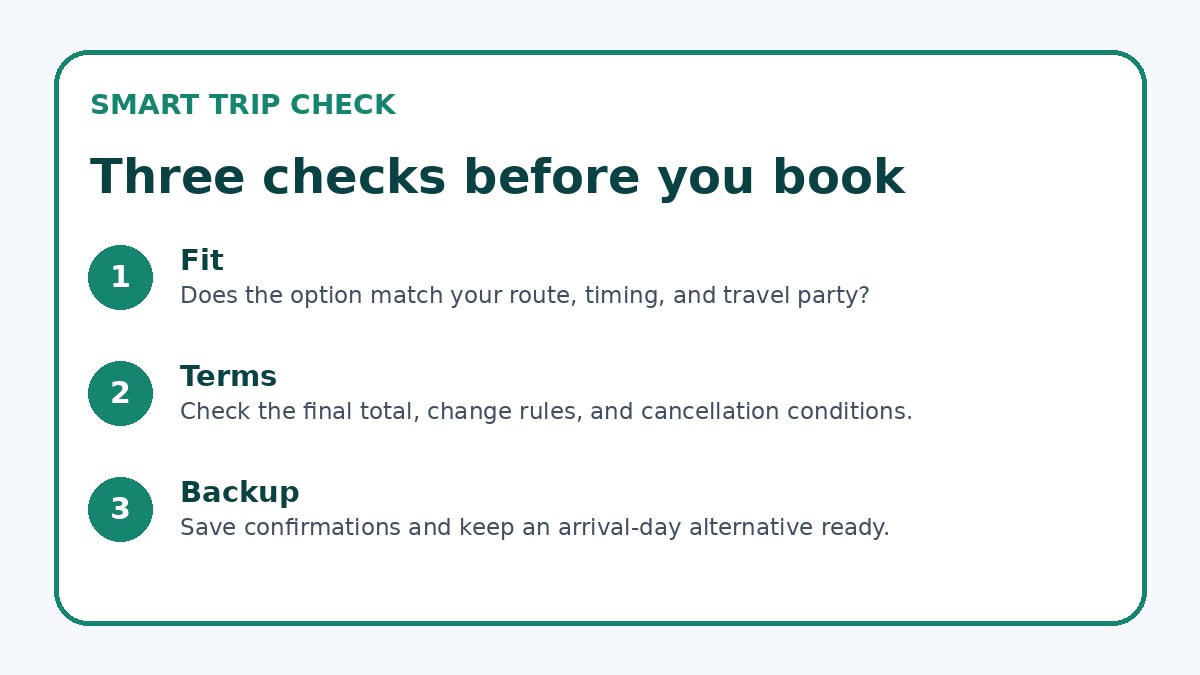
- Verify provider baggage, stroller and child-seat policies on the final booking page before you purchase tickets.
- Plan at least two alternate options for each critical segment (another service, route or private transfer) and note contact details.
- Pack a day bag with essentials for delays: snacks, water, medications, spare clothes, portable charger and basic entertainment.
- If using a rental car for part of the trip, confirm child-seat installation options and parking at pick-up/drop-off locations.
Disruption backup and door-to-door practicality
A solid disruption plan prevents one missed connection from derailing the whole day. Identify at least two alternative operators or modes for each critical segment—an alternate coach, a later rail service, or a taxi transfer. Keep emergency cash, phone numbers for local taxi companies, and apps for regional coaches or train operators handy. Also note nearby accommodations at major transfer points in case an overnight stay becomes necessary.
Door-to-door practicality means planning past the main ride: how will you get from your home or hotel to the initial terminal, and from the final stop to your accommodation? If your family uses a car seat, check whether the last-mile provider can install or transport it safely. For stroller users, pick hotels with ground-floor or lift access near arrival transfer points. Finally, confirm any provider-specific baggage rules, child seat policies and boarding procedures on the provider’s final booking page before committing to tickets.
Rail & Intercity Transport questions travelers ask
Should my family favor rail or coach for the Auckland to Wellington segment?
There’s no universal answer—choose based on what your family values most. Rail often offers more onboard room and a smoother ride, which helps with napping children and moving around. Coaches usually provide more departure frequency and more direct point-to-point boarding, which reduces waiting time. Compare door-to-door time, number of transfers, and how close each terminal is to your accommodation. Check each operator’s booking page for seat layout, luggage rules and accessibility details before deciding.
How do I include the Cook Strait ferry in a family ground-transport plan?
Include the ferry only when it makes sense for door-to-door practicality—for example, if you need to move a vehicle across islands or the ferry aligns with land segments that reduce total transfers. When planning, factor in the time needed for boarding procedures, possible vehicle loading, and walking distances between ferry terminals and connecting coach or rail services. Verify ferry boarding rules, luggage allowances and transfer options at each terminal on the provider’s official booking page and allow extra buffer time for weather-related delays.
What should I do if a planned train or coach service is disrupted?
Have a disruption playbook: first, check the operator’s real-time notification channels and rebooking policy on their booking page. If rebooking options are limited, move to your predefined alternates—another coach, a later rail service, or a private transfer for the most critical downstream segment. Keep local taxi numbers and a payment method ready, and consider splitting a long day into two shorter segments with a booked overnight stop if connections become unreliable. Communicate revised plans with your accommodation so they can assist if an unexpected late arrival occurs.
Final decision note
Building a family-friendly Auckland to Wellington ground-transport plan is about reducing friction, limiting transfers, and keeping options open for disruptions. Start by deciding what matters most—more departure choices, onboard comfort, or the fewest handoffs—then map door-to-door times and terminals rather than just ride durations. Use mixed modes when they cut total handling or improve comfort, and always verify luggage, stroller and child-seat rules on the provider’s final booking page before you commit. Keep two contingency alternatives for each key segment and a small emergency kit to make delays manageable. If you want to compare current availability and conditions while you plan, check provider listings on Trip.com as one of several tools.
Continue planning
Check current options and final conditions
Use the provider page to confirm live availability, the final total, cancellation terms, and every condition that matters to your trip.
This evergreen planning guide was created with AI-assisted drafting and a structured quality review. It does not display live prices, schedules, availability, visa guidance, or provider rankings. Verify current details before booking. Some links are affiliate links; we may earn a commission at no additional cost to you.