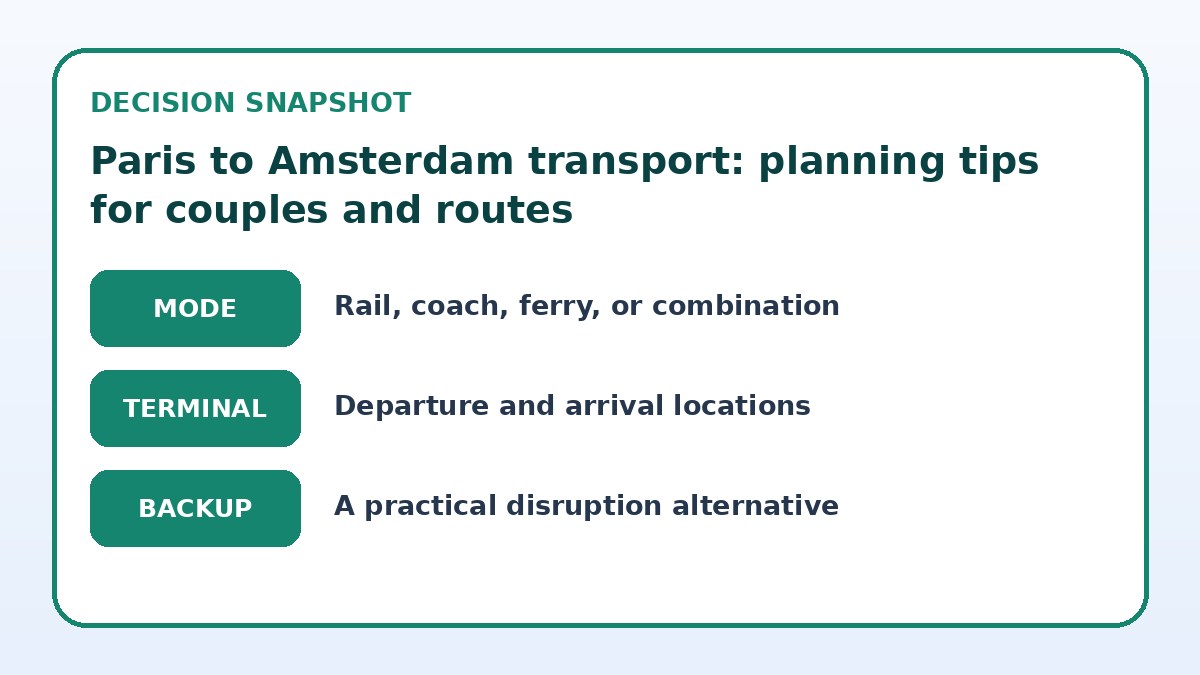
For most couples deciding how to get from Paris to Amsterdam, the practical choice comes down to weighing comfort, door-to-door time, and how much you want to worry about luggage or transfers. If you want a straightforward, relaxed journey with city-center pickup and drop-off, rail often wins; if budget and flexibility matter most, coach services can be compelling; if you want a scenic, slower route that can combine driving and sea time, consider ferry-plus-drive options. This guide gives the quick practical answer up front and then lays out the tradeoffs: which terminals and stops fit a romantic weekend, how much transfer friction to expect, timing flexibility, and a simple disruption backup plan so you can choose with confidence and pack appropriately.
Terminal fit: where you start and end matters
Think beyond the ride: which station or terminal places you closest to your Paris lodging and Amsterdam plans? Major Paris rail terminals and coach stations occupy different neighborhoods; some coach services depart from more peripheral hubs that require an extra metro or taxi ride. In Amsterdam, central rail stations put you right by canals, short tram lines, and compact neighborhoods — ideal for couples carrying light luggage and aiming for a romantic walk from the platform to their hotel or a canal-side café.
If you plan to combine modes, map every terminal-to-door leg before booking. A seemingly cheaper coach that saves money on the ticket can end up costing time and stress if it lands you far from your Amsterdam accommodation late at night. For ferry-inclusive itineraries, check where ports connect to the rail or road network; some require a short drive or a pre-booked transfer, which adds planning friction that’s important for couples who prefer simpler logistics.
Choose the end-to-end journey plan
| Journey approach | Best for | Friction to check |
|---|---|---|
| Rail-first plan (direct or single-change trains) | Couples who value speed, comfort, and arriving in central locations | Can be pricier, and availability changes; verify schedules and change-conditions on the booking page |
| Coach-first plan (budget and flexibility in ticketing) | Couples watching their travel budget who can handle out-of-center terminals | Longer door-to-door time and tighter luggage rules; check terminal locations and transfer options |
| Ferry-combination (drive or rail + ferry) | Couples who prioritize scenic travel and a relaxed journey over time | Fewer departures, more handling of luggage, and longer total travel time to factor into plans |
| Drive or rideshare mix (self-drive or leased car with potential ferry) | Couples wanting privacy, side trips, and full control over timing | Higher logistics: parking, fuel, and city-center drop-offs can be awkward; identify parking/entry rules beforehand |
Check live intercity options
Look beyond the ride itself and compare terminals, transfers, luggage, and arrival fit.
Luggage and transfer friction: pack and plan for the whole door-to-door trip
Assess how many bags you can comfortably manage for stairs, narrow platforms, and short transfers. Trains generally have designated luggage areas and more space to move between carriages, making them easier for couples with two medium suitcases and a carry-on. Coaches are often stricter about luggage placement and involve lifting into underfloor bays; that’s fine for light packers but less appealing if you’ll switch vehicles or use public transport with your bags after arrival.
If you choose a ferry or a drive segment, consider where you’ll store bags on board and how you’ll get them on and off at terminals. Combine modes only if you’re comfortable with extra handling: unpacking at a stopover, carrying bags between platforms, or taking a taxi from an out-of-center arrival. Whatever you pick, leave time in your schedule for slow-moving luggage, and consider travel insurance for delayed or misplaced baggage on longer, multi-leg itineraries.
Timing flexibility: match schedules to your trip priorities
Decide whether you want multiple departures and the option to change plans on the fly. Trains between major cities often have frequent departures, especially during daytime, which helps couples adapt plans without large penalties. Coaches can offer many departures too, but some services run less often and may cluster at off-peak times; late-night arrivals can mean a taxi is necessary if public transit is sparse.
Ferry-inclusive routes typically have fewer sailings and fixed timetables, so they suit couples planning around the crossing rather than building a schedule around frequent options. If your priority is a relaxed morning in Paris and an evening arrival in Amsterdam, look for departures that align with hotel checkout and check-in times to avoid long waits. For any option, check the provider’s final booking page for real-time departure frequencies, seat availability, and transfer recommendations before booking.
Compare the practical alternatives
Use the final page to confirm what is actually offered on your dates and save a workable fallback.
Intercity travel checklist
- Map door-to-door time: add walking, transfers, and estimated taxi wait times to the advertised ride time.
- Check station and terminal locations relative to your Paris lodging and Amsterdam accommodation; note nearby transit lines and late-night options.
- Pack for transfers: bring two carry-on items that can be managed by both partners to simplify platform and ferry movements.
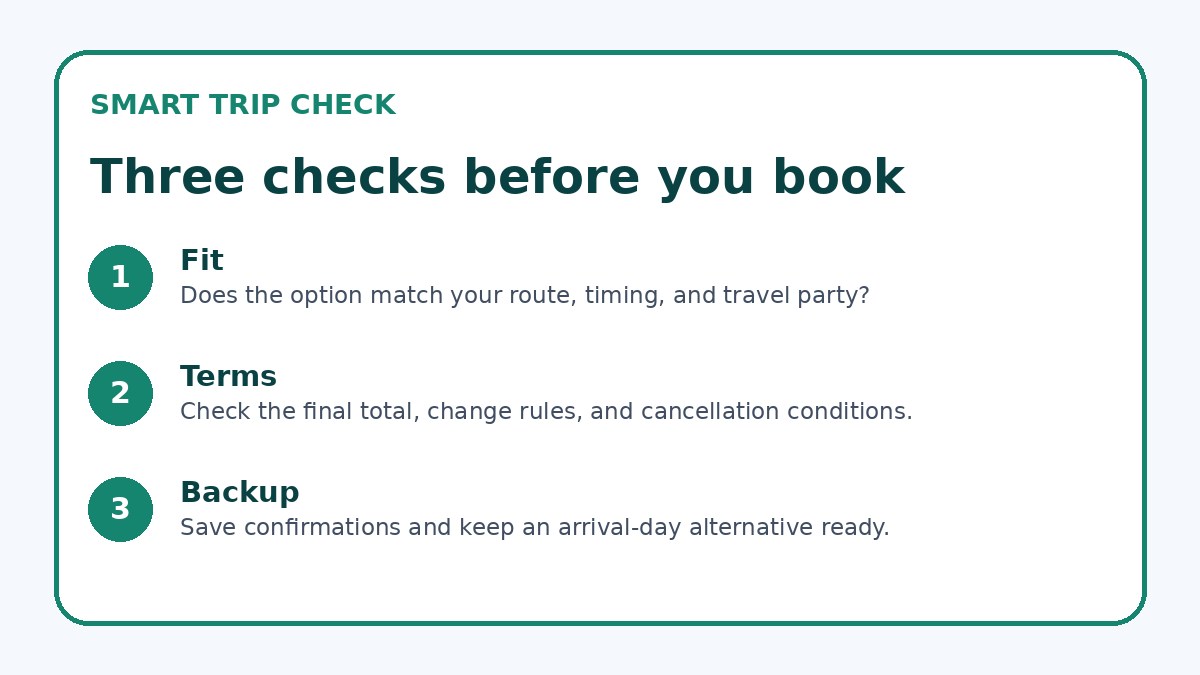
- Save screenshots of your booking and the provider’s final page showing change/cancellation policies for quick reference offline.
- Identify one realistic backup (later train, alternate coach, or rental car) and note how to buy that option at short notice.
- Book arrival-day essentials (hotel check-in window, dinner reservation) with flexible timing in case your chosen mode runs late.
Disruption backup: simple, realistic fallback plans for two
Pick one straightforward backup you can switch to if your first option is delayed or canceled. For couples, a practical plan might be a later train with walk-up availability or a reputable coach company that runs multiple daily services; alternatively, identify a nearby car-rental counter that allows one-way returns if public transport fails. Keep contact and ticket change windows in mind, and agree on who handles rebooking so stress stays low if plans shift.
Bring digital and printed copies of important confirmations and save screenshots of the provider’s booking page; when connectivity is poor, an offline copy can speed up assistance at a station or port. If you must change modes mid-trip, prioritize options that preserve the least amount of romantic time together — for example, trade a delayed scenic ferry for a direct train if it recovers half a day and keeps your evening dinner reservation in Amsterdam.
Rail & Intercity Transport questions travelers ask
Which mode gives the best balance of speed and door-to-door convenience for couples?
For most couples the rail option tends to offer the best balance: trains generally connect city centers directly, reduce the need for taxis or long metro rides, and allow you to move together comfortably with luggage. When comparing options, check whether a direct train is offered or if a single change is required; factor in transfer time between platforms and the walk or transit needed to reach your accommodation. Verify departure frequency and any seat reservations or change conditions on the provider’s booking page before committing.
Is a coach a practical money-saving choice for a romantic short break?
Coaches can be a practical lower-cost choice, especially for couples willing to accept longer door-to-door times and out-of-center terminals. They usually require extra transit or a taxi at each end, which reduces the convenience compared with city-center trains. Consider the time of arrival — late-night drops may mean fewer public transit options, adding taxi cost. Check luggage rules and where coaches stop; if you value saving money but want minimal hassle, compare overall door-to-door time rather than headline ticket fare.
When does a ferry or mixed-mode route make sense for two travelers?
Choose ferry or mixed-mode when the journey itself is part of your trip: if you want a scenic stretch, the flexibility to stop in coastal towns, or the privacy of a car for side trips, a ferry can add value. These options typically take longer and involve more luggage handling and firm sailing times, so they work best when you have relaxed schedules. Before booking, confirm port-to-city connections and whether transfers or pre-booked parking are needed; consult the operator’s final booking page for exact boarding and baggage information.
Final decision note
Choosing between train, coach, ferry, or a mixed approach for Paris to Amsterdam comes down to prioritizing time, ease, cost, and how much of the journey you want to be part of the experience. For most couples seeking a straightforward, romantic weekend, trains usually minimize transfers and deliver the best central-to-central door-to-door result. Coaches suit budget-conscious travelers willing to trade time for lower fares, while ferry or drive combinations create memorable itineraries for those who prize the route itself over speed. Before you book, compare door-to-door time, terminal locations, luggage policies, and change rules on the provider’s final booking page; Trip.com can be a helpful comparator, but always confirm specifics with the carrier.
Continue planning
Check current options and final conditions
Use the provider page to confirm live availability, the final total, cancellation terms, and every condition that matters to your trip.
This evergreen planning guide was created with AI-assisted drafting and a structured quality review. It does not display live prices, schedules, availability, visa guidance, or provider rankings. Verify current details before booking. Some links are affiliate links; we may earn a commission at no additional cost to you.