If you’re traveling solo to London and searching for travel deals, the practical question is this: how far ahead should you book flights, trains, and a room so you balance price, flexibility, and peace of mind? The short answer: decide a target booking window based on your flexibility, season, and how much change risk you tolerate. For most solo travelers planning a city break, aim to lock transportation and a refundable or flexible room 6–10 weeks before travel for non-peak months, and 3–6 months for busy holiday periods—but tailor this to your personal schedule and the kinds of deals you’ll accept. This article explains what to compare when evaluating a package versus separate bookings, what to watch for in inclusions and change rules, and how to test for false savings by lining up the same dates, traveler count, and cancellation conditions.

Test package value fairly
| Booking approach | Best for | Tradeoff to check |
|---|---|---|
| All-in-one package (flight + hotel + transfer) | Travellers who want single-point support and convenience handling bookings and disruptions. | May lock you into rigid terms or include unneeded extras; verify identical dates and inclusions before trusting the headline price. |
| Book flight and hotel separately | Solo travellers who value control over exact flight times, seat choice, and hotel room type. | Requires managing multiple providers and can complicate rebooking after a disruption; compare change rules carefully. |
| Flight only + book accommodation later | Flexible solo travellers focused on securing a preferred flight schedule first. | Risk of limited hotel options or higher rates nearer travel; match room type and cancellation policies when booking accommodation. |
| Train or coach plus hotel (no flight) | Those traveling from within Europe who prefer surface travel and simpler arrival logistics. | Connections and journey times vary; compare direct vs connecting services and add local transfers to avoid surprises. |
Check current package and separate options
Use identical dates, travelers, room needs, baggage, and flexibility so the comparison stays meaningful.
What to compare before judging a package
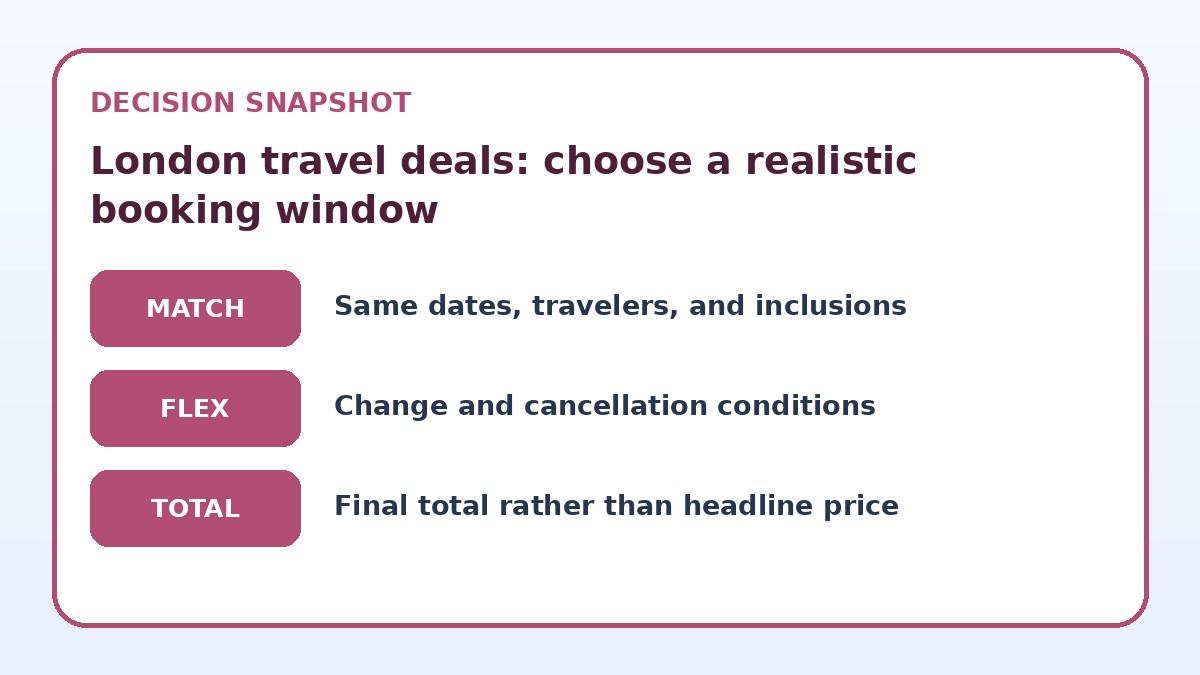
Before accepting a packaged deal, line up the same core elements for a direct comparison: identical travel dates, exact room type, the same number of travellers, and equivalent ground transfers or add-ons. A package that looks cheaper on the headline may only include a basic room or a no-frills flight, while the separate booking alternative shows a room with breakfast or a flight that includes a checked bag. For solo travellers in particular, a single-person room supplement, luggage rules, and seat assignment policies can tip the balance.
Make a checklist and price a true apples-to-apples alternative: search for the same flight times or train connections, the same room category, and add the same extras. If you’re comparing last-minute cancellation protections, add those costs into both totals. Doing this avoids the common trap of assuming a bundle is cheaper when it simply hides exclusions or shifts costs into optional extras that you’ll end up paying for anyway.
Inclusions and flexibility: what really matters
Inclusions like checked luggage, transfers, seat selection, and breakfast are often decisive. For a solo traveller carrying one bag and comfortable on public transit, a package that omits airport transfer may still be fine; another solo traveller who prefers private arrival transport will value the transfer inclusion highly. Similarly, the perceived bargain of a non-refundable rate evaporates if you must change dates or cancel—so identify which inclusions you will likely use and which you can skip.
Flexibility is not only about refunds; it’s about change fees, rebooking ease, and the provider responsible for handling disruptions. Packages sometimes centralise customer service through a single provider, which can be convenient but might add complexity if a flight or hotel wants to enforce separate rules. Always verify who handles refunds or rebooking in case of schedule changes, and check the exact change fee structure on the provider’s final booking page before you commit.
Look past the headline total
Compare inclusions and change conditions before deciding whether a package is genuinely useful for this trip.
Deal comparison checklist
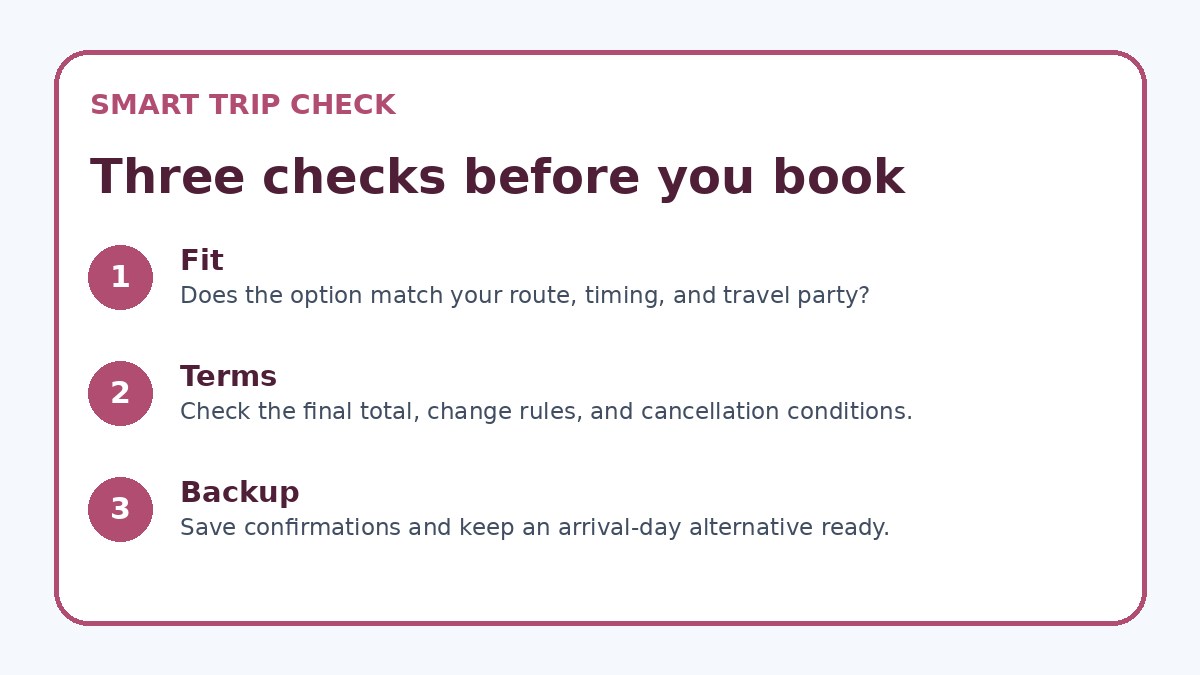
- List the exact travel dates, number of solo travellers, room category, and baggage needs before comparing any deals.
- Price a like-for-like separate booking: same flight/train times, same room type, and identical add-ons to test a package claim.
- Confirm refund and change fees on the final checkout page of each provider and save a screenshot of the terms.
- Add likely extras—transfers, seat selection, breakfast, and taxes—into both package and separate totals to compare true cost.
- Decide your flexibility threshold: set a maximum non-refundable deduction you’ll accept and use it to choose between options.
- If you buy a package, note the single contact for assistance and whether they rebook only or also refund third-party services.
Traveler-specific value: matching the booking window to your needs
Your ideal booking window depends on how fixed your dates are, how important lower cost is, and whether you need extras. Solo travellers with fixed work leave or event dates should prioritise refundable or flexible fares and rooms even if they cost more upfront. If you have flexible dates and can travel off-peak, shopping several weeks to a few months ahead often uncovers better availability and comfortable choices in London’s competitive neighborhoods.
Conversely, if you prefer to wait for last-minute seat sales or hotel promotions, be honest about the higher risk: availability of single rooms in central areas can tighten, and the narrow choices may force compromises on location or check-in times. Decide which concessions you’re willing to accept—cheaper price, but a longer commute each day; or slightly higher cost, but a nicer neighborhood and easier logistics—and let that decision set your booking window.
How to test for false savings and finalize terms
To avoid false savings, perform a simple comparison test: pick your intended dates and search for a packaged option, then build the identical itinerary through separate bookings on airline, train operator, and hotel sites. Add the same baggage, transfers, and extras. Compare total costs and then study the cancellation and change rules line by line. If the package is cheaper but strictly non-refundable while the separate bookings give you flexibility you value, the cheaper headline price may not be the better choice.
Before you click purchase, confirm three things on the provider’s final checkout page: the exact cancellation and change fees and their timelines; who issues refunds and how long processing takes; and any VAT, city taxes, or service fees not included in the headline price. If you need to, open the provider’s terms and conditions and keep a screenshot or PDF of the final booking page. Tools like Trip.com can be useful to compare availability and wording, but always verify critical terms on the seller’s own booking page.
Travel Deals & Booking Strategy questions travelers ask
How far ahead should a solo traveller book London to get decent options?
That depends on your priorities. For flexible, mid-season trips, start looking 6–10 weeks out to balance options and prices; for busy periods such as major holidays or events, extend that window to 3–6 months to secure preferred neighborhoods and times. If your schedule is fixed, prioritize refundable fares or flexible rooms regardless of timing. Always compare like-for-like options and check cancellation/change rules on the provider’s final booking page before committing.
Are bundled packages safer than booking separately if something goes wrong?
Bundles can simplify recovery because one provider may coordinate refunds or rebooking, but that isn’t automatic—check who is responsible for refunds and how they handle third-party supplier issues. Bundles sometimes route all customer service through a single desk, which helps for convenience but can add steps if the supplier’s own policies apply. If avoiding complexity is crucial, confirm the provider’s change and refund process on the checkout page and weigh that against the flexibility you could secure by booking each component directly.
What common hidden costs should solo travellers watch for when comparing deals?
Typical hidden costs include city or tourist taxes added at checkout, single-person supplements for hotel rooms, baggage and seat-selection fees for flights, and airport transfer charges. Also check whether breakfast is included, whether the listed room is refundable, and whether cleaning or service fees are added later. Always total the final checkout amounts for both package and separate bookings, and read the terms on the seller’s booking page to confirm what is and isn’t included.
Final decision note
Choosing a realistic booking window for London travel deals as a solo traveller is a mix of timing and priorities. Start by clarifying how fixed your dates are and how much flexibility you require; that determines whether you chase earlier availability or accept last-minute risk. Always compare packages against separate bookings with identical dates, room types, and extras so you’re not fooled by headline savings. Verify cancellation and change rules on the final booking page, and keep documentation of terms. With those checks in place, you’ll make a decision that matches your budget, comfort level, and the kind of London experience you want.
Continue planning
Check current options and final conditions
Use the provider page to confirm live availability, the final total, cancellation terms, and every condition that matters to your trip.
This evergreen planning guide was created with AI-assisted drafting and a structured quality review. It does not display live prices, schedules, availability, visa guidance, or provider rankings. Verify current details before booking. Some links are affiliate links; we may earn a commission at no additional cost to you.