Practical answer first: pick an area where getting from curb to room is easiest and where hotels explicitly list flexible check-in/check-out and luggage-friendly services (complimentary hold, porter, or a flexible cancellation/modify option). For travelers with extra luggage, that usually means choosing a neighborhood offering short taxi rides, hotels with ground-floor lobbies and porter service, or apartments with lift access and space for large suitcases. Once you’ve shortlisted an area, compare specific room sizes, elevator access, luggage storage policies, and the booking terms on the hotel’s final reservation page. Always verify luggage and modification rules on the provider’s page before paying; Trip.com is a useful comparison point but check the hotel’s own policy and confirmation email for final details.

Check live stays in the areas that fit
Use your dates and party size to compare current rooms after you narrow the neighborhood fit.
Neighborhood fit: which Dubai areas cut luggage friction
Choose where to stay based on how much walking and transfer time you want between transport hubs and your room. Downtown Dubai and Dubai Marina bring many hotels close to main roads and taxi ranks, which reduces the distance porters or taxis must cover. If most of your travel comes via Dubai International Airport, Deira and the Trade Centre area usually offer shorter rides into central points, though traffic patterns vary. Pick neighborhoods with good road access rather than narrow pedestrian lanes when extra luggage is non-negotiable.
Also think about arrival logistics: neighborhoods with simple drop-off points and lobbies right at street level make handing over suitcases to staff quicker. If you plan to use public transport, select hotels near metro stations that have elevators and lifts, and avoid stations accessed only by long stairs. For groups with large or multiple trunks, consider areas where multiple taxis can pick you up at once or where hotels provide shuttle access to avoid juggling luggage on narrow sidewalks.
Choose an area-selection strategy
| Area approach | Best for | Tradeoff to check |
|---|---|---|
| Stay near major roads (Downtown/Trade Centre style) | Quick taxi drop-off and short transfers from airport or tours | May be busier and pricier; less of a neighborhood feel and potentially limited beachfront access |
| Waterfront areas (Marina/JBR) | Easy access to seaside attractions and more hotels with concierge/porter services | Some properties require walking along promenades which can add friction with large luggage |
| Older districts near transport hubs (Deira/near metro) | Lower transfer times from airport and convenient public transport for luggage-light trips | Streets can be narrower and sidewalks busier, which complicates handling very large suitcases |
| Serviced apartments or hotel-apartment clusters | Longer stays, more space, kitchen storage and apartment-style luggage handling | May be farther from tourist attractions and fewer 24/7 porter services compared with larger hotels |
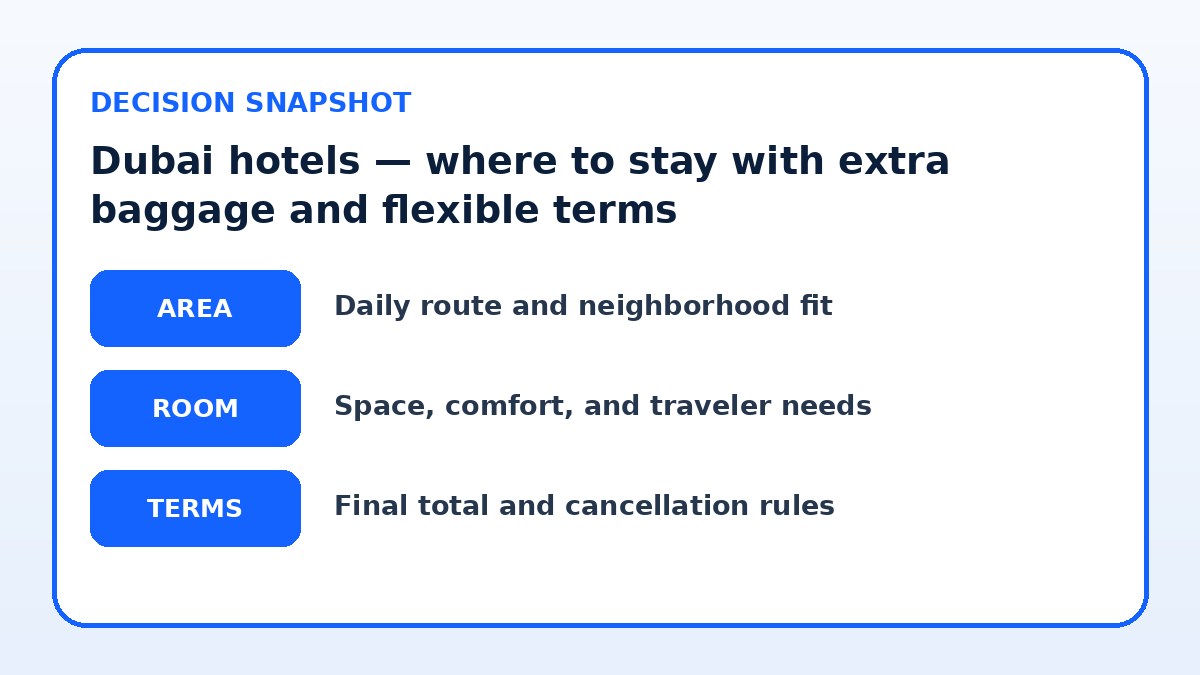
Daily-route friction: how neighborhood choice affects your days
Daily friction starts after check-in: where you stay shapes the ease of moving large bags to attractions, restaurants, and onward transport. Staying close to the major sights you plan to visit reduces repetitive carrying, and choosing a hotel near wide pavements and taxi lanes helps when travelers repeatedly return with shopping or day bags. If your itinerary includes desert tours or dhow cruises that collect passengers at specific piers, prioritize neighborhoods with reliable taxi access and clear hotel pickup policies to avoid having to transfer luggage multiple times.
Consider the walking distances within the neighborhood too: a beachfront hotel might require carrying gear along a boardwalk or sand to reach a taxi stand, while a hotel on a main road often provides curbside drop-off. Also plan for late-night or early-morning movements — neighborhoods with 24-hour taxi availability and lit sidewalks will feel safer and more convenient when you’re hauling heavy bags at odd hours. Map a typical day from your room to transport hubs and main activities to estimate how much luggage handling you’ll face.
Now compare like with like
Keep the same dates, guests, room needs, and cancellation preferences while you compare the final choices.
Room and party needs: picking space and services
Match the room type to how much luggage you’ll have and who’s traveling with you. For two or more people with multiple large suitcases, suites or rooms advertised with extra floor space and wardrobes are worth prioritizing. Serviced apartments and hotel-apartment hybrids often list room dimensions and include kitchen storage where you can stow suitcases out of the way. If the booking page doesn’t show dimensions, ask the property directly for room square footage and lift access before committing.
Don’t forget staff services: porter availability, complimentary luggage hold for early arrivals or late departures, and bell staff at the main entrance all reduce the physical strain. If a property’s booking page mentions porter or luggage storage, confirm whether those services are complimentary or paid. For special items — sports equipment, surfboards, or musical instruments — check whether the hotel has policies or secure storage options since oversized items are treated differently than normal suitcases.
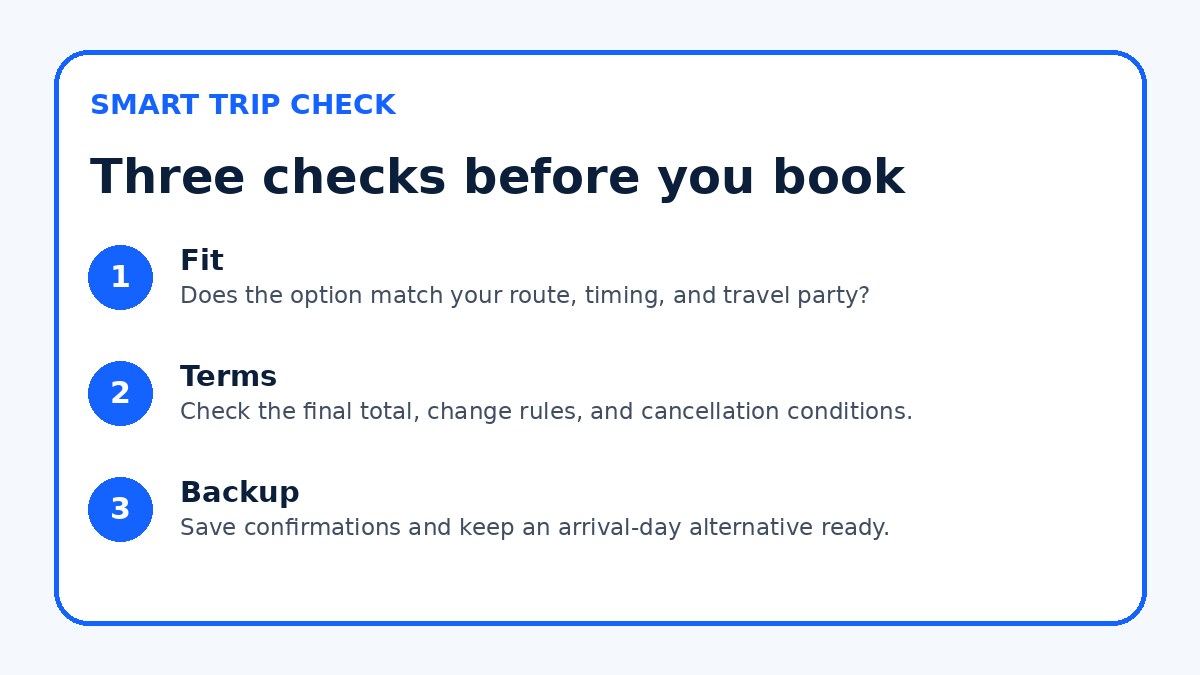
Hotel booking check before payment
- Map your arrival route and choose a drop-off point with a ground-level lobby or short covered walk.
- Contact shortlisted hotels and ask for room dimensions, elevator access, and whether porters are available on arrival.
- Compare cancellation and modification terms on each hotel’s final booking page before entering payment details.
- Confirm luggage storage policies: cost, hours, and whether oversized items are accepted or require advance notice.
- If arriving early or departing late, request early check-in or late check-out and ask whether there is a fee.
- Save the hotel confirmation email and any written replies about luggage or porter arrangements for quick reference at check-in.
Final booking terms: what to compare on the hotel page
When you’re ready to book, scan the hotel’s final reservation terms for these essentials: cancellation and modification deadlines, check-in and check-out times, early check-in or late-check-out fees, and the exact wording on luggage storage. Don’t rely on third-party summaries alone; cancellation rules and luggage services can vary between the hotel’s own site and online travel agencies. If the hotel mentions a ‘flexible rate’, read the fine print to see how many days before arrival you must modify or cancel to avoid fees.
Also verify whether the property requires any deposits for incidental charges and whether those affect luggage storage acceptance at arrival. If you need to change room type after booking because you unexpectedly need more space, confirm how the hotel handles upgrades and associated fees. Lastly, ask the hotel how they confirm porter service times — if you expect an early morning arrival, get that in writing on the confirmation so staff are ready when your taxi drops you off.
Hotel Guide questions travelers ask
How can I identify hotels that are genuinely luggage-friendly before I book?
Look for explicit mentions of porter service, luggage storage, early check-in, and elevator access on the hotel’s detailed page. If room dimensions or floor level aren’t listed, contact the property and ask whether the room has space for multiple large suitcases and whether the elevator serves the booked floor. Also read the cancellation and modification wording carefully: flexible booking options can reduce the pressure to change plans if you later decide you need a larger room. Finally, check recent guest reviews for mentions of luggage handling to confirm practical service.
Should I book a larger room or a second room if I have a lot of luggage?
If your luggage is bulky but you’re traveling as a pair or small group, a single larger room or suite is usually better because it centralizes storage and reduces the number of doors, elevators, and beds you must manage. For families or groups where privacy matters, a second room may make sense, but factor in the inconvenience of keeping items split across rooms. When in doubt, ask the hotel about storing extra bags in a secure back-of-house area accessible on arrival and departure days to avoid blocking walkways or shared spaces.
What booking terms matter most if I need to change plans because of extra luggage?
Prioritize rates that allow free modification or cancellation up to a late cutoff close to arrival, and verify whether changing room type incurs a fee. Confirm the hotel’s policy on early check-in and late check-out because unexpected arrivals with heavy luggage can be managed by shifting times rather than changing dates. Also check whether prepaid bookings are refundable or only partially refundable and whether third-party bookings follow the hotel’s own luggage and service policies. Always keep written confirmation of any agreed exceptions to avoid disputes at check-in.
Final decision note
For travelers with extra luggage, the most practical booking decision is driven by neighborhood arrival logistics and the hotel’s explicit luggage and modification policies. Start by shortlisting areas that minimize transfer time and provide straightforward curbside access, then filter hotels by room space, elevator access, and on-site porter or luggage storage. When you find a property that fits, read the final booking terms on the hotel’s page to confirm cancellation windows, fees, and whether luggage services are complimentary or chargeable. With the right neighborhood choice and clear confirmation of luggage services, you can reduce physical strain and keep your travel plans flexible — always verify the provider’s written policies before you pay.
Continue planning
Check current options and final conditions
Use the provider page to confirm live availability, the final total, cancellation terms, and every condition that matters to your trip.
This evergreen planning guide was created with AI-assisted drafting and a structured quality review. It does not display live prices, schedules, availability, visa guidance, or provider rankings. Verify current details before booking. Some links are affiliate links; we may earn a commission at no additional cost to you.