Practical answer up front: when evaluating Las Vegas travel deals, compare what is included, how the provider defines "cancellation" and "change" policies, and whether the same refund or rebooking rules apply to flights, hotels, and extras in the bundle. Bundles can simplify planning and sometimes reduce risk if they include flexible fares or refundable hotel rates; they can also lock you into stricter supplier rules if one component is nonrefundable. Before you click "book," match the exact dates, number of travelers, room type, baggage allowances, and cancellation windows between a package and separate bookings. That lets you spot false savings and choose the route that actually gives you the flexibility you need for a first Las Vegas trip.

Test package value fairly
| Booking approach | Best for | Tradeoff to check |
|---|---|---|
| All-in-one package (flight + hotel + extras) | Travelers who want one booking and a single support channel. | Convenience can hide a strict rule from one component that limits refunds for the entire booking. |
| Separate refundable hotel + bundled flight | Visitors wanting a flexible stay but price-managed flights. | You still depend on the flight’s change rules; partial flexibility may create uneven refund handling. |
| Independent bookings for every component | Travelers who want maximum control over each supplier’s terms. | More time required to manage multiple providers and potentially higher outlay if refundable options cost more. |
| Bundle with explicit flexible fare upgrades | Those seeking bundled convenience plus flight or hotel flexibility. | Upgrades add cost and may not cover all included extras; read whether upgrades affect every component. |
Check current package and separate options
Use identical dates, travelers, room needs, baggage, and flexibility so the comparison stays meaningful.
What bundle inclusions change cancellation risk
Start by listing every inclusion in a Las Vegas travel deal: outbound and return flights, hotel room category, ground transfers, car rental, and specific tickets (shows, tours, attractions). Each inclusion carries its own cancellation and change rules. For example, refundable hotel rates typically offer more flexibility than deeply discounted nonrefundable fares, and low-cost carrier tickets are often more restrictive than major airlines’ flexible fares. When a package bundles all items under one booking reference, the least flexible element can determine your overall practical options for refunds or date changes.
When comparing a package with separate bookings, ensure you compare identical items. Match the same flight times and fare classes, the same hotel room type and bed configuration, and identical ticketed extras. If an activity in the bundle is nonrefundable but replaceable with an alternative experience, note whether the operator allows credit or only cancellation. The more explicitly each component’s terms are shown on the package booking page, the easier it is to allocate risk to the correct supplier in case you need to cancel.
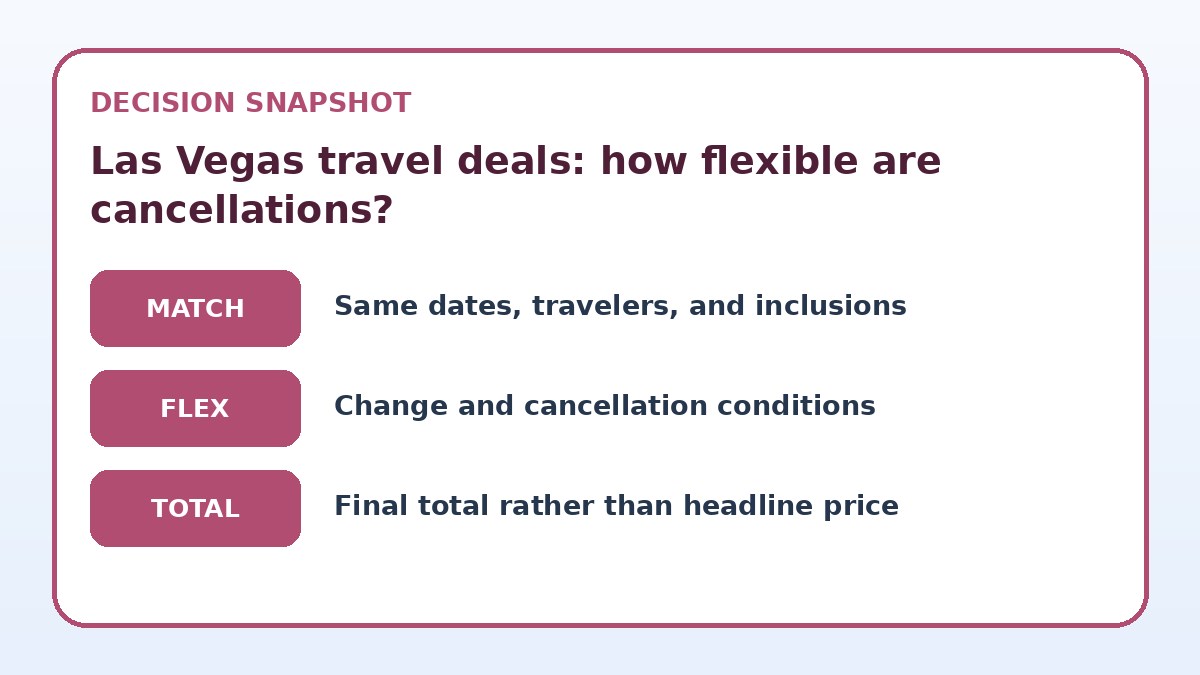
How to read flexibility: deadlines, fees, and who controls the refund
Policies often hide crucial details behind phrases like "flexible" or "free cancellation until X." Look for exact deadlines (dates and local time zones), whether refunds are full or partial, and the fee schedule for changes. A hotel might let you cancel with no penalty up to 48 hours before arrival, while a bundled activity ticket might be nonrefundable. Importantly, verify whether any refund is processed by the supplier or the bundler—third-party agents may take longer to return funds and might charge an administrative fee.
Also confirm how name changes, date changes, and rebookings are handled. Airlines commonly charge change fees unless a flexible fare is purchased; hotels may allow free date moves but only within a limited window. If travel insurance or a "cancel for any reason" upgrade is offered, read its exclusions carefully—these products have their own claims process and documentation requirements. Before booking, copy the cancellation and change clause text or screenshot the final booking page for future reference.
Look past the headline total
Compare inclusions and change conditions before deciding whether a package is genuinely useful for this trip.
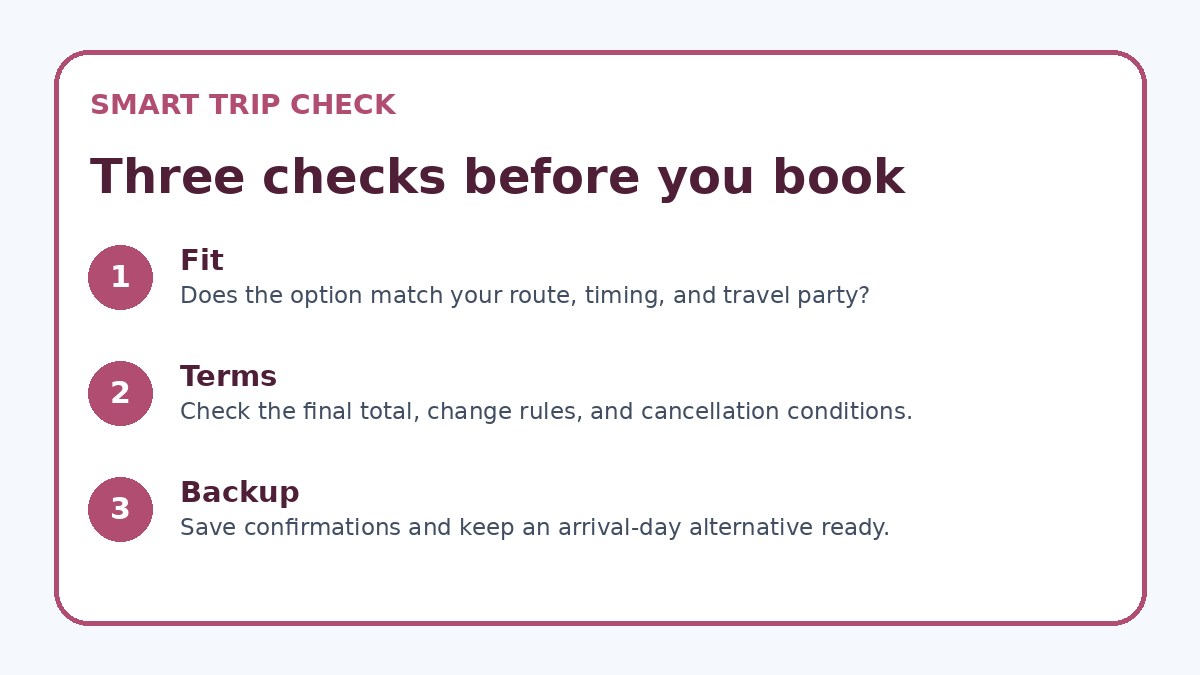
Deal comparison checklist
- Match the exact travel dates, traveler names, and room types between package and separate options before comparing refunds.
- Document cancellation deadlines in local time zones and note whether the refund is full, partial, or credit-only.
- Confirm which entity processes refunds and how long processing typically takes; get their contact details.
- Verify whether name, date, or itinerary changes are allowed and whether fees or fare differences apply.
- Screenshot or save the full booking confirmation and the specific cancellation clause from the final checkout page.
- Consider buying travel insurance or a cancel-for-any-reason add-on for nonrefundable components; review policy exclusions.
Value by traveler type: when bundles help or hurt first-time visitors
Different travelers prioritize flexibility differently. First-time visitors who want convenience and fewer supplier contacts may value a bundled package that consolidates support and provides a single point of contact for changes. Bundles can be helpful if they explicitly include fully refundable options or provide generous change windows for flights and hotels. For travelers who prefer to lock in specific hotels or flight times, separate bookings make it easier to mix refundable and nonrefundable elements tailored to that preference.
Families or groups often benefit from the protection of a single booking when it includes flexible rooming and free child ticket cancellation, but they should verify whether the bundle requires all names to be changed together or allows partial cancellations. Solo travelers with simple plans may save by booking refundable hotel nights and flexible flight fares independently. Decide which elements you cannot afford to lose money on—those should be booked with the most flexible terms you can reasonably secure, whether inside a bundle or separately.
Final terms to verify before you confirm any Las Vegas deal
Before you hit confirm, verify the supplier listed for each component, the exact cancellation deadline and time zone, any change fees or fare difference rules, and how refunds are issued. Check whether refunds go back to the original payment card or if travel credits are issued instead. Also confirm contact channels for post-booking support—phone, chat, email—and the expected timeframe for refund processing if you need to cancel.
If you use an OTA or bundler, open the supplier’s own policy pages linked from the booking page and compare them with the bundle’s stated terms. When in doubt, call the supplier to read back the policy you saw and request written confirmation by email. Consider adding purchase protection or travel insurance for nonrefundable components, and keep screenshots or PDFs of the full booking confirmation and the specific cancellation clauses for your records.
Travel Deals & Booking Strategy questions travelers ask
If a Las Vegas package shows "free cancellation," what exactly should I check?
Look for precise language: the final booking page should state until what date and time cancellation is free, whether it applies to every component, and if refunds are issued back to your card or as travel credit. Confirm whether any third-party supplier listed in the itinerary has different rules, and save a screenshot of the phrase on the checkout page. If the phrase is ambiguous, contact the seller for written clarification before paying, because verbal assurances are harder to enforce later.
Should I book refundable hotel nights and nonrefundable flights when visiting Las Vegas?
That mix can make sense if your main worry is losing accommodation costs—refundable hotel nights can be changed without penalty while you keep cheaper flights. But compare the total cost and cancellation windows: a refundable hotel with a short free-cancel period may not help if your flight changes unexpectedly. Always align the cancellation deadlines across bookings and consider whether changing a flight would leave you with a higher hotel bill; match terms so one change doesn’t cascade into multiple losses.
How do I avoid false savings when a bundle looks cheaper than separate bookings?
Recreate the exact itinerary with separate bookings—same flight times, fare classes, hotel room type, taxes, and refundable status—and compare total out-the-door costs plus potential change or cancellation fees. Include the value of convenience and support for your decision: cheaper may cost more if it leaves you exposed to nonrefundable elements. If the bundle is from an OTA or aggregator, check the suppliers’ own pages for the same dates to confirm terms; Trip.com is one optional place to compare availability and policy language, but always read supplier terms on their final booking pages.
Final decision note
For first-time visitors to Las Vegas, the smartest move is not assuming a bundle is more flexible or cheaper—it's verifying. Compare identical dates, traveler names, room types, and ticket inclusions between packages and separate bookings, then read the exact cancellation and change clauses on the provider’s final booking page. Decide which components you cannot afford to lose and secure the most flexible terms for those items, whether inside a bundle or booked independently. Keep screenshots of the checkout terms and supplier policies, note contact channels for post-booking support, and consider insurance for any nonrefundable pieces. That process turns a headline "deal" into a decision you can live with if plans change.
Continue planning
Check current options and final conditions
Use the provider page to confirm live availability, the final total, cancellation terms, and every condition that matters to your trip.
This evergreen planning guide was created with AI-assisted drafting and a structured quality review. It does not display live prices, schedules, availability, visa guidance, or provider rankings. Verify current details before booking. Some links are affiliate links; we may earn a commission at no additional cost to you.