Quick practical answer: for most families the high-speed train (Eurostar) balances door-to-door time, luggage ease and stress-free travel; coaches are cheapest for flexible budgets; car+ferry or Eurotunnel gives freedom for kids and baggage; flights can work for onward connections but add airport transfers and extra checks. Decide by comparing total journey time from your accommodation in London to your accommodation in Paris, the number and length of transfers, luggage limits, and how much sitting or standing your children will tolerate. This article breaks those tradeoffs into clear family-focused decision points, explains what to verify before you book, and lists a checklist you can use while weighing schedules, stroller policies, seat choices and cancellation terms. Mention Trip.com only as an optional place to check live schedules and availability on providers’ final pages.
Train (Eurostar): why families often pick it
The train is popular with families because it minimizes the number of handoffs between transport modes: you board in central London and arrive in central Paris, avoiding long motorway drives or airport transfers. Trains usually offer spacious seating, the ability to move around, onboard restrooms, and the comfort of bringing prams and multiple bags without the same strict limits airlines apply. For those traveling with young children, the predictable station-to-station routing is easier to plan around naps, meal times, and connecting to city transit or taxis at either end.
Before you book, compare seat types, child ticket policies, and whether a specific train requires reservations for family seating or offers discounted children’s fares. Check luggage allowances and stroller rules on the provider’s final booking page, since restrictions and carriage space vary. Also verify station access times and whether you need to arrive early for identity checks; when comparing options, calculate total door-to-door time including transfers between home, stations, and lodging so the train’s advantage is measured realistically for your family.
Coach: budget-friendly with different tradeoffs
Coaches frequently have the lowest headline cost and can be flexible for families who can travel overnight or accept longer daytime transfers. They also remove the need to pre-book multiple individual train seats if your party is large. On-board restrooms and occasional scheduled comfort stops can help manage young children’s needs without the expense of airport or hotel stops. Coaches can be a practical choice for families on tight budgets or those traveling light with fewer timed activities in Paris.
However, coaches generally take longer and have more variable journey times due to traffic or border controls. For families, long periods sitting on a coach can be tiring and disruptive to children’s routines; also check seat spacing, the availability of reserved seating together, and whether luggage handling is assisted or you’ll be lifting bags. Before committing, compare door-to-door journey time, number of driver rest stops, cancellation and rebooking policies, and on-the-ground drop-off locations in Paris relative to where you plan to stay.
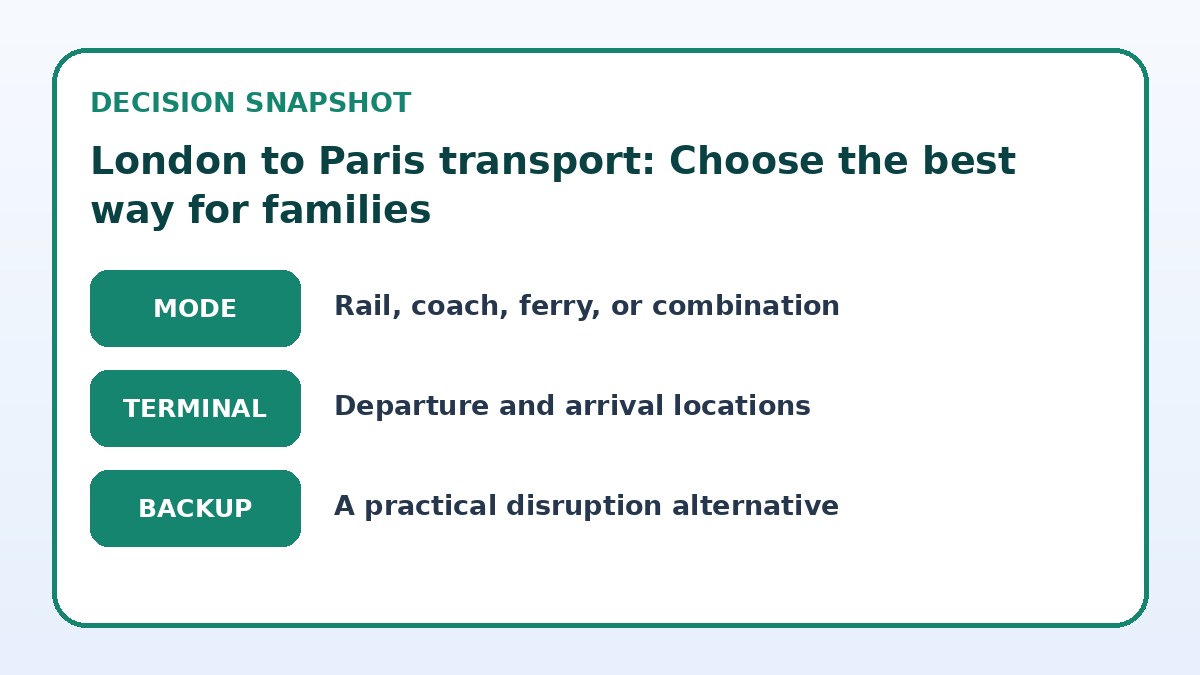
| Approach | Best for | Tradeoff to check |
|---|---|---|
| High-speed train (Eurostar) | Families who value minimal transfers and predictable door-to-door time | Higher ticket fares for flexible seats and advance booking requirements for best seating together |
| Coach | Families on a tight budget or those flexible with time | Longer journey and limited onboard space; can be tiring for young children |
| Car + ferry or Eurotunnel | Families needing flexibility, lots of luggage, or multi-stop road trips | Driving demands, parking challenges in Paris, and extra costs like tolls and fuel |
| Flight (direct or connecting) | Families linking to onward flights or starting far from central rail hubs | Airport transfers, stricter luggage rules, and more pre-departure time required |
Car plus ferry/Eurotunnel: control and flexible routing
Driving and crossing the Channel by ferry or Shuttle gives families the greatest flexibility with luggage, car seats, and on-the-road stops. This option is appealing if your itinerary includes multiple destinations, you’re carrying bulky gear (bikes, pushchairs, bulky travel cots), or you prefer to keep a familiar car environment for naptime and meals. Ferries add a short break where children can stretch and have a meal on board; Eurotunnel shuttles are typically quicker but still let you stay with your vehicle.
Tradeoffs include driving fatigue, unfamiliar road systems in France, and the need to plan for parking in Paris, which can be costly and limited near central neighborhoods. Verify vehicle requirements such as insurance, cross-border documents, and any necessary safety equipment on the provider’s and rental company’s booking pages. Account for tolls, fuel, and the time to load/unload; if you rent a car, check child-seat regulations and availability or bring your own to ensure a comfortable, safe trip.
Before you book
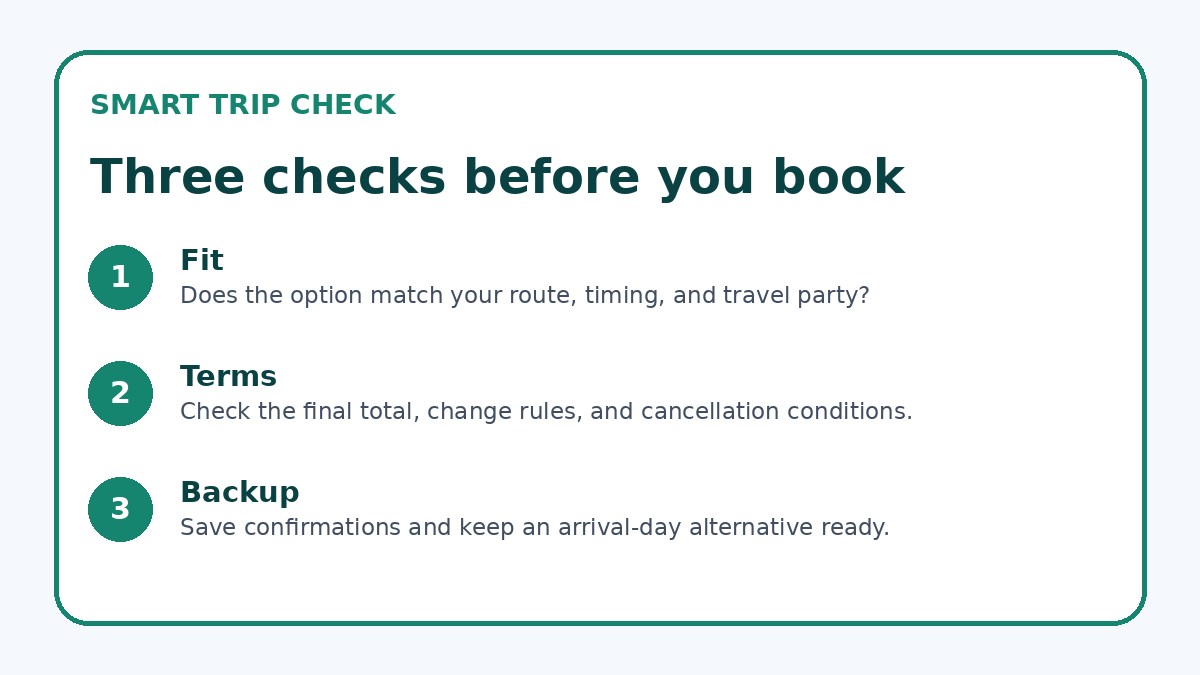
- Calculate total door-to-door time: include travel to/from stations or airports, transfers, and expected wait times for checks or baggage.
- Confirm family and child fares, seat reservation policies, and whether children travel free or need a ticket for your chosen mode.
- Verify luggage and stroller rules (measurements, fees, and whether pushchairs fold for boarding) on the provider’s official booking page.
- Check accessibility options and onboard restroom availability if you have a baby, toddler, or mobility needs.
- If driving, confirm vehicle insurance covers France, obtain needed documents, and research parking options near your Paris accommodation.
- Compare cancellation and change policies for each option and consider flexible tickets if schedules might shift while traveling with children.
Flights and combinations: when flying makes sense
Short flights can be time-efficient if you live far from central train stations or your Paris plans tie in with distant airports, but family travel by air adds steps: travel to the airport, early arrival for check-in and security, managing liquids or medication for youngsters, and ground transfers at the other end. Flights also often separate you from luggage with baggage claim waits and stricter luggage rules, which can complicate travel with strollers, car seats and multiple bags.
If you consider flying, compare total door-to-door time including transfers, check-in windows, and airport transfer options at both ends. Look for airlines’ family policies (pre-boarding, bassinets, child fares) and verify car-seat carriage rules and stroller drop-off procedures on the airline’s final booking page. Often a hybrid approach — for example, flying into a regional airport and taking a short train onward — can be the right compromise depending on schedules and how many transfers your family will tolerate.
Frequently asked questions
Is the Eurostar the fastest family-friendly option from London to Paris?
Eurostar is typically the most direct and passenger-friendly option for families because it links central stations and avoids airport procedures, which simplifies door-to-door planning. Its onboard space and reduced transfers make nap schedules and luggage management easier than flying or long coach rides. However, “fastest” depends on where you start and end: if you live closer to an airport than a central train station, or if station transfers add time, then a flight or different combination might be competitive. Always calculate total travel time from your home to your final Paris address and check provider pages for seat and boarding rules before booking.
What should we check about luggage and strollers before choosing a mode?
Check each provider’s official booking page for exact luggage allowances, stroller policies, and whether bulky items like travel cots count as a piece of luggage or need separate handling. Trains often allow multiple bags with fewer fees, while airlines usually enforce strict counts and charges. For car travel, measure trunk space and ensure car seats and prams fit comfortably; for ferries and coach trips, find out whether luggage is stored under the vehicle or in a cabin. Verifying these details in advance avoids surprises at boarding and ensures you can bring essential family gear.
How do we judge whether driving is better than public transport for our family?
Start by listing priorities: Do you need stops for naps and meals, or do you want minimal driving time? Driving wins if you value flexibility, have lots of gear, or plan multiple side trips. Public transport (train or coach) wins if you prefer not to drive in unfamiliar conditions, want to avoid parking hassles in Paris, or want children to rest without the distraction of road motion. Compare estimated driving time plus ferry/shuttle crossing and parking logistics against train door-to-door times and the number of transfers. Also factor in driver fatigue, tolls, fuel, and potential overnight stays when deciding.
Final planning note
Choosing the right London to Paris transport for your family means balancing total travel time, the number of transfers, luggage and car-seat needs, and what keeps your children comfortable. Eurostar often simplifies logistics with central-to-central service and room to move, while coaches can save money for flexible families. Driving with a ferry or Eurotunnel gives independence and luggage freedom but adds driving responsibilities and parking concerns in Paris. Flights may suit specific itineraries but introduce airport steps families usually prefer to avoid. Use the checklist above, verify policies and seat assignments on each provider’s final booking page, and weigh how much flexibility versus simplicity your family needs when you make the booking.
Continue planning
Check current options and final conditions
Use the provider page to confirm live availability, the final total, cancellation terms, and every condition that matters to your trip.
This evergreen planning guide was created with AI-assisted drafting and a structured quality review. It does not display live prices, schedules, availability, visa guidance, or provider rankings. Verify current details before booking. Some links are affiliate links; we may earn a commission at no additional cost to you.