Practical answer first: if you value speed with low transfer friction, prioritize high-speed rail; if budget and late-night flexibility matter, a coach may fit; if you want a coastal travel experience or plan a multi-stop route, consider a ferry combined with rail or bus. Solo travelers should think beyond the ride: where you start and finish in each city, how easy transfers and luggage handling are, and what backup you'll use if your primary option is disrupted. This guide compares the main ground and sea modes available between Seoul and Busan, highlights terminal fit, luggage/transfer friction, timing flexibility, and disruption backups, and helps you choose an end-to-end plan that suits safety, comfort, and schedule. Use provider sites (or Trip.com to compare availability) to verify schedules, platform locations, and boarding rules before you book.
Terminal fit and door-to-door practicality
Where you begin and end in Seoul and Busan determines much of the trip practicality. Central rail stations are typically well connected to urban transit, taxis, and luggage-storage options, which lowers transfer friction and makes walking or quick taxi rides practical at either end. Coach stations can vary: some are adjacent to subways while others require a bus or taxi connection. Ports are often outside the city center and may require a longer pre- or post-journey transfer, so include that time when comparing total door-to-door travel.
For solo travelers, consider which terminal feels safer and simpler late at night or early morning. If you arrive at a station without 24-hour staffed services, plan where you’ll store bags and how you’ll reach your accommodation. Confirm exact terminal addresses and nearest transit lines on the provider’s booking pages, and map the walking route from platform to taxi rank or transit entrance. A seemingly small difference in terminal placement can add significant time and hassle to the overall journey.
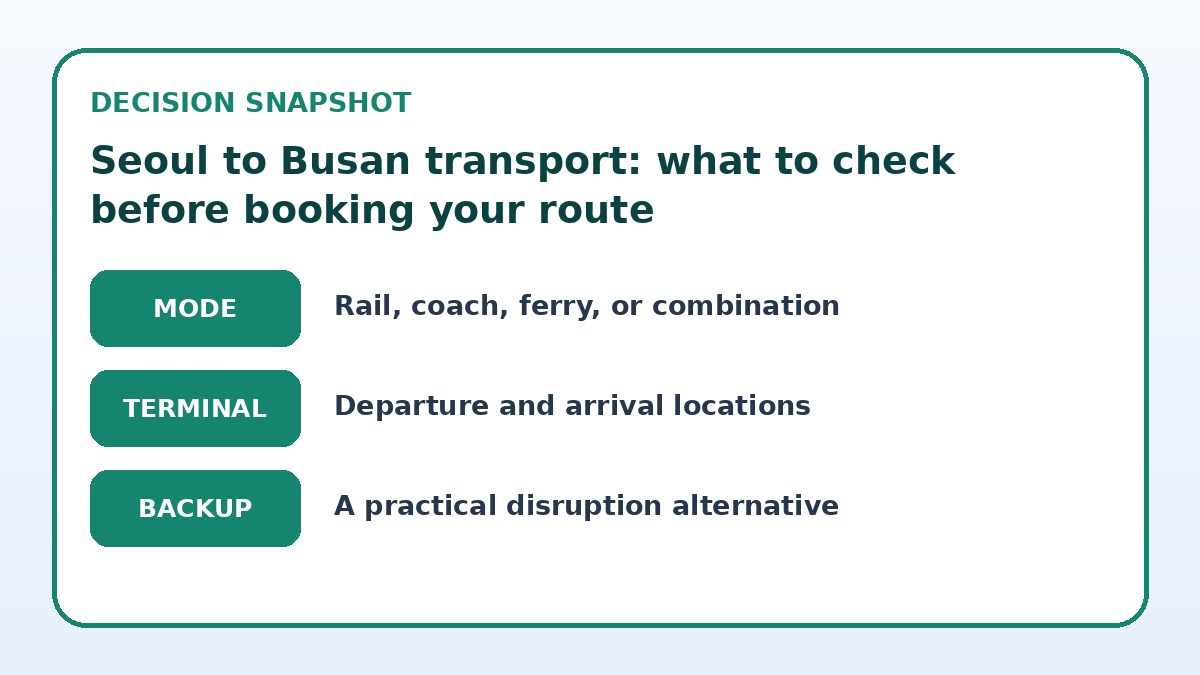
Choose the end-to-end journey plan
| Journey approach | Best for | Friction to check |
|---|---|---|
| High-speed rail (direct where offered) | Solo travelers prioritizing speed, central terminals, and fewer transfers. | May require advance ticketing and navigating busy stations with luggage. |
| Long‑distance coach | Budget-conscious travelers needing flexible departure times or late-night options. | Often longer door-to-door time and coach stations can be outside central areas. |
| Ferry combined with rail or coach | Travelers who want a scenic alternative or plan coastal stops en route. | Longer total travel time and extra transfers to and from ports increase complexity. |
| Hybrid routing (mixing modes for best fit) | Those balancing cost, comfort, and specific arrival times or sightseeing goals. | Requires careful timing and contingency planning for missed connections. |
Check live intercity options
Look beyond the ride itself and compare terminals, transfers, luggage, and arrival fit.
Luggage, transfers and friction
Luggage rules and transfer complexity change the subjective comfort of a journey more than the published ride time. High-speed trains usually have clear luggage areas and lots of space for carry-ons, but finding that space and hauling bags through busy platforms can be taxing. Coaches often allow larger checked items but loading and unloading may mean you can’t access personal items during transit. Ferries may have vehicle decks and separate passenger cabins, requiring more time to disembark and reassemble for last‑mile travel.
Think through each transfer: how many times will you handle your bags, where will you store them, and will you need short-term storage at a station? Solo travelers should favor routes with fewer transfers or where transfers are short and well-signed. If you must change modes, allow generous connection buffers and prefer transfers inside the same terminal or within walking distance. When comparing options, check the provider’s luggage limits and pickup procedures on their booking page rather than relying on third‑party summaries.
Timing flexibility, frequency and day/night options
How often each mode runs affects your planning freedom. Trains commonly run at regular intervals throughout the day with multiple classes of service, which helps if your schedule shifts. Coaches can fill gaps outside peak rail times and sometimes operate late-night departures, which may suit travelers on a tight itinerary or arriving late. Ferries are subject to more limited timetables and seasonal variations, so they suit travelers who can plan around fixed departure windows or who want the experience as part of a longer schedule.
Solo travelers should weigh the cost of tighter connections against the convenience of a later or earlier departure. If you must arrive by a specific time, choose the mode with a schedule reliability buffer and a practical backup option. When comparing, check up-to-date timetables directly on operator booking pages and confirm seasonal or holiday timetable changes. Don’t forget to allow travel time from your arrival terminal to your final address when calculating arrival windows.
Compare the practical alternatives
Use the final page to confirm what is actually offered on your dates and save a workable fallback.
Intercity travel checklist
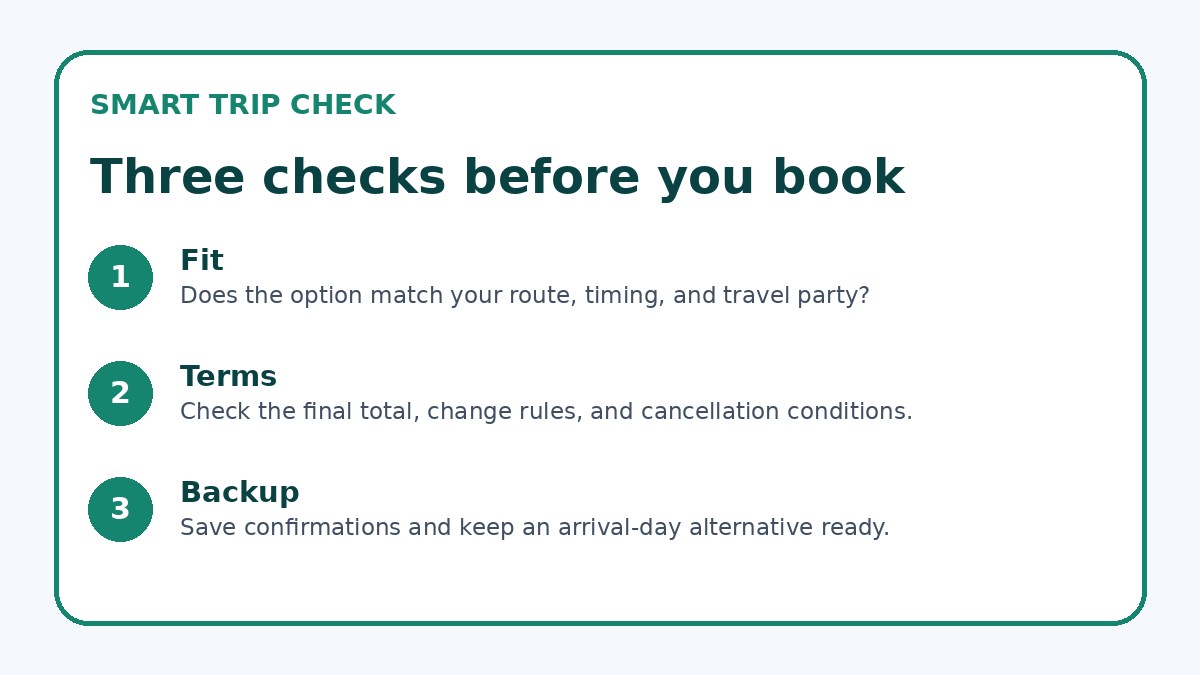
- Map door-to-door time: include transit to departure terminal and final transfer to your accommodation before booking.
- Verify luggage allowances and handling procedures on the operator’s final booking page to avoid surprises at boarding.
- Confirm exact terminal name and nearest transit line, then save a map screenshot or landmark directions on your phone.
- Check frequency and first/last departures for your chosen date and note at least one realistic backup departure.
- Keep digital copies of tickets and payment receipts, plus a portable charger and local taxi app for quick rebooking.
- If traveling at night, confirm staffed hours at arrival terminal and pre-book a short taxi or transit to your lodging.
Disruption backups and realistic contingencies
Disruptions happen: weather, strikes, technical faults, or simple delays. Pick a primary mode you’re comfortable switching from and identify at least one realistic backup. For example, if you plan a train, note coach and flight options that depart near your intended arrival time; if you plan a bus, check later rail departures. Keep a saved screenshot or PDF of alternative tickets and local taxi apps, and know where to buy another ticket quickly if needed. Also identify nearby stations or stops where you could pivot without returning to a faraway terminal.
Budget time and money for contingencies and consider flexible ticket types if your plan is likely to change. Save contact numbers and station addresses, and carry a portable charger to handle sudden rebooking on your phone. Verify refund, exchange, and rebooking rules directly with providers before purchase (or via Trip.com as a comparison tool) so you can act fast when plans shift. Having a realistic, practiced contingency beats feeling stranded and keeps solo travel confident and manageable.
Rail & Intercity Transport questions travelers ask
How do I compare door-to-door time for train versus coach on this route?
To compare door-to-door time, add three elements: travel time from your lodging to the departure terminal, the advertised ride time, and transfer time from the arrival terminal to your final destination. Trains often have shorter ride times and central stations, which can reduce overall door-to-door time despite similar ride durations; coaches may run from terminals farther out, adding first/last mile transit. Use station addresses and local transit schedules to calculate realistic connections rather than relying on ride time alone.
Can I bring large luggage on these services and how does that affect solo travel?
Luggage policies vary by mode and provider. Trains typically have overhead racks and luggage spaces but busy platforms make loading bulky items harder; coaches often allow larger checked items stored under the vehicle, which is convenient but prevents access during transit. Ferries may have separate storage areas and more relaxed rules but also require extra handling during embarkation. For solo travelers, choose the option with fewer transfers or easier handling procedures and verify the provider’s luggage rules on their booking page before you commit.
What is a practical disruption backup if my scheduled train or coach is canceled?
A practical disruption backup depends on your schedule flexibility. If time is crucial, identify the next rail or coach departure and note any nearby daytime flights as an alternative. If you have extra time, switching to a later coach or combining rail and local transit may be simplest. Carry contact info and a payment method for quick purchases, and check rebooking/refund policies before booking so you can act without surprise fees. Always factor in travel time to alternate terminals when switching modes.
Final decision note
Choosing how to travel from Seoul to Busan as a solo traveler comes down to three practical tradeoffs: door-to-door time, transfer friction with luggage, and schedule flexibility. High-speed rail often wins on speed and central terminals but may need careful platform navigation; coaches can suit tight budgets or late schedules but sometimes extend the first and last mile; ferries add a scenic element at the cost of longer total travel and extra transfers. Hybrid routes let you tailor tradeoffs, but they require clear connection buffers and a realistic backup plan. Before booking, verify terminal locations, luggage rules, departure frequency, and rebooking policies on each provider’s official booking page or a comparison tool like Trip.com to confirm the details that matter for your trip.
Continue planning
Check current options and final conditions
Use the provider page to confirm live availability, the final total, cancellation terms, and every condition that matters to your trip.
This evergreen planning guide was created with AI-assisted drafting and a structured quality review. It does not display live prices, schedules, availability, visa guidance, or provider rankings. Verify current details before booking. Some links are affiliate links; we may earn a commission at no additional cost to you.