If you’re flying Sydney to Auckland with extra baggage, the practical priority is simple: decide how many bags you must carry, then pick a flight and fare that reliably accommodates that volume without risking missed connections. Start by confirming exact travel dates, the number of passengers, and the weight and dimensions of each checked item. That information determines whether a direct flight, a single-connection itinerary, or a higher-tier fare is the right choice. Once you have those details, compare fares with the baggage allowances displayed on the airline’s booking page — and check connection minimums, transfer rules, and whether your baggage will be tagged through to Auckland. This article walks through routing tradeoffs, baggage and connection risks, schedule fit, fare conditions, and a practical checklist so you can arrive prepared and avoid unpleasant surprises at the airport.
See live routes for your exact travel day
Compare direct and connecting choices with the same baggage and traveler details.
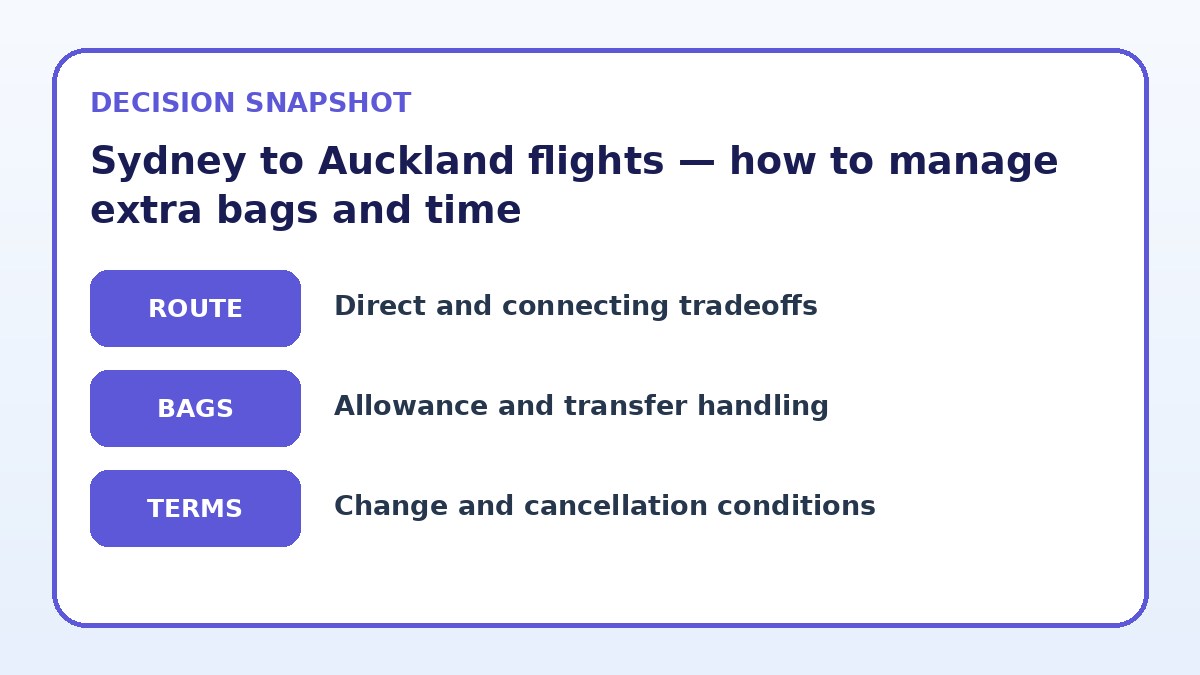
Routing: direct versus connecting when you have extra bags
Direct flights reduce the number of times your luggage is handled and lower the chance of a missed connection where overweight or oversized bags can cause delays. If direct services run on your chosen dates, they are often the simplest option: you check in once in Sydney, your baggage is loaded once, and you collect it in Auckland. However, direct flights can have stricter or more limited fare classes for large-volume travelers; they may not always include generous piece-based allowances depending on the carrier and fare selected.
Connecting itineraries can sometimes offer better fares or availability for larger baggage allowances, especially when combining carriers that allow piece-based or higher-weight checked bags. But each connection introduces transfer rules to verify: will your bags be checked through to Auckland or must you clear them and re-check? Does the connection require terminal transfer or additional time to pay excess fees? When comparing options, line up the full itinerary details and baggage policy for each carrier involved so you can weigh convenience against cost.
Baggage and connection risk: what to verify before booking
Before you commit, have the exact details of each bag — weight, linear dimensions, and whether items are oversized or require special handling (sports gear, musical instruments, fragile items). On the airline’s booking or baggage page, confirm whether your fare includes piece-based allowances or a per-kilogram limit; look for how excess is charged (per extra piece or per kilogram). If your bags exceed standard checked dimensions or weight, check whether the carrier allows special items and what pre-notification or packaging rules apply. If multiple carriers appear on one ticket, check the most restrictive policy between them.
For connecting flights, identify whether bags are checked through and whether you must clear immigration or customs at any stop. If a connection requires re-checking luggage, factor in time for collecting, passing through border control, and re-checking — and whether you’ll have to pay an extra fee on-site. Also verify whether an interline agreement exists between carriers; if not, you might have to claim and re-check your baggage yourself. These are the points that most commonly turn a seemingly good fare into a logistical headache.
Compare flight-selection strategies
| Flight strategy | Best for | Risk to check |
|---|---|---|
| Pick the most direct flight available | Minimizing handling and transfer risk for many checked items | May be less flexible in fare class options and could cost more than connecting routes |
| Choose a single-connection itinerary with same-ticket transfer | Balancing fare savings with automatic baggage transfer when carriers interline | Connection problems or tight layovers increase the chance of delays and re-checking luggage |
| Buy a higher-tier fare on a carrier with generous baggage allowance | Travelers who prefer certainty about included baggage without per-piece fees | Higher upfront fare but less risk of weight/size surprises at the airport |
| Book a lower fare and pre-purchase extra baggage online | Those looking to minimize upfront cost while securing needed allowance | Online allowances vary by carrier; if not purchased in advance, airport fees and delays are likely |
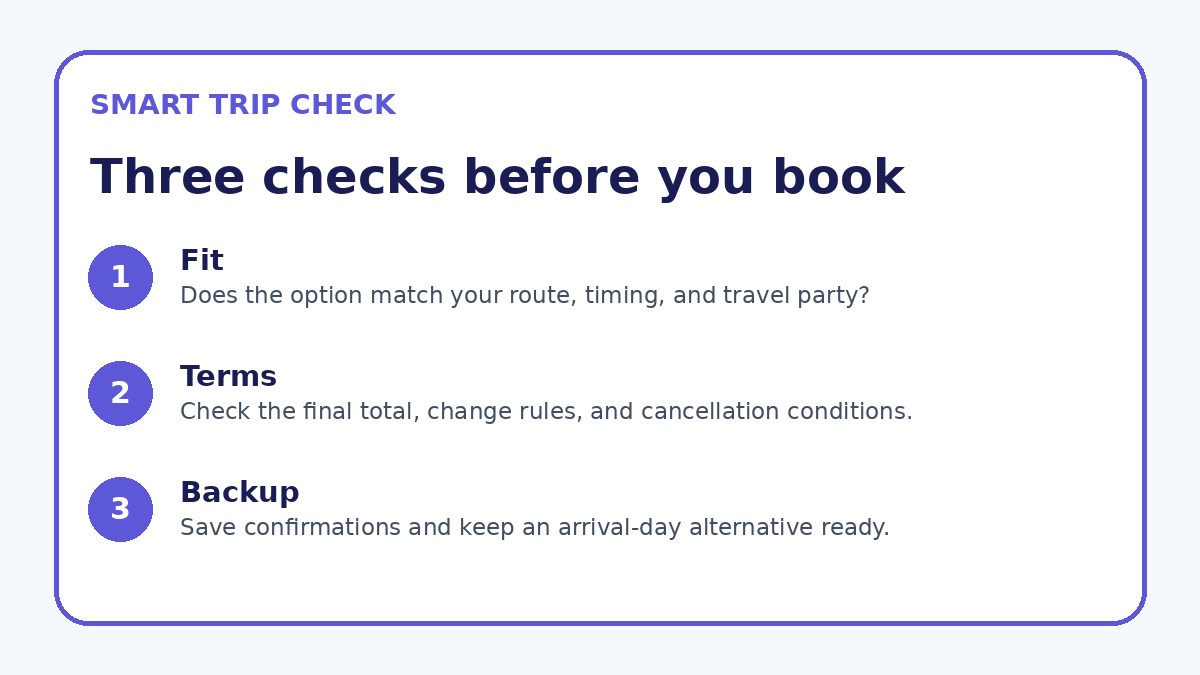
Recheck the complete itinerary
Confirm airports, connection handling, baggage, and change conditions before deciding.
Schedule fit: how much airport time to build in
For travelers with extra or oversized luggage, add buffer time beyond standard recommendations. At Sydney Kingsford Smith, oversize-baggage handling, queueing at special baggage counters, and paying for excess allowance can take additional time. If you plan to drop off multiple heavy pieces or crates, arrive early enough to complete any paperwork, inspections, or manual weigh-ins. If the airline requires pre-paid excess baggage purchased at the counter, build that into your arrival time — online pre-purchase often speeds processing and reduces stress.
When you have a tight connection, aim for longer scheduled transfer windows. The minimum connection time advertised by an airport or airline is a starting point, not a guarantee; with extra baggage, allow additional time for collection and movement between stands or terminals. If your itinerary includes an overnight layover, a connecting carrier’s local re-check rules can affect whether you need to reclaim luggage and clear customs. For short trips or one-way moves with many bags, choosing a midday direct or single-leg schedule reduces the risk of delays caused by overnight handling or staff shortages.
Flight details to verify
- Confirm exact travel dates, number of passengers, and detailed bag inventory (pieces, weight, dimensions) before searching fares.
- On each airline’s final booking page verify included baggage allowance, per-piece weight limits, and excess-baggage fee structure.
- If your itinerary connects, check whether bags are checked through and whether you must clear customs or re-check at any stop.
- Purchase additional baggage allowance online in advance if available; print or save the receipt and luggage confirmations.
- Allow extra time at Sydney airport for oversized or heavy bags, online check-in exceptions, and potential paperwork or inspections.
- Pack valuables and essentials in carry-on in case checked baggage is delayed; photograph bag contents and label inside and outside.
Fare conditions and practical booking checks
Fares differ in how they treat baggage: some include one or two checked pieces in the base price, others offer only carry-on with additional fees for checked items. When comparing options, read the fare rules on the airline’s final booking page: confirm included pieces, per-piece weight limits, and whether sports or oversized equipment is separately allowed. If the fare allows changes or refunds, check how flexible the ticket is should you need to modify dates because of baggage constraints or missed connections.
Also verify where and how excess-baggage charges are applied and whether buying additional allowance during booking is possible and cheaper than paying at the airport. For itineraries combining carriers, inspect the ticketing page to see which carrier’s baggage rules apply to each flight segment. Finally, before you click buy, prepare exact traveler details, bag counts and weights, and tentative arrival and departure times — those specifics are what the airline will use to calculate final baggage fees and any necessary approvals.
Flight Guide questions travelers ask
How far in advance should I arrive at Sydney Airport with extra checked bags?
With multiple or oversized checked bags, plan to arrive earlier than standard recommendations to allow for special handling, manual weight checks, and payment of any excess charges. Arriving at least 90 to 120 minutes before international departure is a reasonable baseline, but if you anticipate needing oversized-baggage processing, crate handling, or extra paperwork, add more buffer. If you pre-purchased excess allowance online and have completed online check-in, processing will be faster; still allow extra time for queueing and bag drop so you’re not rushed.
If my itinerary has a connection, will my checked baggage be transferred to Auckland automatically?
Whether bags are transferred automatically depends on the ticketing and interline agreements between carriers and your itinerary routing. On a single ticket with interline or codeshare partners, checked baggage is often tagged through to the final destination; however, some connections require you to reclaim baggage to clear immigration and then re-check it. Always check the booking confirmation and airline baggage page for the specific itinerary; if the information is unclear, confirm with the airline’s reservations team or the final carrier before travel.
Is it cheaper to buy extra baggage during booking or at the airport?
Many carriers offer lower rates for purchasing additional baggage online during booking than paying at the airport, but policies differ across airlines and fare classes. Pre-purchasing usually speeds up processing at check-in and can avoid higher counter fees, though always confirm the exact cost on the airline’s booking page before buying. If you’re booking a multi-carrier itinerary, ensure you purchase allowance for the correct carrier and confirm how that purchase will be applied across flight segments.
Final decision note
Traveling Sydney to Auckland with extra luggage is mostly about preparation: decide your exact bag counts and weights, then match that reality to flight routing and fare conditions before booking. Direct flights reduce handling risk but may limit fare flexibility; single-connection options can save money but add transfer complexity. Always verify baggage allowances and excess charges on the airline’s final booking page, check whether bags transfer automatically on connecting itineraries, and allow additional time at Sydney airport for oversized or uniquely packaged items. With the checklist completed and your details to hand, you’ll be able to compare live options confidently and pick the arrangement that balances cost, convenience, and the certainty your baggage needs demand.
Continue planning
Check current options and final conditions
Use the provider page to confirm live availability, the final total, cancellation terms, and every condition that matters to your trip.
This evergreen planning guide was created with AI-assisted drafting and a structured quality review. It does not display live prices, schedules, availability, visa guidance, or provider rankings. Verify current details before booking. Some links are affiliate links; we may earn a commission at no additional cost to you.