If you’re traveling solo to Boston, start by choosing the neighborhood before you shop specific Boston hotels. Downtown, Back Bay, Beacon Hill, and Cambridge each solve different problems: one minimizes commute time to museums and offices, another gives calmer streets and larger rooms, while a third connects you to the university scene and nightlife. The fastest route to a pleasant stay is to match where you’ll spend most of your daytime and evening hours with the room attributes that matter to you—soundproofing, size, quiet floor, or a desk for work. This article gives a practical on-the-ground way to shortlist an area, judge daily-route friction, pick a room type for solo needs, and read the booking terms you must verify before finalizing a reservation.
Check live stays in the areas that fit
Use your dates and party size to compare current rooms after you narrow the neighborhood fit.
Neighborhood fit: match your daily agenda to where you sleep
Decide where most of your time will be: museum and stage days, campus visits, business meetings, or nightlife and restaurants. If your schedule is dominated by daytime walks and historic sites, staying in or adjacent to Downtown/Financial District or Beacon Hill keeps your primary destinations within easy walking distance and reduces transit decisions. Solo travelers who prefer less sensory overload and safer-feeling streets later at night often choose Back Bay or Cambridge’s Harvard Square area for calmer evenings while still being a short transit ride from central attractions.
Think in practical chunks: morning coffee spot, midday activity, evening plan. Use those three anchors to map neighborhoods that minimize back-and-forth. For example, if you have a mix of museum visits and a concert at the TD Garden, choose a place with straightforward transit links rather than the absolute nearest neighborhood. This upfront match of daily agenda to neighborhood cuts wasted travel time and increases the value of whatever room you choose.
Choose an area-selection strategy
| Area approach | Best for | Tradeoff to check |
|---|---|---|
| Prioritize central location (Downtown/Back Bay) | Maximizing walkability to major sights and restaurants | Smaller rooms and higher foot traffic; more noise and limited in-room space |
| Prioritize quieter residential feel (Cambridge/South End) | Larger rooms, calmer evenings, and a neighborhood vibe | Longer transit to some central attractions and occasional transfer hassles |
| Prioritize budget value on edge neighborhoods | Lower nightly rates and acceptable tradeoffs for shorter stays | More transit time and potential inconvenience for late-night returns |
| Prioritize amenities and workspace | Remote workers needing reliable Wi‑Fi and a desk-friendly room | May require staying slightly outside core tourist zones for larger rooms |
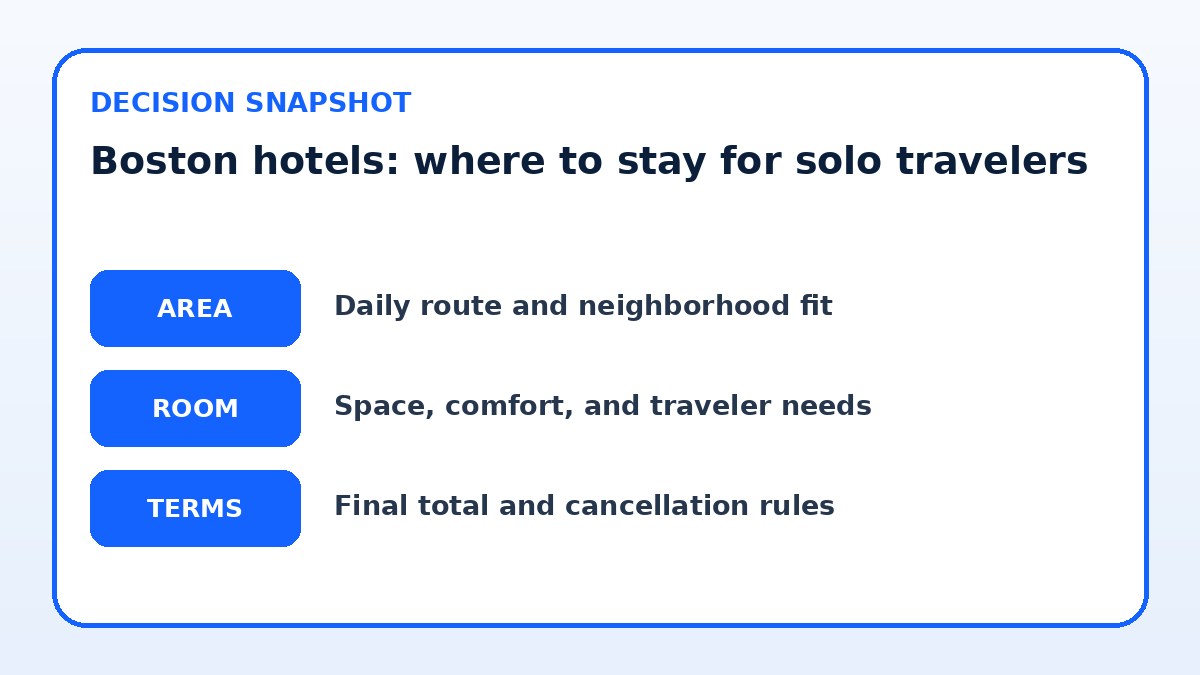
Daily-route friction: measuring how neighborhood affects your day
Daily-route friction is the tiny time and decision costs that add up: crossing bridges, transferring MBTA lines, or walking on uneven sidewalks with luggage. When you compare neighborhoods, mentally run a sample day: where you’ll eat breakfast, the route to your first stop, transit connections, and how you’ll return after evening plans. Neighborhoods like Back Bay and South End have grid layouts and reliable transit access with frequent buses and Green Line stops, while Beacon Hill has charming but narrower streets that slow walking and can add minutes to each trip.
Also evaluate late-night safety and transit frequency—these affect whether you prefer a slightly larger room farther out or a compact room in a lively center. Check how many transfers any likely train or bus requires and whether stations are indoors or exposed. When you compare options on a booking page, open a maps view and trace your most common routes to see how much actual walking and transit time you will spend each day.
Now compare like with like
Keep the same dates, guests, room needs, and cancellation preferences while you compare the final choices.
Room and solo needs: what to prioritize in your room choice
For solo travelers, the most valuable room features are clear: a comfortable bed, good blackout curtains, reliable Wi‑Fi, a small workspace if you plan to work, and effective soundproofing. Don’t judge a hotel only by star labels—look for room photos that show desk space, window size and placement, and bathroom types. If you need rest after long days, ask property pages about quiet floors or rooms away from elevators and street-facing windows. If you’ll be doing laundry or cooking light meals, check whether the hotel offers in-room kettles, a microwave, or on-site laundry services.
Balance room size against location: a larger room in Cambridge or the Seaport might give more comfort for evenings, but costs you a longer transit back from central attractions. Conversely, a compact Back Bay room puts you centrally situated for walking but often provides less space to spread out. If work is part of your trip, prioritize consistent Wi‑Fi and a dedicated workspace over decorative upgrades. Before booking, verify the property’s cancellation terms, included amenities, and exact room dimensions on the provider’s final page.
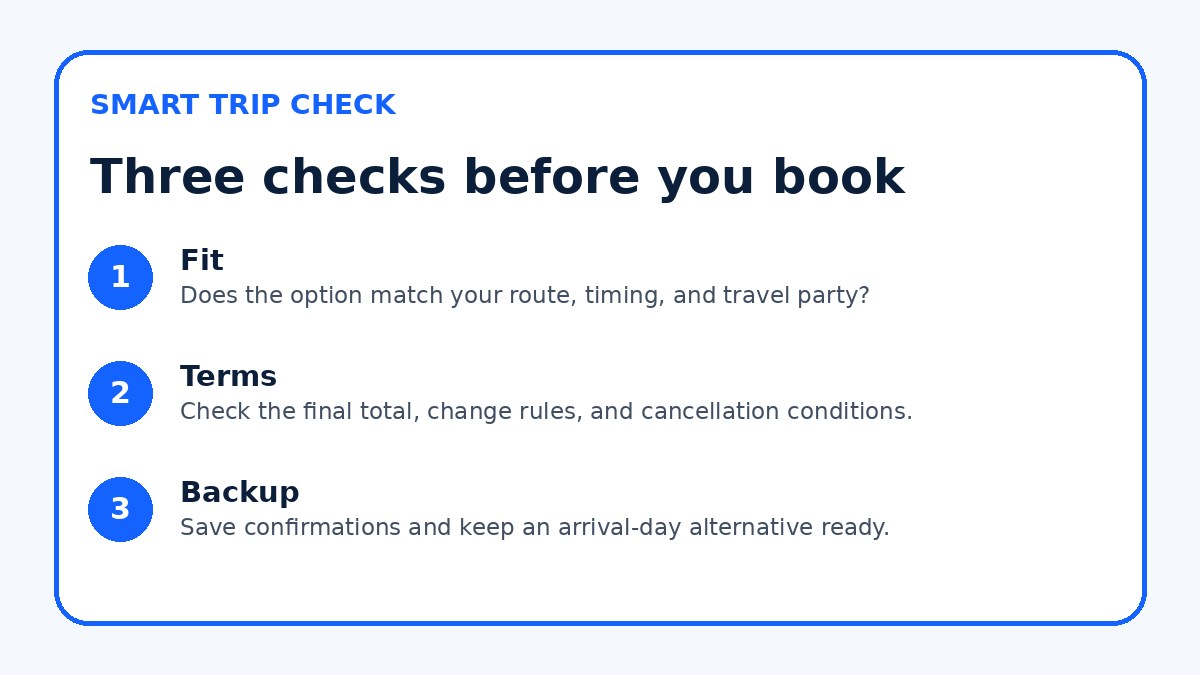
Hotel booking check before payment
- Map your top three daytime activities and draw walking/transit routes from each candidate neighborhood.
- Confirm Wi‑Fi, workspace, and quiet-room availability on the hotel’s official booking page.
- Read the cancellation and deposit policy thoroughly and note any nonrefundable windows.
- Check recent guest photos and reviews for current noise, cleanliness, and room condition clues.
- If arriving late, message the property about late-check-in procedures and how to collect keys.
- Save screenshots of the booking terms and any direct messages from the hotel after you reserve.
Booking terms and last checks before you confirm
Before you press reserve, verify three things on the hotel’s booking page: cancellation and change policies, what fees and taxes the property will add, and the exact room type and any bedding/layout specifics. Policies and service offerings change frequently—don’t assume breakfast, parking, or early check-in are included unless they’re explicitly listed on the confirmation page. If you’re comparing through an online travel agency, open the hotel’s direct page as well to reconcile differences in stated policies and to check deposit rules or identity verification requirements.
Also make a habit of checking recent guest photos and a few recent reviews to confirm the room photos match reality and that reported noise or maintenance problems are not current. If you have special needs—mobility accessibility, late arrival, or dietary restrictions—contact the property directly after booking and save any written confirmations. Trip.com can be a place to compare current availability, but always verify final terms on the property or booking provider page before completing payment.
Hotel Guide questions travelers ask
Which Boston neighborhood is best for solo travelers who want nightlife and safety?
For solo travelers balancing nightlife and safety, Back Bay and the Seaport offer many dining and late-night options while maintaining well-lit streets and regular transit. Back Bay’s grid makes late-night walks straightforward, with restaurants and transit nearby; the Seaport has modern streets and a compact evening scene. Beacon Hill is quieter and picturesque but has narrower sidewalks and fewer late-night venues, so it’s better for calmer evenings. Always check how you’ll get back from late-night venues: note MBTA schedules and whether ride apps work well in your chosen area.
How far should I prioritize proximity to subway stations when selecting a Boston hotel?
Proximity to an MBTA Green, Red, or Orange Line station reduces daily friction, especially for trips that cross the Charles River or head to distant neighborhoods. Aim to be within an easy 5–12 minute walk of a station if you expect to rely on transit; this keeps transfers and waiting time minimal. If most of your plans are within walking distance, prioritize walkability and streetscape instead. Verify actual station entrances on a map—some stations have multiple exits that change your walking time significantly.
If I need a quiet room to work, what specific features should I request?
Ask for a room on a higher floor away from elevators, street-facing windows, and mechanical rooms. Request a confirmed desk or workspace and verify Wi‑Fi speed and any business center hours. If available, ask the hotel for soundproofed or ‘quiet’ room types and check whether housekeeping schedules might interrupt your work. After booking, message the property to reconfirm your quiet-room preference in writing so staff can note the request and advise on the best room options.
Final decision note
Choosing the right Boston neighborhood first makes it far easier to find a hotel that fits your solo trip. Match where you’ll spend most of your daytime and evening hours to a neighborhood’s strengths—walkability, calm streets, or transit links—and then pick a room that supplies the comfort you need: bed quality, sound control, workspace, and reliable Wi‑Fi. Use the checklist to map routes, confirm amenities, and verify booking terms on the final provider page. With a clear neighborhood shortlist, you can confidently compare current Boston hotels and select a room that minimizes daily friction and maximizes comfort.
Continue planning
Check current options and final conditions
Use the provider page to confirm live availability, the final total, cancellation terms, and every condition that matters to your trip.
This evergreen planning guide was created with AI-assisted drafting and a structured quality review. It does not display live prices, schedules, availability, visa guidance, or provider rankings. Verify current details before booking. Some links are affiliate links; we may earn a commission at no additional cost to you.