If you’ve spent time in Taipei with more bags than you arrived with, the most useful decision in the first hour after landing is simple: pick the transfer option that fits your luggage volume, mobility needs, and tolerance for extra coordination. Focus on three immediate questions: how many large suitcases and carry-ons are you carrying, are you traveling as a solo passenger or a group, and how comfortable are you with walking between modes (train to taxi) while managing bags? This article gives the plain answer up front, then walks through tradeoffs and planning checks. Whether you aim to save money, avoid stairs, or guarantee a vehicle that fits an oversized bag, use the sections to decide, prepare a clear meeting point, and verify vehicle and drop-off details before you confirm.
Check options for your arrival details
Use your flight, luggage, party size, and accommodation address to compare current choices.
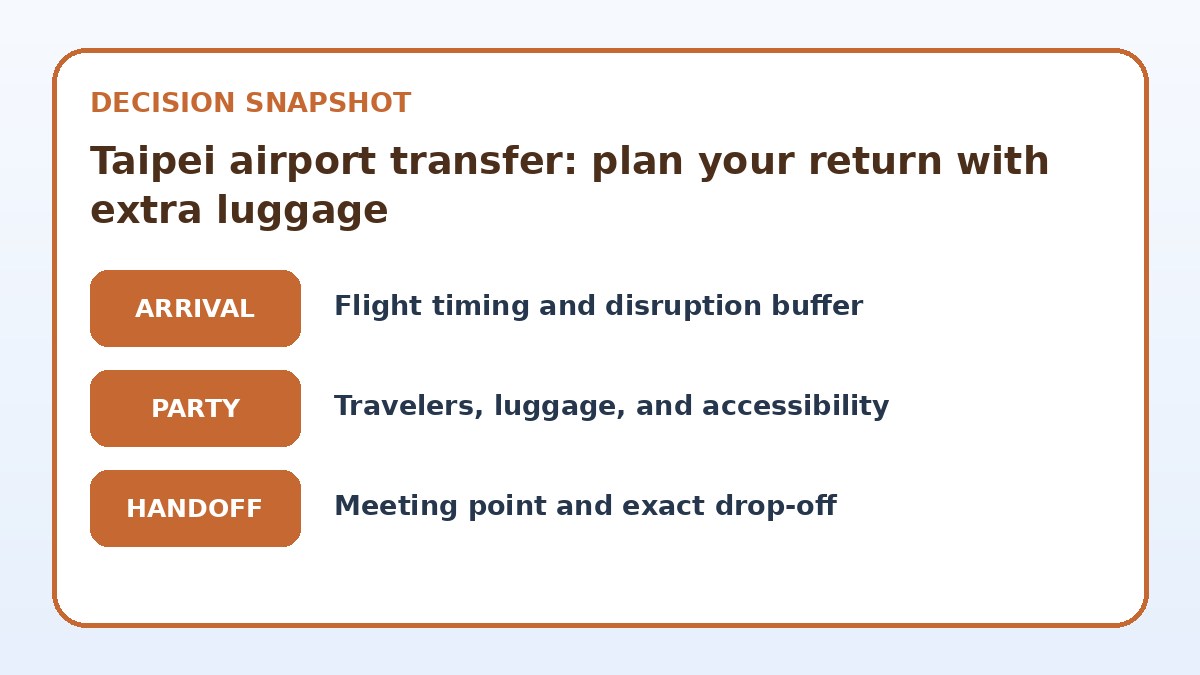
Match luggage and party size to a transfer type
Start by counting bags and measuring the big items. Note the number of large suitcases, awkward items (bikes, surfboards, ski bags), and the number of people who can carry bags. This simple inventory tells you whether a single taxi will suffice, whether a minivan or estate car is needed, or whether a driver who helps load and unload is worth paying extra for. Also consider whether any travelers have mobility needs—wheeled walkers, strollers, or limited ability to carry luggage—because that changes the type of vehicle and the amount of help you require.
Next, match that inventory to realistic vehicle types available in Taipei. A single large suitcase plus a roller bag and one person usually fits in a standard taxi if trunks are free; several large suitcases push you toward a larger taxi/minivan or a pre-booked private transfer with guaranteed cargo capacity. If you’re traveling as a family or with bulky sports equipment, prioritize a vehicle advertising trunk or roof capacity and explicit assistance with loading. Confirm the vehicle type and number of suitcases the provider accepts before you book.
Arrival details to have ready
- Count large suitcases and awkward items, and note their approximate dimensions to communicate to the transfer provider.
- Confirm whether your chosen vehicle type explicitly accepts your number of suitcases and any oversized items on the provider’s booking page or in writing.
- Save and share your flight number and expected arrival terminal with the transfer provider so they can track delays and adjust pickup times.
- Ask and record the exact meeting point name, exit number, or landmark inside the terminal and take a photo to send to your driver if needed.
- Check with your accommodation for the closest practical vehicle drop-off and give that address to the transfer company before booking.
- If arrival time is late or uncertain, confirm the provider’s late-arrival waiting policy and emergency contact number in writing.
Plan for late or disrupted arrivals
When flights are delayed, the best-laid transfer plan can unravel. Before you book, check the provider’s policy for extended waits, flight-tracking procedures, and after-hours pickups. For private transfers, ask whether the driver monitors real-time arrivals and how long they will wait without extra charge; for shared shuttles or meet-and-greet services, verify cutoff times and whether a late pickup converts to a private surcharge. If your provider’s page doesn’t state these policies, message or call and get a written confirmation to avoid surprises.
If disruption is likely—tight connections, weather concerns, or multiple flight legs—build slack into your plan. Choose an option that offers flexibility even if it costs more: a later pickup window, easier rebooking, or a service with multiple meeting points. Keep the provider’s emergency contact saved, and share arrival updates mid-flight if you can. This preparation minimizes the chance you’ll arrive with heavy luggage and no practical way to your accommodation.
Match the transfer to your arrival
| Arrival approach | Best for | Detail to verify |
|---|---|---|
| Public rail plus short taxi or shuttle | Small luggage and solo or light groups | Requires two transfers and carrying bags on/off trains and stations |
| Standard taxi hailed at arrivals or pre-booked via app | Up to two large suitcases and quick door-to-door trips | May be tight on trunk space and uncertain when oversized items are present |
| Pre-booked private transfer (van or estate car) | Groups, families, or travelers with multiple large suitcases | More expensive but minimizes handling and offers guaranteed vehicle size |
| Shared airport shuttle or group transfer | Budget-conscious travelers with moderate luggage and flexible timing | Can include stops, longer travel time, and limits on oversized items |
Make the meeting plan clear
Check the final pickup instructions, waiting conditions, and exact drop-off coverage.
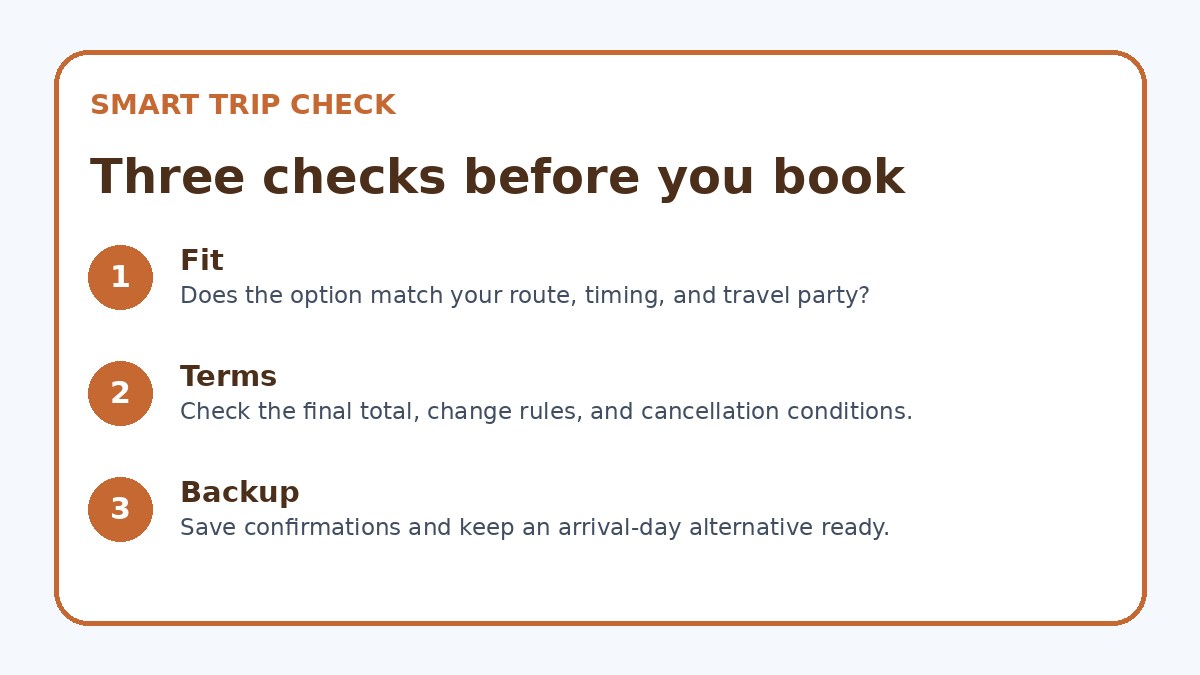
Clarify meeting points and luggage handling
Meeting-point clarity matters more when you’re dealing with many bags. For private pickups, set a specific, easily identifiable spot: a terminal exit number, a named café, or a baggage claim carousel number. State whether you will be inside customs/immigration, outside at arrivals curb, or at a designated meeting area; confirm whether the driver will meet you inside the terminal or at curbside. Provide the driver your color of luggage or a photo if available—this speeds identification and reduces the time you’re managing multiple bags in a crowded hall.
For shared services or returning guests, ask where the vehicle will load (curbside, designated bus bay, or underground area) and whether there are stairs or lifts involved. If the meeting point requires a long walk or escalator, consider whether everyone can manage that with their bags. If your hotel’s entrance isn’t suitable for large vehicles, pre-arrange a nearby accessible drop-off and send that address to the transfer provider so they can plan door-to-door service effectively.
Check destination-side drop-off fit before booking
The final step before you confirm any Taipei airport transfer is to confirm the drop-off location fits your accommodation’s access. Hotels and apartments in older neighborhoods may have narrow lanes, limited curbside access, or pedestrian-only streets that prohibit direct vehicle access. Ask your accommodation what they recommend as the closest practical drop-off, and pass that precise instruction to the transfer company. If they cannot reach your door, identify a safe, nearby landmark or street corner for easy unloading.
Also consider entry logistics at your lodging—does the property have porters who will take luggage from curb to room, or will you need to carry everything inside yourself? If elevators are small, or if rooms sit up several flights, you may want a transfer service that includes porter help. Confirm any special local restrictions (low bridges, short-term loading restrictions) with the provider and on their booking page; when in doubt, request the provider’s written drop-off procedure and planned alternative if their vehicle can’t reach the door.
Airport Transfer & Local Mobility questions travelers ask
What should I check first when booking a Taipei airport transfer with lots of luggage?
First, count how many large suitcases and awkward items you have and how many people can help carry them. Use that inventory to pick a vehicle size—if you have more bags than a standard sedan’s trunk holds, target a larger taxi, pre-booked van, or private transfer that explicitly states luggage capacity. Then confirm meeting-point and drop-off access with both the transfer provider and your accommodation. Finally, verify the provider’s policy on delays and baggage assistance so you aren’t surprised on arrival.
Can I rely on standard taxis in Taipei when I have oversized or many suitcases?
Standard taxis can work for travel with one or two large suitcases plus a carry-on, but they become unreliable with multiple large bags or long, awkward items. Trunk space varies and you may be charged or left waiting for a larger vehicle. To avoid uncertainty, either pre-book a vehicle that lists luggage capacity or choose a private transfer service and get confirmation that your baggage will fit. If you plan to hail a taxi, be prepared to wait for a larger cab or split into multiple vehicles if necessary.
How do I handle a pickup if my flight is delayed or I miss my connecting flight?
Choose a transfer provider that monitors flight status and publishes a clear late-arrival policy. Share your flight number so they can track changes, and save the provider’s contact number for re-coordination if plans change. If your original option won’t wait or has cutoff times, consider a flexible fallback: local taxi apps, airport counters, or hotel-arranged pickups. Before booking, know exactly how long the driver will wait and whether an extra fee or rebooking is required for significant delays.
Final decision note
A clear, testable plan is the best defense against the headache of returning to Taipei Taoyuan or Taipei Songshan with extra luggage. Start by tabulating your bags and choosing a vehicle that fits the load and the mobility of your party. Verify meeting-point details and drop-off access with both your provider and accommodation, and confirm the provider’s late-arrival and baggage-handling policies in writing. For travelers juggling many large items, a pre-booked private transfer or larger taxi minimizes handling and risk; for lighter loads, rail plus a short taxi can save time and money. If you want to compare current providers and availability, consider checking Trip.com among other booking platforms and always double-check the provider’s final booking page for vehicle size, wait-time rules, and pickup instructions before you confirm.
Continue planning
Check current options and final conditions
Use the provider page to confirm live availability, the final total, cancellation terms, and every condition that matters to your trip.
This evergreen planning guide was created with AI-assisted drafting and a structured quality review. It does not display live prices, schedules, availability, visa guidance, or provider rankings. Verify current details before booking. Some links are affiliate links; we may earn a commission at no additional cost to you.