Practical answer up front: if you want classic skyline views and quick ferry and MTR connections, stay in Tsim Sha Tsui; if you prefer business-district convenience with higher-end dining and short rides to the Peak, pick Central/Sheung Wan; for budget-friendly options and street food culture, choose Mong Kok or Sham Shui Po in Kowloon; Causeway Bay is best if shopping and lively neighborhood energy are your priorities. Each area has different advantages for first-time visitors — transit access, walking friendliness, evening atmosphere, and hotel styles vary sharply. Use these quick criteria (transit hub, walking ease, crowds, and nightlife) to narrow choices, then compare actual hotel locations on a map against the specific attractions and MTR lines you plan to use. Below I explain the tradeoffs and how to decide based on your travel priorities.
Central & Sheung Wan: convenience and classic Hong Kong business vibes
Central and Sheung Wan sit on Hong Kong Island where colonial-era streets meet glass towers. Stay here if you value short rides to the Peak Tram, easy connections to the Airport Express and major MTR lines, and access to high-end restaurants and rooftop bars. Hotels range from global luxury brands to boutique properties; rooms tend to be smaller than comparable international standards but you gain fastest access to major ferries, business districts, and fine-dining scenes. Evenings can be busy on weekdays thanks to office crowds, and weekends bring a mix of tourists and local shoppers.
Tradeoffs include higher room rates and a cheaper-feeling experience in terms of square footage: any savings usually trade off with smaller rooms or simpler layouts. If you plan many day trips, check proximity to Central MTR, the Star Ferry piers, and the Peak Tram terminus on a map before booking—walking links and block-by-block convenience matter here. Verify hotel specifics like bed size, free Wi‑Fi, and cancellation policies on the provider’s final booking page; the general neighborhood advantages don’t guarantee a specific hotel facility or view.
Tsim Sha Tsui: waterfront views and tourist-focused convenience
Tsim Sha Tsui (TST) in Kowloon is a popular first-time choice because it puts many classic attractions within reach: the Avenue of Stars promenade, museums, nightly light displays, and ferries to Central. Many TST hotels advertise harbor or skyline views; however, view availability varies by hotel and room category, so confirm the room type and view specification on the booking page. The area is walkable to shopping streets, large malls, and cultural venues, and it’s a short MTR ride to Mong Kok and other Kowloon neighborhoods for street markets and local dining.
Expect TST to be tourist-oriented and often busy, especially near the promenade and main shopping streets. Noise and crowds are part of the tradeoff for the location’s convenience—if you need quiet for sleep or zoom calls, prioritize hotels on side streets or higher floors and confirm noise-mitigation features directly with the property. Transportation is straightforward here, but validate the nearest MTR exit and walking time to the hotel on your map to avoid surprises after arrival.
| Approach | Best for | Tradeoff to check |
|---|---|---|
| Choose Tsim Sha Tsui | First-time visitors wanting iconic harbour views and museum access | More tourist crowds and potentially higher noise near the promenade |
| Choose Central/Sheung Wan | Business travelers and those who want upscale dining and Peak access | Higher hotel rates and weekday bustle from offices |
| Choose Causeway Bay | Shoppers who value nonstop retail options and easy island transit | Crowds and street noise, especially on weekends and holidays |
| Choose Mong Kok or Sham Shui Po | Budget-conscious travelers seeking markets and street-food culture | Smaller rooms, older buildings, and a busier street atmosphere |

Causeway Bay: retail intensity and neighborhood energy
Causeway Bay is Hong Kong Island’s retail nucleus, packed with department stores, boutiques, and food stalls. It’s a great option if you plan long shopping days, want lots of restaurant choices nearby, and enjoy constant street energy. MTR stations give you fast links to Central and the rest of the island, and hotels range from international brands to apartment-style stays that can suit travelers who want more space.
The tradeoff is that Causeway Bay can feel loud and crowded, with pedestrian traffic high throughout the day and into the evening. If window views or a restful night are priorities, research the hotel’s exact street address to avoid rooms that face busy thoroughfares. Also consider whether you value walking to attractions or shorter transit time — Causeway Bay is convenient for island activities, but it’s a longer MTR ride to Kowloon museums or the waterfront promenades than Tsim Sha Tsui.
Before you book
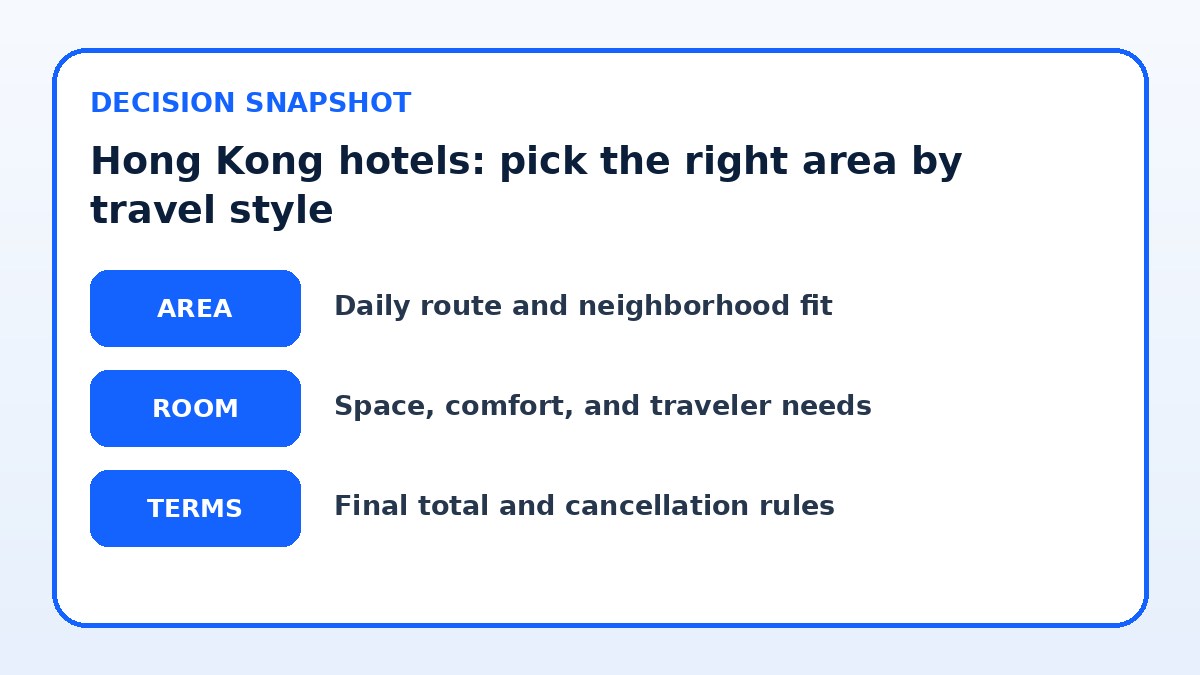
- Map the hotel address against your must-see sites and the nearest MTR station before booking
- Confirm the room type, bed size, and view description on the hotel’s final booking page
- Check transportation options from the airport to your chosen neighborhood and compare travel time estimates
- Read recent guest comments about noise and cleanliness to set realistic expectations
- If mobility is a concern, verify elevator access, step-free routes, and luggage handling with the property
- Look up cancellation and prepayment terms on the provider’s page and save confirmation details
Mong Kok & Sham Shui Po: budget and authentic local life
For first-time visitors who want street markets, affordable eats, and a more local feel, Mong Kok and Sham Shui Po in Kowloon are strong contenders. These neighborhoods have some of the best street food, electronics and fashion markets, and compact hotels and guesthouses that are easier on the budget. Walking here is lively and sensory: neon signs, market stalls, and local shops are part of the experience. MTR and bus links are plentiful, and many attractions in nearby Kowloon are within a short ride.
Expect smaller hotel rooms and simpler properties compared with Hong Kong Island’s luxury options. Noise, narrow streets, and the sensory intensity of markets are typical tradeoffs. If small rooms are acceptable for the budget savings and neighborhood character, verify bed size, room windows, and elevator access on a hotel’s booking page—some properties are in older buildings with different accessibility standards. Consider proximity to the nearest MTR exit for smoother arrivals and departures.
Frequently asked questions
Which Hong Kong neighborhood is most central for sightseeing as a first-time visitor?
Central/Sheung Wan and Tsim Sha Tsui are the most central for a typical first-time itinerary. Central gives you quick access to the Peak, many tram and ferry links, and an easy starting point for island neighborhoods. Tsim Sha Tsui places you on the Kowloon side with close access to the harbourfront, museums, and ferry crossings to Hong Kong Island. Decide whether you prefer island-side dining and rooftop bars (Central) or harbour views and promenade walks (Tsim Sha Tsui).
Are hotel rooms much smaller in Hong Kong than in other cities?
Yes, many Hong Kong hotel rooms are smaller than rooms in many Western cities, particularly in popular neighbourhoods. Luxury properties may offer competitive space, but even then rooms can be compact; boutique and budget hotels often prioritize location over square footage. If room size matters, check advertised room dimensions or photos, and confirm bed size and storage on the booking page. Consider serviced apartments or suites if you need extra space for families or longer stays.
How should I balance budget and location when booking Hong Kong hotels?
Start by listing your non-negotiables: proximity to specific attractions, shopping, quiet for sleep, or nightlife. If transit convenience is critical, prioritize hotels adjacent to an MTR station even if they cost more; if saving money is the top goal, Mong Kok and Sham Shui Po usually offer cheaper options but expect smaller rooms and more street noise. Always map the hotel’s street address to confirm walking times, and check the final booking page for amenities you care about, such as Wi‑Fi, breakfast, and cancellation policy.
Final planning note
Picking where to stay in Hong Kong depends on what you want from your first visit: skyline views and promenade walks (Tsim Sha Tsui), business-district convenience and island access (Central/Sheung Wan), nonstop shopping energy (Causeway Bay), or authentic markets and savings (Mong Kok/Sham Shui Po). Use transit proximity, walking convenience, noise tolerance, and room size as your main decision criteria. Before you commit, map the hotel’s address against your itinerary, confirm room details and cancellation terms on the booking page, and check recent guest feedback for noise and cleanliness. If you want to compare current availability quickly, Trip.com is one option to view listings — but always confirm key facts on the hotel’s own booking page before finalizing.
Continue planning
Check current options and final conditions
Use the provider page to confirm live availability, the final total, cancellation terms, and every condition that matters to your trip.
This evergreen planning guide was created with AI-assisted drafting and a structured quality review. It does not display live prices, schedules, availability, visa guidance, or provider rankings. Verify current details before booking. Some links are affiliate links; we may earn a commission at no additional cost to you.