Short answer: many first-time visitors do fine without a car if you plan to stay mostly central in Auckland, but renting one makes sense for day trips to beaches, Waiheke or the Coromandel, and when your itinerary is spread across the region. Choose based on where you sleep, how many people are traveling, and which day trips you want. Auckland’s central areas have compact public transport, ride-hailing, and walkable neighborhoods; parking and inner-city traffic can be time-consuming and costly. If you want the freedom to chase remote coastal viewpoints, vineyards, or multi-stop routes on your own timetable, a car changes the experience. Below are practical tradeoffs and decision criteria so you can weigh convenience against cost, local driving conditions, and the kinds of places you plan to visit.
When a rental car gives you clear advantages
A car is most useful when your itinerary includes several places that are difficult to reach by public transport or when you value flexible timing. Examples include exploring the west coast beaches beyond Piha, taking a full day on Waiheke Island with a car, driving south toward the Coromandel Peninsula, or traveling between multiple accommodation bases. A vehicle reduces dependence on fixed tour schedules and lets you stop at lookout points, cafes and small attractions along the way without waiting for connections. If you’re traveling with young children, a car also simplifies luggage and gear logistics — car seats, strollers and picnic supplies are easier to manage when you control the rhythm of the trip.
Another advantage is time efficiency on multi-stop days. Public transport and ferries often require transferring between modes; owning a car shortens door-to-door travel time on routes without frequent services. For travelers on a tight schedule or who prefer exploring at dawn and dusk, driving provides independence. Remember that if you plan to combine driving with a ferry to an island, you must check provider rules about vehicle decks and booking policies; confirm those details on the ferry operator’s official booking page before finalizing a car rental that depends on island access.
When to skip the car and use alternatives
If most of your time will be spent in central Auckland — the CBD, Viaduct Harbour, Ponsonby, Parnell, and the waterfront — public transport, ferries and short taxi or ride-hail trips cover most needs. Walking between central neighborhoods is pleasant and often faster than driving once you account for parking. Regular buses, trains and ferries connect main tourist sites, and organized day tours reach farther destinations without you having to navigate. Staying centrally can reduce stress, since you avoid city parking constraints and commuting through congested arterial roads.
Travelers on a tight budget can often save by combining public transport with a few single-purpose taxi rides for late nights or transfers with luggage. If you prefer guided experiences — wine tours, surf lessons, or wildlife cruises — these usually include transport from central pick-up points, making a rental redundant. Also consider the hassle of finding and paying for parking near popular attractions; if you expect to park frequently in busy neighborhoods, the time and expense may outweigh the flexibility a car gives you.
| Approach | Best for | Tradeoff to check |
|---|---|---|
| No rental — public transport, rides and tours | Solo travelers, couples, or short stays focused in central Auckland | Less flexibility for remote day trips and early starts; depends on schedules and tour availability |
| Rent for day trips only | Visitors based centrally who want occasional regional exploration | You’ll still avoid city parking long-term but must arrange pick-up and drop-off logistics |
| Full trip rental | Families or small groups with multi-base itineraries across greater Auckland | Higher total cost and parking hassles, but maximum independence and luggage convenience |
| Hybrid: rental for part of stay + public transport | Travelers wanting both central ease and occasional independent drives | Requires extra planning to coordinate rentals with accommodation and ferry plans |
Key decision criteria: cost, time, and comfort
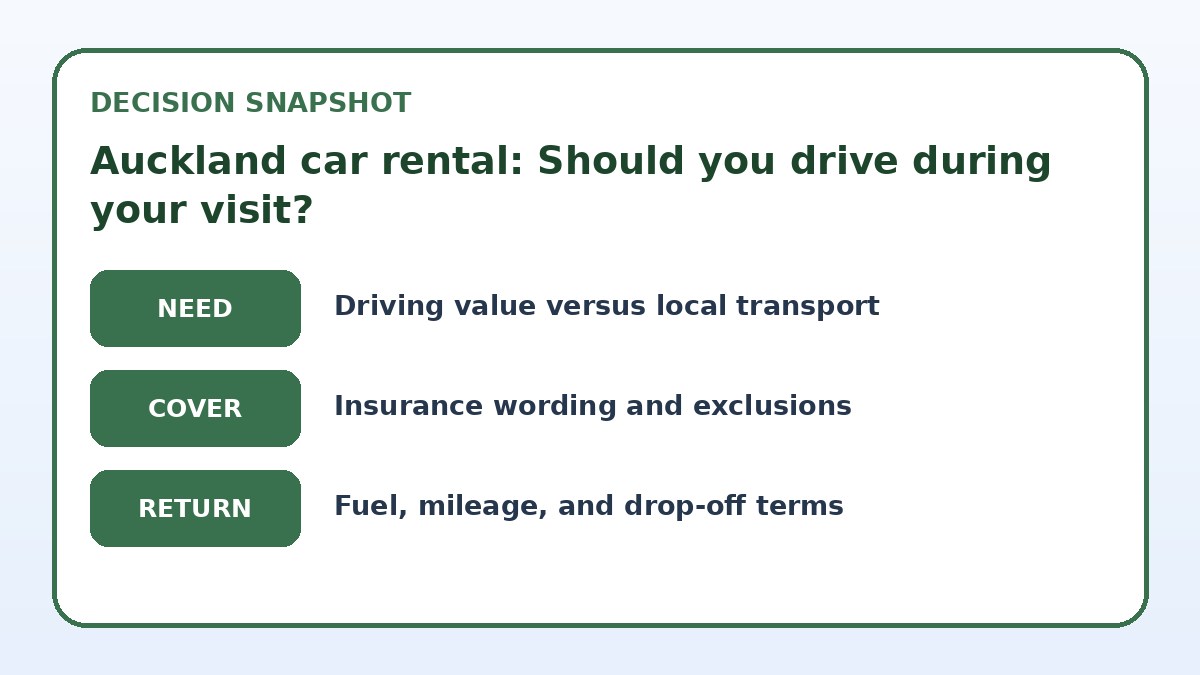
Think beyond the headline rental rate. Add fuel, parking, tolls, insurance options, and any one-way or airport collection fees to estimate the real cost. Compare that to taxi, ride-hail, and public transport fares for the specific journeys you plan. Also factor in the time you’ll save or lose: driving can be faster between dispersed coastal and rural points but slower for short trips inside the city due to traffic and parking. For multi-person groups, splitting the vehicle cost often makes a rental more economical than multiple fares, while solo travelers may find public transit cheaper and less stressful.
Comfort and convenience are equally important. Consider luggage volume, mobility needs, and whether you’ll be carrying outdoor equipment like surfboards or bicycles. If you want to chase sunrise or sunset viewpoints without depending on timetables, the car wins. If you prefer avoiding unfamiliar driving conditions, heavy traffic, and narrow rural roads, rely on guided transfers or public transportation. Be honest about your confidence driving on left-hand roads, in roundabouts, and on two-lane coastal routes — if uncertain, choose alternatives or book an automatic and ensure rental provider’s insurance and license checks are clear.
Before you book
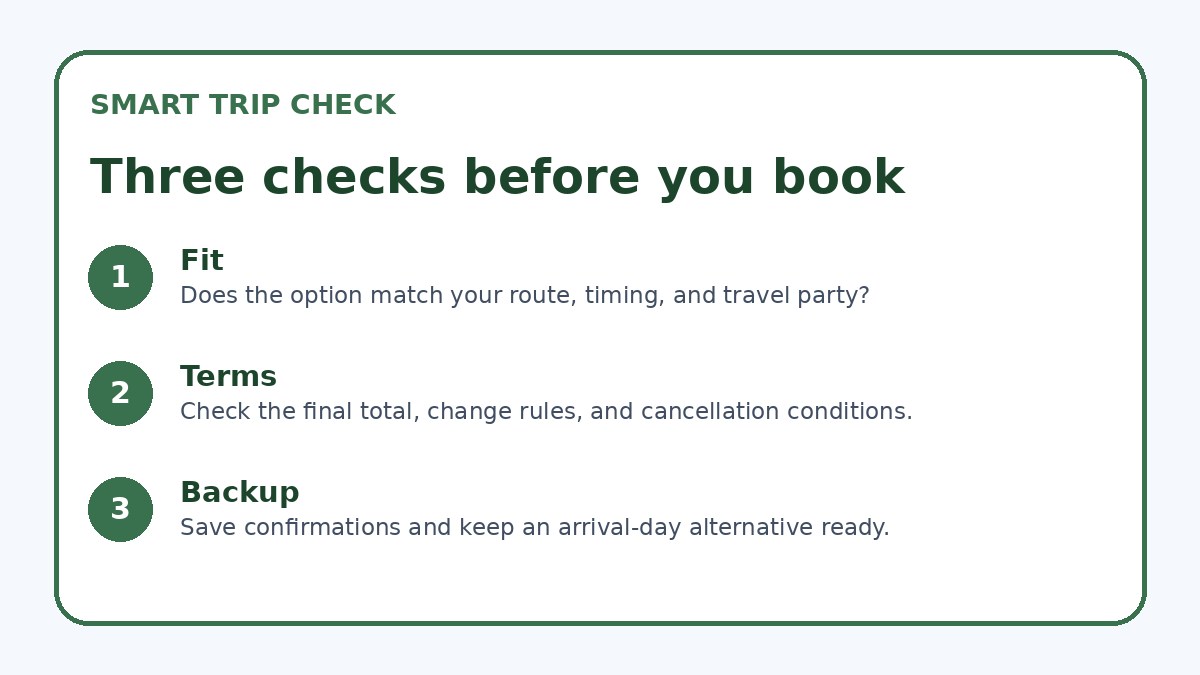
- List your must-see day trips and mark whether each is feasible by public transport, tour, or requires a car.
- Check rental pick-up/drop-off hours and whether after-hours collection is available if you have late arrival or early departure.
- Confirm vehicle rules for island ferries or regional roads on the official ferry and road authority pages before booking.
- Compare total estimated costs including fuel, parking, insurance excess and any airport surcharges before choosing a car.
- Reserve any required extras—child seats, roof racks or additional drivers—on the rental booking page and check final charges.
- Read the rental contract’s insurance and roadside assistance terms and take photos of the car on pick-up and drop-off.
Practical checks before you book a car
Verify pick-up and drop-off locations and opening hours, especially if you land late or plan an early departure. Airport desks are convenient but may add surcharges; city locations can be cheaper but may require a transfer. Confirm whether the car class you want is actually available on your rental confirmation because inventories fluctuate; check the provider’s final booking page for model availability, fuel policy, mileage limits, and whether cross-border or island travel is permitted. If you need extras such as child seats, GPS or roof racks, reserve them in advance and check the rental company’s final charge details.
Double-check insurance inclusions and what is excluded — collision damage waivers, excess amounts, roadside assistance and theft cover vary significantly between providers and booking platforms. If you plan to take ferries with a vehicle, verify ferry operator rules on vehicle dimensions, reservations and schedules on the ferry’s official site; do not assume your car rental booking guarantees a ferry space. Confirm driver age restrictions, additional driver fees, and the process for roadside help or accidents so you won’t be scrambling for contact numbers mid-trip.
Frequently asked questions
Is it hard to drive in Auckland for someone used to right-hand traffic?
Adjusting to left-hand driving and roundabouts takes attention but is manageable for most competent drivers. Start with short trips in lower-traffic hours to build confidence; choose an automatic transmission if you normally drive an automatic. Keep to posted speed limits and allow a larger following distance while you adapt. Use GPS for navigation, but prepare for narrow suburban streets and multiple roundabouts in some neighborhoods. If you’re uncomfortable after a trial drive, consider returning the car and switching to guided tours or ride-hailing for the remainder of your stay.
Can I park easily near Auckland’s main sights and neighborhoods?
Parking availability varies by neighborhood and time of day. Central spots near the waterfront, Viaduct, and major shopping streets may be limited and metered; long-term parking often requires paid lots or garages. Suburban areas typically offer more free street parking but check local signs for resident-only restrictions. If your accommodation includes parking, factor that into the cost-benefit decision. For popular beaches and wineries, arrive early in the day to secure a spot. Always verify exact parking rules and costs on the city council or venue pages rather than assuming street parking is free.
Do I need extra insurance or to buy damage waivers from the rental company?
Insurance needs depend on your personal situation and the policy offered by the rental company. Many travelers use a combination of the rental company’s options and coverage from their credit card or travel insurance, but limits, excess amounts and exclusions differ. Before declining any waivers, compare what your card or policy actually covers for overseas rentals and collision damage. Confirm the rental provider’s excess amount and whether roadside assistance is included by checking the final booking page. If you have doubts, purchasing additional cover can reduce stress, though it adds to the total rental cost.
Final planning note
Deciding whether an Auckland car rental fits your first visit comes down to the trade between flexibility and convenience versus cost and parking hassles. If your plans are centered on the CBD with a handful of guided experiences, public transport and rides can simplify logistics and often save money. If you want to explore multiple coastal routes, islands, or scattered regional highlights on your own timetable — especially with family or gear — a car can be liberating. Make the choice after mapping your actual itinerary, calculating total costs, checking ferry and insurance rules on official booking pages, and honestly assessing your comfort with local driving conditions.
Continue planning
Check current options and final conditions
Use the provider page to confirm live availability, the final total, cancellation terms, and every condition that matters to your trip.
This evergreen planning guide was created with AI-assisted drafting and a structured quality review. It does not display live prices, schedules, availability, visa guidance, or provider rankings. Verify current details before booking. Some links are affiliate links; we may earn a commission at no additional cost to you.