
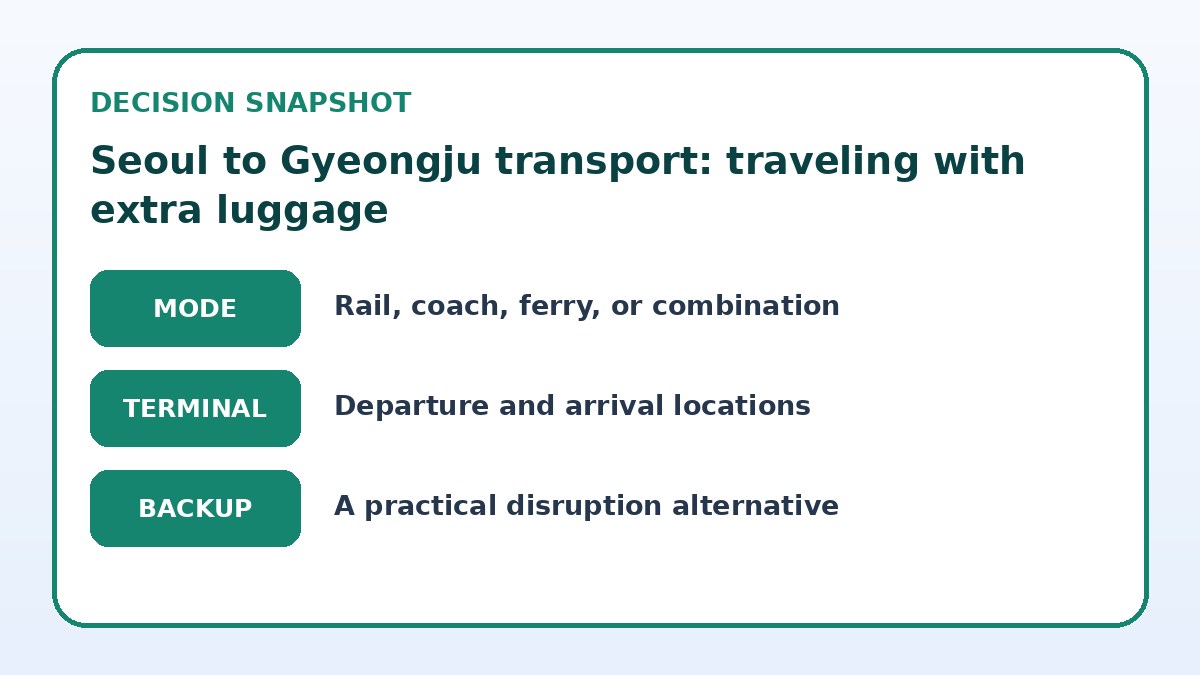
If you’re heading from Seoul to Gyeongju with more or bulkier luggage than usual, prioritize options that reduce handling and transfers. The most practical approaches are taking a train with dedicated luggage space, using a highway bus if you can stow items underneath, or combining public transport with a luggage-forwarding service to send bags ahead to your hotel. Decide by balancing door-to-door convenience against cost and schedule flexibility: fewer transfers mean less stress but may require booking specific seats or services. Below you’ll find step-by-step choices, what to verify on provider pages, and realistic tradeoffs to help you pick the smoothest way to travel with extra bags on this route.
See current options before you compare the details
Availability and final conditions change. Open Trip.com now or keep reading for the practical comparison.
Train options and on-board luggage reality
Trains between Seoul and Gyeongju can offer the most comfortable ride for travelers with sizeable luggage since you stay with your bags and avoid repeated loading and unloading. High-speed or intercity services sometimes provide dedicated luggage racks, overhead space, and an area near doors for suitcases; however, carriage layouts vary by train type. When booking, look for seat maps that show luggage zones and pick seats adjacent to vestibules if available. If train operators require seat reservations, reserving early ensures you get the configuration that fits your baggage needs.
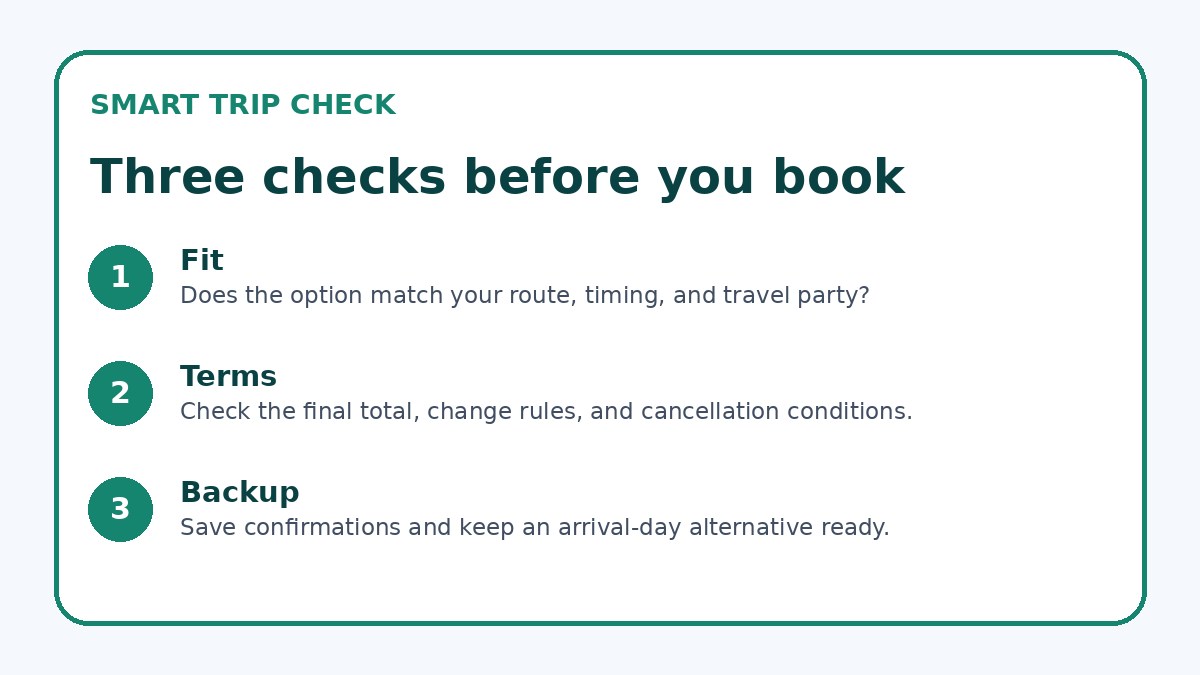
Before you book, verify the carrier’s official luggage rules on their booking or information page—measurements, weight limits, and any requirement to purchase additional space may differ. If you have oddly shaped or oversized items, contact the carrier’s customer service to confirm whether those items are permitted and if any special handling is needed. Also check station facilities where you board and disembark; some stations have elevators and wide platforms that make it far easier to move heavy cases than older, narrower stations do.
Buses and practical considerations for bulky bags
Highway buses between Seoul and Gyeongju typically have large underfloor cargo bays that accept several large suitcases, which keeps the passenger area free and reduces the stress of carrying bags through terminals. Loading and unloading still falls to the traveler or a porter service at the terminal, so plan for safe lifting and allow extra time at departure and arrival. If you’re traveling with fragile or very valuable items, stowing them under a bus carries some risk; keep irreplaceable items with you in the cabin.
Check the operator’s baggage allowances and handling policies on the booking page, because some services limit the number of free checked items or impose size restrictions. If you need assistance loading, see whether the terminal offers porter help or whether a ground agent can assist—this is especially important if you have mobility limits or unusually heavy bags. Finally, factor in the location of bus terminals relative to your Seoul departure point and Gyeongju destination: a cheaper ticket can become inconvenient if long taxi rides or transfers are needed with your luggage.
| Approach | Best for | Tradeoff to check |
|---|---|---|
| High-speed/intercity train with luggage zones | Travelers prioritizing comfort and keeping bags with them | May require seat reservation and limited dedicated space on some train types |
| Highway bus with underfloor storage | Budget-minded travelers with large but sturdy suitcases | You must load/unload at terminals and valuables should remain with you |
| Luggage-forwarding service | Those who want a light, transfer-free onboard experience | Requires lead time and coordination with delivery windows at both ends |
| Hybrid: forward big bags, take carry-on on train or bus | Travelers wanting speed and minimal onboard baggage | Extra cost for forwarding and planning to coordinate pickups |
Ready to check the option that fits your plan?
Use your exact dates and traveler details so the provider page can show the current total and conditions.
Luggage-forwarding and hybrid approaches
Luggage-forwarding services can drastically simplify door-to-door travel: you drop your bags at a collection point in Seoul and they’re delivered to your Gyeongju hotel or a designated pickup location. This removes the need to carry heavy cases on trains or buses and lets you travel light on board. Verify pickup and delivery windows because forwarding services often require lead time and may not deliver on the same day; also check what documentation or labels are needed and whether the service insures contents for loss or damage.
A common hybrid strategy is to send larger suitcases ahead while traveling with a carry-on that holds essentials for the transfer. That way you can use faster trains or buses without the burden of heavy luggage, and you maintain access to valuables and travel documents. Before committing, confirm the exact delivery address and hours with your accommodation, and check cancellation or change policies on the forwarding provider’s page to avoid surprises if your arrival time shifts.
Before you book
- Measure and weigh every bag; note any oversized items that might need special handling before booking transport.
- Check the transport provider’s official luggage rules and seat or carriage maps on their booking page for space and restrictions.
- Consider sending large suitcases with a reputable luggage-forwarding service and confirm pickup and delivery windows.
- Allow extra time at Seoul departure and Gyeongju arrival for loading, unloading, and possible porter assistance.
- Pack valuables, travel documents, and an overnight change into a carry-on that you keep with you on board.
- Confirm station access (elevators, ramps) at both ends and the distance from station to your accommodation to plan transfers.
Choosing by total door-to-door convenience
Assess your journey from origin door to final destination—include walking, stairs, elevator access, station layouts, and transfer complexity—to choose the approach that minimizes physical strain. If your Seoul accommodation or Gyeongju lodging is far from a train station, a direct bus that drops you closer to your hotel or a taxi for the final leg could be more convenient despite a longer ride. Factor in how many times you must pick up and set down luggage, because each handling increases fatigue and the chance of damage.
If budget, speed, and convenience conflict, list your priorities before you book: is it lowest effort, shortest travel time, or lowest cost? For many travelers with extra luggage, the time and stress saved by forwarding bags or choosing a single-vehicle trip outweighs monetary savings. Whatever you choose, double-check measurements and special-item rules on provider pages, and book services that allow easy adjustments if your plans or arrival times change.
Frequently asked questions
Can I bring oversized bags on Korean trains between Seoul and Gyeongju?
Policies vary by operator and train type, so check the carrier’s official luggage rules on their booking page before you book. Many intercity trains allow standard suitcases with no extra fee, but truly oversized or oddly shaped items might need special handling or pre-approval. If the provider’s site lists size or weight limits, measure and weigh your items to confirm they fit. For anything unusual, contact customer service listed on the operator’s page to request confirmation and to learn about any required documentation or advance notice.
Is it safe to check bags under highway buses instead of keeping them on board?
Most highway buses routinely carry checked luggage in underfloor bays and do so safely for standard suitcases, but regulated protections and handling practices differ. For fragile, high-value, or sentimental items, keep them in a carry-on and with you in the cabin. Always label bags clearly, keep a list of contents, and consider taking photos of items before handing them over. Verify the operator’s policy and whether terminals offer supervised loading or claim checks on their booking or information page.
How long in advance should I arrange luggage-forwarding for Seoul to Gyeongju?
Forwarding services typically require at least one day’s lead time, though precise windows vary by provider and service level. Consult the specific forwarding company’s service terms on their booking page to see collection deadlines, delivery windows, and whether same-day or overnight delivery is available. Also confirm that your Gyeongju accommodation accepts deliveries and note any check-in or reception hours that affect when you can receive your bags. If timing is tight, discuss expedited options and potential additional fees directly with the forwarding provider.
Final planning note
Traveling from Seoul to Gyeongju with extra luggage is mostly a question of how much handling you’re willing to do and how much coordination you want to arrange ahead of time. Trains offer the comfort of keeping bags with you and fewer transfers, buses give generous underfloor storage for heavy suitcases, and luggage-forwarding services remove the burden of carrying big bags at the cost of planning and extra coordination. Choose based on door-to-door effort: fewer transfers and forward delivery reduce strain, while budget options may require more lifting and time. Before you finalize anything, verify luggage limits, carriage layouts, station access, and pickup/delivery windows on the provider’s booking pages to ensure your chosen plan will work with your baggage.
Continue planning
Check current options and final conditions
Use the provider page to confirm live availability, the final total, cancellation terms, and every condition that matters to your trip.
This evergreen planning guide was created with AI-assisted drafting and a structured quality review. It does not display live prices, schedules, availability, visa guidance, or provider rankings. Verify current details before booking. Some links are affiliate links; we may earn a commission at no additional cost to you.