If you’re traveling solo between Sydney and Melbourne, the practical choice is to identify whether you value schedule flexibility or door-to-door convenience more. For many solo travelers, flexibility means being able to change plans without penalties and choosing times that reduce stress; convenience means minimizing transfers, airport transit time, and complicated logistics. Start by listing your non-negotiables: time of day, proximity to arrival transport, baggage flexibility, and how likely your plans might shift. Use that list to compare flight itineraries side-by-side: note total journey time, number of connections, and change/cancellation rules on the booking page. Finally, check transport options at each airport or terminal to understand the true time cost beyond airtime, and decide whether a slightly longer route with a late cancellation policy or a faster, rigid option better matches your solo travel style.
See current options before you compare the details
Availability and final conditions change. Open Trip.com now or keep reading for the practical comparison.
Assessing your solo-traveler priorities
Start by being honest about what will make the trip less stressful for you. Solo travel often means you handle every decision and every delay on your own, so consider whether you prefer the freedom to change dates or the simplicity of fewer steps from door to door. Ask yourself practical questions: are you on a business schedule with fixed meetings, or exploring with flexible dates? Will you carry carry-on only, or do you need checked luggage? Your answers determine whether flexible fare rules or a straightforward itinerary should carry more weight when comparing options.
Also weigh non-flight factors that matter when you travel solo: proximity of the arrival airport to your first destination, availability of reliable public transport at odd hours, and how comfortable you feel managing transfers and baggage. For some travellers, arriving slightly later but at a more central terminal reduces taxi time and stress. For others, a predictable schedule with guaranteed seat assignments and straightforward baggage handling is worth paying extra. Make a short pros-and-cons list to clarify which tradeoffs matter most before you start hunting fares.
Comparing direct and connecting itineraries
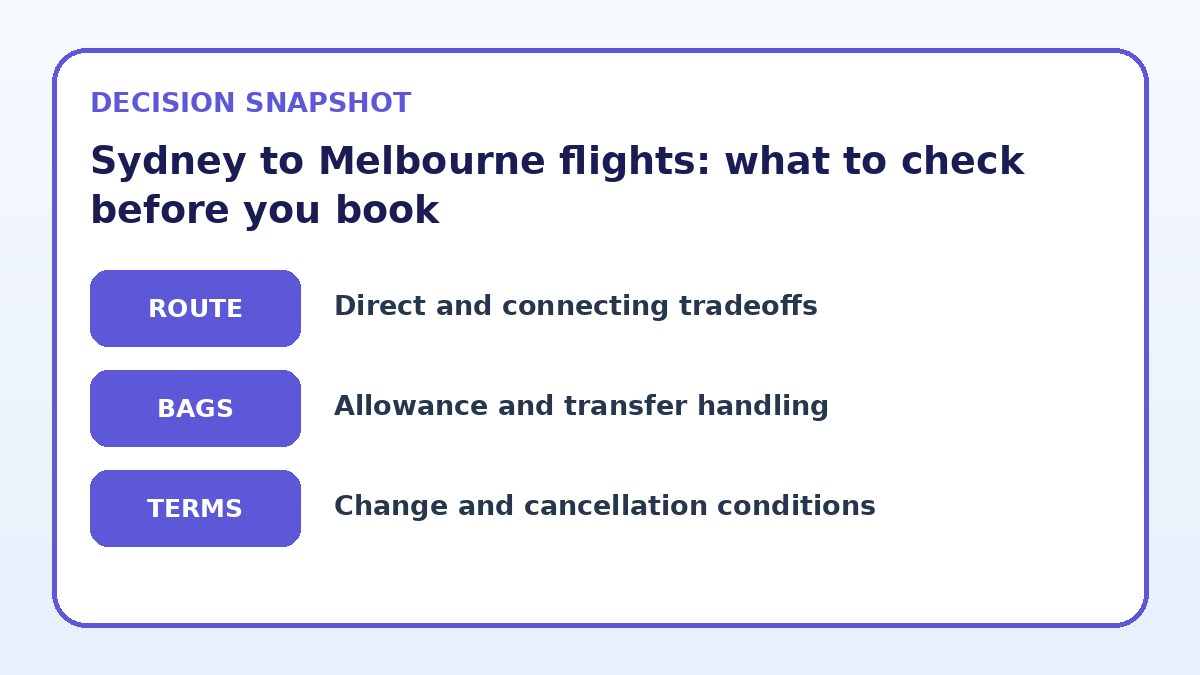
Direct flights reduce complexity: fewer chances for delays to cascade, simpler baggage handling, and less need to navigate unfamiliar airports. But direct services might be scheduled at less convenient hours or priced differently depending on demand. When direct options are available, compare their total door-to-door time and arrival airport against connecting alternatives. For solo travellers, a single direct flight that lands closer to your destination or offers better ground transport can often be the more convenient choice, even if the flight departs at an off-peak time.
Connecting itineraries can offer more departure options and sometimes better flexibility for changing dates, particularly if connections are on the same ticket with protected transfer times. However, connections introduce additional points of failure—missed flights, separate re-checks for baggage, or long layovers. When evaluating connecting options, check minimum connection times, whether baggage is checked through, and if you’d need to change terminals. Those details will determine whether a cheaper or more flexible connection actually saves time and stress.
| Approach | Best for | Tradeoff to check |
|---|---|---|
| Flexible fare with multiple departure choices | Travelers who expect plan changes and value the ability to rebook | Usually higher upfront cost and potentially fewer convenient departure times |
| Direct flight with rigid ticket terms | Travelers who want the simplest, fewest-steps journey | Less flexibility to change, and departures or arrivals may be at less convenient hours |
| Connecting itinerary with protected transfers | Those prioritizing mid-day departures or lower cost with some flexibility | More time and complexity during the trip, and connections can fail with delays |
| Low-cost basic fare with add-on options | Pack-light solo travelers who are confident travel plans won't change | Additional fees for bags, seats, and changes can add up and reduce convenience |
Ready to check the option that fits your plan?
Use your exact dates and traveler details so the provider page can show the current total and conditions.
Fare types, change rules, and hidden convenience factors
Fare categories across airlines vary widely: basic economy or similar low-tier fares often restrict seat selection, baggage, and changes; mid and flexible fares relax those limits. Instead of focusing solely on the ticket label, read the fare conditions shown on the airline or agent’s final booking page. Confirm what changes and cancellations cost, whether name changes or date swaps are allowed, and what happens to baggage allowances. For solo travellers who might adjust plans at short notice, a slightly higher fare with lenient change rules can be less risky than a low-cost restrictive ticket.
Don’t overlook convenience features beyond the fare rules: priority boarding, easy check-in kiosks, lounge access, and domestic transfer desks can meaningfully reduce stress. Also assess ground logistics—how far the airport is from your lodgings, availability of ride-share or trains, and ease of public transport with luggage. These practicalities can turn a seemingly cheap option into a time sink, while a more convenient choice may free up energy and time for your trip.
Before you book
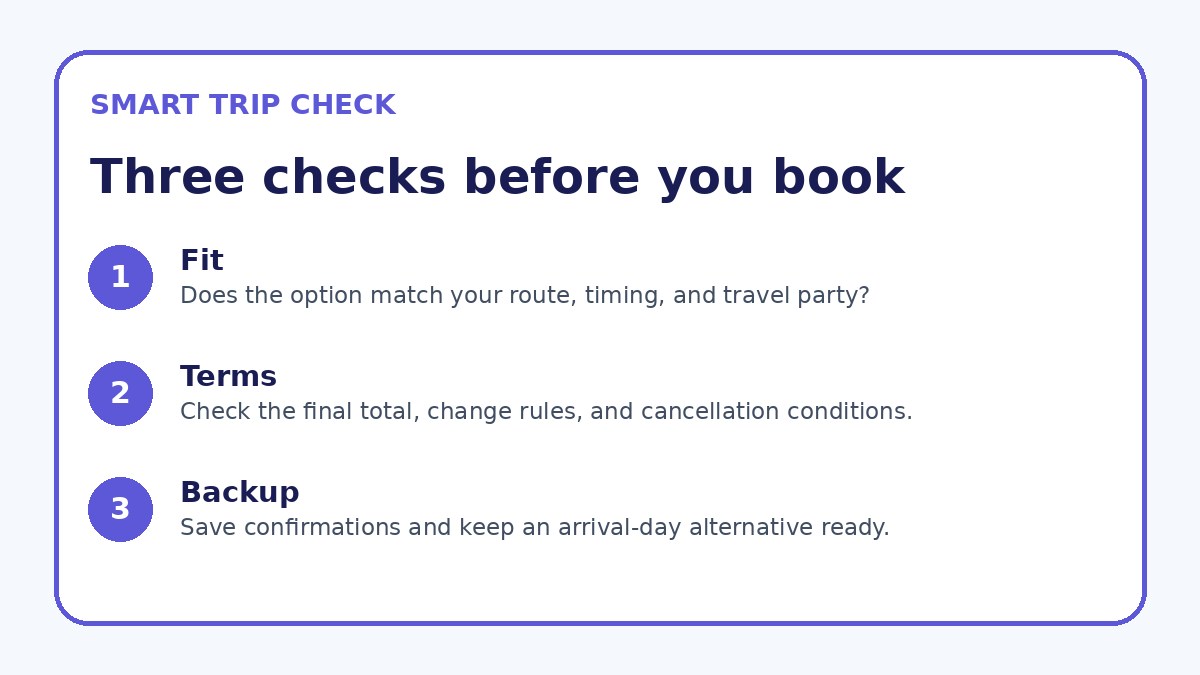
- List your non-negotiables: arrival time window, baggage needs, and likelihood you’ll change dates.
- Compare total door-to-door time for each itinerary, including airport transfer and check-in estimates.
- On the airline’s final booking page, confirm change, cancellation rules, and any fees for baggage or seats.
- If considering connections, verify whether baggage is checked through and the minimum connection time.
- Check transport options and typical transit times from arrival airport to your first destination.
- Save screenshots of fare conditions and the booking page; keep booking references and supplier contact details.
Booking strategy and what to verify before purchase
When you’re ready to book, compare the same itinerary on multiple sites but prioritize the airline or provider’s final booking page for fare conditions and additional fees. Trip.com can be used as one comparison tool, but always verify baggage rules, seat selection costs, change and cancellation policies, and whether the fare is refundable on the supplier’s own checkout. Note total journey time and any required ground transfers before confirming. For tickets that involve separate carriers or self-transfer, check whether you’ll need to re-check luggage or clear security between flights.
Keep documentation handy: screenshots of the fare conditions, the booking reference, and any communications from the airline. If you value maximum flexibility, look for fares that allow free date changes or offer travel credits. If convenience is your priority, select options with minimal transfers and arrival times that align with public transport or easy taxi access. Finally, consider travel insurance that covers delays and changes if you opt for non-flexible tickets; confirm exactly what is covered before relying on it.
Frequently asked questions
Is it better to choose a direct flight or a flexible ticket when traveling solo between Sydney and Melbourne?
There’s no single right answer: choose a direct flight if you prioritize convenience and minimizing transfers, especially if you carry luggage or dislike juggling connections. Pick a flexible ticket if your dates could change or you want the option to rebook without heavy penalties. Evaluate both options by comparing total door-to-door time, the cost difference for flexibility, and how likely you are to change plans. Remember to check the fare conditions on the provider’s final booking page to confirm what changes and refunds are actually allowed.
How should I factor airport location and ground transport into my flight choice?
Treat ground transport as part of the flight decision: arrival at an airport closer to your lodgings or with frequent public transport can save time and money. Check train, shuttle, and taxi options and schedules for your expected arrival time. If an earlier or later flight reduces transfer time or avoids late-night travel, it may be worth the fare difference. Look up terminal distances and typical transfer times so you can compare real door-to-door durations instead of just airtime.
What specific items should a solo traveler verify on the booking page before paying?
Before booking, confirm the exact fare conditions: whether changes or cancellations are allowed and what fees apply, baggage allowances and charges, seat selection rules, and whether the itinerary is protected for missed connections. If the booking involves two separate tickets, check whether you must re-check luggage and allow extra transfer time. Also verify payment protection, refund processing timelines, and where to contact customer service if plans change.
Final planning note
Balancing schedule flexibility and convenience for Sydney to Melbourne flights comes down to honest priorities and careful comparison. Solo travelers who expect plan changes should favour fares with lenient change rules even if they cost more up front; those who want the simplest experience should aim for direct routes and arrivals that sync with easy ground transport. Always compare total travel time rather than airtime alone, and confirm fare conditions and baggage policies on the provider’s final booking page before paying. Use a comparison site such as Trip.com to view options quickly, but rely on the airline’s checkout for the definitive terms and any last-minute details.
Continue planning
Check current options and final conditions
Use the provider page to confirm live availability, the final total, cancellation terms, and every condition that matters to your trip.
This evergreen planning guide was created with AI-assisted drafting and a structured quality review. It does not display live prices, schedules, availability, visa guidance, or provider rankings. Verify current details before booking. Some links are affiliate links; we may earn a commission at no additional cost to you.