Practical answer up front: if you need freedom to change dates or cancel, buy a fully refundable or flexible ticket even if it costs more; if your plans are fixed and you want a lower fare, choose a non‑refundable advance ticket and accept stricter rules. For most solo travellers between Sydney and Melbourne, the core tradeoff is flexibility versus cost and convenience: refundable fares let you pivot without rebooking, whereas advance or restricted fares often require penalties, vouchers, or the purchase of a new ticket. When comparing options—train, coach, or air—focus on change and cancellation terms, how refunds are calculated (refund, voucher, or credit), and whether the fare includes seat reservations or baggage. Before completing a purchase, verify exact rules on the provider’s final booking page and check whether Trip.com or other aggregators show the same conditions and any fees attached.
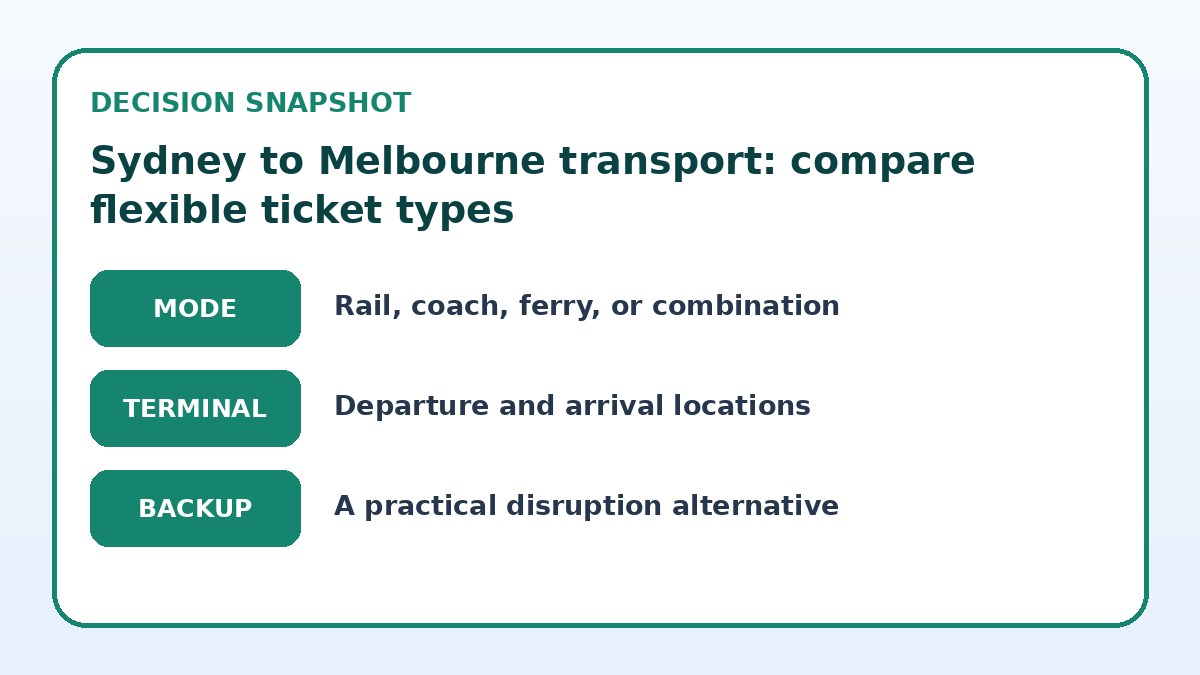
See current options before you compare the details
Availability and final conditions change. Open Trip.com now or keep reading for the practical comparison.
How to read flexibility in ticket rules
Ticket rules use specific language—refundable, flexible, restricted, or non‑refundable—and each term has practical implications. A refundable ticket typically returns money to your original payment method minus any admin fees; a flexible ticket may allow unlimited free date changes within a set window but could still restrict seat class or route changes. Restricted or advance fares often permit changes only with a fixed penalty or require payment of the fare difference on top of a change fee. On booking pages look for explicit steps: what triggers a penalty, whether a voucher is offered instead of cash, and how long refunds take.
Also check what the fare actually includes because flexibility can be limited by add‑ons. For air travel the fare class determines whether you can check baggage or select seats without extra fees; for some trains or coaches an inexpensive fare might exclude a seat reservation or flexible boarding. If you anticipate changing travel times, confirm whether the provider allows you to move to any day or only to specific alternative services. If multiple operators serve parts of the route, confirm whether a combined ticket treats changes across legs the same way, or if each leg has independent rules.
Comparing flexibility across transport modes
Flights commonly segment fares by class and changeability: some economy fares have limited options for changes or refunds, while flexible fares provide more freedom but cost more. Trains and long‑distance coaches often advertise open or flexible fares that let you change travel dates with little fuss; however, they can still require seat rebooking or may have blackout days. The practical check is simple: find the exact change and cancellation policy for the specific fare on the booking screen. If you plan to connect—say a flight to another city or a final coach leg—confirm whether a single ticket covers the entire connection, because separate bookings shift the burden of rebooking onto you if one leg changes.
For solo travellers the experience matters beyond the rules. A refundable flight might be convenient for schedule shifts, but airport procedures—check‑in and security—add time and complexity compared with a direct train or coach transfer into city centres. Trains frequently provide simpler city‑centre to city‑centre travel and may include more generous carry‑on allowances, but trains can have fewer daily departures and different cancellation policies. Weigh the convenience of departure location, number of daily services, and luggage needs along with the ticket flexibility when choosing your mode.
| Approach | Best for | Tradeoff to check |
|---|---|---|
| Buy a refundable/flexible single‑ticket covering entire route | Travelers who value ease, single‑point rebooking, and peace of mind for connections | Higher upfront cost compared with splitting legs or choosing advance fares |
| Purchase advance/non‑refundable single‑ticket | Solo travelers with fixed plans seeking the lowest base fare for one booking | Strict change rules and potential for losing most of the fare if plans shift |
| Book separate tickets for each segment (cheap + flexible mix) | Those maximizing savings while protecting the most uncertain leg with flexibility | If an earlier leg is delayed, you may be responsible for missed onward connections |
| Use vouchers or credits from a previously cancelled booking | Travelers who already hold provider credit and want to avoid out‑of‑pocket expense | You may be limited to booking windows, restricted routes, or non‑transferable credits |
Ready to check the option that fits your plan?
Use your exact dates and traveler details so the provider page can show the current total and conditions.
Practical decision criteria for solo travellers
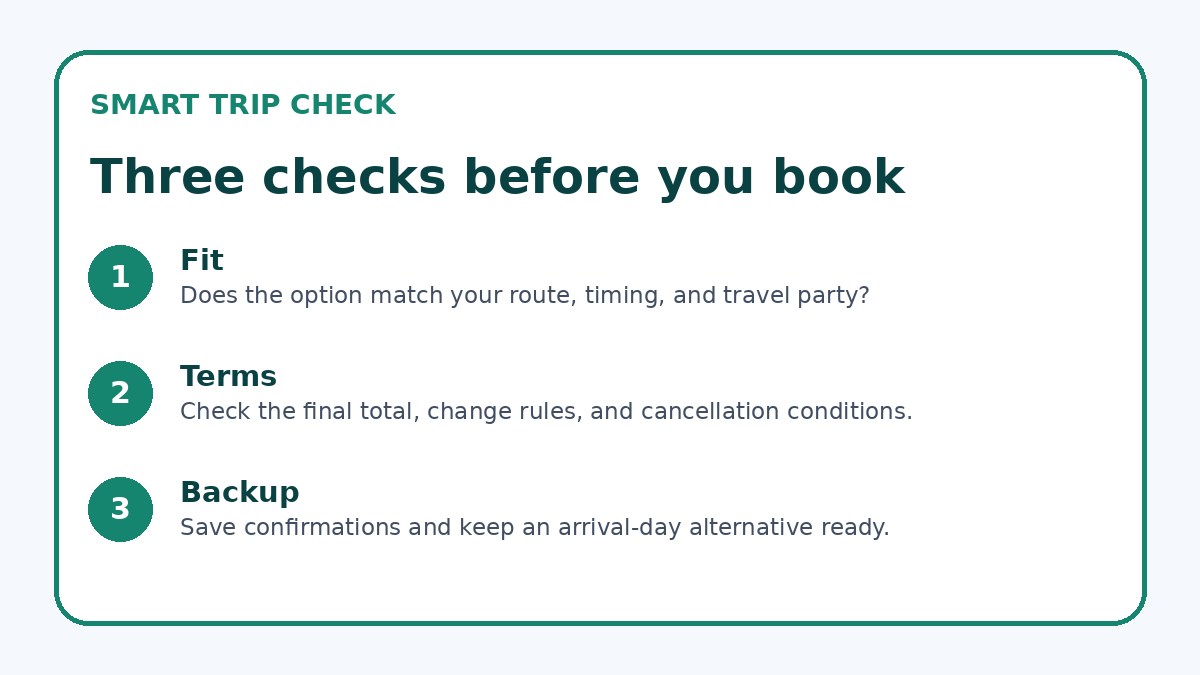
Start with certainty of your dates: if both departure and return are fixed, an advance non‑flexible fare usually reduces cost and complexity. If plans could change—work, events, or weather—favor a flexible or refundable fare. Also consider length of stay: the longer the trip, the higher the chance of needing a change, which increases the value of flexibility. Factor in personal risk tolerance: if losing some money on a cheap fare is acceptable versus paying more up front for peace of mind, that preference should guide your choice.
Next, evaluate logistics: solo travellers often prefer fewer connections and simpler transfers. If a route requires a transfer and you worry about missed connections, choose a single ticket that protects connections or buy flexible fares for connecting legs. Check whether the provider offers free rebooking within a short window after departure (some allow same‑day changes), and verify any seating or baggage restrictions that could force you to upgrade when changing. Finally, review customer support options—24/7 helplines or online self‑service can make changes less stressful.
Before you book
- Read the fare conditions line‑by‑line and save a PDF or screenshot of the exact change and cancellation terms before paying.
- Compare whether refunds are issued to your card, as vouchers, or as travel credits and note any expiration dates.
- If booking connections, confirm whether one ticket covers all legs or whether separate tickets require separate change policies.
- Check baggage and seat reservation rules tied to the fare so a change doesn’t force an unwanted upgrade.
- Contact customer support to clarify ambiguous rules and request written confirmation if the agent makes exceptions.
- Review refund and rebooking processes for cancelled services and note any admin fees or processing timeframes.
What to verify on the booking page before paying
On the provider’s final booking page confirm four things in writing: the exact change fees and how the fare difference is applied; the cancellation policy including whether refunds are cash or vouchers; any time limits on free changes; and what parts of the fare are refundable (taxes versus service fees). Look for sections labeled 'fare conditions', 'terms and conditions', or 'ticket rules'—those hold the formal policy. If the language is unclear, contact customer service before paying, or compare the same fare on another reputable booking site like Trip.com to see consistent terms.
Also verify operational details that affect flexibility but can change independently of the fare: whether the operator issues single‑ticket protection for connections, transfer time recommendations, and the procedure for rebooking if a service is cancelled. If you rely on a specific connection with an onward booking, consider buying protection or travel insurance that covers missed connections for independent tickets. Keep screenshots or PDFs of the final fare rules and your confirmation email, because the written record is what you’ll use if you later dispute a charge or request a refund.
Frequently asked questions
Is it safer to book a refundable ticket if I’m travelling solo between Sydney and Melbourne?
Booking refundable tickets reduces the stress of last‑minute changes because you can usually get your money back or rebook without major penalties. For solo travellers who may face unpredictable work or personal issues, that flexibility can be worth the extra cost. If you’re confident in your schedule, a non‑refundable fare can save money—but be prepared that changes may mean paying most of a new fare. Always check whether refunds are immediate or issued as travel credits and whether any admin fees apply.
Can I mix modes (train, coach, flight) and still keep flexibility?
Yes, but flexibility depends on how you book. A combined single booking that covers multiple modes often offers protection if one leg is delayed, whereas separate bookings leave you responsible for missed connections. If mixing modes, protect the riskiest leg with a flexible fare or buy travel insurance that covers missed connections on independent tickets. Verify each provider’s change and refund rules because they typically apply per ticket, not per passenger itinerary.
What common pitfalls should solo travellers avoid when choosing a flexible fare?
Common mistakes include assuming all 'flexible' labels mean full refunds, not checking whether a fare allows transfers between different service times, and overlooking voucher‑only refunds. Another pitfall is ignoring baggage and seat rules tied to cheap fares—these can force unexpected extra spending when rebooking. Finally, failing to secure a single booking for connections can leave you exposed to the full cost of rebooking separate legs if schedules change.
Final planning note
For solo travellers on the Sydney to Melbourne corridor the core decision is whether the value of flexibility outweighs its cost. If your dates are set and you want to save, an advance non‑refundable fare is often acceptable; if there’s any doubt, buying a refundable or flexible fare reduces stress and the operational friction of rebooking connections. Whatever you choose, read the provider’s full fare conditions on the final booking page, verify refund types and processing times, and save evidence of the rules. Use a mix of common‑sense risk assessment—how likely your plans are to change—and the logistical needs of your chosen mode to find the right balance between flexibility and price.
Continue planning
Check current options and final conditions
Use the provider page to confirm live availability, the final total, cancellation terms, and every condition that matters to your trip.
This evergreen planning guide was created with AI-assisted drafting and a structured quality review. It does not display live prices, schedules, availability, visa guidance, or provider rankings. Verify current details before booking. Some links are affiliate links; we may earn a commission at no additional cost to you.