
If you’re booking a San Francisco to Vancouver flight solo, the most useful step up front is to decide how much flexibility you need and then compare the ticket rules that match that need. Check whether the fare allows free or paid changes, whether refunds are possible, and whether credits or vouchers are issued for cancellations. Also confirm how many changes are permitted and whether name changes or date changes carry extra fees. Different fare families, codes, and distribution channels (airline direct, online travel agency, or a consolidator) often place the decisive conditions on the booking page. Before you pay, read the booking’s full fare rules and the provider’s final confirmation—those pages state the operative conditions. If you want a quick cross-check of options, you can compare availability and policies on Trip.com or on airline sites, but treat the airline confirmation as authoritative.
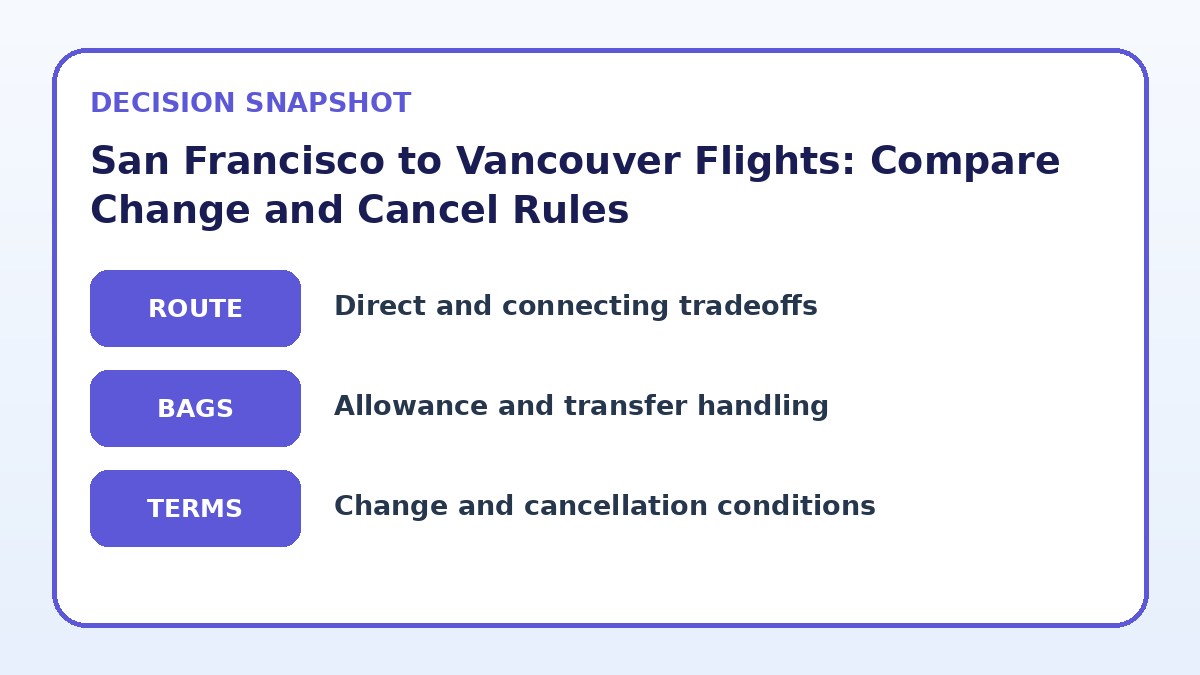
See current options before you compare the details
Availability and final conditions change. Open Trip.com now or keep reading for the practical comparison.
Understand the basic rule types and what they mean
Airline fare rules fall into a handful of practical categories: nonrefundable no-change fares, change-permitted fares with a fee, fully refundable fares, and fares that issue travel credits or vouchers rather than cash refunds. For solo travelers, the distinction matters because a cheap nonrefundable ticket can be fine if your dates are fixed, but it becomes costly if plans shift. Read the booking terms for the precise definitions—some providers differentiate between voluntary changes (you change by choice) and involuntary ones (airline schedule changes) and apply different remedies. The booking confirmation and the airline’s contract of carriage explain remedies for involuntary disruptions; verify these pages directly before finalizing payment.
Also look for ancillary rules that affect your total flexibility: how long you have to cancel for a full refund (some fares include a short free cancellation window), whether same-day changes are allowed, and whether a reissue is needed when shifting zones or fare classes. Restrictions on name changes or passenger substitutions are especially relevant for solo travelers who might transfer a ticket within a close family—many fares do not permit transferral. Since provider wording varies, identify key terms on the booking page—refund, voucher, change fee, reissue fee, fare difference—and record them so you can compare apples to apples.
Comparing direct and connecting itineraries from San Francisco
When you look at options from San Francisco to Vancouver, compare direct and connecting itineraries separately for change and cancellation risk. A direct itinerary generally reduces the complexity of changes because there is a single carrier or marketing/operating carrier pair and a single fare rule set to follow. Connecting itineraries can involve codeshares, separate tickets, or mixed carriers, which multiplies the number of fare rules you must track. If your connection is on a separate ticket, one change to the first segment won’t automatically rebook the second flight; you may be responsible for both changes and any resulting costs.
For solo travelers, consider the tradeoffs: a one-stop itinerary may be cheaper or open up more time choices, but it raises the chance of needing a change or of the trip being disrupted. When comparing options, check whether the ticket is sold as one itinerary (protected connection) or two independent purchases. On the booking page, verify the change and cancellation policy for each segment and confirm who is the operating carrier. Even if a travel agency shows the itinerary neatly, the airline’s final confirmation and contract of carriage determine your options and liabilities.
| Approach | Best for | Tradeoff to check |
|---|---|---|
| Buy the cheapest nonrefundable fare | Fixed plans and low tolerance for higher fare premiums | No cash refund and high fees or no changes if plans shift |
| Pay slightly more for a change-permitted fare | Travelers who may need date shifts but want lower up-front cost than refundable fares | You still may pay fare differences and some administrative fees |
| Purchase a fully refundable ticket | Solo travelers who prioritize maximum flexibility and quick refunds | Higher upfront cost compared with restricted fares |
| Book a mixed approach (credit-friendly fare or voucher option) | Those who want flexibility but accept travel credit rather than cash refunds | Credits may have blackout periods, expiration dates, or limited reuse options |
Ready to check the option that fits your plan?
Use your exact dates and traveler details so the provider page can show the current total and conditions.
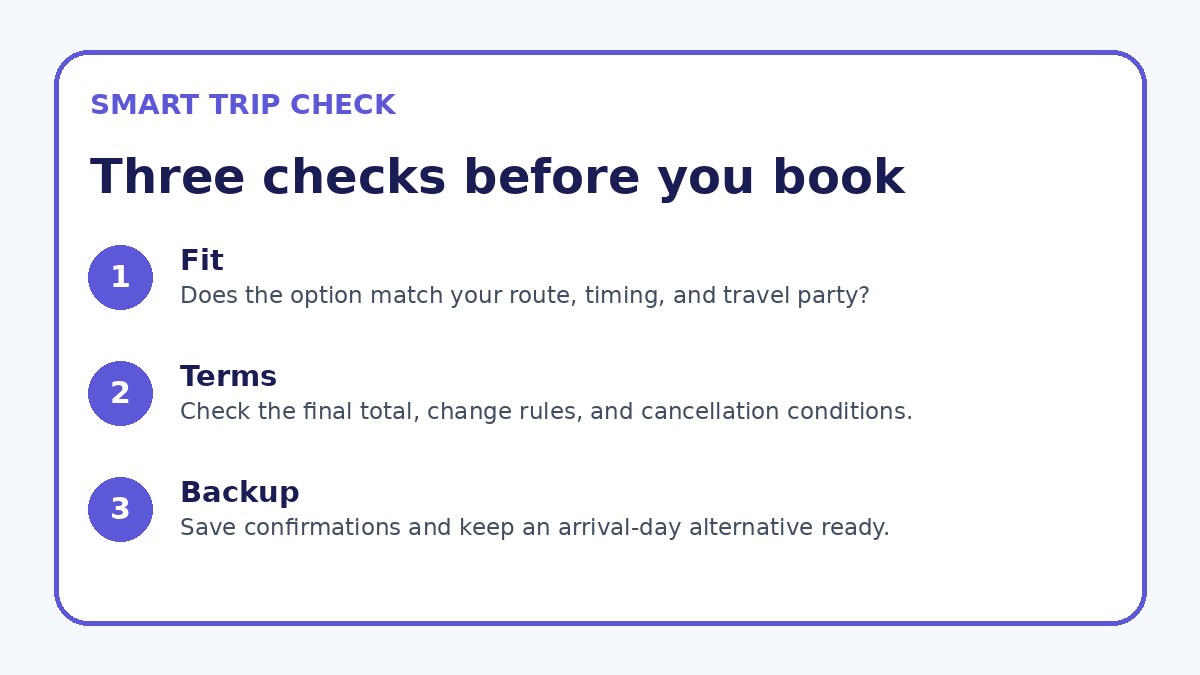
How to read change fees, fare differences, and refunds
Change fees, when they apply, are often two parts: a fixed administrative fee plus any fare difference between the original ticket and the new ticket. Some tickets waive the fixed fee but still require payment of any higher fare for the new travel date. For refunds, the booking page will state whether a cash refund to the original form of payment is possible or whether only a travel credit or voucher is issued. Solo travelers who need a clear fallback—such as saving the option to recover money if plans are canceled—should prioritize refundable fares or policies that explicitly allow cash refunds in the event of voluntary cancellation.
When nothing about refunds or credits looks permanent, look for ancillary protections: a short free cancellation window after purchase, a flexible change policy listed on the booking page, or a bundled fare that includes change waivers. Whatever the wording, note how refunds are processed (timeframe, documentation), whether there are blackout dates for changes, and whether government taxes and fees are refunded. Always double-check the final booking confirmation and the provider’s help center to see how they’ve handled similar cancellations or changes in the past, and keep a screenshot or PDF of the fare rules as evidence.
Before you book
- Before paying, open and save the final booking page that lists change and cancellation rules; take a screenshot or PDF copy.
- Verify whether the fare allows a cash refund, travel credit only, or no refund at all, and note the required steps to claim it.
- Confirm whether change fees are fixed or waived, and whether you still owe any fare difference when changing dates or routing.
- If the itinerary has connections or codeshares, check change and cancellation rules for each carrier involved on the final confirmation.
- Decide whether to buy travel insurance that expressly covers cancellations and confirm what documentation you’d need to submit a claim.
- Record contact channels (airline phone, web chat, OTA support) listed on the booking page for faster action if you must change or cancel.
Decision criteria for solo travelers: risk tolerance and backups
Make your decision by balancing three things: how likely your plans are to change, how much you’re willing to spend for flexibility, and how quickly you need a resolution if something goes wrong. If your schedule is fixed and you prefer to spend less, a nonrefundable economy fare can be acceptable. If you expect changes, choose a flexible or refundable fare even if it costs more. Consider buying a low-cost refundable fare with a backup cancellation option or select a fare that allows changes with only fare-difference payments—this often reduces the upfront premium while keeping moveability.
Also plan operational backups: an emergency contact, travel insurance that covers trip interruption or cancellation (verify exactly what is covered), and a saved copy of the booking’s change and refund rules. If you book via an online travel agent, confirm whether the agent handles changes or whether you must contact the airline directly; the handling channel can affect speed and success of changes. Before finalizing, verify the rules on the airline’s final booking page and keep that page or confirmation email handy in case you need to argue for a specific remedy.
Frequently asked questions
Can I change a San Francisco to Vancouver ticket after booking without penalties?
Whether you can change a ticket without a penalty depends on the fare rules of the ticket you buy. Some fare classes and promotional offers waive change fees or allow free rebooking, while others impose a fixed change fee plus any difference in fare. Always check the final booking page where the ticket is sold—the precise change fee, permitted changes, and any waiver conditions are shown there. If you booked through an online travel agency, confirm whether the airline or the agency enforces the policy so you know whom to contact when changing.
If my flight is canceled by the airline, will I automatically get a refund or rebooking?
Airlines generally offer options when they cancel a flight, but the remedy depends on the circumstances and the airline’s contract of carriage. Typical choices include rebooking on the next available flight or issuing a refund to the original form of payment. The airline’s cancellation policy and the booking confirmation will state your specific rights; verify these on the airline’s official pages linked from the booking. Keep your confirmation and any cancellation notices, and contact the airline directly for the fastest resolution.
How do I compare the flexibility of different booking channels for San Francisco to Vancouver flights?
Start by checking the fare rules on each booking channel’s final purchase page: airline direct, online travel agency, or consolidator. Some OTAs include their own change handling procedures and service fees, while airlines may handle changes directly without intermediary charges. Compare whether the channel shows the same refund and change language and whether they display the operating carrier’s rules. If policies differ or are unclear, call the airline to confirm how changes will be managed for bookings sold through that channel before completing payment.
Final planning note
For solo travelers on the San Francisco to Vancouver route, the smartest booking choice begins with a clear estimate of how fixed your plans are and how much you’ll pay to preserve flexibility. Read and save the final booking page’s change and cancellation rules, compare direct versus connecting itineraries for added complexity, and decide between low-cost nonrefundable fares and more expensive refundable or change-permitted options. If you need extra assurance, consider travel insurance that covers cancellations and verify the insurer’s requirements. Always confirm the operative terms on the airline’s final confirmation—those terms determine your remedy if plans change—and keep a record of them for fast action when you need it.
Continue planning
Check current options and final conditions
Use the provider page to confirm live availability, the final total, cancellation terms, and every condition that matters to your trip.
This evergreen planning guide was created with AI-assisted drafting and a structured quality review. It does not display live prices, schedules, availability, visa guidance, or provider rankings. Verify current details before booking. Some links are affiliate links; we may earn a commission at no additional cost to you.