If you’re flying solo from London to Barcelona, the practical question is simple: can you change or cancel your ticket without losing a lot of money or freedom? Start by checking the airline’s fare rules for changes, cancellations, and refunds on the exact fare class you plan to buy. Look for whether changes are permitted, whether a fee applies, if a fare difference will be charged, and the deadline to make changes. Also confirm how refunds are handled—cash, credit voucher, or travel credit—and whether the policy applies when the airline cancels a flight. If you’re comparing direct and connecting itineraries, verify rules for each segment separately. Finally, note that third-party sites and travel agencies can have different change/cancel policies from the airline; always verify on the airline’s final booking page before completing purchase.
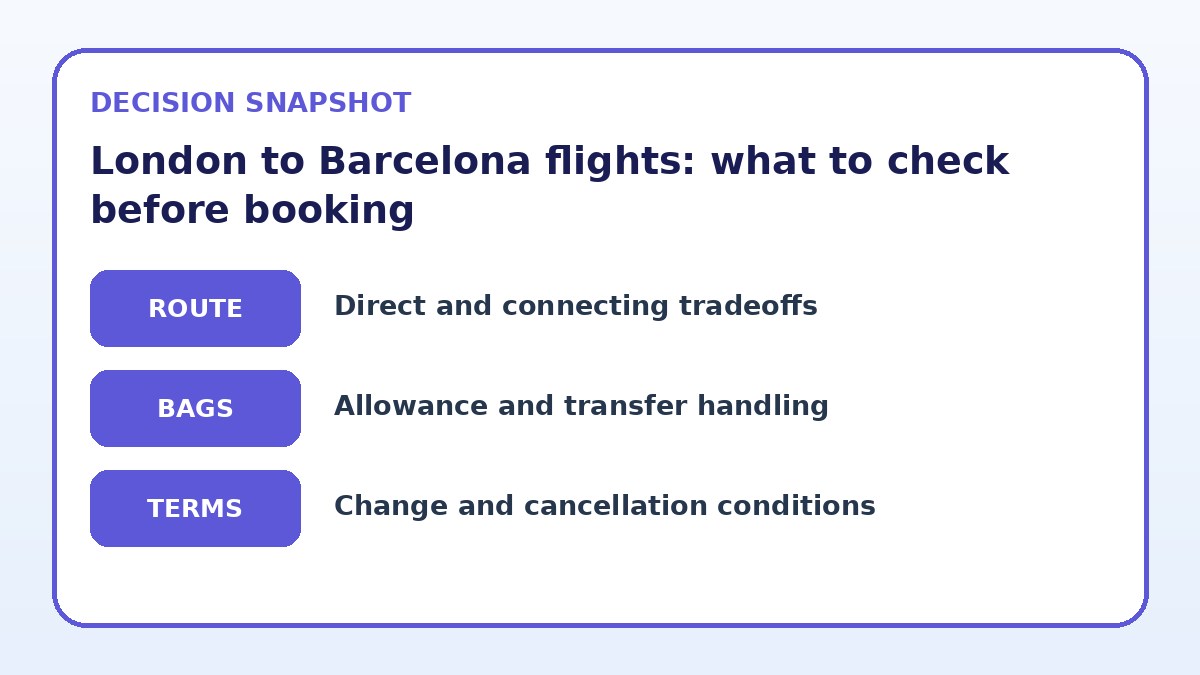
See current options before you compare the details
Availability and final conditions change. Open Trip.com now or keep reading for the practical comparison.
Understand the different flexibility levels
Airlines sell multiple fare types with different change and cancellation conditions. A fare labeled as flexible or refundable usually lets you cancel for a full refund or change without a heavy penalty, but these fares cost more. Semi-flexible tickets may allow changes for a fee plus any fare difference; sometimes cancellations result in a travel voucher rather than cash. Low-cost or basic fares often have the strictest rules: changes are either forbidden or allowed only for a large fee, and cancellations typically produce no refund. For a solo traveler, weigh the extra fare cost against the financial risk if plans change.
When you compare offers, focus on three specific items: change fee amount, whether a fare difference applies, and refund type. A low change fee but a large potential fare difference can still be expensive if you rebook during a high-demand period. Also check time limits—some fares allow changes up to two hours before departure, others require changes earlier. Remember that seat assignments, extras like baggage, and bundled services may not transfer to a new ticket without additional charges. Put simply: the headline price rarely reflects the real flexibility you’re buying.
How connecting flights and carriers affect rules
If your London to Barcelona itinerary includes a connection or is marketed by one carrier but operated by another, rules can become tricky. Changing or cancelling one segment might affect the entire ticket; many airlines treat a multi-segment booking as a single contract, so a change to one leg can trigger fees and fare recalculation for the whole itinerary. If different carriers operate segments under separate tickets, each ticket follows its own rules and you lose protections like automatic rebooking for missed connections. Before booking, check whether the itinerary is protected through a single booking reference and who the operating carrier(s) are.
When comparing direct and connecting options, verify the change and cancellation policy for each scenario. Direct flights simplify refunds and changes because only one carrier’s rules apply. Connecting itineraries can be cheaper but carry more logistical risk and potentially higher combined change fees. Also confirm whether the fare’s terms allow rerouting to a different route or date and whether any partner airline involved recognizes those terms. For any itinerary, always verify the final policy language on the operating carrier’s booking page and ask the agent to confirm in writing if you book through a reseller.
| Approach | Best for | Tradeoff to check |
|---|---|---|
| Buy refundable or flexible fare | Travelers who want maximum control and minimal change stress | Higher upfront fare cost compared with nonrefundable tickets |
| Choose semi-flexible fare with low change fee | Those expecting a likely date tweak but wanting a cheaper alternative | May still pay fare difference on rebooking; rules vary by carrier |
| Buy the cheapest nonrefundable fare | Solo travelers certain of plans and prioritizing lowest base price | Little to no refund; high fees or no options for changes |
| Book nonrefundable but add travel insurance or credit card protection | Budget-conscious travelers wanting some financial backup | Insurance has exclusions and may not cover all change fees or reasons |
Ready to check the option that fits your plan?
Use your exact dates and traveler details so the provider page can show the current total and conditions.
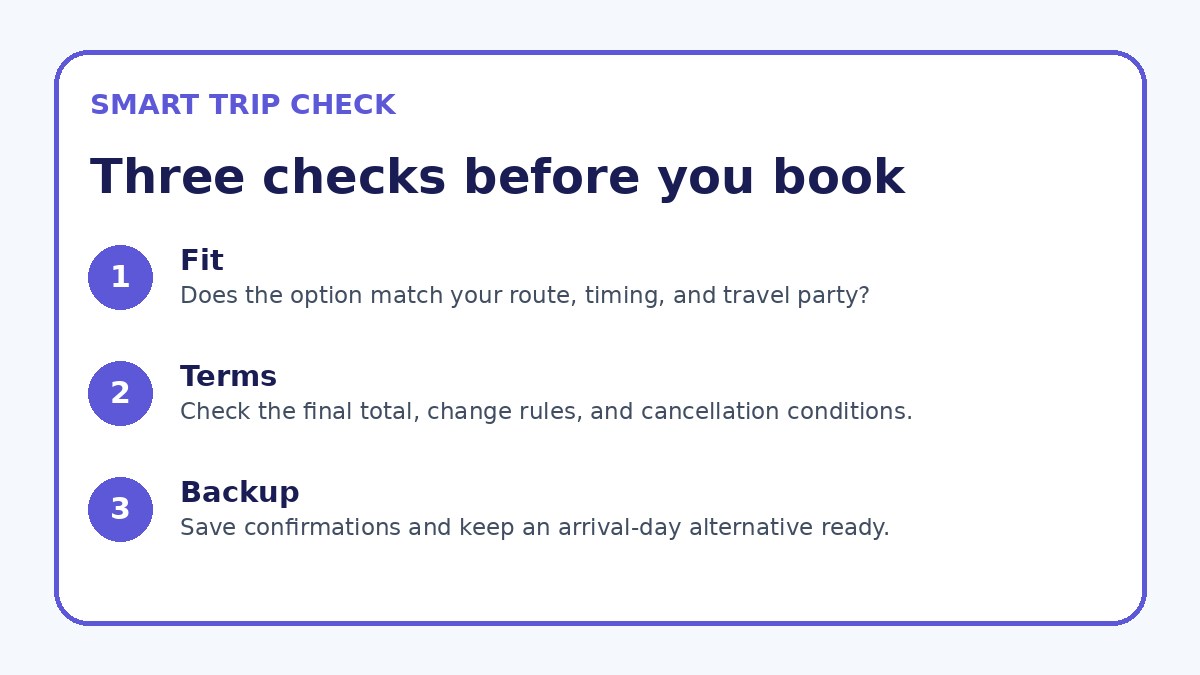
Third-party bookings, credit cards and travel insurance
Booking through online travel agencies or consolidators can add layers to the change and cancellation process. Agencies sometimes impose their own change or service fees and may issue vouchers instead of processing refunds through the airline. If you find a lower price via a third party, confirm who handles refunds and changes, and whether the agency can act on your behalf in a disruption. Trip.com can be a place to compare options, but always cross-check the airline’s official policy on its booking page before you commit. The airline’s policy is the authoritative source for how your ticket will be treated on their side.
Your payment method and insurance choices also change the risk balance. Many credit cards offer trip interruption or travel protection that covers certain cancellations or changes; coverage depends on the card’s terms and often requires that you pay the fare with that card. Standalone travel insurance can reimburse change fees, unused prepaid costs, or medical-related cancellations, but policies vary widely on covered reasons and claim procedures. Before you rely on insurance, read policy exclusions and the claims process so you understand whether it will truly mitigate the fare’s inflexibility.
Before you book
- Open the exact fare rules on the airline’s booking page and save a screenshot before purchasing.
- Confirm whether changes incur a fixed fee, a fare difference, or both, and note the deadline for free changes.
- Verify the refund type offered—cash, bank refund, or travel voucher—and ask for written confirmation if unclear.
- If booking through a third party, read the agency’s change/cancel terms and who handles refunds in disruptions.
- Check whether baggage, seat assignments, and add-ons remain valid after a change or require repurchase.
- Compare refundable fare cost versus likely change fees and potential insurance coverage to decide overall value.
Practical steps for solo travelers before booking
Start by defining how flexible you need to be: are dates fixed, are you willing to pay more for refundable options, or do you need a low-fare nonrefundable ticket knowing you’ll accept more risk? If you value schedule freedom, compare refundable fares or pay for a flexible ticket add-on. If you’re comfortable with a firm plan, choose the cheaper, less flexible fare but set alerts for cheaper flexible options. Keep in mind that change rules can differ even within the same fare family across different flights, so always open the fare rules on the specific flight you intend to buy.
Before clicking purchase: screenshot or save the full fare rules page, confirm whether baggage and seat changes transfer on rebooking, and note the exact deadlines for fee-free changes if offered. If an unexpected problem crops up, having the booking terms on hand speeds negotiations. Finally, keep contact details for the airline’s customer service and for your booking agent in one place. For last-minute changes, phone service often resolves things faster than email, but verify wait time expectations and any potential phone-only change fees.
Frequently asked questions
Can I change a London to Barcelona flight day-of-departure without losing the whole ticket?
It depends on the fare rules tied to your ticket. Some flexible fares allow day-of changes for a fee or no fee, while basic or nonrefundable fares often prohibit last-minute changes or impose high charges. Airlines also vary in whether they permit same-day standby or confirmed rebooking. If avoiding the risk is essential, choose a flexible or refundable fare. If you hold a restrictive ticket, check whether your credit card or travel insurance covers last-minute changes and always verify the airline’s change policy on the final booking page before assuming any option is available.
If my airline cancels the flight, will I automatically get a refund or rebooking?
When an airline cancels, its contract of carriage and applicable regulations usually require offering a refund or alternative transportation, but the exact remedies and timelines vary by jurisdiction and carrier. Some airlines will rebook you on the next available flight on the same carrier or a partner; others may offer vouchers. Always confirm the airline’s stated remedy on its official communications and the booking page. If you booked through a third party, contact both the agent and the airline to understand who will process refunds or rebooking—keep records of all communications.
How do I compare change and cancellation rules between direct and connecting itineraries?
Treat each itinerary as its own contract. For direct flights, only the operating carrier’s policy applies, simplifying changes or refunds. For connecting itineraries on a single ticket, the whole ticket is typically subject to one set of fare rules, so changing one segment can affect the entire price and conditions. If segments are on separate tickets, each has separate rules and you likely lack protection for missed connections. Compare the fare rules displayed on the booking page for the exact itinerary you’re considering and confirm the operating carriers and whether the booking is under a single reference.
Final planning note
Solo travelers should treat change and cancellation conditions as central to the London to Barcelona booking decision, not an afterthought. Start by defining your tolerance for schedule shifts, then compare refundable, semi-flexible and cheap nonrefundable options against that tolerance. Always verify the explicit fare rules on the airline’s final booking page, save that language, and understand how third-party bookings, credit cards and insurance interact with those rules. A small additional cost for flexibility can save stress and expense later, but for firm plans a low-cost ticket may be fine—just know exactly what you’re trading off before you pay.
Continue planning
Check current options and final conditions
Use the provider page to confirm live availability, the final total, cancellation terms, and every condition that matters to your trip.
This evergreen planning guide was created with AI-assisted drafting and a structured quality review. It does not display live prices, schedules, availability, visa guidance, or provider rankings. Verify current details before booking. Some links are affiliate links; we may earn a commission at no additional cost to you.